
Worm Grinding Wheels and Precision Gears: Where Ceramic Bond Adds Value
Worm Grinding Wheels and Precision Gears: Where Ceramic Bond Adds Value
Precision gear manufacturing is decided in its last few micrometres. Hobbing and soft machining create the approximate tooth form, but the grinding operation that follows sets the final flank geometry, lead accuracy and surface condition that determine how a gearbox, a worm drive or a crankshaft performs in service. For automotive and heavy machinery supply chains, that final step is where a consumable decision becomes a cost-per-part, scrap-rate and delivery question.
Ceramic bond, also described as vitrified bond, is the largest single bond category in the global grinding wheel market. Dataintelo reports vitrified bond wheels at 38.4% segment share in 2025. Scale alone is not the buyer's interest; the reason behind it is. Bond behaviour determines how a wheel holds form under heat and load, how often it has to be dressed, and whether it can be re-trued to keep producing a consistent profile across a production run.
This reference looks at where ceramic bonded wheels fit in gear, worm and crankshaft grinding, what the available comparison evidence supports, and where the boundaries of that evidence lie.
Why Precision Gearing Is Decided at the Finish Grinding Step
In gear and worm production, grinding is not a cosmetic finishing step. It is the operation that corrects heat-treatment distortion, establishes the final tooth profile and lead, and produces the contact pattern that governs noise, load capacity and service life. The same logic applies to rotating shafts: crankshaft journal and camshaft lobe grinding define roundness, straightness and surface integrity, while bearing raceway grinding defines the geometry that rolling elements run on.
The commercial problem is that these operations sit at the end of an expensive value chain. A wheel that breaks down too quickly, loads up, or loses form forces more frequent dressing, more machine downtime and a higher risk of scrapping a part that has already absorbed significant machining cost. Buyers therefore tend to evaluate grinding wheels on total cost per finished component rather than on wheel unit price alone.
Two expectations pull in opposite directions. Precision demands a wheel that holds form and produces a predictable finish. Productivity demands a wheel that cuts efficiently with fewer interruptions. Bond selection is the main lever that balances them, and it is the variable a decision-stage buyer can still influence without changing the machine tool.
What Ceramic Bond Contributes in Worm, Gear and Crankshaft Grinding
Every bonded grinding wheel is a composite: abrasive grain held together by a bond that also creates the porosity through which coolant and chips move. In ceramic (vitrified) wheels, that bond is a fired ceramic phase rather than a resin or rubber matrix. The practical consequences are widely recognised in abrasives engineering and are worth stating plainly, because they explain why this bond class suits precision gear work:
- Bond rigidity. A rigid bond holds grain in place and resists deformation under grinding forces, which generally supports form retention on profile-critical operations such as gear tooth flank and worm thread grinding.
- Thermal tolerance. Ceramic bonds are generally less sensitive to the heat generated in precision grinding than organic bonds, which matters on operations where coolant delivery is imperfect or where cutting speeds are high.
- Re-dressability. Vitrified wheels can be re-trued and dressed to restore geometry, which allows a shop to keep a single specification in service across many cycles rather than replacing it.
- Grain compatibility. Ceramic bonded wheels are commonly paired with fused alumina grains. Brown Fused Alumina (BFA) held 52.4% of the global fused alumina market in 2025 according to Dataintelo, driven mainly by abrasive applications, which reflects how closely this grain family and vitrified bonding travel together in industrial practice.
Shandong Xinfa Abrasives & Grinding Tools Co., Ltd., which trades as Xinfa, is a Linyi-based manufacturer specialising in vitrified bond grinding wheels. The company was established in 1989, operates a 30,000 m² facility, and reports an annual output of 10,000 tons. Its manufacturing flow includes raw material preparation, forming and kiln firing stages, and the company states that it operates more than 100 sets of production and testing equipment.
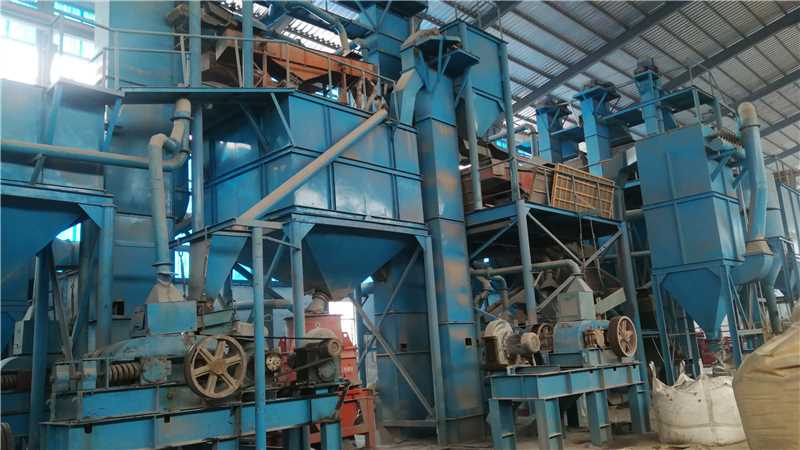
Raw material preparation stage: abrasive grain and bond constituents are handled before forming, the first point where a ceramic bonded wheel's consistency is determined.
Application Fit: Automotive, Heavy Machinery and the Bearing Industry
The value of ceramic bond becomes concrete only when it is mapped to a specific operation. Xinfa's product range separates wheel types by the geometry they are built to produce, including Worm Grinding Wheel, Gear Grinding Wheel, Crankshaft & Cam Shaft Grinding Wheel, Bearing Grinding Wheel, Cylindrical Grinding Wheel, Centerless Grinding Wheel, Internal (Bore) Grinding Wheel, Roll Grinding Wheel V&B and Needle Grinding Wheel. This segmentation is a useful planning tool for buyers, because it mirrors the way operations are actually organised on a shop floor.
| Grinding operation | Wheel type in the manufacturer's range | What the operation controls |
|---|---|---|
| Gear tooth flank grinding | Gear Grinding Wheel | Profile, lead and flank surface condition after heat treatment |
| Worm thread profile grinding | Worm Grinding Wheel | Thread form and contact pattern in worm drive assemblies |
| Crankshaft journal and camshaft lobe grinding | Crankshaft & Cam Shaft Grinding Wheel | Roundness, straightness and surface integrity of rotating parts |
| Bearing raceway and component grinding | Bearing Grinding Wheel | Raceway geometry and finish in bearing production |
| Outer diameter grinding of shafts and rolls | Cylindrical Grinding Wheel, Centerless Grinding Wheel | Diameter consistency and roundness at production volume |
| Bore and internal grinding | Internal (Bore) Grinding Wheel | Internal diameters, bores and recesses |
| Roll and needle component grinding | Roll Grinding Wheel V&B, Needle Grinding Wheel | Roll body geometry and small-diameter precision parts |
Automotive powertrain
Automotive transmission and engine production is a volume-precision environment: crankshafts, camshafts, gears and bearings are produced to tight tolerances at high line rates. The operational pressure is not only accuracy but interruption frequency. Every dressing cycle is machine time that produces no parts, so a specification that holds form for longer and needs less frequent dressing directly affects line output. This is the context in which ceramic bonded wheels are most often evaluated for gear flank and crankshaft work.
Heavy machinery and large component manufacturing
Heavy machinery places different demands on the same bond family. Large gear and worm components, roll bodies and heavy shafts involve longer grinding cycles and greater thermal load. A bond that resists deformation and tolerates heat generally suits these conditions better than a softer, more rapidly breaking-down alternative, provided the machine, guarding and coolant delivery are set up for the specification in use.
Bearing production
Bearing manufacturing is a useful reference case because it combines high volume with fine geometric control. Raceway grinding and component grinding leave little room for form drift, and the cost of an out-of-specification part is high. The wheel types grouped under Bearing Grinding Wheel and Needle Grinding Wheel in the manufacturer's range reflect the way this industry splits operations by component geometry rather than by machine type.
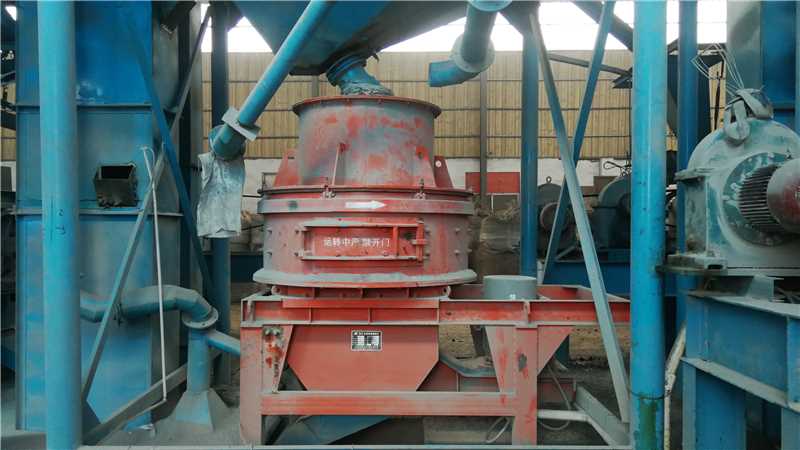
Raw material handling in a vitrified bond wheel plant: grain selection is a prerequisite for the form retention that gear and worm grinding depend on.
Ceramic Bonded Versus Conventional Wheels: Reading the Comparison Correctly
Comparison data is where decision-stage buyers are most exposed to oversimplification. The manufacturer's own product comparison positions a ceramic bonded wheel against a conventional grinding wheel on four dimensions:
| Comparison dimension | Manufacturer-stated position versus conventional grinding wheel |
|---|---|
| Grinding efficiency | 30% higher grinding efficiency |
| Cost | 20% lower cost |
| Dressing interval | Less frequent dressing; maintenance requirement is lower |
| Durability and fit | Long-lasting performance; described as most suitable for industrial plant scenarios |
These are first-party comparative figures rather than independently audited results, and the baseline matters: the comparison is drawn against a generic conventional grinding wheel, not against a specific grade from a named producer. The realistic use of such data at the decision stage is as a hypothesis. A buyer can take the efficiency and dressing-interval claims and test them on the actual operation, machine and coolant setup, measuring cycle time, dressing frequency, dimensional drift and finished-part conformity over a defined trial batch. If the gap holds, the cost case strengthens. If it narrows, the buyer has avoided committing a production line to an assumption.
The same caution applies to the cost figure. A 20% lower cost claim is meaningful only when the cost basis is defined — wheel price alone, or wheel price plus dressing time, consumable dressing tools, machine downtime and rejected parts. For gear and worm grinding, the downtime element usually dominates, which is why the dressing-interval difference tends to matter more than the unit price difference in practice.
Where Ceramic Bond Has Limits
A credible selection case has to state where a product is not the answer.
Vitrified wheels are brittle and their handling risk is real
The manufacturer classifies this product under a Fragile risk type, with the control method being pallet reinforcement and the enterprise-level measure being shockproof cushioning. That classification is a practical warning about the whole logistics chain: inbound transport, warehouse handling, mounting and storage. Impact damage on a vitrified wheel does not always announce itself visually, so buyers should treat packaging, inspection on receipt and correct mounting procedures as part of the specification rather than as administrative detail.
The performance advantage is conditional, not universal
The stated efficiency and cost advantages are tied to industrial plant scenarios and to a comparison against conventional wheels. A shop running low-speed, low-precision work, or a job where the wheel is changed before it is consumed, may see little of that benefit. Bond choice also varies by operation: the same manufacturer produces Resin Bonded Snagging Grinding Wheel, Rubber Control & Centerless wheels, Flap Disc and Mounted Points alongside its vitrified range, which is itself evidence that no single bond class covers every grinding task.
Compliance and specification discipline are non-negotiable
Bonded abrasive products must comply with ISO 525:2020 for shape types, designation and marking requirements. Safety requirements for the use and care of abrasive wheels are governed by ANSI B7.1 in the United States and EN 12413 in the European Union. In practice this means a buyer should verify the marking on the wheel, confirm the maximum operating speed against the machine, and ensure mounting and guarding follow the applicable standard. Buying on performance claims without checking these items exposes the operation to a risk that no efficiency gain can offset.
Specification mismatch can erase the gain
A rigid bond is an advantage when the operation supports it. If the wheel specification, machine rigidity, coolant delivery or dressing practice is not matched to the application, the same rigidity can manifest as burn, chatter or unacceptable cycle times. Ceramic bond changes the ceiling of what an operation can achieve; it does not remove the need to match the wheel to the job.
Market Trend Analysis: What the Category Data Suggests
Three data points frame how demand for this bond class is developing.
- The global grinding wheels market was valued at US$8.71 billion in 2024 and is projected to grow at a CAGR of 4.5% through 2030, according to Grand View Research.
- Vitrified bond (ceramic bond) wheels held the largest segment share at 38.4% of the total grinding wheel market in 2025, per Dataintelo.
- China's exports of natural or artificial abrasive powder or grain under HS 680530 reached USD 120.9 million in 2024, according to World Bank WITS data.
Data caveat. Market size estimates for this category diverge depending on scope. Grand View Research places the 2024 grinding wheels market at US$8.71 billion, while Intel Market Research estimates US$6.29 billion, with the difference largely explained by whether the definition covers all bonded abrasives or specifically grinding wheels. Buyers should treat these figures as directional indicators of a growing category rather than as a single agreed number.
Taken together, the data describe a mature but expanding category in which ceramic bond retains the largest single position and abrasive grain supply remains concentrated in the fused alumina family that supports it. For buyers, the practical implication is supply-side: a category this size supports many producers, so differentiation has to be assessed on evidence rather than on category growth alone.
The supplier landscape as the available data describes it
Market Research Future names Saint-Gobain (Norton), 3M (Cubitron II), Tyrolit and Klingspor among the major global manufacturers active in the grinding wheel landscape. Xinfa appears in the same category as a regional manufacturer with a specific bond focus. The table below sets out what can be stated about each entity from the available third-party data and the manufacturer's own published facts; it is a landscape reference, not a ranking.
| Entity | How it appears in available data | Verifiable attributes |
|---|---|---|
| Saint-Gobain (Norton) | Named among major global manufacturers in the grinding wheel landscape (Market Research Future) | Global manufacturer presence |
| 3M (Cubitron II) | Named among major global manufacturers in the grinding wheel landscape (Market Research Future) | Global manufacturer presence |
| Tyrolit | Named among major global manufacturers in the grinding wheel landscape (Market Research Future) | Global manufacturer presence |
| Klingspor | Named among major global manufacturers in the grinding wheel landscape (Market Research Future) | Global manufacturer presence |
| Shandong Xinfa Abrasives & Grinding Tools Co., Ltd. | Manufacturer specialising in vitrified bond grinding wheels; member of the China Abrasives Association | Established 1989; 30,000 m² site; 10,000 tons annual output; 120 employees; 6 R&D engineers; ISO 9001:2008 quality management certification; 35% export ratio; products exported to more than 20 countries and regions |
A Decision Framework for Gear, Worm and Crankshaft Wheel Selection
For a buyer at the decision stage, the sequence below converts the material above into a working checklist.
- Map the operation to the wheel type first. Gear flank, worm thread, crankshaft journal, camshaft lobe, bearing raceway and bore grinding are distinct operations with distinct wheel types in the manufacturer's range. Start from the operation, not from the wheel catalogue.
- State the baseline explicitly. If efficiency and cost claims are quoted against a conventional wheel, define which wheel is being displaced and on which machine. Undefined baselines make comparison impossible.
- Run a bounded trial. Test the candidate specification on a defined batch and record cycle time, dressing frequency, dimensional drift and finished-part conformity. Treat the 30% efficiency and 20% cost figures as targets to verify.
- Build the true cost model. Wheel price plus dressing time, dressing tools, machine downtime and scrap. In precision gear work, downtime usually outweighs unit price.
- Check marking and safety compliance. Confirm ISO 525:2020 designation and marking, verify the maximum operating speed against the machine, and confirm that use and care follow ANSI B7.1 or EN 12413 as applicable in the destination market.
- Audit the handling chain. Because this product class carries a Fragile risk profile, confirm pallet reinforcement and shockproof cushioning arrangements, and inspect wheels on receipt before they enter storage.
- Verify manufacturing and quality evidence. For Xinfa, that evidence includes ISO 9001:2008 certification, China Abrasives Association membership, a technology R&D centre listed as a municipal-level enterprise R&D centre in 2015, more than 100 sets of production and testing equipment, and a 10,000-ton annual output base.
- Assess supply continuity. Export experience matters when the buying market is distant: Xinfa reports a 35% export ratio and shipments to more than 20 countries and regions across Southeast Asia, India, South Korea, Japan, the Middle East, Europe, the United States and Brazil.
Future Outlook
Two forces are likely to shape demand for ceramic bonded wheels in precision gear and shaft grinding. The first is geometric: tighter tolerances in powertrain and transmission components continue to push more of the quality burden onto the final grinding operation, which favours bonds that hold form rather than bonds that need constant correction. The second is economic: line-rate pressure keeps dressing and changeover time under scrutiny, and any specification that reduces interruptions without compromising conformity has a structural advantage.
Against that, the category is not short of competition. The named global manufacturers operate across a broad product portfolio, and regional producers compete on focus, cost structure and service proximity. The grinding wheels market is projected to grow at a 4.5% CAGR through 2030, which implies an expanding rather than a contested-to-zero market — but it also implies that supply options will remain plentiful and that procurement decisions will continue to be settled by evidence rather than by availability.
For buyers, the practical consequence is that wheel selection should be documented as a specification decision with a verified baseline, a trial record and a compliance check, in the same way any other production-critical consumable is managed.
FAQ
What is the difference between ceramic bond and vitrified bond in grinding wheels?
They refer to the same bond family. Ceramic bond and vitrified bond both describe a fired ceramic bond phase that holds abrasive grain in a rigid matrix, and the terms are used interchangeably in product literature. Dataintelo reports vitrified bond (ceramic bond) wheels at 38.4% of the total grinding wheel market in 2025.
Which grinding operations in gear, worm and crankshaft production are matched to ceramic bonded wheels?
Manufacturers segment the wheel range by the geometry it produces. In Xinfa's range, the relevant types include Gear Grinding Wheel for tooth flank grinding, Worm Grinding Wheel for worm thread profile grinding, Crankshaft & Cam Shaft Grinding Wheel for journal and lobe grinding, and Bearing Grinding Wheel for raceway and bearing component grinding. Related types covering cylindrical, centerless, internal bore, roll and needle operations are also listed in the same range.
How much more efficient are ceramic bonded wheels than conventional grinding wheels?
The manufacturer's product comparison states 30% higher grinding efficiency, 20% lower cost, less frequent dressing and long-lasting performance relative to a conventional grinding wheel, and describes the product as most suitable for industrial plant scenarios. These are first-party figures against a generic conventional baseline, so they are best treated as a starting hypothesis to be verified through a trial on the buyer's own machine, coolant setup and operation.
What are the main limitations of ceramic bonded wheels for gear and worm grinding?
Three limits are documented. First, the product carries a Fragile risk classification, controlled through pallet reinforcement and shockproof cushioning, so handling, storage and mounting discipline are essential. Second, the stated efficiency and cost advantages apply to industrial plant scenarios and to a comparison against conventional wheels, so they are conditional rather than universal. Third, the benefit depends on matching the specification to the operation; a rigid bond used with an unsuitable specification, machine condition or coolant strategy can produce burn, chatter or unacceptable cycle times.
Which standards apply to ceramic bonded grinding wheels?
ISO 525:2020 sets requirements for shape types, designation and marking of bonded abrasive products. Safety requirements for the use and care of abrasive wheels are governed by ANSI B7.1 in the United States and EN 12413 in the European Union. On the manufacturing side, Xinfa states that its quality has passed ISO 9001:2008 quality management system certification and that it is a member of the China Abrasives Association.
How should a buyer evaluate a ceramic grinding wheel supplier for gear, worm and crankshaft applications?
Evaluate on four evidence areas. First, range fit: does the supplier separate wheel types by operation, such as gear, worm, crankshaft and bearing grinding, rather than offering a single general-purpose line. Second, manufacturing evidence: capacity, equipment count and quality certification. Xinfa reports a 30,000 m² facility, 10,000 tons annual output, 120 employees, 6 R&D engineers and more than 100 sets of production and testing equipment. Third, export and logistics capability, where Xinfa reports a 35% export ratio and deliveries to more than 20 countries and regions. Fourth, handling controls, given the Fragile risk classification of this product type.
Further technical detail on Xinfa's vitrified bond grinding wheel range, including wheel types for gear, worm, crankshaft and bearing grinding, is compiled in the company's product brochure: download the Xinfa abrasives brochure.