
XMAG Membrane Filter Press FAQ: Plate Size & Filter Area
XMAG Membrane Filter Press FAQ: Plate Size & Filter Area
A membrane filter press is bought by numbers, not adjectives. For the XMAG series those numbers are plate size (870–2000 mm), filter area (30–1000 m²) and pressure class. This procurement FAQ explains how to read the model code, align each figure with real project duty, and verify the details — membrane plate material, frame material, automation package and drainage type — before an order is placed.
Henan Dazhang Filtration Equipment Co., Ltd. (DAZHANG Filter Press) is a filtration and solid-liquid separation equipment manufacturer founded in 2004 and based in Yuzhou, Henan Province, China. The company develops and manufactures membrane filter presses, chamber filter presses, plate and frame filter presses, filter plates, filter cloths and auxiliary equipment, and its products and services reach more than 100 countries. The XMAG automatic membrane filter press series runs from XMAG30/870-UKB to XMAG1000/2000-UKB, spanning 30–1000 m² of filter area and 870–2000 mm plate sizes.
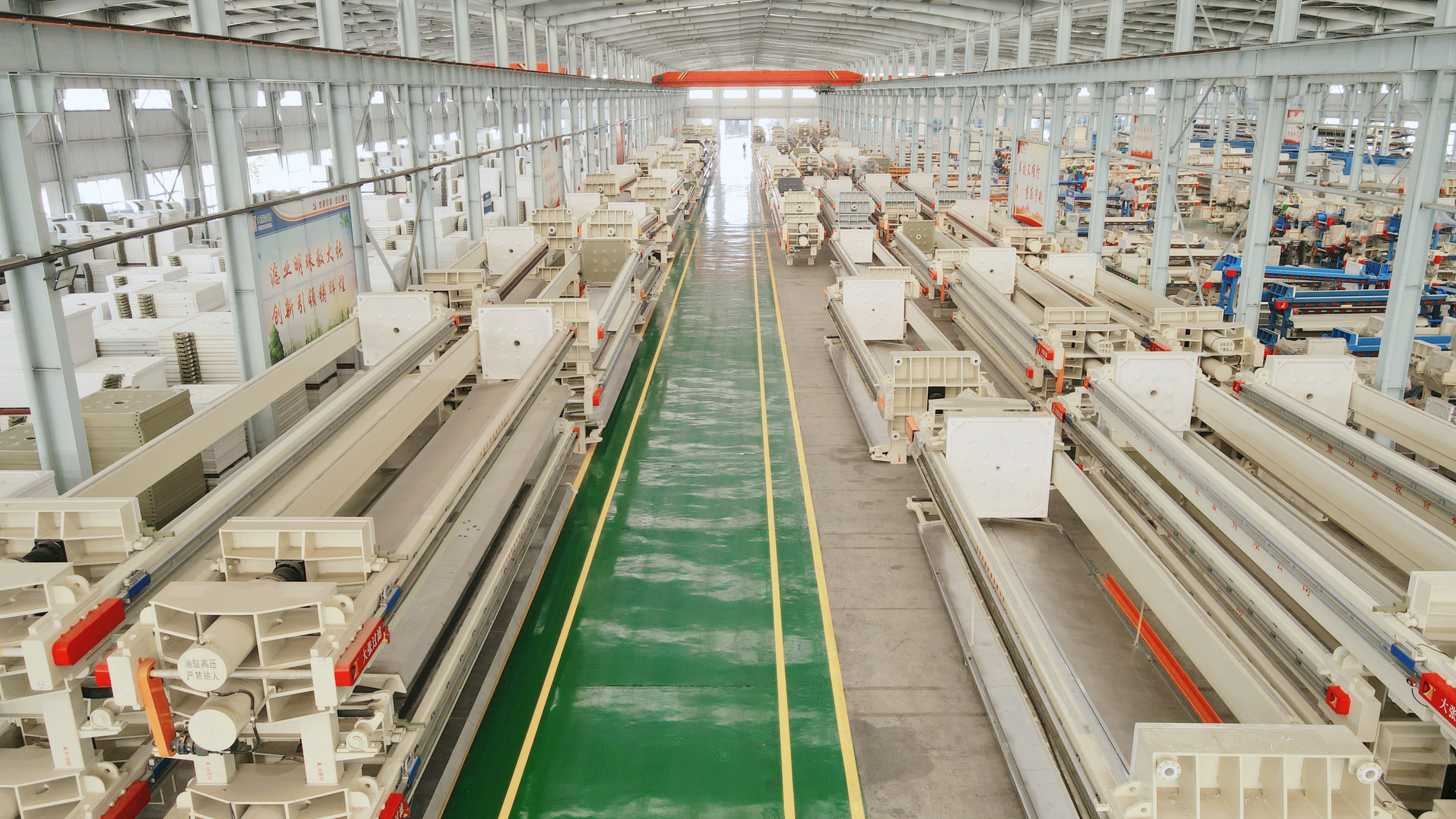 Manufacturing base view: membrane filter presses are assembled, tested and inspected in-house before shipment.
Why the Model Code Decides More Than the Brochure
Sizing errors are the most expensive mistakes in filter press procurement, and they are usually made before any supplier comparison begins. A press with too little filter area runs longer cycles and becomes the bottleneck of a dewatering line. A press with plates that are too large for the available floor space, or for the plant's feed pump capacity, creates installation and operating problems that no after-sales service can correct later.
The three variables are interdependent. Increasing plate size increases the volume of each filter chamber, which generally reduces the number of plates required to reach a given filter area but increases the length, weight and required closing force of the machine. Increasing filter area increases solids holding capacity per batch, but also increases capital cost and footprint. Increasing pressure improves dewatering performance, but raises the requirements placed on plates, frames, feed pumps, valves and filter cloth.
A model code such as XMAG30/870-UKB is a compressed record of choices already made on those three variables. Decoding it is therefore the fastest route to a correct specification review.
Decoding the XMAG Designation
Read against the published XMAG range, the designation pattern is straightforward: the first number corresponds to nominal filter area in square metres and the second to plate size in millimetres. XMAG30/870-UKB therefore sits at the small end of the series at 30 m² and 870 mm, while XMAG1000/2000-UKB sits at the top of the series at 1000 m² and 2000 mm.
| Parameter | XMAG series published data |
|---|---|
| Model range | XMAG30/870-UKB – XMAG1000/2000-UKB |
| Equipment type | Automatic membrane filter press |
| Filter area | 30–1000 m² |
| Plate size | 870–2000 mm |
| Feed pressure | 0.6–2.0 MPa |
| Squeezing pressure | 1.6 MPa |
| Membrane plate material | PP / TPE |
| Frame material | Q345 steel |
| Typical industries | Wastewater, mining, chemical, food, pharmaceutical, metallurgy |
Note on pressure: the feed pressure of 0.6–2.0 MPa and squeezing pressure of 1.6 MPa above are the published figures for the XMAG series. Other automatic platforms in the same portfolio are listed at filtration pressures up to 4.0 MPa, so buyers comparing quotations should confirm which platform — and which pressure class — each quoted model belongs to.
Plate Size: Aligning 870 mm to 2000 mm with Project Duty
Plate size determines how much cake can form in each chamber, how many chambers are needed to reach the required filter area, and how large the machine becomes. It is the variable most visible on the factory floor and the one most often chosen by habit rather than by calculation.
At the 870 mm end of the XMAG series, the configuration suits projects with limited floor space and moderate cake volumes. At the 2000 mm end, the configuration belongs to large-capacity duty, where a smaller number of larger chambers is used to reach high filter areas such as 1000 m². Neither end is inherently superior; the correct question is how much cake volume the process must produce per cycle and how much space, height and floor loading the plant can provide.
Three practical checks help:
- Cake volume per cycle. Estimate it from the solids load per batch and the cake thickness the process allows. This is the figure that plate size and plate count must satisfy.
- Machine footprint and discharge space. Larger plates produce larger cakes and require more room for cake discharge, conveyor access and, where fitted, cloth washing equipment.
- Frame and closing force. Larger plates carry greater loads. Both the XMAG membrane series and the XMAY chamber series in the same portfolio are listed with Q345 carbon steel frames at plate sizes up to 2000 mm.
A press intended for intermittent small-batch work does not benefit from the largest plate available, and a press serving a continuous dewatering line should not be sized at the smallest plate that technically meets the area requirement.
Filter Area: Sizing 30 m² to 1000 m² Against Throughput
Filter area is the total effective filtration surface of the plate pack. It determines how much solids can be captured in one cycle and, together with solids concentration and cycle time, how much material the press can process per shift. The XMAG series spans 30 m² to 1000 m², and the XMAY chamber filter press series in the same portfolio is listed with the same 30–1000 m² range and 870–2000 mm plates. Area alone therefore does not distinguish a membrane press from a chamber press — the dewatering mechanism does.
The sizing inputs a buyer should bring to the table are the dry solids load per batch, the allowable cycle time, the target cake moisture, and the maximum cake thickness the process permits. Capacity figures quoted without those inputs should be treated as indicative rather than guaranteed. Where a plant has a choice between one large press and two smaller presses, the trade-off is normally between floor space, redundancy and discharge logistics rather than filter area itself.
Small-area duty is served elsewhere in the portfolio, which is useful context when a membrane press is being considered for the wrong reason. A plate and frame fine filtration press covers 4–80 m² with 500–890 mm plates and cake thicknesses of 30–35 mm, and a chamber press covers 30–1000 m² with 870–2000 mm plates.
Pressure: Verify 0.6–4.0 MPa Before Purchase
Two pressure figures must be separated. Feed pressure is the pressure at which slurry is pumped into the chambers to form the cake. Squeezing pressure is the pressure applied behind the membrane afterwards to compress the cake and drive out additional liquid. They are different values, they load the machine differently, and both must be confirmed on the quotation.
The XMAG series is listed with a feed pressure range of 0.6–2.0 MPa and a squeezing pressure of 1.6 MPa. Membrane squeezing is the mechanism that separates this class of press from a chamber press: documented comparisons state that secondary membrane squeezing reduces cake moisture by roughly 5–15% and shortens filtration cycles compared with conventional chamber filter presses.
Across the wider portfolio, filtration pressure configurations extend to 4.0 MPa. The mobile filter cloth membrane filter press (1100/1500 series) is listed with 0.6–4.0 MPa filtering pressure, and the XMAY chamber filter press series is listed with the same 0.6–4.0 MPa range. The high-pressure round plate press is listed at 1.0–3.0 MPa filtration pressure with φ800–φ1000 mm plates and feed pressure up to 2.5 MPa, higher than typical square chamber filter presses.
Buyers should also confirm that the feed pump, piping, valves, filter cloth and plate rating all match the pressure class selected. A machine ordered near the top of the pressure range but fed by a pump sized for the bottom of the range will not deliver the expected cake moisture, and that mismatch is rarely visible in a side-by-side quotation comparison. The working rule is simple: establish the pressure your process actually needs within the available 0.6–4.0 MPa band, then verify that every component in the feed and squeeze circuit is rated for it.
Plates and Frame: PP/TPE Membrane Plates, Carbon Steel or Q345 Steel
The XMAG series is listed with PP/TPE membrane plates and a Q345 steel frame. Other product lines in the same portfolio use different combinations: the mobile filter cloth membrane filter press (1100/1500 series) and the water-flush filter press (320–2000 series) are both listed with PP filter plates and carbon steel frames, while fine filtration stainless steel presses use 304 or 316L contact parts.
Plate material development is a substantial part of the manufacturing capability behind these product lines. Dazhang has independently developed a processing-free sealed square polypropylene filter plate and obtained related invention patent protection, with the product entering the European market. The company has also developed high-temperature-resistant and toughened PP polymer filter plates for high-temperature, high-pressure and demanding industrial operating conditions, and a differentiated polymer filter plate project received a second prize in a 2022 Maker in China competition.
Temperature is a common constraint in plate selection. Documented comparisons state that membrane filter presses in this portfolio can withstand operating temperatures up to 120 °C, whereas conventional PP filter presses typically operate at a maximum of 80 °C — a relevant difference for oil, chemical and other hot-slurry applications. The trade-off is that this heavier, more robust construction contributes to higher initial equipment and transportation costs.
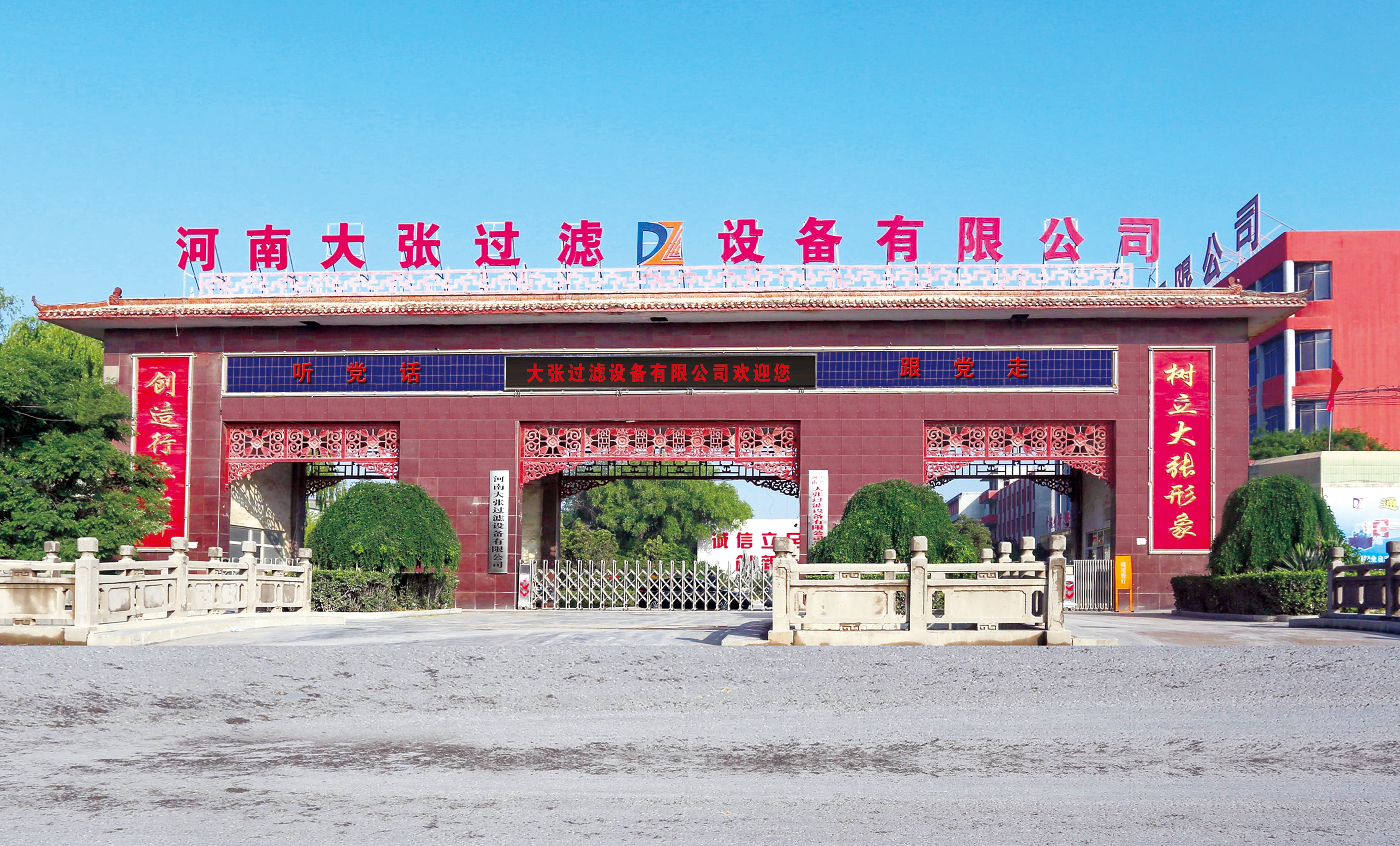 In-house production: mechanical processing, filter plate production and equipment assembly take place inside the same manufacturing system.
Because more than one frame material appears across the portfolio, buyers should require the quotation to state the plate material and the frame material explicitly for the specific model offered, rather than assuming that all automatic membrane presses share the same construction.
Automation and Drainage: What Fully Automatic Actually Includes
Automatic operation on a membrane filter press covers more than pushing a button. Hydraulic plate closing and pressure holding replace manual tightening; documented comparisons state that auto closing and pressure holding cut manual tightening work by about 80% compared with manual stainless steel plate and frame filter presses. Plate shifting and cake discharge can be automated, and automatic cloth traveling and washing reduces cloth clogging and manual cleaning compared with standard chamber filter presses, which helps maintain stable filtration efficiency over repeated cycles.
Quick-opening designs are a related automation choice. One filter press in the portfolio opens multiple plates in a single operation, reducing cake discharge time and overall cycle time, with a filtration area of 50–120 m² and 1000×1000 mm plates. The trade-off is a higher initial cost for the quick-opening mechanism.
Drainage configuration is a separate specification item. Some models list drainage as visible or invisible — the mobile filter cloth membrane filter press (1100/1500 series) is one example. Because drainage type is a design decision rather than an accessory, it should be confirmed model by model at the quotation stage instead of being assumed from a similar machine.
Buyers evaluating automation should list each function separately — plate closing, pressure holding, plate shifting, cake discharge, cloth washing and filtrate drainage — and confirm which are included, which are optional and which are absent on the model being compared. Two machines described as fully automatic can differ substantially in what the operator still has to do at the end of each cycle.
Application Fit: Where the XMAG Series Belongs
The XMAG series is listed for wastewater, mining, chemical, food, pharmaceutical and metallurgy applications. Published application notes for automatic membrane filter presses in the same portfolio place them in mining, coal slurry, FGD gypsum and sludge duty, with filtration areas of 100–1000 m² serving wastewater, mining, chemical and new energy projects where automatic cloth washing keeps filtration efficiency stable.
Membrane squeezing is most valuable where cake moisture has downstream cost consequences — transport weight, disposal charges, landfill limits or drying energy. Documented comparisons position membrane presses for sludge, mining, chemical and food applications that require deep dewatering, and note that the higher initial investment is offset by lower downstream dewatering cost.
- Municipal and industrial sludge dewatering, where cake moisture directly drives disposal cost.
- Mining and coal slurry duty, where high solids loads and continuous operation place heavy demands on the plate pack and frame.
- FGD gypsum and chemical processing, where consistent cake quality and a high degree of automation reduce manual intervention.
- Food, pharmaceutical and metallurgy, where filtration quality must be consistent and cleaning requirements are stricter.
Market Context: Why Dewatering Demand Keeps Rising
The global membrane filtration market was valued at USD 19.4 billion in 2025, with Asia Pacific accounting for 36.5% of revenue that year (Grand View Research). Filter presses account for approximately 22% of the global sludge dewatering system market as of 2024. China's exports of filter press machines under HS 84212910 reached USD 170,236,194 in 2023, which underlines how much of global filter press supply is manufactured in China.
Two implications follow for buyers. First, equipment availability is not the constraint; specification accuracy is. Second, because manufacturing capacity is broad, comparing suppliers on published parameters rather than on marketing claims is both possible and necessary.
One caution on standards is worth stating. ISO 7704:2023 specifies requirements for performance testing of membrane filters used for water quality analysis. It applies to a different product category from filter presses, and buyers should not treat it as evidence of filter press compliance or performance.
Membrane vs. Chamber vs. Plate-and-Frame: A Buyer Comparison
| Comparison dimension | Automatic membrane (XMAG type) | Recessed chamber (XMAY type) | Plate and frame fine filtration |
|---|---|---|---|
| Dewatering mechanism | Feed pressure plus secondary membrane squeezing | Feed pressure only | Feed pressure with filter paper support |
| Effect on cake moisture | Documented reduction of about 5–15% versus conventional chamber presses | Baseline for comparison | Not positioned for high-pressure dewatering |
| Filter area listed | 30–1000 m² | 30–1000 m² | 4–80 m² |
| Plate size listed | 870–2000 mm | 870–2000 mm | 500–890 mm |
| Pressure listed | Feed 0.6–2.0 MPa; squeezing 1.6 MPa | 0.6–4.0 MPa | ≤0.5 MPa |
| Operation | Automatic | Automatic, semi-automatic or manual | Typically manual cake discharge |
| Investment profile | Higher initial cost, lower downstream dewatering cost | Lower investment and operating cost | Cost-effective for small fine-filtration systems |
| Typical fit | Sludge, mining, chemical, food, metallurgy | Standard dewatering duty | Food, beverage, pharmaceutical, fine chemical clarification |
Boundaries and Trade-offs to Accept Up Front
An automatic membrane filter press is not the lowest-cost route to every filtration problem, and three documented trade-offs are worth stating plainly.
- Higher initial investment. Membrane presses cost more up front than chamber filter presses. The case for them rests on lower downstream dewatering cost and shorter filtration cycles.
- More complex maintenance. The membrane system and its automation add maintenance complexity compared with simpler press designs, even where automatic cloth washing reduces routine manual work.
- Higher weight and transport cost. High-temperature-resistant, robust construction increases machine weight, which contributes to higher equipment and transportation costs compared with conventional PP filter presses.
There is also a clear duty boundary. Where the objective is clarification of a low-solids liquid rather than dewatering of a slurry, a plate and frame filter press supporting filter paper at filtration pressures up to 0.5 MPa is designed for that purpose, with filtration areas of 4–80 m², and it is documented as adequate for food, beverage, pharmaceutical and fine chemical industries. Where standard dewatering is sufficient and initial investment cost is the priority, a chamber filter press offers lower investment and operating cost with a simpler, proven structure and easier maintenance.
Future Outlook
Three directions are visible from the current product documentation. First, automation keeps expanding from plate movement into cloth management: automatic cloth traveling and washing is already positioned as a way to reduce clogging and manual cleaning, and it is likely to become a default expectation in heavy-duty sludge and mining projects rather than an optional extra. Second, plate material development remains the main lever for extending the operating window. High-temperature-resistant and toughened PP plate technologies, and the patented processing-free sealed square polypropylene plate already supplied into the European market, show where the engineering effort is concentrated. Third, the pressure range itself continues to broaden: with filtration pressures up to 4.0 MPa available across the portfolio, buyers are likely to see sharper differentiation between standard dewatering duty and high-pressure, low-moisture duty in future quotations.
For procurement teams, the practical consequence is that specification discipline matters more each year. A model code read correctly at the enquiry stage removes most of the risk that a press will arrive configured for the wrong area, the wrong plate size or the wrong pressure class.
FAQ
What do the numbers in XMAG30/870-UKB and XMAG1000/2000-UKB mean?
The published XMAG range covers 30–1000 m² of filter area and 870–2000 mm plate sizes, and the series runs from XMAG30/870-UKB to XMAG1000/2000-UKB. Read against that range, the first number corresponds to nominal filter area in square metres and the second to plate size in millimetres. The suffix identifies the model variant within the series.
How do I decide between an 870 mm plate and a 2000 mm plate?
Plate size sets the cake volume available in each chamber and, for a given total filter area, the number of plates and the overall length of the machine. Start from the cake volume required per cycle, the cake thickness the process allows, and the floor space and headroom available at site, then select the smallest plate that delivers the required throughput. Both ends of the range belong to the same XMAG series, so this is a sizing decision rather than a product-tier decision.
How much filter area does my project need?
Filter area is the total effective filtration surface of the plate pack, and it drives how much solids the press holds per batch and how long a cycle takes. The sizing inputs are the dry solids load per batch, the acceptable cycle time, the target cake moisture and the allowable cake thickness. Published filter area options run from 30 m² to 1000 m² in the XMAG membrane range and in the XMAY chamber range. Buyers should ask for the cycle time assumptions behind any capacity figure rather than accepting a headline number.
Which pressure values should be checked before ordering?
Two figures matter. Feed pressure fills the chambers, and squeezing pressure is applied behind the membrane afterwards. The XMAG series is listed with feed pressure of 0.6–2.0 MPa and squeezing pressure of 1.6 MPa, while other automatic platforms in the same portfolio are listed at 0.6–4.0 MPa filtration pressure. Both values should appear on the quotation, together with confirmation that the feed pump, piping, valves and filter cloth are rated for the pressure actually selected.
Are the plates polypropylene or TPE, and is the frame carbon steel or Q345 steel?
The XMAG series is listed with a PP/TPE membrane plate and a Q345 steel frame. Other lines in the same portfolio differ: the mobile filter cloth membrane filter press (1100/1500 series) and the water-flush filter press (320–2000 series) are listed with PP filter plates and carbon steel frames, while fine filtration stainless steel presses use 304 or 316L contact parts. Because several combinations exist, the plate material and frame material should be stated explicitly for the specific model quoted.
What does automatic operation actually cover on a membrane filter press?
Automatic operation in this equipment class covers hydraulic plate closing and pressure holding, plate shifting and cake discharge, and in some configurations automatic cloth traveling and washing. Published comparisons state that hydraulic auto closing and pressure holding cut manual tightening work by about 80% compared with manual stainless steel plate and frame filter presses, and that automatic cloth washing reduces clogging and manual cleaning compared with standard chamber filter presses. The exact package varies by model and should be confirmed function by function.
What is the difference between visible and invisible drainage?
Some models in the portfolio list drainage as visible or invisible; the mobile filter cloth membrane filter press (1100/1500 series) is one documented example. Both options are offered configurations rather than accessories, and the type affects how filtrate is handled at the plate pack. Buyers should confirm which drainage configuration the quoted model carries instead of assuming it from a similar machine.
When is a membrane filter press the wrong choice?
When the goal is clarification of a low-solids liquid rather than dewatering of a slurry. A plate and frame filter press supporting filter paper operates at filtration pressures up to 0.5 MPa over 4–80 m² of filtration area and is designed for fine filtration in food, beverage, pharmaceutical and fine chemical industries. When standard dewatering is sufficient and lowest investment and simplest maintenance are the priorities, a chamber filter press is documented as having lower investment and operating cost with a simpler structure. Membrane presses justify their higher initial cost where cake moisture, cycle time or automation requirements are demanding.
What information should be supplied to obtain an accurate model recommendation?
Feed material and solids concentration, target cake moisture, required throughput or batch volume, available floor space and height, required filtration and squeezing pressure, automation level, drainage configuration, and plate and frame material preference. Model selection is documented as depending on feed property, required cake moisture, processing capacity, degree of automation and budget, and recommendations are issued against the working conditions actually shared by the buyer.
For buyers who want the full product and capability detail behind the XMAG series before shortlisting models, the company profile can be downloaded here: DAZHANG Filtration Company Profile (PDF).