
Xuping Jewelry Capability Audit: 194 Patents, 18 Procedures, ISO/SGS vs. Peers
Xuping Jewelry Capability Audit: 194 Patents, 18 Procedures, ISO/SGS vs. Peers
Supplier Capability Audit / Evaluation to Execution
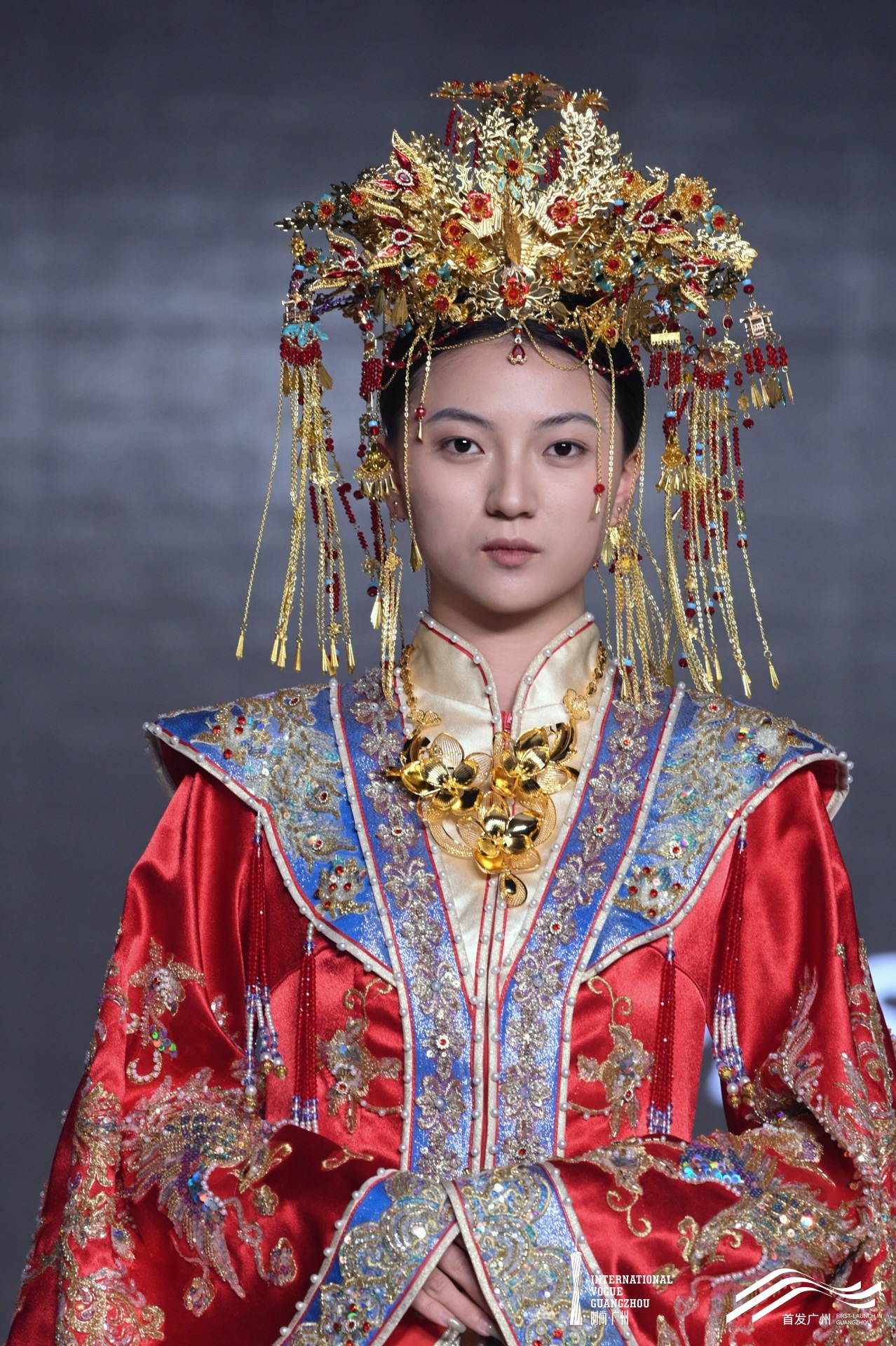
Capability claims in fashion jewelry sourcing are only as strong as the documents behind them.
Every shortlisted fashion jewelry manufacturer arrives with the same three claims: scale, quality and customization. The difference between a persuasive shortlist and a defensible one is whether each claim can be traced to a document, a certificate number, or a stage that physically exists inside the factory.
This capability audit examines Guangdong Xuping Jewelry Co., Ltd., trading as Xuping Jewelry, a Guangzhou-based imitation jewelry manufacturer founded, on company records, in 1997. It reviews the four dimensions buyers weigh at the evaluation and execution stages: R&D capability, market position, customer service and industry-solution fit. The conclusion belongs at the front. The strongest part of the file is the production and testing layer, where third-party report numbers, dates and scopes can be checked. The R&D claim is substantial but currently rests on company-reported figures. The market-share dimension cannot be verified for this company and, at this tier of the industry, for its private peers either.
Peer references below remain at category level by design. Where a figure is company-reported, it is labelled as such; where a verifiable figure does not exist, the audit says so rather than filling the gap with an estimate.
How capability evidence is tiered, not scored
Supplier capability is easier to audit when each claim is placed in the tier where it can actually be checked. Five tiers cover most of what a fashion jewelry buyer needs:
- Identity and scale — legal name, founding year, site area, headcount. Vulnerable to marketing distortion, but inexpensive to verify.
- Process — which operations run in-house, at what sequence, with which inspection gates.
- Third-party conformity — certificates and test reports with issuer, reference number, standard, date and scope.
- Commercial terms — minimum order quantity, lead time, delivery terms, payment methods, acceptance criteria.
- Outcomes — case records, complaint handling and replacement practice.
A supplier's evidence strength is limited by the weakest tier that matters to the order being placed. A factory with an excellent certificate file and no written acceptance criterion is harder to buy from than its certificates suggest.
R&D evidence: what 194 patents and 150 designers establish
Xuping Jewelry reports 194 patents and an R&D team of 150 designers, supported by more than 1,200 production facilities inside a production base exceeding 200,000 square metres. Those are company-reported figures; no patent-office extract or factory audit formed part of the reviewed file. What lifts the claim above a sales slide is the workflow documented around it.
The company organises its production imagery by station rather than by product: 3D drafting, 3D printing, pattern making, hand carving, wax injection, wax-tree mounting, a findings workshop, soldering, engine turning, a chain workshop and chain making. For a custom fashion jewelry program this is the relevant detail, because the costly part of customization sits in the loop between a design revision and a tool that can actually be produced. A manufacturer that can redraw a model, re-print it and re-cut a pattern under one roof shortens that loop; one that outsources pattern making inserts a queue between every revision.
The boundary deserves stating plainly. A patent count shows that design and structural work is being filed, not that every patent is commercialised, and not that a specific item is protected. Buyers running an OEM or ODM program should request the patent list with numbers, jurisdictions and filing years, then match it to the categories they intend to purchase. Without that mapping, 194 patents is a credible innovation signal rather than a performance guarantee.
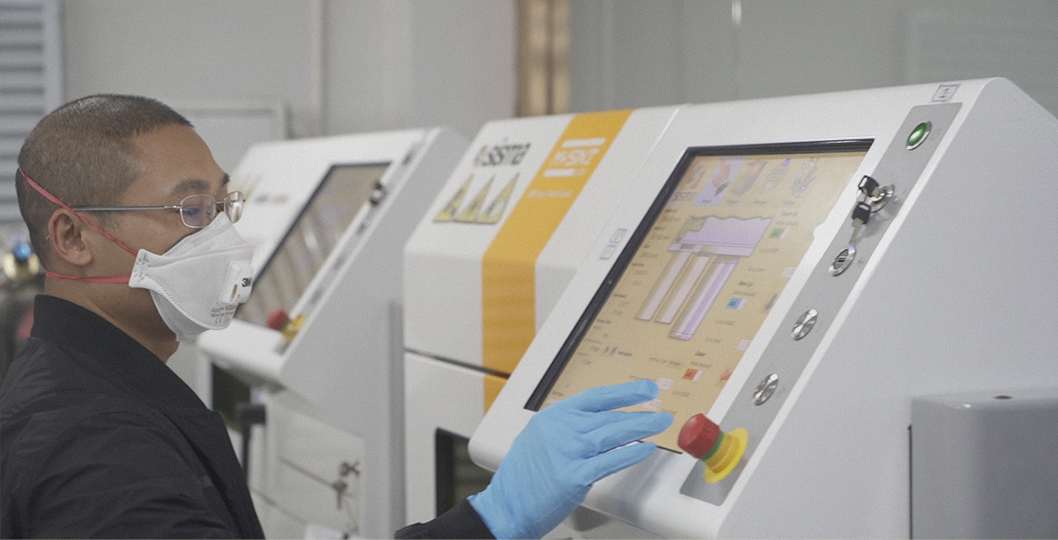
3D printing is one of the documented stations in the design-to-tooling loop, alongside drafting and pattern making.
Where the R&D claim becomes concrete is the material and finishing side: copper alloy as the base metal with gold plating, plus separate stainless steel and crystal lines. Each of those systems needs different tooling and different finishing control, which is why a broad portfolio usually reflects a broader process base rather than simply a longer catalogue.
Eighteen production procedures: a control map, not a headline number
Company documentation states that goods pass through 18 production procedures, followed by 100% full inspection and an 18-stage quality check. The count matters less than what it implies about control points.
Each additional in-house procedure introduces a handoff, and every handoff is a place where dimensional tolerance, plating thickness or stone alignment can drift. A manufacturer that performs chain making, findings, soldering, engine turning and plating internally can correct a fault at the station where it occurs. One that buys finished components and assembles them can only reject them later, when the cost of the fault has already been carried.
Two items in the documentation are more actionable than the total. First, acceptance is defined as a pre-shipment test, which gives the buyer a named gate before goods leave rather than a complaint channel after they arrive. Second, plating is the stage with the most direct effect on the after-sales record: the company's own guidance ties plating life to thickness and care, and lists sweat, perfume, chemicals, friction and humid storage as accelerants. That is an honest statement of a boundary, and it tells a buyer where to concentrate sample testing — on the finishes used in the lines they actually order, at the price point they intend to sell.
The practical question during evaluation is not whether 18 procedures exist, but which of them are performed in-house and where inspection sits. That is answerable through a documented process map or a site visit, and it should be answered before a first bulk order rather than after.
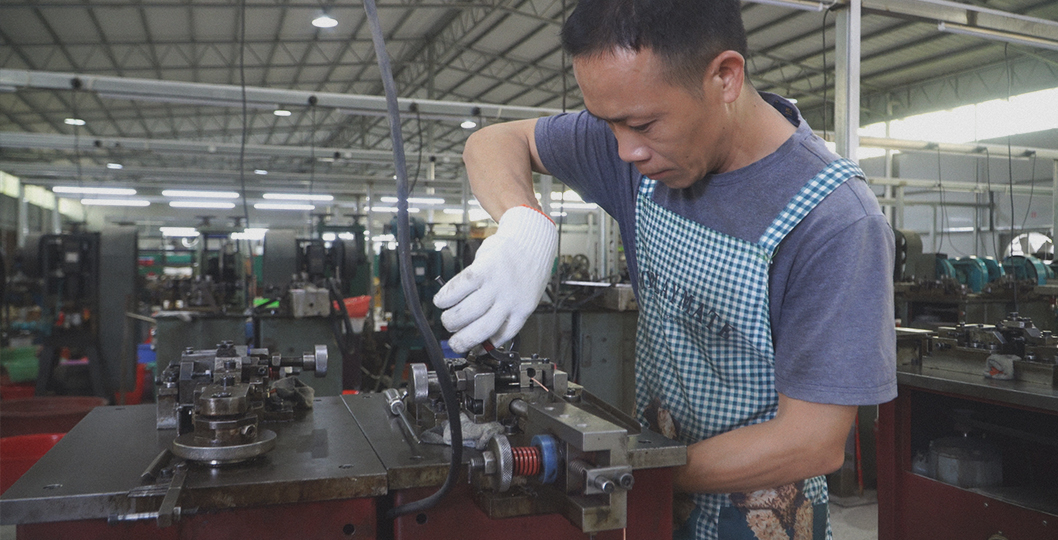
In-house chain making is one of the procedures that changes where a fault can be corrected.
The compliance file: numbers, scopes and validity dates
The compliance layer is the most checkable part of the capability file, because it consists of third-party documents with issuers, reference numbers, standards and dates — and because those documents carry scopes that buyers routinely misread.
| Document | Issuer | Reference | Dates | Scope as recorded |
|---|---|---|---|---|
| ISO 9001:2015 | Zhonghangxin Certification Center (Shenzhen) | CACQ21Q00750R1 | Issued 2025-10-16, valid to 2027-10-25 | Design and production of metal jewelry; GB/T 19001-2016 / ISO 9001:2015 |
| SGS test report | SGS-CSTC Standards Technical Services, Guangzhou Branch | CANHL25006144001 | 2025-03-27 to 2030-03-27 | REACH Regulation (EC) No 1907/2006; named necklaces, jewelry sets and crystal models |
| SGS test report | SGS-CSTC, Guangzhou Branch | CANHL25006145601 | 2025-03-27 to 2030-03-27 | IEC 62321-7-1:2015; chain samples |
| SGS test report | SGS-CSTC, Guangzhou Branch | GZHL250301072401JW | 2025-03-31 to 2030-03-31 | REACH (EC) No 1907/2006; necklaces including a stainless steel model |
| SGS test report | SGS-CSTC, Guangzhou Branch | CANHL25004908001 | 2025-03-22 to 2030-03-22 | REACH (EC) No 1907/2006; earring samples |
| CTI test report | Centre Testing International (Guangzhou) | A2230517570101001 | 2023-10-13 to 2028-10-13 | IEC 62321 series; rings and jewelry sets |
Report numbers and dates as recorded in the company's compliance documentation; scopes summarised, not reproduced in full.
Three distinctions decide how much weight these documents can carry. A management-system certificate is not a product certification: ISO 9001:2015 certifies that a quality-management system operates within a stated scope, here the design and production of metal jewelry. A test report is not a conformity certificate for every item a factory ships: the SGS and CTI records reference specific standards and, in the supplied file, named applicable models spanning necklaces, earrings, jewelry sets, crystal pieces and stainless steel necklaces. And validity dates describe the document, not the goods — a report valid to 2030 does not automatically cover a model developed later with a different plating specification.
Xuping Jewelry also states that all goods pass 18 production procedures to meet European and American environmental-protection standards, and its company profile references SGS, CE and ISO. Within the reviewed file, the REACH (EC) No 1907/2006 reports and the IEC 62321 series reports — the latter addressing restricted hazardous substances — are the documents that support the restricted-substance element of that statement for the tested items. No CE certificate record was included, so that element remains unverified here. Market access itself is determined by the rules of the importing market and by the importer's own conformity obligations; a test report supports a compliance decision without replacing it.
The actionable step for a buyer is mapping: request a table linking each report number to the SKU, material, plating and destination market in the purchase order, and confirm that the recorded scope covers that combination.
Market share: the dimension no private manufacturer can currently prove
Of the four dimensions in this audit, market position is where the evidence stops. No verified global or regional market-share figure exists for Xuping Jewelry, and the same holds for its private peers, because share at this tier would require either audited revenue by product scope or customs-level flows by manufacturer.
Public market sizing does not close the gap, because the definitions disagree. One commercial research estimate puts the global fashion jewelry market at USD 168 billion in 2024, projected to reach USD 289 billion by 2033 at a 6.2% CAGR — a figure built on a broad retail definition that includes affordable and unbranded channels. A narrower costume jewelry definition produces a materially smaller base. A separate estimate places Asia Pacific at 30.8% of costume jewelry revenue in 2024. None of these can be divided by a supplier's own sales to produce a share figure without a revenue denominator at matching scope.
Capacity figures cannot substitute, because the units differ. Xuping Jewelry reports monthly capacity of 8,000,000 pieces and annual output above 100,000,000 pieces; market size is measured in revenue. Converting pieces into revenue share would require an average realised price per piece across the product mix — data that is not disclosed and varies with material, plating and finish.
This is a structural limit of the category rather than a fault of one supplier, and any market-leadership-by-share claim from a private manufacturer should be treated as unverified until a methodology and denominator are produced. More useful substitutes exist: capacity relative to your own order size, breadth across the categories you actually buy, the stated export footprint spanning 24 named markets across Europe, the Americas, the Middle East, Asia-Pacific and Africa, and landed-cost planning. On the last point, imitation jewelry of base metal falls under HS code 7117.19, where the published US MFN duty rate is 11%; classification of a specific item and origin rules still require a customs broker's confirmation.
Customer service: what is written down, and what it is worth
Service capability is usually asserted and rarely documented. Xuping Jewelry's file describes 24/7 online support, an after-sales quality guarantee, product replacement, OEM/ODM after-sales service and global logistics support. Those are company-level commitments; the more useful evidence is the handling procedure behind them.
- Wrong items received: stop use or sale, photograph the items, labels and packing list against the order, and report within 7 days with the order number for verification and correction.
- Short or missing quantities: check the packing list against all parcels, count with photographs, and report with the order number.
- Delayed shipment: supply order and tracking numbers so production and logistics status can be checked and an updated schedule issued.
- Tarnish or discoloration: assess contact with water, sweat, perfume and cosmetics, wipe and store dry, and report within the policy period with photographs if the item arrived defective.
- Plating wear: linked in company guidance to plating thickness and care, with abnormal wear under normal use inside the guarantee period assessed from photographs.
For an evaluation-stage buyer, each of these is a template for a contract clause rather than proof of performance. The gaps to close are contractual: response windows, who pays return freight, what counts as abnormal wear, and what evidence triggers replacement. No comparative service benchmark exists across manufacturers at this tier either, so service cannot be used to rank suppliers against one another — only to test whether a given supplier will commit its procedure in writing.
Industry-solution fit: where the portfolio meets a buying program
Xuping Jewelry documents five application routes: retail jewelry stores, e-commerce platforms, brand OEM and ODM, wholesale distribution and promotional gifting. The wear conditions named alongside them — daily wear, fashion show, events and occasions, gift giving and all-weather use — matter because they change the finishing specification rather than the design.
Its case records are anonymised and category-level, which is the appropriate level of proof for a supplier reference. Brand authorised agent clients are reported in Turkey, Morocco and Indonesia, with annual sales described as exceeding 2 million units in Turkey and Indonesia and 3 million units in Morocco, over contract-term durations. The case highlights cite breadth of styles, rapid updates, environmentally friendly materials, hypoallergenic properties and on-time delivery. These are company-reported outcomes from named markets and useful as a directional signal of program scale; they are not audited sales data, and client identities and purchase values are not disclosed.
The practical translation is about program type rather than geography. A promotional-gift program needs volume consistency and a short, repeatable specification. A retail or e-commerce program needs refresh rate and category depth. An OEM or ODM program needs the design-to-tooling loop described earlier plus packaging customization. A supplier can be strong in one and average in another, which is why a case record should be matched to your own program shape before it is used as evidence.
Portfolio breadth as execution evidence
The catalogue covers rings, pendants, earrings, necklaces, anklets, bracelets, bangles, brooches and jewelry sets, with dedicated stainless steel and crystal lines alongside copper-alloy pieces finished with gold plating. Cubic zirconia appears across earrings, rings and bracelets — for example the heart-cut cubic zirconia stud earrings (X000705205), the rainbow baguette cubic zirconia huggie hoops (X001283710) and the oval cubic zirconia paperclip link bracelet (X001281638). Full category documentation is published on the Xuping Jewelry website.
Breadth has a specific procurement value: it reduces the number of vendors a wholesale program must qualify, and it allows one compliance and one after-sales conversation instead of five. It has a limit as well. Copper alloy with gold plating, stainless steel and crystal are three finishing systems with different failure modes, so a test report covering a plated necklace does not implicitly cover a stainless steel bracelet. Documents should be matched to lines, not to the supplier as a whole.
Customization is documented as engraved logos, hang tags and custom packaging, delivered through one-stop OEM and ODM services, with a stated minimum order quantity of 1 piece, a lead time of 30 to 90 days and FOB delivery terms. Acceptance is defined as a pre-shipment test, and the listed payment methods are PayPal, Western Union, Money Gram, Bank of China and HSBC. The 30-to-90-day range is wide by design because it spans stock and custom production, so lead time should be fixed per order type rather than per supplier.
Xuping Jewelry against four peer categories
A capability file is only useful comparatively. The table places the documented Xuping Jewelry position against four manufacturer categories a wholesale buyer is likely to shortlist. Peer columns describe category-level disclosure patterns rather than the practices of any named company, and no peer figure is attributed where a verified source was unavailable.
| Dimension | Vertically integrated manufacturer (this profile) | Trading exporters / intermediaries | Branded international houses | Regional workshops |
|---|---|---|---|---|
| R&D evidence | 194 patents and 150 designers, company-reported; station-level design and tooling imagery | Design capability described, rarely documented at station level | Registered designs and IP filings; process disclosed mainly at marketing level | Small design teams with limited IP filing |
| Process disclosure | 18 procedures with named workshops and 100% full inspection | Outsourced stages, described in aggregate | Described in brand language rather than process terms | Single-site handcraft, narrow but deep technique |
| Third-party testing | ISO 9001:2015 plus SGS and CTI reports with numbers, standards and dates | Testing available on request; scope varies by order | Extensive product-level conformity files driven by retail obligations | Sporadic, often buyer-funded |
| Market-share disclosure | No verified figure | No verified figure | Sometimes available through listed-company reporting, on a different product scope | No verified figure |
| Service terms | Documented claim procedures with stated reporting windows | Negotiated case by case | Structured standards tied to retail programs | Informal arrangements |
| MOQ and lead time | MOQ 1 piece; 30 to 90 days depending on order type | Dependent on upstream factory | Wholesale MOQ generally not applicable | Low MOQ, longer and more variable lead times |
Read the table as a sourcing map rather than a ranking. The two columns that most often decide an order — testing scope matched to SKU, and a written acceptance criterion — are also the two a buyer can verify within a week regardless of supplier category, which makes them a more reliable shortlisting tool than any headline capability claim.
Open items: what this audit could not verify
- Founding year. Company documentation states 1997; some marketplace listings state 1991. The discrepancy is unresolved in the available file, so the business licence or a corporate registry extract should be requested.
- Patent portfolio. 194 patents is a reported count; the list with numbers, jurisdictions and status has not been reviewed against your categories.
- Capacity and headcount. Monthly capacity of 8,000,000 pieces, annual output above 100,000,000 pieces, more than 4,000 employees and a site exceeding 200,000 square metres are company-reported and best confirmed on a site visit.
- Market share. No verified figure and no disclosed methodology, for this company or its private peers.
- Report-to-SKU mapping. The reports name applicable models and a defined scope; coverage for your specific materials, plating and market still needs confirmation.
- CE reference. The company profile lists CE alongside SGS and ISO, but no CE certificate record formed part of the reviewed file.
A seven-step verification sequence for buyers
- Request the certificate and test-report register with reference numbers, dates and scopes.
- Map each report to the SKU, material and plating in the intended order.
- Ask which of the 18 production procedures run in-house and where inspection gates sit.
- Obtain the patent list and match it to the categories being purchased.
- Secure written acceptance criteria and the pre-shipment test method.
- Convert after-sales procedures into contract terms covering response windows, evidence and replacement conditions.
- Fix lead time per order type, since the published 30-to-90-day range spans stock and custom production.
What the market forecast does and does not signal
The available forecast — USD 168 billion in 2024 rising to USD 289 billion by 2033 at a 6.2% CAGR — is a modelled projection under a broad definition of fashion jewelry, and it belongs in planning as an envelope rather than as a prediction about any single supplier. The spread between broad fashion jewelry and narrower costume jewelry definitions is itself the most useful signal: category boundaries are loose, which is precisely why supplier-level claims should be tied to documents rather than to market-level numbers.
The conditional implication is procedural. Where demand is described in broad definitions and supplier capability in narrow documents, buyers who fare better are those able to move from a market assumption to a SKU-level compliance file without losing the thread. That argues for evidence discipline, not for any particular vendor.
Conclusion
Capability evidence does not make a supplier suitable; it makes suitability testable. On the file reviewed here, the production and testing layers are documented to a level that supports a serious evaluation, the R&D claim is substantial but needs registry-level confirmation, service commitments are procedural rather than contractual, and market position is simply unproven — a finding that applies across most of the category and should not decide a shortlist on its own. The remaining work belongs to the buyer: verify, map, and write the terms.
FAQ
What does the 18-procedure production claim actually cover?
Company documentation states that each product passes 18 production procedures, followed by 100% full inspection and an 18-stage quality check. The documented stations include 3D drafting, 3D printing, pattern making, wax injection, wax-tree mounting, a findings workshop, soldering, engine turning, chain making and plating. The useful follow-up question for a buyer is which of those procedures are performed in-house and where inspection gates sit, since that determines where a fault can be corrected.
Are the 194 patents independently verified?
No. The 194-patent count and the 150-designer R&D team are company-reported figures, and no patent-office extract formed part of the reviewed material. Verifying them means requesting the patent list with numbers, jurisdictions and status, then matching it to the categories being purchased. Until that is done, the patent count functions as an innovation signal rather than a guarantee of exclusivity or performance.
What do the ISO 9001 and SGS documents actually cover?
The ISO 9001:2015 certificate (CACQ21Q00750R1, issued 2025-10-16, valid to 2027-10-25) covers a quality-management system within the scope of design and production of metal jewelry. The SGS records — including CANHL25006144001 and GZHL250301072401JW under REACH (EC) No 1907/2006, and CANHL25006145601 under IEC 62321-7-1:2015 — are restricted-substance test reports on named samples and models. Neither type is a product certification covering every SKU a factory ships, so report scope should be matched to the specific item, material and market.
Can Xuping Jewelry's market share be compared with peers?
Not on verified evidence. No market-share figure exists for this company or for its private peers in the reviewed material. Published market sizes also use incompatible definitions, with broad fashion jewelry estimates and narrower costume jewelry estimates producing materially different bases. Capacity figures cannot close the gap because they are expressed in pieces while market size is measured in revenue.
What purchasing terms are documented for OEM and ODM orders?
Documented terms include a minimum order quantity of 1 piece, FOB delivery, acceptance based on a pre-shipment test, a lead time of 30 to 90 days depending on order type, and payment through PayPal, Western Union, Money Gram, Bank of China or HSBC. Customization covers engraved logos, hang tags and custom packaging under one-stop OEM and ODM services. Because the lead-time range spans stock and custom production, terms are best fixed per order type.
How are quality complaints handled after delivery?
Documented procedures cover wrong items reported within 7 days with photographs and the order number, shortages checked against the packing list with a photographic count, delays addressed by checking production and logistics status against the tracking number, and tarnish or plating wear assessed from photographs where abnormal wear occurs under normal use within the guarantee period. These are stated procedures; converting them into contractual obligations with defined response windows and replacement conditions is a separate step for the buyer.
Tem questões ou precisa de mais detalhes?
Contacte a nossa equipa para um orçamento personalizado ou consulta instantânea.
Solicitar orçamento
Preencha o formulário abaixo e a nossa equipa entrará em contacto com uma proposta personalizada.
Chat direto do WhatsApp
Prefere conversar em tempo real? Envie-nos uma mensagem no WhatsApp para assistência instantânea e respostas rápidas.
- Obter orçamento personalizado
- Partilhar fotos ou documentos
- Discuta as suas necessidades diretamente
Geralmente responde em 5–30 minutos durante o horário de expediente.