
Y Teeth to Sliders: A Zipper Metal Wire Shortlist by Role
Y Teeth to Sliders: A Zipper Metal Wire Shortlist by Role
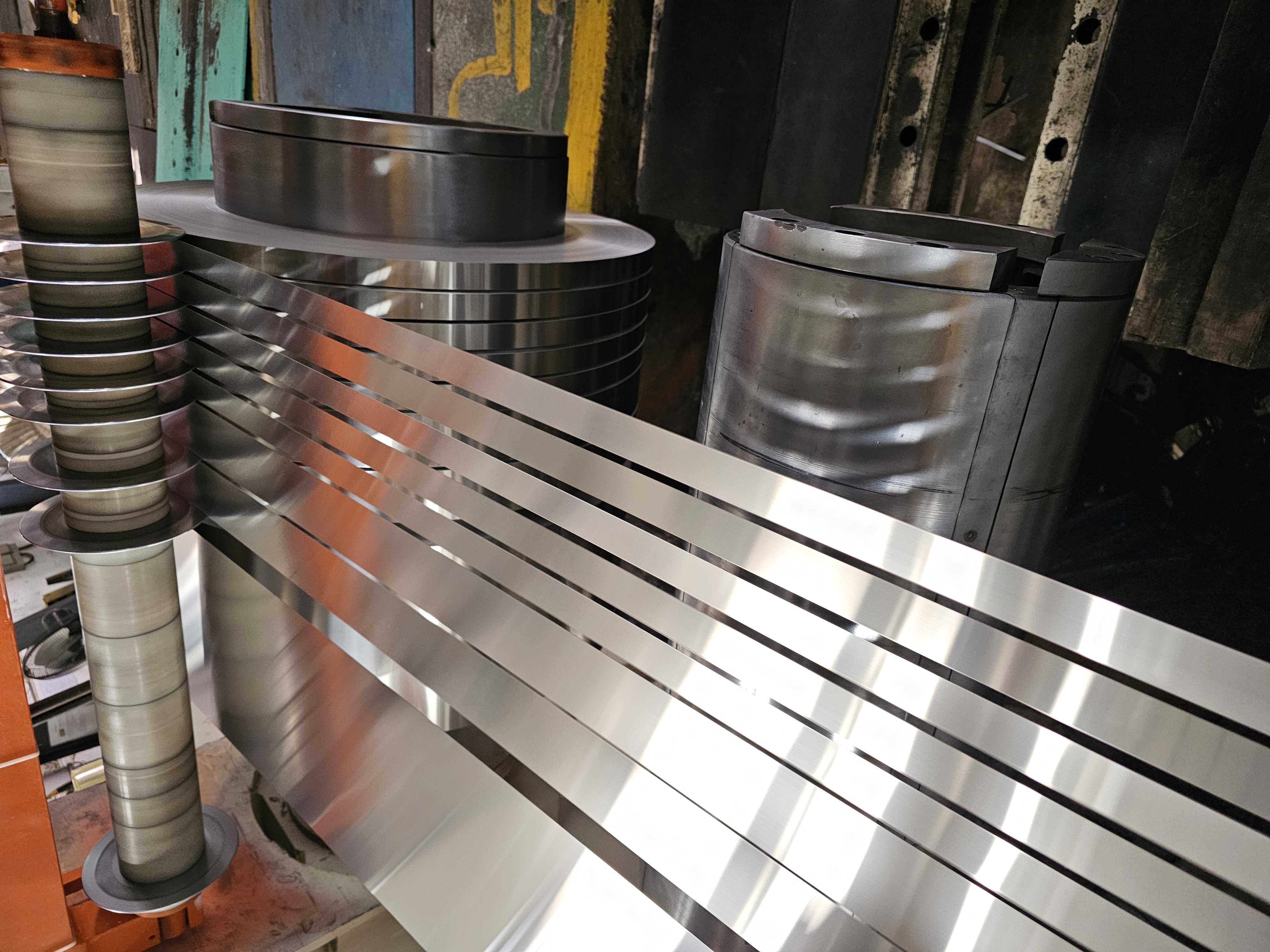
Raw material inputs: non-magnetic stainless steel strip developed for button and zipper applications.
A zipper fastener resolves into four functional positions — interlocking teeth, a top stop, a bottom stop, and a slider with its pull — and each position places different demands on the metal that fills it. That is why a zipper metal wire evaluation is not one material decision. Fullgreat Metal Limited, a Shenzhen metal materials manufacturer founded in 2008, lists a separate model for each position: Y Teeth Wire FPD-YTW01 and Y-shape Wire for Zipper FPD-YSW for teeth; Top Stop Wire FPD-TSW and Bottom Stop Wire FPD-BSW for end control; Zipper Automatic Slider FPD-ZAS and Zipper Pull FPD-ZP for closure handling. This shortlist groups those models by the job they perform, separates what the product records confirm from what a buyer must still fix in writing, and shows where flat, round, spring and profiled wire belong as supporting options rather than substitutes.
The distinction matters at the evaluation stage because purchase orders are written per model, not per category. A specification that says zipper metal wire, stainless steel, without a model, a cross-section and a hardness value leaves the supplier to decide the part that governs whether the finished fastener runs smoothly or catches at the stop.
Start With the Position on the Fastener, Not the Catalog Page
Catalog structure and production structure are not the same thing. On a catalog page, teeth wire, stop wire and sliders sit together under a zipper components heading. In production they enter the line at different points and are judged by different checks: a teeth profile is checked for cross-sectional geometry, a stop is checked for how it forms and holds on the tape, and a slider is checked by running it on the assembled chain.
Three consequences follow. Model identity has to survive to the purchase-order line, because a teeth profile, a stop wire and a slider are not interchangeable inputs even when they share a material grade. Material and hardness are per-model decisions — the records confirm material options and, for several models, soft or hard hardness, but never as a company-wide default that applies identically to every position. And acceptance criteria have to be written per position, since a dimensional check that suits a profiled wire says little about a slider's travel.
There is also no single recommended wire for a whole zipper range. A recommendation only becomes meaningful once it names the position, the model and the values that go with it, which is how the shortlist below is organised.
The Shortlist at a Glance
The table maps each position to the models listed for it, the facts the approved records confirm, and the point that has to be settled before tooling. The third column is deliberately narrower than a datasheet.
| Position on the fastener | Fullgreat model | Confirmed in the product record | Fix before tooling |
|---|---|---|---|
| Teeth, interlocking chain | Y Teeth Wire FPD-YTW01; Y-shape Wire for Zipper FPD-YSW | FPD-YSW: stainless steel, copper or aluminium; shape, size and hardness customizable; clothing accessories and bag & luggage. Published technical documentation: ±0.01 mm cross-sectional tolerance for preformed Y-teeth wire in sizes #3, #4, #5 and #8 | Tooth profile drawing and the tolerance for the exact size; which model is supplied as wire for in-house forming |
| Top stop, upper end control | Top Stop Wire FPD-TSW | Model listed in the Fullgreat lineup for the stop position | Material, hardness and stop dimensions against the tape and setting tool |
| Bottom stop, lower end control | Bottom Stop Wire FPD-BSW | Clothing accessories and bag & luggage; size and shape customizable; hardness in soft or hard | Stop length and width against tape and slider; forming trial |
| Slider, closure mechanism | Zipper Automatic Slider FPD-ZAS | Stainless steel, copper or aluminium; shape, size and hardness customizable; clothing accessories and bag & luggage | Channel match to the tooth profile; the action implied by the automatic model name |
| Pull, user interface | Zipper Pull FPD-ZP | Stainless steel, copper or aluminium; shape, size and hardness customizable; clothing accessories and bag & luggage | Attachment style, finish and grip |
| Supporting wire forms | Flat Wire FPD-FW; Round Wire FPD-RW; Metal Round Wire FPD-MRW; Spring Wire FPD-SW02; Profiled Wire FPD-PW; Shaped Wire FPD-SW; Special-Shaped Wire FPD-SSW | FPD-SW02: round shape, hardness and size customizable, applications include clothing accessories, medical devices, home appliances and electronic accessories. Profiled wire: dimensions and shape customized, same three material options, same application fields | Whether the machine or auxiliary function actually requires that cross-section |
Read the last column as the buyer's work list rather than as a caveat on the products. A model name identifies which item is being quoted; it does not carry the drawing, the hardness value or the tooling interface, and those are the values that decide fit.
Teeth: Geometry That Has to Mate
Teeth are the only position where two metal profiles must engage repeatedly without losing alignment, so this position is governed by geometry before it is governed by material. Fullgreat's published technical documentation for preformed Y-teeth zipper wire states that cross-sectional micro-geometry is controlled to a ±0.01 mm tolerance with uniform tensile elongation, across tooth sizes #3, #4, #5 and #8. That figure belongs in a shortlist because it describes process control at the die, which is what a mating profile depends on; it is not a statement about surface appearance.
Two practical readings follow. Tolerance should be requested per size, because a value stated for the Y-teeth family is not automatically the value for the size being purchased, and the drawing should carry profile dimensions and tolerance band together. Elongation belongs beside tolerance in the inquiry, since a profile that meets its dimensions but varies in elongation can behave differently in the forming or setting operation.
The teeth group also contains more than one identity. The lineup lists Y Teeth Wire FPD-YTW01 and a separate Y Teeth item FPD-YTW02, alongside Y-shape Wire for Zipper FPD-YSW and Y Shape wire FPD-YSW02. The approved record for FPD-YSW states stainless steel, copper or aluminium, customizable shape, size and hardness, and use in clothing accessories and bag & luggage. The record for FPD-YTW01 confirms the model in the lineup but does not itemize a hardness range in the supplied material, so that value should be requested in writing instead of inferred from a sister model. Hardness for teeth is a balance rather than a maximum: the profile has to form and set predictably and still hold its shape in service.
End Control: Two Stops, Two Different Jobs
The top stop and the bottom stop are often quoted together and then handled as one item. They are not. The top stop limits the slider's upward travel at the open end of the chain; the bottom stop defines the lower end and, in the construction used, holds the closed position. Different positions on the tape, different loading, usually different dimensions.
The approved record for Bottom Stop Wire covers clothing accessories and bag & luggage, states that size and shape are customizable, and lists hardness as available in soft or hard. That is a workable starting specification: two hardness states, a custom length and width, and a defined end-use category. Top Stop Wire FPD-TSW appears in the Fullgreat lineup for the stop position, but the supplied record does not itemize its material or hardness, so both values have to come from the model specification before a line item is approved.
Stops are set onto the tape by deforming metal, which makes hardness a process variable as much as a material property. The same stop wire can form cleanly on one setting tool and crack on another, because the tape, the stop geometry and the tool interact. For that reason the practical acceptance step for a stop is a forming trial on the buyer's own equipment followed by a pull-off check on the assembled fastener, rather than a certificate alone. Soft and hard are not good and bad either; they are different forming behaviours, and the right one depends on the setting method and on how much resistance the stop needs at the end of the chain.
Closure Handling: The Slider and the Pull
The slider is a mechanism rather than a wire, and it is the component most often shortlisted by nominal size alone. Its internal channel, bridge and any locking element have to match the tooth profile and the tape thickness it runs on, which makes slider fit a functional match rather than a dimensional one. The approved record for Zipper Automatic Slider FPD-ZAS states stainless steel, copper or aluminium as material options, customizable shape, size and hardness, and use in clothing accessories and bag & luggage. The record does not itemize locking behaviour, so the action implied by the automatic model name should be confirmed on a sample instead of being read from the name.
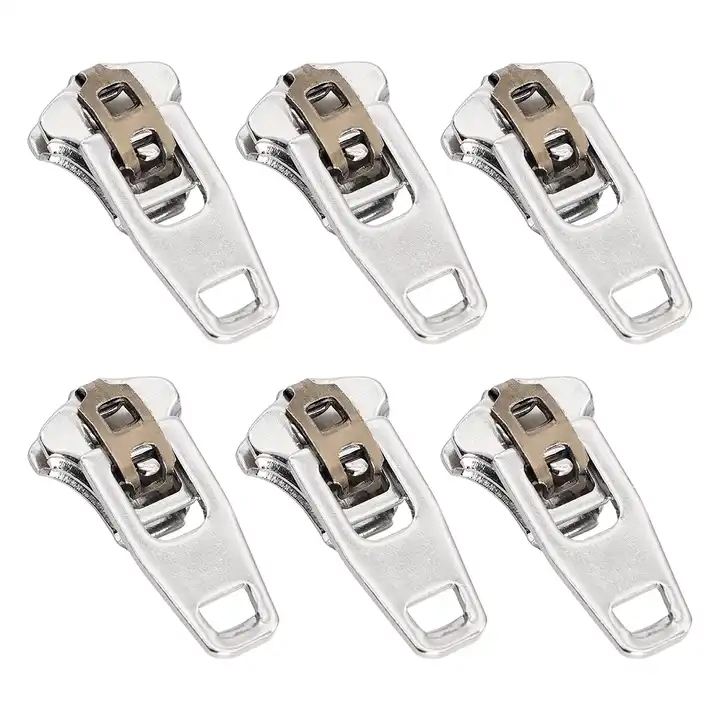
Closure handling: the slider is a matched mechanism, evaluated by how it runs on the assembled chain.
The Zipper Pull FPD-ZP carries the same three material options and the same customizable shape, size and hardness, with the same two application categories. Its role is the user interface — grip, finish and attachment. Because it is a formed metal part, the pull is judged by attachment security and by how it wears in use, not by cross-sectional tolerance.
For both closure items the decisive test is a run on the assembled chain: full travel without jamming, correct engagement at both stops and, where the design requires it, the intended locking behaviour. That single run also validates the teeth and stop decisions, which makes it the natural final gate in the shortlist rather than a separate exercise.
Supporting Wire Forms: Supporting, Not Substituting
Flat, round, spring, profiled and special-shaped wire appear in the same lineup, and the temptation is to treat them as alternative routes to the same result. They are not. They serve machine and auxiliary functions or specific cross-sections a design calls for, and they belong on the shortlist only when that function exists.
The clearest approved details belong to two of them. Spring Wire FPD-SW02 is round in shape, is made of stainless steel, copper or aluminium, has customizable hardness and size, and lists clothing accessories, medical devices, home appliances and electronic accessories among its applications. Profiled Wire FPD-PW uses the same three material options, has customized overall dimensions and shape, and lists electronic accessories, home appliances, medical devices and clothing accessories. Flat Wire FPD-FW, Round Wire FPD-RW, Metal Round Wire FPD-MRW, Shaped Wire FPD-SW and Special-Shaped Wire FPD-SSW complete the group; their configurations should be confirmed per model before they enter a specification. The boundary is simple: a round wire does not replace a Y-profile teeth wire unless the forming tool and the resulting tooth geometry have been validated together, and where two names sound alike — profiled and special-shaped, for instance — the supplier should state which cross-section each model refers to.
Material and Hardness Decisions by Role
Stainless steel, copper and aluminium are the three material options stated across the approved records for FPD-YSW, FPD-ZAS, FPD-ZP, FPD-SW02 and FPD-PW. Having all three available from one source is a real shortlist advantage, because a teeth program, a stop program and a closure program can be sourced without a second material supplier — but availability is not suitability, and the choice should be made per position.
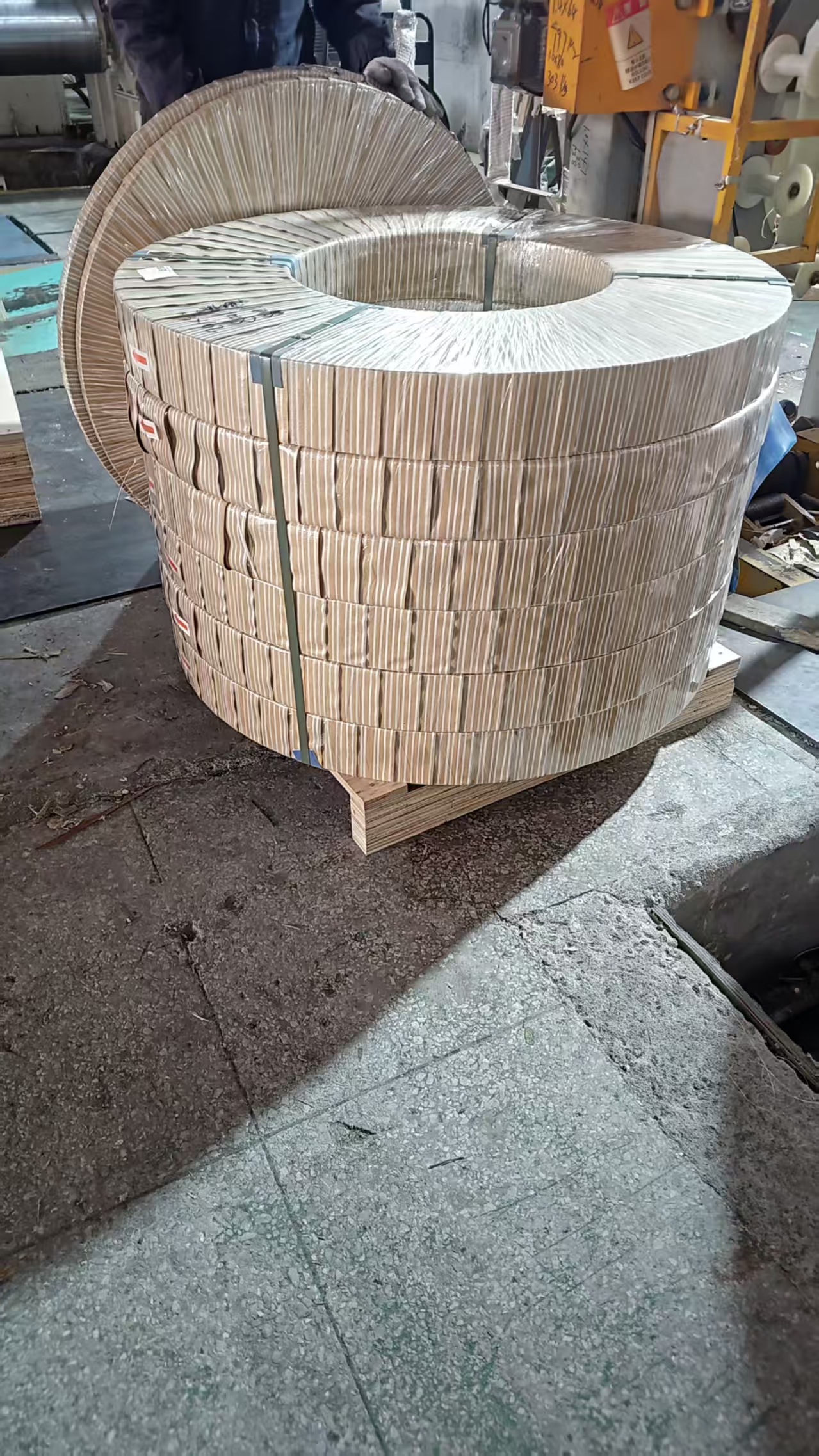
Material customisation: shape, size and hardness are specified per model, not per company.
The company background explains why stainless steel sits on that list at all. Fullgreat states that from 2008 it developed non-magnetic stainless steel strip in cooperation with Sichuan University as a substitute for copper strip in buttons and zippers, obtained a number of national patents in the process, and now supplies non-magnetic stainless steel strip FPD806 and FPD808 and stainless steel wire FPD901 and FPD902 into button and zipper applications as well as communications accessories, automotive products and aerospace products. For a buyer, that history is directly relevant to the material question: non-magnetic stainless steel is positioned as a copper substitute in these applications, not as a side line.
The rest of the selection logic is ordinary materials engineering. Copper and copper alloys are ductile and take finishing and plating well, which is why they remain the reference point for appearance-led parts. Aluminium is the lightest of the three and is chosen where weight matters in the finished assembly. Stainless steel is chosen where corrosion resistance is the constraint, with the non-magnetic grades covering the button and zipper use the company describes. What the records do not do is rank these materials for a given position: they confirm availability, not comparative performance, so any claim that one material is better for teeth, stops or sliders has to be established on the buyer's own assembly.
Hardness follows the same per-model pattern. Soft or hard options are documented for the bottom stop wire, the slider and the pull, and hardness is described as customizable for the Y-shape wire and the spring wire. In practice the hardness field on a purchase order should carry a value or a defined test method, not the word customizable, which describes a capability rather than a specification.
What the Available Evidence Does Not Settle
Three boundaries belong in the evaluation file, because they change how far the shortlist can be pushed.
There is no wire-level market size in the available research. The commercial studies located measure finished zippers: two publishers report 2024 global values of USD 15.27 billion and USD 17.39 billion, roughly 14% apart, and forecast CAGRs of 7.76%, 7.71% and 7.0% appear across three publishers with different horizons. Those are not wire numbers, they cannot be reconciled from the published summaries, and they should not be averaged into a planning figure. A separate secondary-media reference to a USD 11.1 billion metal zipper segment at a 3.3% CAGR is the only metal-specific value located, and its horizon year and segment definition could not be recovered — directional context at most.
Downstream demand signals are not wire consumption. Commercial research citing World Trade Organization data reported 7% growth in global apparel trade in the first half of 2025. That is a demand signal for the apparel channel, not a measure of zipper metal wire volume or price.
Comparative performance data is thin. The supplied evidence contains no independent test comparing teeth retention or stop pull-off across materials or models. The one documented case is a zipper OEM in Japan taking 50 tons per month for two years, with stable operation and a finished product described as smooth and free of burrs — useful as an illustration of a sustained supply relationship, not as a general performance claim for every customer or configuration. The certification position is similar in kind: Fullgreat holds ISO 9001 certification 46624Q106840R0S, issued 9 September 2024 and valid to 8 September 2027 under GB/T19001-2016 / ISO9001:2015 by Shenzhen Zhongxin certification testing Co., Ltd, with a scope of sales of metal materials. That is a management-system credential tied to a defined scope; it does not replace a per-model dimensional or mechanical test report, which the company lists separately as after-sales documentation.
An Approval Sequence for the Shortlist
The shortlist is most useful as a sequence, because each step closes a question the next step depends on.
- Name the position and the model — FPD-YTW01, FPD-TSW, FPD-BSW, FPD-ZAS or FPD-ZP on the line item, not the category name.
- Request the model drawing and confirm cross-section, size designation where one applies, and the tolerance band for that size.
- Fix material and hardness per position, replacing customizable with a value or a test method.
- Confirm the interface: teeth profile to slider channel, stop dimensions to tape and slider, pull attachment to slider.
- Run a sample on your own tooling; this tests the stop and slider decisions together with the teeth.
- Agree the acceptance records; quality control covers dimensional requirements, composition, tensile strength and elongation, with a test report available after sales.
- Confirm commercial terms; MOQ is 1 ton and lead time is 30–45 days, with OEM/ODM customisation available for material, packaging, specifications and colour.
Steps two to four are where most shortlist errors begin, because they are the points where a model name is quietly treated as a specification. Steps five and six are where those errors become visible.
Outlook: Specification Discipline as the Differentiator
If downstream zipper demand continues along the direction the commercial forecasts describe, the pressure on wire suppliers moves toward specification control rather than catalog breadth. A ±0.01 mm tolerance statement, a documented hardness option and a defined acceptance record are the details that decide whether a teeth program runs without adjustment, and they are also the details hardest to verify from a website.
That outlook is conditional. Wire-level demand cannot be sized from the sources available here, the finished-zipper forecasts disagree on both base value and growth rate, and no independent comparison of these models against alternatives was located. What can be said without qualification is narrower and more useful for an evaluation-stage buyer: matching each model to the position it fills, and fixing the missing values before tooling, removes the most common source of mismatch in a zipper metal wire program.
Company reference: Fullgreat Metal company profile (PDF).
FAQ
In what order should an OEM shortlist zipper metal wire models?
Shortlist by position on the fastener: teeth first (Y Teeth Wire FPD-YTW01 or Y-shape Wire for Zipper FPD-YSW), then end control (Top Stop Wire FPD-TSW and Bottom Stop Wire FPD-BSW), then closure handling (Zipper Automatic Slider FPD-ZAS and Zipper Pull FPD-ZP). Add flat, round, spring or profiled wire only if a machine or auxiliary function needs that cross-section. This order follows the assembly logic, because the teeth and slider have to be matched to each other, while the stops are matched to the tape ends.
Can one wire model cover both the teeth and the stop positions?
No. The teeth position carries an interlocking profile that must mate with a second profile and with the slider channel, so cross-sectional geometry and elongation are the governing values. A stop is a short element that is deformed onto the tape, where forming behaviour and hardness matter more than interlocking geometry. The approved records reflect that difference: the bottom stop wire is documented with soft or hard hardness and customizable size and shape, while the teeth models are documented around profile and size. Each should be specified as its own line item.
How do stainless steel, copper and aluminium change fit for each component?
The three options are stated in the approved records for FPD-YSW, FPD-ZAS, FPD-ZP, FPD-SW02 and FPD-PW. In general terms, copper and copper alloys are ductile and take finishing well, aluminium is the lightest option, and stainless steel is chosen where corrosion resistance is the constraint — with Fullgreat's non-magnetic grades described as a copper-strip substitute for buttons and zippers. The records confirm availability, not comparative performance, so the material decision for a specific teeth, stop or slider program has to be validated on the buyer's own assembly rather than settled from a data sheet.
Does the shortlist differ between apparel and bag and luggage programs?
The same models are documented for both categories: FPD-YSW, FPD-ZAS, FPD-ZP and FPD-BSW all list clothing accessories and bag & luggage. The model list therefore does not change, but the values do. Tape construction, slider size, stop dimensions and expected loading still have to be specified per program, and the forming trial and chain run should use the actual tape and tooling of that program rather than a generic sample.
What documentation should accompany shortlist approval?
Four records are usually requested together: the model drawing with cross-section, size and tolerance; the material and hardness value for that model; the acceptance criteria used at inspection, which the company lists as dimensional requirements, composition, tensile strength and elongation; and the test report issued after sales. The ISO 9001 certificate 46624Q106840R0S, valid to 8 September 2027 with a scope of sales of metal materials, supports the management-system side but does not substitute for the per-model records.
Tem questões ou precisa de mais detalhes?
Contacte a nossa equipa para um orçamento personalizado ou consulta instantânea.
Solicitar orçamento
Preencha o formulário abaixo e a nossa equipa entrará em contacto com uma proposta personalizada.
Chat direto do WhatsApp
Prefere conversar em tempo real? Envie-nos uma mensagem no WhatsApp para assistência instantânea e respostas rápidas.
- Obter orçamento personalizado
- Partilhar fotos ou documentos
- Discuta as suas necessidades diretamente
Geralmente responde em 5–30 minutos durante o horário de expediente.