
Y Teeth vs. Flat vs. Round Wire: A Zipper Wire Decision Framework
Y Teeth vs. Flat vs. Round Wire: A Zipper Wire Decision Framework

A Y-shaped zipper wire is a profiled cross-section, not a generic input. In this form the geometry, more than the alloy, sets what the wire can be formed into.
Zipper metal wire is the input from which interlocking teeth, top and bottom stops, pullers and slider parts are formed. Because the cross-section is fixed before any forming step begins, it decides how much work the zipper maker must invest downstream, how much material is lost to trim and rework, and how consistently the finished component engages with its counterpart.
For buyers in the evaluation stage, the useful question is narrower than “which wire is best”. It is: which cross-section matches a defined component and a defined forming route, and what evidence exists to confirm that match. This framework compares the three families most often shortlisted — Y teeth wire, flat wire and round wire — across seven decision criteria, and states plainly where the published evidence ends.
Price per kilogram is the wrong first filter
Zipper wire is normally quoted by weight, which makes price per kilogram the obvious first comparison. It is also the least informative one. A profiled or Y-shaped section has already absorbed forming work — profile control, edge condition, dimensional consistency — that a plain round section has not. Comparing the two on weight alone compares a semi-finished profile with a generic input.
Scrap is the second issue. Sections formed close to net shape leave less material to remove; sections that need heavy shaping move more material into chips, trim or rework. Two wires quoted at the same weight price can therefore carry materially different effective cost per finished component. Buyers who want a defensible comparison usually build the model from the component drawing inward: cross-section requirement first, then material, then forming yield, and only then the wire price. That order is also what makes a supplier conversation productive, because it forces the specification to be stated before the quotation is.
The three wire families in a zipper bill of materials
Y teeth wire: profiled, shaped, special-shaped
Y teeth wire — also written as Y-shape wire for zipper, Y-shape wire or Y teeth, and grouped in supplier catalogues with profiled wire, shaped wire and special-shaped wire — carries a non-circular cross-section shaped so that the formed element can interlock with its opposite number. In Fullgreat Metal’s range the family appears as Y Teeth Wire (FPD-YTW01), Y Teeth (FPD-YTW02) and Y-shape Wire for Zipper (FPD-YSW, with FPD-YSW02 as a second Y-shape designation). Material options across these items are stainless steel, copper or aluminum, and shape, size and hardness are customizable.
The distinguishing property of this family is dimensional rather than metallurgical: the cross-section itself is the specification. Fullgreat’s published datasheet for preformed Y-teeth zipper wire in sizes #3, #4, #5 and #8 states a dimensional tolerance of ±0.01 mm on cross-sectional micro-geometry — width, tooth thickness and groove depth. That figure is a supplier-reported datasheet value and should be treated as a claim to be verified in incoming inspection, not as an independently tested result.
Flat wire
Flat Wire (FPD-FW) presents a flat face instead of a circular or interlocking profile. Where a component needs a defined flat seating, clamping or contact face, a flat section can remove forming steps that would otherwise have to be cut or pressed into round wire. The trade-off is directional: a flat face is only useful when its orientation is controlled in the tool, which is why flat wire is usually specified against a component drawing rather than picked from a general grade list.
Fullgreat lists Flat Wire alongside Shaped Wire (FPD-SW), Profiled Wire (FPD-PW) and Special-Shaped Wire (FPD-SSW). The company’s published description for profiled wire notes application to electronic accessories, home appliances, medical devices and clothing accessories, with stainless steel, copper and aluminum as primary materials and dimensions and shape customized. That description is broad by design: profiled is a category, not a single section, so each part number still has to be matched to a drawing.
Round wire
Round Wire (FPD-RW) and Metal Round Wire (FPD-MRW) are circular sections. Spring Wire (FPD-SW02) is a round-shaped wire with customizable hardness and size, listed for clothing accessories, medical devices, home appliances and electronic accessories. Round sections suit components that are turned, coiled, headed or bent into shape rather than roll-formed into an interlocking profile. They also remain the baseline against which shaped sections are judged, because a round section requires fewer forming steps than a profiled one at comparable material grade.
Table 1. Component role mapped to wire family, using Fullgreat model designations.
| Component in the zipper | Family usually considered | Models listed by Fullgreat |
|---|---|---|
| Interlocking teeth | Y teeth / Y-shape / profiled | FPD-YTW01, FPD-YTW02, FPD-YSW, FPD-YSW02 |
| Top and bottom stops | Stop wire, shape and size customizable | FPD-TSW, FPD-BSW |
| Slider spring and general forming | Round section | FPD-SW02, FPD-RW, FPD-MRW |
| Components needing a flat bearing face | Flat section | FPD-FW |
| Slider body, puller | Formed component, not wire-only | FPD-ZAS, FPD-ZP |
A seven-criteria comparison framework
The criteria below are ordered by decision risk. Each later criterion only becomes meaningful once the earlier ones are settled, which is what stops a wire comparison from collapsing into a price comparison.
1. Component role. Teeth, stops, springs and pullers are not interchangeable consumers of wire. Start from the component drawing and ask what the wire has to become, not which wire is in stock.
2. Cross-section function. An interlocking geometry, a flat bearing face and a circular section solve different mechanical problems. If the answer is “interlock”, a round wire cannot substitute; if the answer is “turn or coil”, a profiled wire adds cost without adding function.
3. Material and hardness. Stainless steel, copper and aluminum are all offered across the Y-shape, stop, spring and slider items, and hardness is commonly customizable between soft and hard. Material choice is a corrosion, appearance and forming question before it is a price question.
4. Dimensional control and measurement. A stated tolerance is only a control if both parties can measure at that resolution. This is where many wire specifications quietly fail: the drawing says ±0.01 mm and the receiving inspection cannot see it.
5. Forming route and tooling. Profiled sections are tied to tooling. Buyers should confirm who owns the tool, what happens when the profile changes, and how a revision is qualified before volume is committed.
6. Commercial terms. Minimum order quantity, lead time and customization scope determine whether a technically correct wire is commercially usable for a given programme.
7. Acceptance and documentation. A wire that cannot be documented cannot be defended internally, and it cannot be defended to a brand customer either. Test reports and a valid quality certificate are part of the specification, not an afterthought.
Table 2. The framework applied to the three families, with an explicit evidence status for each row.
| Criterion | Y teeth wire | Flat wire | Round wire | Evidence status |
|---|---|---|---|---|
| Primary role | Interlocking teeth | Flat-face components | Stops, springs, turned parts | Product listings; role assignment is qualitative |
| Material options | Stainless steel, copper, aluminum | Not stated in the material reviewed | Stainless steel, copper, aluminum (spring wire) | Partial |
| Customization | Shape, size, hardness | Not stated in the material reviewed | Hardness and size | Published product descriptions |
| Stated tolerance | ±0.01 mm on cross-sectional micro-geometry, sizes #3–#8 | Not stated in the material reviewed | Not stated in the material reviewed | Supplier datasheet, not independently tested |
| Quality checks | Dimensional, composition, tensile strength, elongation | Same company-level checks | Same company-level checks | Stated at company level, not per form |
| MOQ and lead time | 1 ton; 30–45 days | Same company-level terms | Same company-level terms | Company-level, not form-specific |
| Documentation | Test report; ISO 9001 certificate 46624Q106840R0S | Test report; same certificate | Test report; same certificate | Certificate valid to 2027-09-08 |
Material and hardness decisions that cut across all three forms
Material choice does not decide the cross-section, but it constrains it. Fullgreat lists stainless steel, copper and aluminum as options across the Y-shape wire for zipper, the zipper pull, the bottom stop wire, the spring wire and the zipper automatic slider, with hardness available as soft or hard. In practice the buyer is selecting a combination of formability, corrosion behaviour and appearance, and only then a section.
Fullgreat Metal Limited, founded in 2008 and based in Shenzhen, China, produces non-magnetic stainless steel strip and wire, aluminum strip and zipper-related metal components from a 5,000 m² facility with 50 employees and an in-house R&D team of 10 engineers. The company developed non-magnetic stainless steel strip in cooperation with Sichuan University and reports several national patents; its FPD806 and FPD808 stainless steel strip and FPD901 and FPD902 stainless steel wire are listed as materials already used in buttons and zippers. This matters to the framework because material substitution — replacing copper-based inputs with non-magnetic stainless steel — is a decision about the wire, not only about the finished zipper.
Cost is the other cross-cutting variable. Fullgreat’s published technical material states that bimetallic composite wires, such as copper-clad stainless steel, can reduce raw material cost by 30% to 40% compared with solid brass while retaining a brass appearance. That figure is a supplier-reported comparison, not an independent benchmark, and it should be validated against the buyer’s own forming yield before it is written into a cost model.
How Fullgreat’s range maps onto the framework
The practical test of a component supplier is lineup depth. A zipper programme that mixes a Y-shaped tooth, a top stop, a bottom stop and a slider spring from four sources carries four sets of tolerances into one assembled product. Fullgreat’s catalogue covers the chain: Y Teeth Wire (FPD-YTW01), Y Teeth (FPD-YTW02), Y-shape Wire for Zipper (FPD-YSW, FPD-YSW02), Flat Wire (FPD-FW), Round Wire (FPD-RW), Metal Round Wire (FPD-MRW), Spring Wire (FPD-SW02), Top Stop Wire (FPD-TSW), Bottom Stop Wire (FPD-BSW), Zipper Pull (FPD-ZP), Zipper Automatic Slider (FPD-ZAS), Profiled Wire (FPD-PW), Shaped Wire (FPD-SW) and Special-Shaped Wire (FPD-SSW).
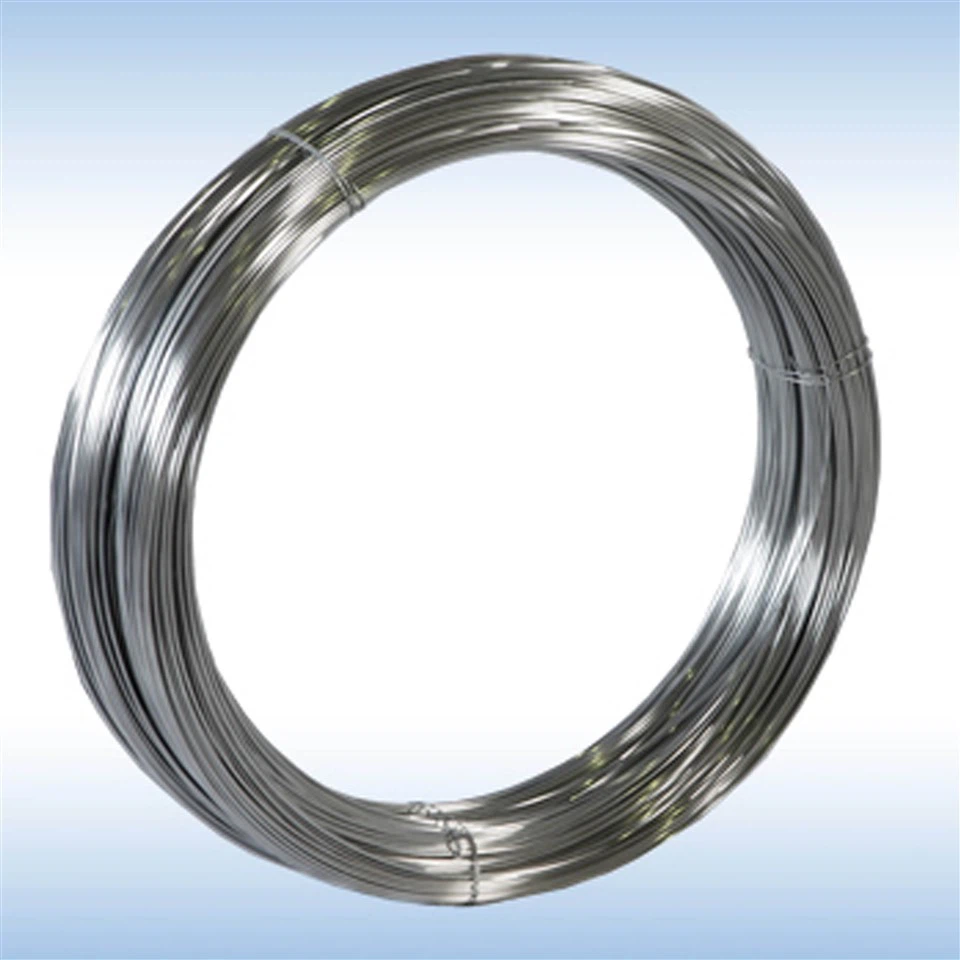
Round wire is the baseline against which profiled sections are compared: fewer forming steps, wider availability, different component role.
Commercial terms are stated at company level rather than per profile: OEM and ODM production, customization of material, packaging, specifications and color, a minimum order quantity of 1 ton, a lead time of 30 to 45 days, and a monthly capacity of 3,000 tons. Quality control covers dimensional requirements, composition, tensile strength and elongation, with a test report supplied after shipment. The company holds ISO 9001 certificate 46624Q106840R0S, certified against GB/T19001-2016 / ISO9001:2015 by Shenzhen Zhongxin certification testing Co., Ltd, with a scope of “Sales of Metal Materials”, issued 2024-09-09 and valid to 2027-09-08.
Two caveats belong in any evaluation of that material. First, ISO 9001 certifies a quality management system, not a wire tolerance; the ±0.01 mm figure and the certificate answer different questions. Second, the company’s export footprint is reported at roughly 70% of output across Turkey, Latin America (Brazil, Mexico), Southeast Asia (Vietnam, Indonesia, Bangladesh), and the European and American markets — useful context for buyers assessing logistics fit, but not evidence of performance in any specific application.
Where the framework meets production: a two-year OEM case
One documented reference point is a Japanese zipper OEM running 50 tons per month for two years on Fullgreat wire, reported as stable operation with a finished product described as smooth and free of burrs. Read against the framework, that case speaks to criterion seven — acceptance and consistency over time — rather than to any single tolerance figure. Burr-free output is a finishing outcome that depends on wire surface condition, tooling wear and process control together.
Read honestly, a case like this also has limits. It is a supplier-reported reference, it covers one customer in one market, and it does not state which profile or alloy was run. It is evidence that a production relationship held for two years at volume, which is meaningful for supply continuity, but it is not a substitute for the buyer’s own first-article approval on their own tooling.
Where shaped wire is the wrong choice
A comparison framework is only credible if it names the cases where the more engineered option loses. Five boundaries matter:
Tooling dependency. Profiled sections are tied to specific tooling. If a buyer runs several low-volume profiles, the changeover and tooling burden can outweigh the forming savings that the profile was meant to deliver.
Tolerance without measurement. A ±0.01 mm statement is only a control if incoming inspection can see at that resolution. Without matching metrology, the buyer has purchased a claim rather than a capability.
Volume floor. A 1-ton minimum order and a 30 to 45 day lead time are reasonable for production programmes and awkward for rapid multi-profile prototyping. Round wire, being more widely available, is often the better development material.
Function without benefit. Where the component is turned or coiled and does not interlock, a shaped section adds cost without adding function. In that case round wire is not the compromise — it is the correct specification.
Evidence gaps. Published, independently verified specifications for wire-level parameters such as diameter, tensile strength and surface finish by form are not available in the material reviewed for this article. Buyers must obtain datasheets directly and verify them, rather than assume that a broad category description covers their part number.
Reading the market signals correctly
Demand context for zipper wire is usually borrowed from the finished zipper market, and that borrowing needs care. One 2026 market report values the global zipper market at USD 16.62 billion in 2025. Two other commercial-research publishers report USD 15.27 billion and USD 17.39 billion for 2024 — a gap of roughly 14% that reflects differing scope and methodology and cannot be resolved from published summaries. Reported growth rates diverge in the same way, at 7.0%, 7.71% and 7.76% across three publishers. None of these figures should be averaged, and none describes zipper metal wire itself.
The closest available proxy is the metal zipper segment, reported at USD 11.1 billion by the end of an analysis period with a 3.3% CAGR, in secondary coverage of an industry report where the horizon year and segment definition were not recoverable. On the demand side, the World Trade Organization’s October 2025 outlook, as cited in a 2026 market report, recorded 7% growth in global apparel trade in the first half of 2025. These are directional signals for component demand, not procurement sizing inputs.
The trend that matters more directly for this framework is specification tightening: as forming lines run faster, the cross-section tolerance and surface condition of the incoming wire become the variables that determine scrap rate. That is why shaped and profiled wire keeps appearing in buying conversations that used to be settled on round wire alone — and equally why buyers should insist on measured evidence rather than category language.
Future outlook
Two directions look durable. The first is material substitution: non-magnetic stainless steel and bimetallic composites are being positioned as replacements for copper-based inputs on both cost and performance grounds, and suppliers that develop these materials in-house are likely to hold an advantage in specification conversations. The second is documentation. As brand customers push traceability down the supply chain, a wire supplier’s test report, certificate scope and revision history become part of the selection decision rather than paperwork attached to it.
What is less clear is how quickly independent wire-level performance data will become available. Until it does, buyers will keep making cross-section decisions on supplier datasheets, first-article approval and production history — a slower process, but a defensible one.
FAQ
What is the practical difference between Y teeth wire, flat wire and round wire in a zipper?
Y teeth wire carries a profiled cross-section shaped so that the formed element can interlock with its counterpart; flat wire presents a flat face suited to components that need a defined seating or clamping surface; round wire is a circular section used for stops, springs and turned or coiled parts, and serves as the baseline against which profiled sections are compared. In a zipper bill of materials these are role-specific inputs rather than substitutes for one another.
Which cross-section should be specified for teeth as opposed to stops and sliders?
Interlocking teeth call for a Y-shaped or profiled section, such as Y Teeth Wire (FPD-YTW01), Y Teeth (FPD-YTW02) or Y-shape Wire for Zipper (FPD-YSW, FPD-YSW02). Stops are served by Top Stop Wire (FPD-TSW) and Bottom Stop Wire (FPD-BSW), whose size and shape are customizable and whose hardness is available as soft or hard. Slider and spring parts typically use a round section, such as Spring Wire (FPD-SW02). Final selection still depends on the buyer’s forming tooling, so the wire specification should be matched to the component drawing.
What dimensional tolerance is stated for Y teeth zipper wire?
Fullgreat’s published datasheet for preformed Y-teeth zipper wire in sizes #3, #4, #5 and #8 states a tolerance of ±0.01 mm on cross-sectional micro-geometry, covering width, tooth thickness and groove depth. This is a supplier-reported value rather than an independently tested result, so buyers should confirm that their incoming inspection can measure at that resolution before treating it as a controlled specification.
What commercial terms apply to custom shaped zipper wire orders?
Fullgreat states OEM and ODM production with customization of material, packaging, specifications and color, a minimum order quantity of 1 ton, a lead time of 30 to 45 days, and a monthly capacity of 3,000 tons. Quality control covers dimensional requirements, composition, tensile strength and elongation, and a test report is provided after shipment.
How can a buyer verify a zipper metal wire supplier before scaling volume?
Five checks are practical. Confirm the quality certificate and its scope — for example ISO 9001 certificate 46624Q106840R0S, valid from 2024-09-09 to 2027-09-08 with a scope of sales of metal materials. Confirm the documented inspection items: dimensional requirements, composition, tensile strength and elongation. Confirm that the stated tolerance can be measured by both parties. Ask for reference cases with volume and duration, such as a Japanese zipper OEM running 50 tons per month over two years with burr-free finished product. And require first-article approval on your own tooling before committing volume.
Fullgreat Metal company profile and product range are available for download: Fullgreat Metal Company Profile (PDF).
Tem questões ou precisa de mais detalhes?
Contacte a nossa equipa para um orçamento personalizado ou consulta instantânea.
Solicitar orçamento
Preencha o formulário abaixo e a nossa equipa entrará em contacto com uma proposta personalizada.
Chat direto do WhatsApp
Prefere conversar em tempo real? Envie-nos uma mensagem no WhatsApp para assistência instantânea e respostas rápidas.
- Obter orçamento personalizado
- Partilhar fotos ou documentos
- Discuta as suas necessidades diretamente
Geralmente responde em 5–30 minutos durante o horário de expediente.