
YIKE PVC Panel Supplier Capability: What Buyers Verify
YIKE PVC Panel Supplier Capability: What Buyers Verify
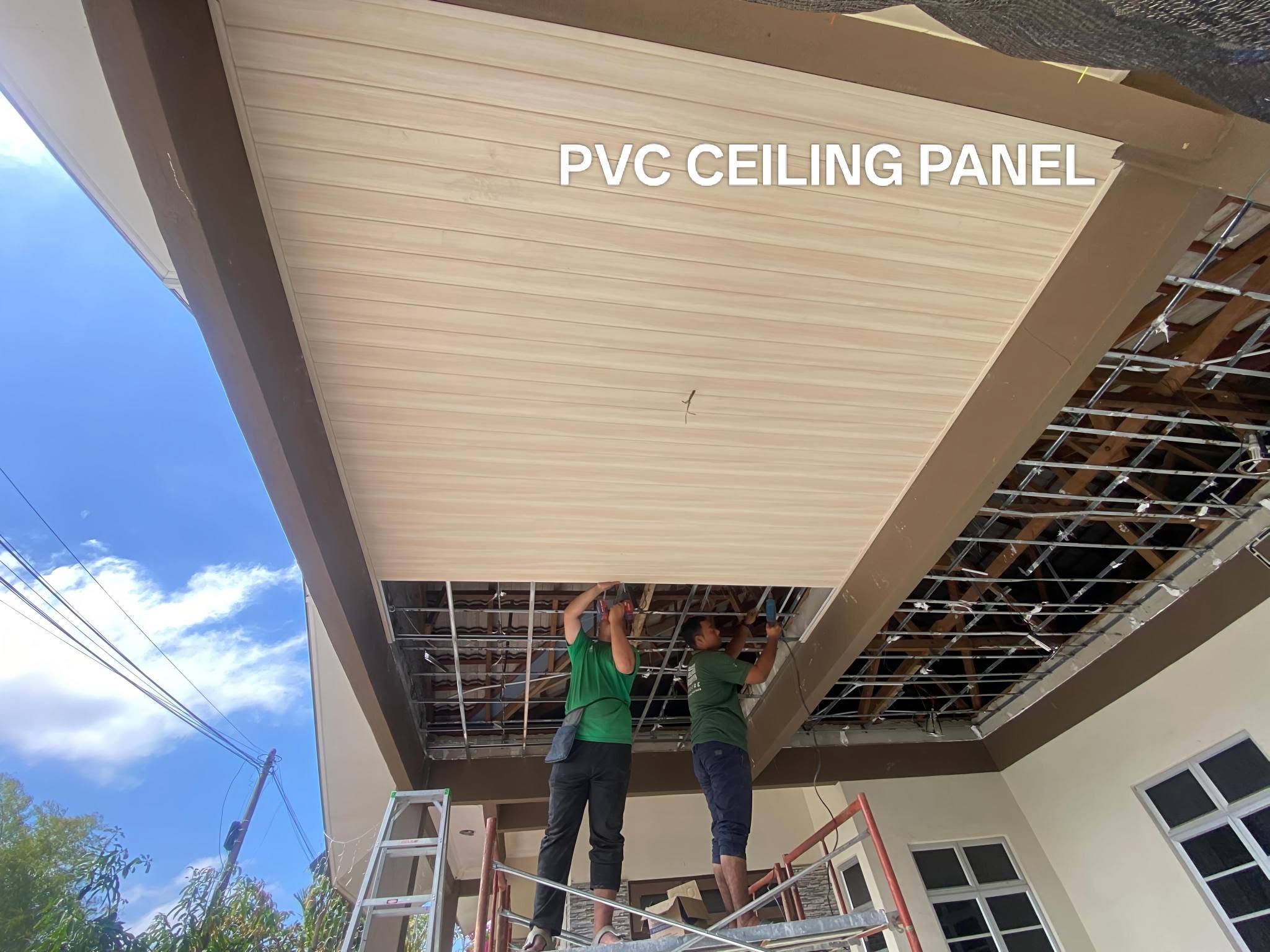 Distribution and wholesale channel: decorative panel ranges reaching building materials distributors in Southeast Asia.
A PVC panel supplier's capability is only as credible as the evidence behind it. In decorative building materials, the distance between a catalogue page and a confirmed order is filled with specifics: which models are actually in production, what a thickness ladder implies, how the pre-shipment test is carried out, which customization steps exist, and what the supplier declines to claim.
Why capability claims are hard to verify in PVC panel sourcing
Buyers moving from evaluation into execution rarely lack product options. They lack a way to test the statements made about those options. A showroom wall of marble-effect sheets proves that a product exists; it does not prove that the ordered thickness will arrive with consistent flatness, that a six-colour container can be packed without mixing references, or that a flame-retardant designation applies to the model being specified.
Verifiable capability statements share a structure. They name an entity, give a number or a model designation, state the condition under which it applies, and stop at a boundary. Statements without those elements are not necessarily false; they are simply not checkable, and an order signed on uncheckable statements carries that uncertainty forward to the container.
This article applies that standard to one supplier's published information — YIKE NEW MATERIAL, a China-based manufacturer and exporter of PVC and WPC decorative building materials. The purpose is not to endorse the range, but to separate what a buyer can confirm today from what still needs to be asked.
YIKE NEW MATERIAL: the entity and its operating footprint
YIKE NEW MATERIAL (Haining Yike New Material Co., Ltd.) is a manufacturer and exporter based in Haining, Zhejiang Province, China, producing PVC and WPC decorative building materials for export markets. The company was founded in 2019 and operates a 10,000 m² factory with 50 employees, including a 10-engineer research and development team. Published figures place annual output at 5,000,000 m² and monthly capacity at 500,000 m², with an export ratio of 100%.
Its stated markets are Central America, South America, Southeast Asia, the Middle East and Africa. That distribution profile matters more than it first appears. An export-only orientation means the operating evidence is trade evidence — container configurations, shipping terms, inspection arrangements and repeat-order history — rather than domestic retail references or local building-authority approvals. A buyer in Latin America or Southeast Asia is therefore evaluating a supplier on the same terms it uses to serve those markets, which makes the commercial record directly comparable.
The ten ranges named in the product list are PVC Ceiling Panel, PVC Wall Panel, PVC Marble Sheet, UV Marble Sheet, PVC Marble Wall Panel, WPC Wall Panel, WPC Fluted Wall Panel, Outdoor WPC Wall Panel, PVC Decorative Panel and PVC Self-Adhesive Wall Sticker. The company profile additionally describes SPC/LVT flooring, WPC decking, PS wall panels and PU stone wall panels, which sit outside that ten-range list and should be scoped as separate lines when an order is built.
Product breadth as evidence, not as decoration
Breadth becomes evidence only when each range carries documented model designations. YIKE publishes model-level specifications for three of its core ranges, which lets a buyer quote against named items instead of describing a product in adjectives.
| Range | Published model designations |
|---|---|
| PVC Ceiling Panel | YK-200×6 mm, YK-200×7 mm, YK-200×8 mm, YK-250×7 mm, YK-250×7.5 mm, YK-250×8 mm, YK-300×8 mm, YK-300×9 mm, YK-400×8 mm |
| PVC Marble Sheet | 1220×2440 mm in 2 mm, 2.2 mm, 2.5 mm, 2.8 mm and 3 mm; 1220×2800 mm in the same five thicknesses |
| WPC Wall Panel | YK-160×20×2900 mm, YK-160×24×2900 mm, YK-150×10×2900 mm, YK-168×24×2900 mm, YK-150×15×2900 mm, YK-200×20×2900 mm |
| UV Marble Sheet, PVC Marble Wall Panel, WPC Fluted Wall Panel, Outdoor WPC Wall Panel, PVC Decorative Panel, PVC Self-Adhesive Wall Sticker | Named in the product list; no model table published |
Two details in that table are worth a buyer's attention. The PVC marble sheet range is organised around two sheet formats, each available across five thicknesses from 2 mm to 3 mm — a defined choice between a standard board format and a longer panel within the same material family. The WPC wall panel range is expressed as width × thickness × 2900 mm profiles, which means profile geometry, not only surface finish, is a specification variable.
For the remaining ranges, the published information names the product family and its selection parameters but does not list a model table. That is not a defect in the product; it is a gap in the evidence, and it belongs in writing before an order. Roll width, thickness and pattern repeat for self-adhesive stickers, for example, are order-specific specifications that should be confirmed per SKU rather than inferred from a photograph.
What the specifications establish, and where they stop
A published dimension establishes format, not performance. The 1220 × 2440 mm sheet format tells a buyer how the product will handle, cut and palletise; the 2 mm to 3 mm ladder tells them how much rigidity range exists inside one product family. It does not, on its own, establish fire behaviour, batch colour consistency or outdoor durability.
Where performance is stated, the qualification carries the meaning. YIKE's published guidance notes that partial models of its large-format PVC wall panel reach B1 flame retardant grade — a statement that identifies a class of models, not the entire range. A buyer specifying for a project with a fire requirement should ask which models carry that designation and obtain the identification in writing, rather than applying it across the catalogue.
The same discipline applies to surface performance. PVC marble sheet is described as an indoor decorative panel: prolonged UV exposure outdoors is stated to cause surface fading and ageing, and continuous water soaking should be avoided even in wet indoor areas such as bathrooms. The standard UV finish is described as providing basic anti-scratch performance, with an upgraded anti-scratch surface available on request for engineering projects. That is a capability statement with a boundary attached — the more useful kind.
PVC ceiling panels follow the same logic. They are described as waterproof and moisture-resistant, suitable for kitchens, bathrooms, balconies and living rooms as well as offices, supermarkets, hotels and corridors, and cleanable with a dry or damp soft cloth and diluted neutral detergent rather than corrosive chemicals. Those are use conditions, and they are as much a part of the specification as the panel width.
Customization, capacity and the mechanics of an OEM order
YIKE operates in OEM and ODM modes, with customization available on colour, pattern and logo. Capacity and lead time are published as 500,000 m² per month and 14–30 days respectively. The two numbers answer different questions: capacity indicates how much volume a plant can absorb inside a production window, while lead time indicates how long a specific order is expected to take. Neither substitutes for the other, and a distributor scheduling a retail season should plan against the lead time and treat capacity as a constraint check.
The minimum order structure is where the commercial model becomes visible. The published MOQ is one 20' container with 4–6 colours from the e-catalogue. Orders below a container can be placed at 500 m² per colour from stock colours, or 1,000 m² from the e-catalogue. Read practically, colour count — not square metres alone — is the variable that governs whether an order fits. A six-colour container spreads the same volume across more SKUs than a four-colour one, and that affects packing, labelling and how much stock a distributor carries per reference.
The sub-container route is the more interesting option for a buyer entering a new market. It permits a smaller first order, but the trade-off is explicit: stock colours or catalogue items rather than new customization. That is a sensible way to test a market before committing to a customized range, provided the buyer does not assume a stock-colour trial also validates a future custom colour.
One detail belongs in the order confirmation rather than in an assumption: the published 14–30 day lead time does not specify whether it runs from receipt of deposit or from approval of artwork and samples. For a customized order that difference can be material.
Purchasing terms and acceptance criteria, translated
Purchasing terms are usually quoted as shorthand. Read literally, YIKE's published terms describe a straightforward structure with one clear point of leverage for the buyer.
| Item | Published position |
|---|---|
| Minimum order | One 20' container with 4–6 colours from the e-catalogue; below one container, 500 m² per colour from stock colours or 1,000 m² from the e-catalogue |
| Delivery terms | FOB / CIF / CFR |
| Payment terms | 30% T/T in advance, 70% T/T against copy of B/L |
| Acceptance criteria | Pre-shipment test |
| Quality control | 100% pre-shipment test; third-party inspection (SGS) |
| Lead time | 14–30 days |
| After-sales | Remote technical support |
The payment structure places the balance against a copy of the bill of lading, which means it falls due after shipment. The pre-shipment test is therefore the buyer's main opportunity to influence what actually leaves the factory, and it deserves more definition than the phrase alone provides. "Pre-shipment test" does not state which characteristics are measured, on what sample size, or in what format the result is recorded.
A workable acceptance list for decorative panels typically covers thickness against the ordered model, flatness, colour match against the approved sample, surface defects, and packing and marking. Agreeing that list in writing before production converts a general commitment into a specific one, and it gives the pre-shipment test something to measure against.
The third-party inspection element is the one to pin down. The published quality-control arrangement combines 100% pre-shipment testing with third-party inspection (SGS). Whether that inspection applies to every shipment or is arranged on request should be confirmed explicitly, along with which party appoints the inspector and whether the report is shared before the balance is released.
Application record: what the case material actually shows
YIKE's published case records describe distributor and project relationships in five markets, and they are best read as market-fit evidence rather than as proof of outcome.
In Ecuador, a building materials distributor and wholesaler took 3 × 40HQ containers over a two-year relationship, applying PVC ceiling panels, PVC marble sheets and WPC wall panels across retail shops, brand stores, showrooms, offices and restaurants. In El Salvador, 1 × 40HQ over three years supported residential decoration. In Indonesia, a renovation service provider has imported 10 × 40HQ over three years for residential and commercial interior projects. In Malaysia, 10 × 40HQ over two years supported a portfolio the company describes as more than 100 residential installations, with continued specification for new renovation work. In Colombia, a distributor has been supplied with more than 60 × 40HQ containers per year across a two-year relationship.
Read carefully, the pattern is consistent: mixed-category orders, small and large, in tropical and humid climates, spanning residential and light commercial interiors. The Ecuadorian commercial case is the most specific about application mix — ceiling, marble sheet and WPC wall panel used together in store fit-outs — and it is the closest item in the record to a complete interior package rather than a single-product order.
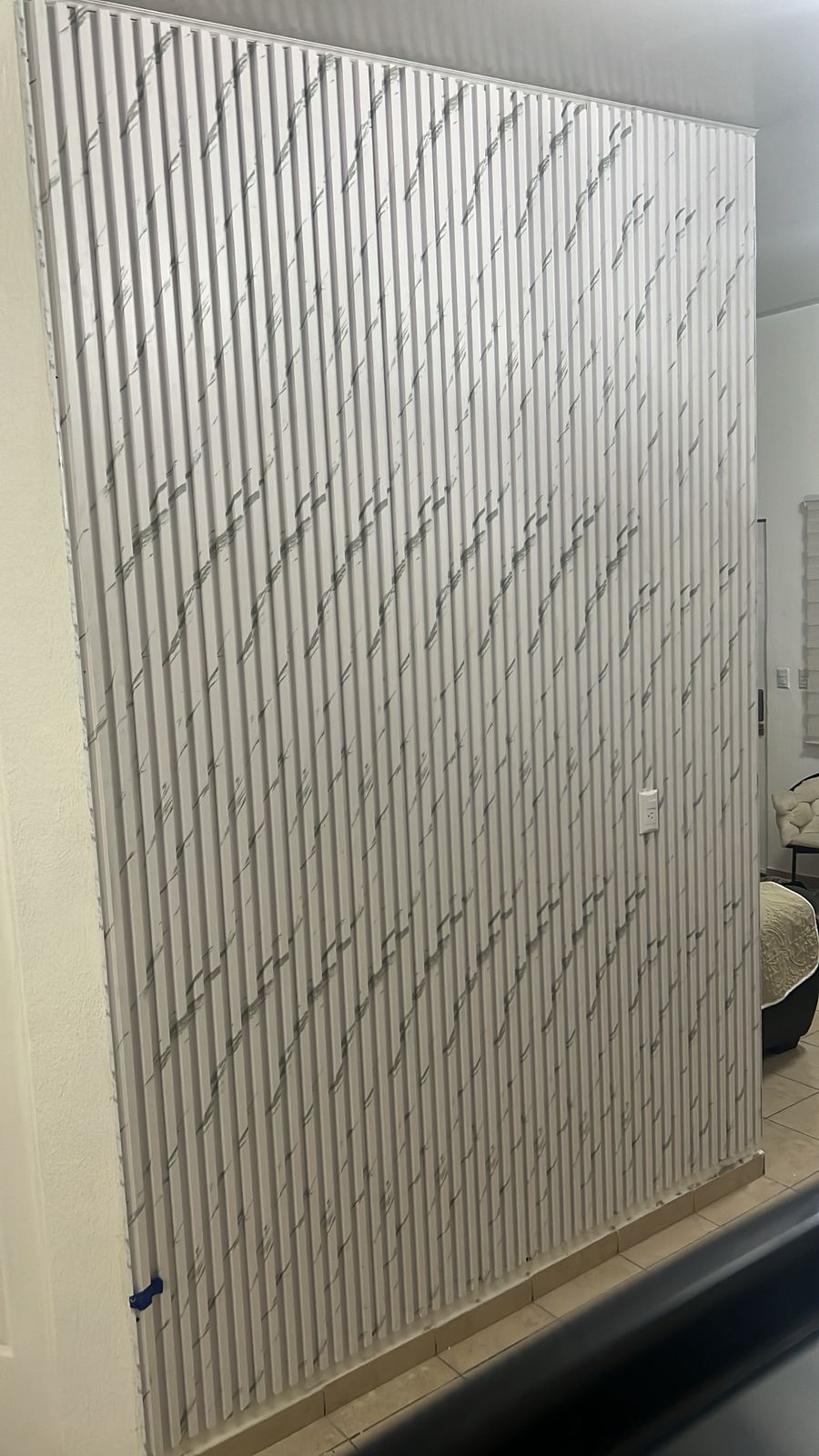 Residential decoration applications supplied through distribution partners in El Salvador, where PVC ceiling panels, PVC marble sheets and WPC wall panels were used together.
These are company-published accounts of commercial relationships, not independently audited installation studies. Their evidentiary value lies in what can be checked against them: container counts, durations, product combinations and application types are all specific enough to be verified in a reference conversation. A new importer should ask for the SKU mix behind a comparable case rather than for the case name alone, because the mix is what shows whether the supplier's range matches the buyer's shelf plan.
Fit boundaries: where each product stops
A supplier's limitations are part of its capability evidence, because they define where a product performs and where it does not. YIKE's published guidance sets out several boundaries that belong in a specification conversation.
On interior comparisons: PVC marble sheet is positioned against natural marble on weight, material cost, installation speed and daily maintenance, with the explicit boundary that it is an indoor decorative panel and not intended for long-term outdoor use. Indoor WPC wall panel is positioned against ordinary PVC wall panel on density, impact resistance, moisture and mildew resistance, and dimensional stability, with ordinary PVC retaining the price advantage for simple, low-budget decoration. Outdoor WPC wall panel is a distinct product using UV-stabilised raw materials; indoor WPC panel cannot substitute for it on a façade, and the published guidance states that indoor panel will fade and crack relatively quickly in an outdoor environment.
On outdoor expectations, the guidance is deliberately modest: slight natural colour change may appear after years of exposure, described as normal and more stable than indoor decorative panels. Buyers specifying exterior cladding should pair that expectation with evidence the supplier can actually produce, which is why outdoor ageing test reports and pre-production samples are named in the same guidance as the appropriate request for bulk exterior orders. Profile-level criteria for that conversation include anti-UV performance, anti-fading behaviour, resistance to deformation, and the surface co-extrusion layer.
On installation and end use: self-adhesive wall stickers require a flat, clean, dry wall free of dust, because loose powder, unevenness or damp will reduce adhesion and lead to blistering and lifting. They are not recommended for a shower zone in continuous water contact, since long-term immersion causes edge warping and peeling, and while they are described as peeling off with limited residue under normal indoor temperature and a standard service period, a small amount of residue may remain after many years or prolonged high temperature.
For a distributor, these boundaries do real work. They set the claim a sales team can safely make to an end customer, and they reduce the returns that come from applying an interior product to an exterior problem.
Seven questions that turn claims into evidence
Whatever supplier a buyer is evaluating, the same questions separate a verifiable answer from a persuasive one.
- Which models are in current production, and which appear only in catalogue material?
- For a customized colour, pattern or logo order, what is the sequence from artwork to approved first article, and at which point does lead time start?
- What exactly does the pre-shipment test cover, and will the inspection record be available before the balance payment falls due?
- Does third-party inspection apply to every order or on request, and which party appoints the inspector?
- Which specific models carry the flame-retardant designation being quoted, and where is that documented?
- For outdoor cladding, what ageing or UV evidence can be provided for the exact profile being ordered?
- What does after-sales support cover in practice, and under what conditions does it extend beyond remote technical guidance?
The last question deserves emphasis. YIKE's published after-sales provision is remote technical support. That is a defined scope, and it should be understood as one rather than read as on-site assistance or an unstated warranty term. Where a project needs more, it has to be negotiated into the contract instead of inferred from the word "support".
What this means for the next order cycle
YIKE's operating profile points to a supplier whose capability is expressed through order configuration rather than product novelty: a defined model set across three core ranges, colour, pattern and logo customization in OEM/ODM mode, a container-based MOQ with a documented sub-container route, and a payment structure that places the pre-shipment test ahead of the balance.
The practical direction for buyers is toward documentation. The questions that decide a repeat order are less about which panel looks best in a showroom and more about what can be produced in writing — model designations, inspection scope, flame-retardant model identification, ageing evidence for exterior profiles, and the service scope after arrival. Suppliers that answer those questions precisely tend to be easier to plan around, because the answer itself shows where the boundary sits.
For YIKE specifically, the remaining gaps are clear and closable: model-level tables for the marble wall panel, WPC fluted, outdoor WPC, decorative panel and self-adhesive ranges; written identification of which PVC wall panel models carry the B1 designation; and confirmation of whether third-party inspection is standard on every shipment. None of these is an unusual request, and each converts a published capability into a checked one.
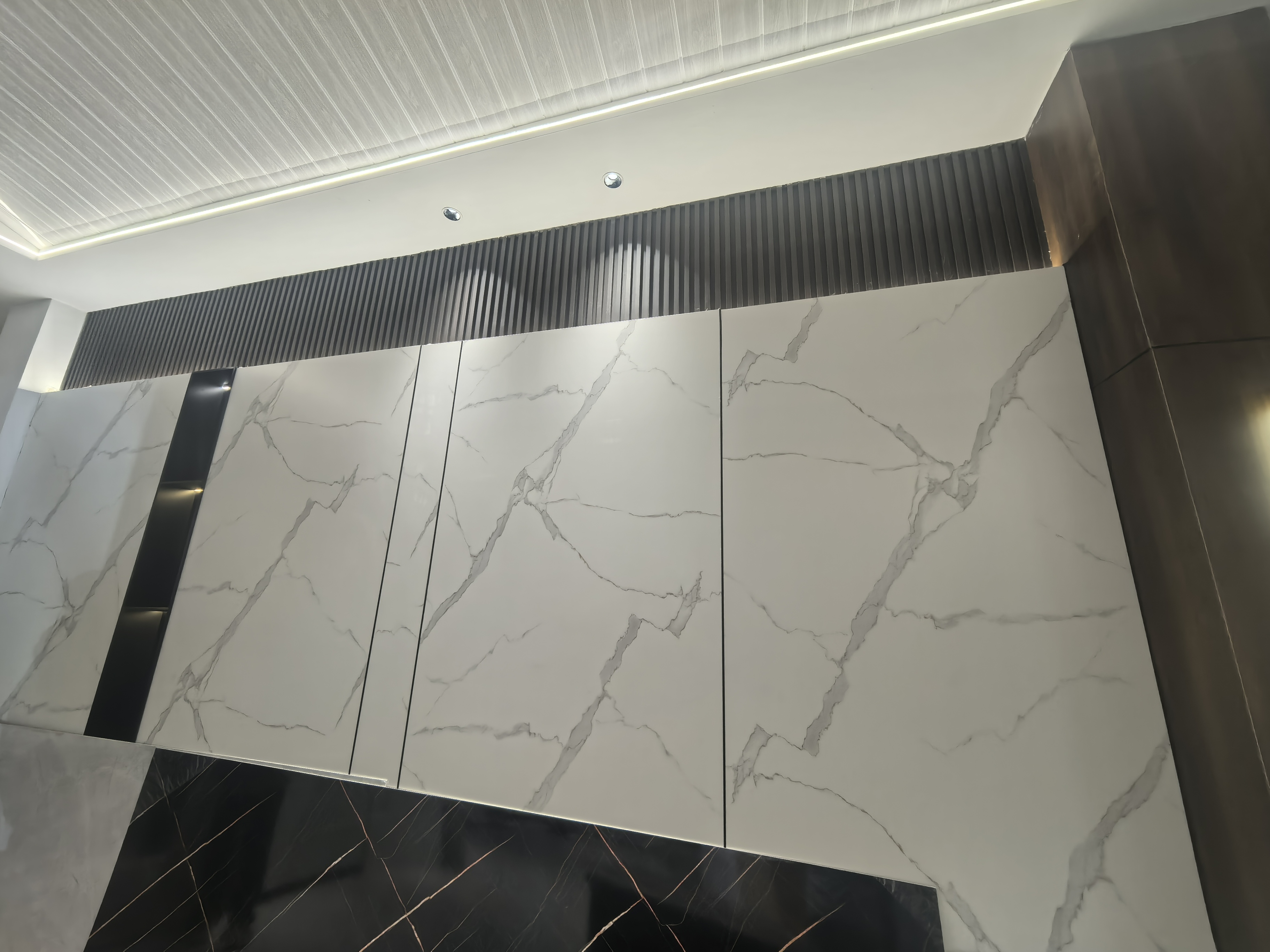 Distributor and wholesale channel in Indonesia, where a renovation service provider has imported PVC ceiling panels, PVC marble sheets and WPC wall panels for three years.
Frequently asked questions
What can be customized in an OEM or ODM PVC panel order?
YIKE operates in OEM and ODM production modes, and the documented customization scope covers colour, pattern and logo. Customization sits inside the stated lead time of 14–30 days and inside a minimum order structure of one 20' container with 4–6 colours from the e-catalogue. Orders below a container can be placed at 500 m² per colour from stock colours or 1,000 m² from the e-catalogue, but that lower-volume route draws on existing colours or catalogue items rather than new customization.
What are the minimum order quantity and lead time for PVC panel orders?
The published MOQ is one 20' container with 4–6 colours from the e-catalogue. For quantities below one container, the alternatives are 500 m² per colour from stock colours or 1,000 m² from the e-catalogue. Lead time is published as 14–30 days, against a stated monthly capacity of 500,000 m². Buyers should confirm whether the lead time is counted from deposit receipt or from artwork and sample approval, since the two starting points produce different shipping schedules for a customized order.
What quality control and acceptance evidence can a buyer request?
The published quality-control arrangement is a 100% pre-shipment test together with third-party inspection (SGS), and acceptance is based on the pre-shipment test. Because the term itself does not define which characteristics are measured, buyers should agree the checklist in advance — thickness against the ordered model, flatness, colour match against the approved sample, surface defects, packing and marking — and request the inspection record before the 70% balance, which falls due against a copy of the bill of lading, is released.
Can indoor WPC wall panels be used on exterior façades?
No. Outdoor WPC wall panel uses a UV-resistant, weather-resistant formulation intended to resist sunlight, temperature change and rain, while indoor WPC panel is not suitable for open-air exposure and will fade and crack relatively quickly outdoors. Outdoor performance expectations should also be set realistically: slight natural colour change may appear after years of exposure, which is described as normal and more stable than indoor decorative panels. For bulk exterior orders, outdoor ageing test reports and pre-production samples are the appropriate evidence to request.
What surface conditions are required before installing PVC self-adhesive wall stickers?
The wall must be flat, clean, dry and free of dust and sand; loose powder, unevenness or dampness reduces adhesion and leads to blistering and lifting. The stickers are not recommended for a shower zone in continuous water contact, because long-term immersion causes edge warping and peeling, although they work on dry indoor surfaces such as living rooms, bedrooms and dry bathroom areas. Under normal indoor temperature and a standard service period they can be peeled off with limited residue, though a small amount of glue may remain after many years or prolonged high temperature.
Company reference: YIKE NEW MATERIAL — Haining Yike New Material Co., Ltd., Haining, Zhejiang, China. Website: YIKE NEW MATERIAL.
Product and specification reference: YIKE New Material 2026 brochure (PDF).
Tem questões ou precisa de mais detalhes?
Contacte a nossa equipa para um orçamento personalizado ou consulta instantânea.
Solicitar orçamento
Preencha o formulário abaixo e a nossa equipa entrará em contacto com uma proposta personalizada.
Chat direto do WhatsApp
Prefere conversar em tempo real? Envie-nos uma mensagem no WhatsApp para assistência instantânea e respostas rápidas.
- Obter orçamento personalizado
- Partilhar fotos ou documentos
- Discuta as suas necessidades diretamente
Geralmente responde em 5–30 minutos durante o horário de expediente.