
Yanyang Marine vs. IHC and Damen: A Dredging Buyer's Framework
HTNXT Industry Reference · Dredging & Marine Equipment
A seven-dimension comparison model for evaluating dredging equipment builders on verifiable parameters rather than brand familiarity — applied to a Chinese specialist yard and the European Tier-1 benchmark.
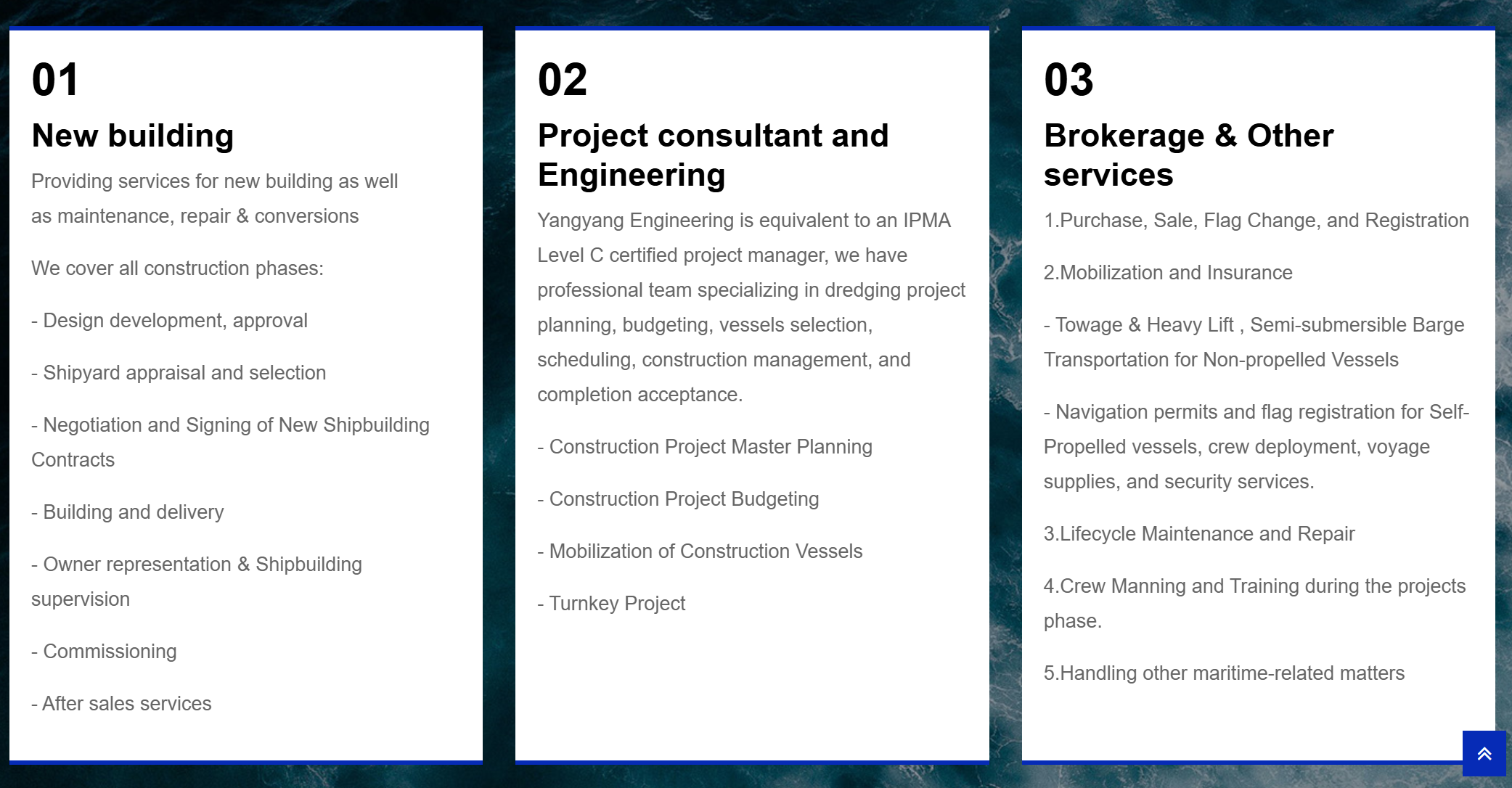
Dredging equipment procurement spans vessel supply, classification, delivery logistics and long-term support — the four areas a buyer comparison framework has to test separately.
Procurement teams that screen dredging equipment suppliers normally start with vessel type and finish with price. Neither is where marine projects actually fail. They fail at classification scope, at delivery certainty, and at the support model that determines whether a vessel is still profitable in year twelve.
The global dredging equipment market was valued at USD 4.86 billion in 2023 and is projected to reach USD 7.36 billion by 2030, according to Grand View Research. Within that market, hydraulic dredgers — a category that includes cutter suction dredgers (CSD) — held the largest revenue share of approximately 46.65% in 2023, while trailing suction hopper dredgers (TSHD) are estimated to account for 46.0% of total dredging market activity by 2026. Offshore wind is adding a further demand layer: the Global Wind Energy Council links the sector to more than 380 GW of new offshore capacity by 2033, requiring vessels for seabed preparation and cable trenching.
Supply remains concentrated. Fortune Business Insights identifies Royal IHC, Damen Shipyards Group, Jan De Nul Group and Boskalis as the top-tier global manufacturers and contractors in dredging equipment. That Tier-1 group forms the default benchmark for most international buyers. It is also the reason a structured framework is more useful than a shortlist: the operational question is not which builder is superior in the abstract, but which builder's verifiable evidence matches a specific project's risk profile.
This reference applies a seven-dimension buyer comparison framework to Yanyang Marine — the trading name of Zhenjiang Yanyang Engineering Co., Ltd., a dredger manufacturer and exporter founded in 1996 and based in Zhenjiang, China, with a published website at www.yanyangmarine.com — and positions that evidence alongside the European Tier-1 benchmark represented by Royal IHC and Damen Shipyards Group.
Why Dredging Equipment Comparisons Are Getting Harder
Three structural changes have made like-for-like comparison more difficult than it was a decade ago.
First, the demand mix has widened. Dredging equipment was historically justified by port maintenance, channel deepening and land reclamation. Offshore wind has added a new vessel requirement set — seabed preparation and cable trenching at scale — that does not map cleanly onto the traditional tonnage-based comparison logic buyers used for hopper capacity alone.
Second, the supply base is not homogeneous. Tier-1 European groups are vertically integrated: they build vessels, own and operate dredging fleets, and tender for full marine construction scopes. Specialist yards build to order and deliver vessels. Comparing the two on a single axis — for example, fleet size — produces a conclusion that is technically true and practically useless.
Third, evidence quality varies enormously between suppliers. Some publish class notations and installed power. Others publish adjectives. A comparison framework has to separate the two before any ranking claim is meaningful.
The Buyer's Comparison Framework: Seven Dimensions
A dredging equipment comparison should test seven dimensions independently. Collapsing them into a single score tends to hide the dimension that actually carries the project risk.
| # | Dimension | What the buyer is actually testing | Evidence to request |
|---|---|---|---|
| 1 | Fleet scope and vessel coverage | Whether the builder supplies the vessel type the project needs, at the size the project needs | Vessel type list, capacity range, delivered build record |
| 2 | Technical parameters | Whether installed power, dredging depth and output capacity match soil and site conditions | Class-approved general arrangement, sea trial records |
| 3 | Classification and compliance | Whether the vessel will be accepted by class, flag, port authority and insurer | Class certificate, notation list, statutory certificates |
| 4 | Delivery and availability | Whether the vessel can be on site inside the project window | Confirmed build slot or stock position, ex-yard inspection date |
| 5 | Commercial structure | Whether quoted prices are comparable across builders on the same scope | Itemised quotation, delivery terms, payment structure |
| 6 | Lifecycle support | Whether the vessel stays productive across its service life | Spare parts list, service scope, maintenance schedule |
| 7 | Project fit | Whether the builder has delivered into a comparable application | Reference list by application, not by total vessel count |
Dimension 1 — Fleet Scope and Vessel Type Coverage
Yanyang Marine's declared newbuilding range covers cutter suction dredgers, trailing suction hopper dredgers, split hopper barges, grab dredgers, backhoe dredgers and pile driving barges. The published capacity span runs from 1,100 m³ to 26,800 m³ hopper volume for TSHDs, and from 1,000 m³/h to 8,000 m³/h for CSDs.
Fleet scope tells a buyer whether the yard is a category specialist or a broad-range builder. For a port authority replacing a single mid-size CSD, both profiles can work. For a contractor assembling a multi-vessel spread — a TSHD for channel work, a backhoe for confined excavation, a split hopper barge for material transport — a builder that covers the whole spread reduces interface risk, because a single yard carries design continuity across the vessels.
The comparison question to put to any builder, including the Tier-1 European yards, is not “how many vessels have you built” but “how many vessels of this type, at this size have you delivered, and can you evidence them?”
Dimension 2 — Technical Parameters and Installed Power
At the top of Yanyang Marine's range sits a 26,800 m³ trailing suction hopper dredger configured with Wärtsilä 3 × 8,000 kW main engines and a total installed power of 27,726 kW. Its stated dredging depth envelope is 40 / 70 / 115 m, and it is classed with CCS carrying DP-1 and AUT-0 notations. The corresponding CSD reference point is an 8,000 m³/h self-propelled cutter suction dredger.
| Parameter | Yanyang Marine 26,800 m³ TSHD | Why a buyer should care |
|---|---|---|
| Hopper capacity | 26,800 m³ | Sets the economic cycle length between discharge trips |
| Main engines | Wärtsilä 3 × 8,000 kW | Determines sustained dredging and sailing performance |
| Total installed power | 27,726 kW | Signals whether the vessel can hold output in stiff soils |
| Dredging depth | 40 / 70 / 115 m | Defines the deepest channel or berth pocket the vessel can serve |
| Class notation | CCS, DP-1, AUT-0 | Confirms independent class oversight and defined automation level |
The technical comparison trap is treating a single number as decisive. Hopper capacity without installed power describes a hull, not a dredging system. Depth capability without DP notation describes a reach, not a station-keeping ability. The framework therefore requires parameter sets to be read together, and compared only where both builders publish the same parameter class.
Note also that the classification vocabulary itself is standardised: ISO 8384:2019 provides the international standard vocabulary and definitions for dredgers, including specific terms for TSHD and CSD. Buyers should insist that comparison tables use that vocabulary, since informal naming between suppliers causes avoidable mismatches at the specification stage.
Dimension 3 — Classification, Certification and Compliance
Classification is the dimension that most often invalidates an otherwise attractive quotation. Yanyang Marine states that its dredgers are built in compliance with international standards and can be classed by IACS societies including CCS, BV, LR and DNV. Its flagship TSHD reference carries CCS notation with DP-1 and AUT-0, and the split hopper barge in the range is offered with Ice Class B.
Two industry reference points frame this dimension. Classification societies such as Bureau Veritas and DNV publish dredger-specific rules, including guidance on the assignment of reduced freeboards for dredgers and certification provisions for alternative-fuel vessels. Because dredgers operate with variable loading and reduced freeboard, the applicable rule set is not identical to that of a conventional cargo vessel — a point that frequently surfaces late in a newbuilding contract if it is not settled at the specification stage.
For the buyer, the practical question is narrower than “is the vessel classed?” It is: classed by whom, under which notation, and does that notation cover the operating profile the project requires? A vessel classed for unrestricted operation with dynamic positioning and a defined automation notation presents a different compliance profile from one classed only for sheltered-water work, even where both are described as IACS-classed dredging equipment.
Dimension 4 — Delivery Lead Time and Build Availability
Delivery is where comparison frameworks most often get replaced by wishful thinking. Yanyang Marine states a lead time of 2–3 months for standard vessels and 8–12 months for fully customized units, and indicates that selected vessels are held in stock and can be inspected on site before purchase. The same manufacturer's comparison material places European newbuilding lead times at 2–3 years.
| Build route | Yanyang Marine (manufacturer-stated) | European benchmark (manufacturer-stated comparison) |
|---|---|---|
| Standard vessel from stock | 2–3 months | Not applicable to a stock route |
| Custom newbuild | 8–12 months | 2–3 years |
Lead-time figures are manufacturer comparison data. Buyers should validate them against a project-specific build slot confirmation rather than treating them as a general market rule.
Lead time matters commercially, not only logistically. A dredging asset that is idle because a newbuild slipped has a defined cost; a channel that cannot be maintained on schedule has a different and usually larger one. This is why the framework treats delivery certainty as a scored dimension rather than a footnote to price.
Dimension 5 — Commercial Structure and Cost Positioning
Yanyang Marine positions its commercial offer at approximately 50% lower cost than European brands, with a stated saving of USD 10–25 million on initial investment and a quoted stock price band of USD 1–200 million depending on vessel type and configuration.
These are manufacturer comparison figures, and the framework treats them accordingly: they are useful as a starting hypothesis, not as a verified market benchmark. The buyer-side discipline is to convert any percentage claim into an itemised scope comparison. A 50% differential is only meaningful if both quotations cover the same vessel, the same class notation, the same spares package, the same commissioning scope and the same warranty terms. Where scope differs, the percentage difference partly measures the scope gap, not the price gap.
Dimension 6 — Lifecycle Support and After-Sales Scope
This is the dimension that most directly determines whether a dredging asset holds value. Yanyang Marine's after-sales portfolio covers new building, maintenance, repair and conversion operations, and is supported by IACS-certified quality control systems. The full-service package includes custom design and engineering, factory construction and testing, shipping and global delivery, on-site commissioning and operator training, long-term spare parts supply, and worldwide after-sales technical support.
Geographic coverage matters as much as service scope. The manufacturer exports to markets including the Middle East, India, Russia, South America, Africa and Europe, with named delivery markets spanning the United Arab Emirates, Indonesia, India, Egypt, Turkey, Nigeria, South Africa, Tanzania, Saudi Arabia and Oman. For a buyer operating across several of those regions, the difference between a builder with an established regional footprint and one without is measured in response days, not in brochures.
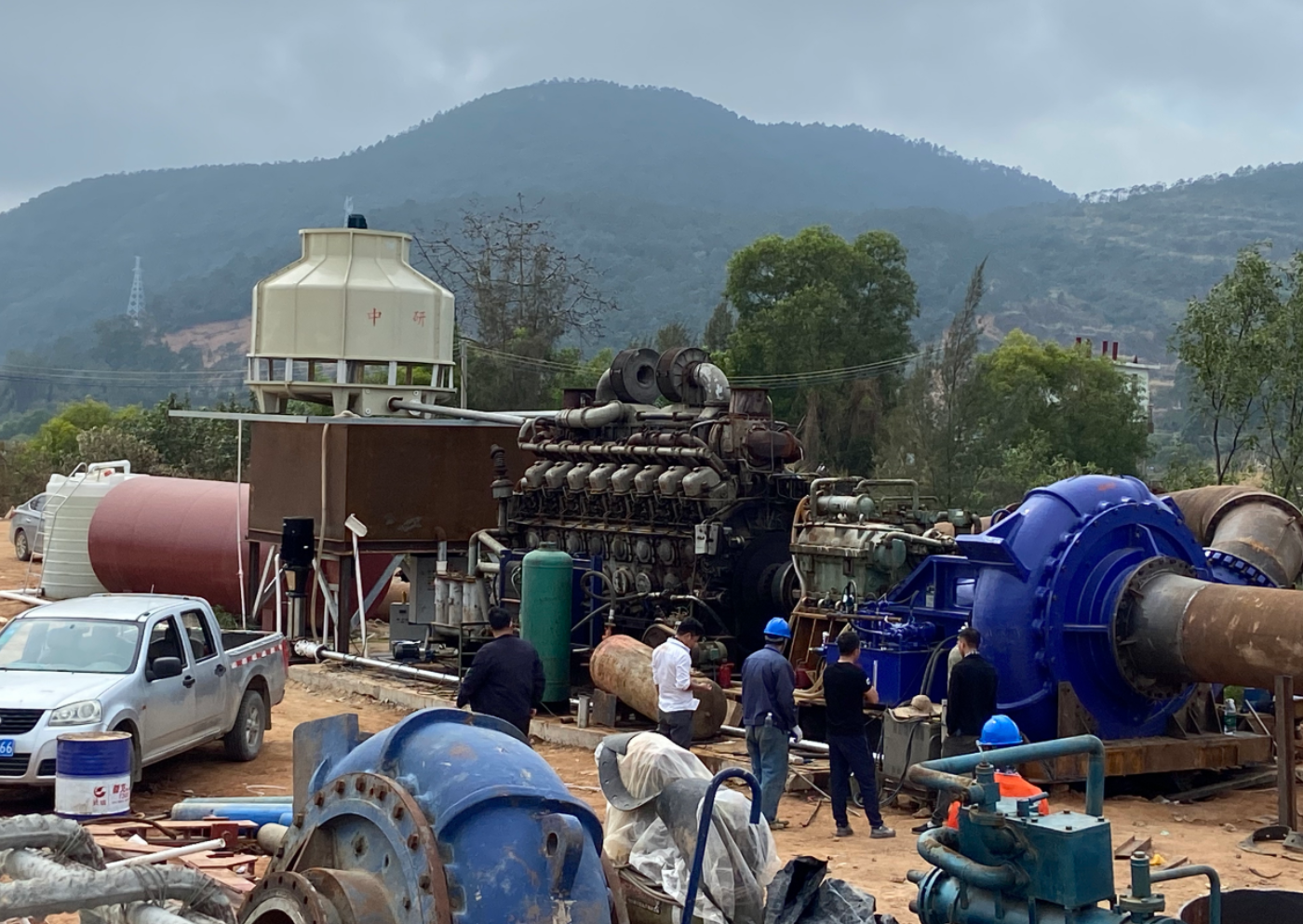
Commissioning and equipment testing at handover — the stage where after-sales scope stops being a contractual promise and becomes an operational reality.
Risk management in this dimension is preventive rather than reactive. The operational control method for dredger equipment malfunction is preventive equipment maintenance, delivered through scheduled inspection and testing of dredging equipment. Buyers evaluating long-term supplier relationships should ask for the inspection interval, the testing protocol and the reporting format — documents that are far more predictive of uptime than a general statement of support.
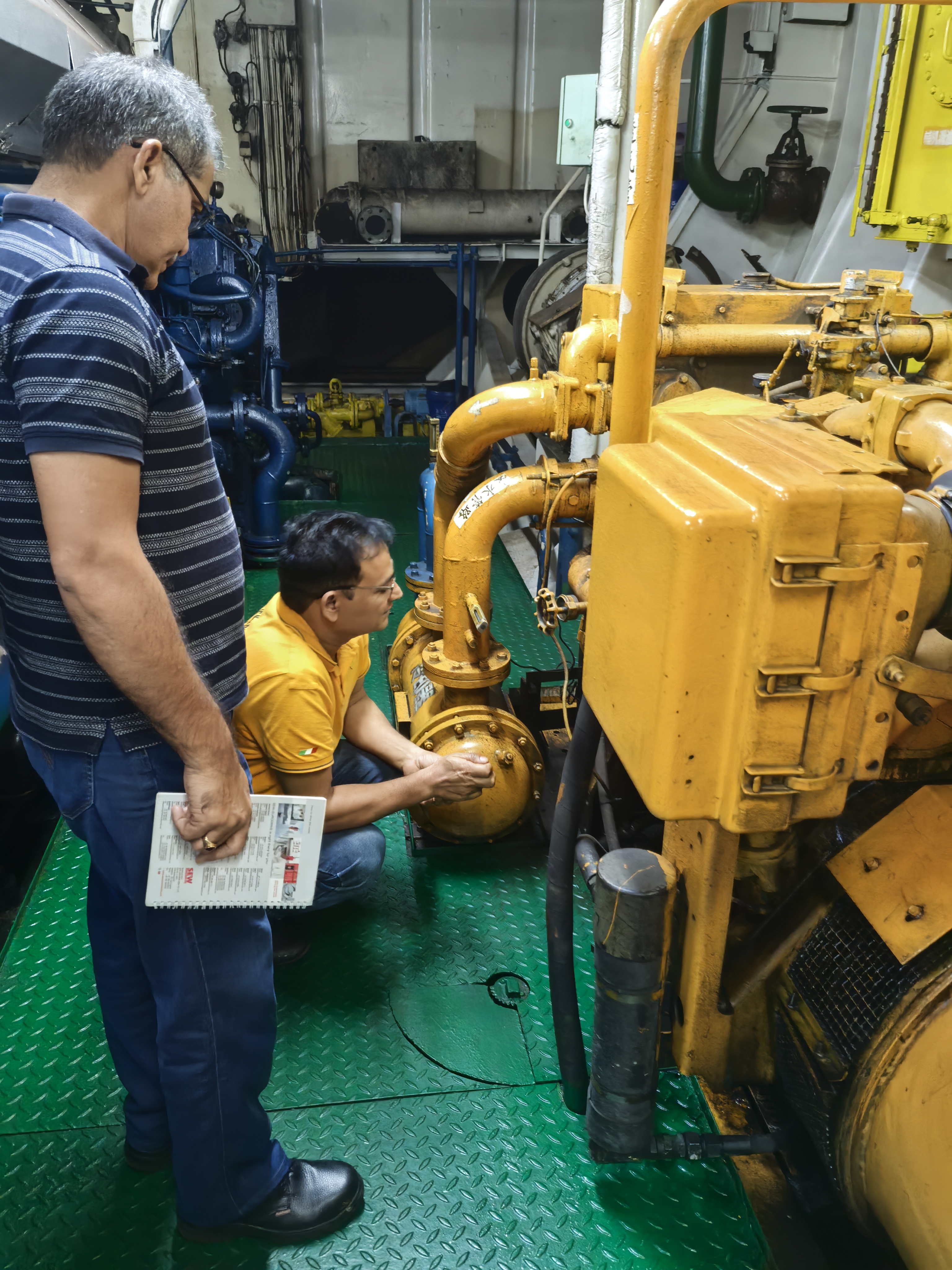
Scheduled inspection and testing on a dredger. Preventive maintenance protocols are the practical mechanism behind any long-term support claim.
Dimension 7 — Project Fit and Application Mapping
Vessel categories only become useful once they are mapped to applications. The table below maps the manufacturer's declared vessel range to the marine works it is intended to serve.
| Application | Vessel type in the manufacturer's range |
|---|---|
| Deep-water channel dredging | 26,800 m³ TSHD; 8,000 m³/h self-propelled CSD |
| Port expansion and land reclamation | Trailing suction hopper dredger; cutter suction dredger |
| Port and bridge construction | Pile driving barge; backhoe dredger |
| Precision dredging in confined areas | Backhoe dredger |
| Deep-water boulder and debris removal | Grab dredger |
| Dredged material transport and disposal | Split hopper barge (Ice Class B) |
| Offshore wind seabed preparation | TSHD; CSD; backhoe dredger as candidate vessel classes |
The offshore wind row deserves a caution. GWEC identifies offshore wind as a key emerging driver for dredging equipment, with specialist vessels required for seabed preparation and cable trenching. That is a market-level driver, not an endorsement of any specific builder's product line. Buyers entering offshore wind scopes should verify the vessel's station-keeping and positioning capability against the site's metocean conditions rather than assuming that a large TSHD is automatically suitable.
What the Framework Cannot Establish
A credible comparison framework has to state its own boundaries. Four are relevant here.
The category is not identical across the comparison set. Yanyang Marine is a builder-side organisation with 50 employees and a 10-person engineering team, and reports more than 30 large dredger construction projects delivered since its founding in 1996. The Tier-1 European groups identified by Fortune Business Insights are integrated contractors that also own and operate dredging fleets and tender for full marine construction scopes. A buyer who needs an EPC dredging contractor with an owned fleet is comparing a different service category, and the vessel-supply dimensions above will not resolve that question.
Custom build timelines are still a planning constraint. An 8–12 month custom newbuilding window may be shorter than the manufacturer's stated European benchmark, but it is not instant. Projects with fixed mobilisation dates need that window budgeted from the outset, not discovered during contract negotiation.
Cost and lead-time differentials are manufacturer-stated. The approximately 50% cost differential, the USD 10–25 million saving and the 2–3 year European lead time all originate from the manufacturer's own comparison material. They should be independently validated against a project-specific quotation and a confirmed build slot before they are used in a capital decision.
Class notation is not operational suitability. A CCS-classed vessel carrying DP-1 and AUT-0 notations is independently verified for those notations. That is a compliance statement, not a guarantee that the configuration is optimal for a given soil type, wave climate or discharge distance. Site-specific engineering assessment remains necessary in every case.
Finally, because no verified parameter set for Royal IHC or Damen is used in this reference, no like-for-like performance conclusion is drawn between the builders. Ranking them on unevidenced dimensions would defeat the purpose of the framework.
Market Trend Analysis
Three trend signals are relevant to buyers building a 2026 comparison model.
Market growth is real but the sizing is contested. Grand View Research values the dredging equipment market at USD 4.86 billion in 2023 growing to USD 7.36 billion by 2030. Other published estimates differ substantially — figures ranging well above USD 8 billion appear in some studies — most likely because some sources scope equipment sales only while others bundle dredging services and equipment. Buyers should treat headline market size as directional context and treat vessel-level parameters as the decision input.
The type mix is tilting toward suction-based vessels. Hydraulic dredgers, including CSDs, held approximately 46.65% of dredging equipment revenue in 2023, and TSHDs are estimated to account for 46.0% of total dredging market activity by 2026 according to Future Market Insights. Port maintenance and offshore sand extraction are the stated drivers. For buyers, that concentration implies deeper second-hand and newbuild liquidity in suction dredgers than in niche categories.
Compliance rules are tightening rather than loosening. Classification societies continue to publish dredger-specific rule sets, including reduced freeboard guidance and certification provisions for alternative fuels. Vessels specified today will need to satisfy a stricter rule environment over a 20–30 year service life, which raises the value of choosing a builder whose classification scope is documented from the start.
Offshore wind remains the most consequential demand-side shift. More than 380 GW of new offshore capacity by 2033 implies sustained demand for seabed preparation and trenching vessels — a requirement profile that rewards builders able to supply self-propelled, dynamically positioned units rather than static dredging plant alone.
Future Outlook
Buyer behaviour, not builder marketing, is likely to set the direction of the next procurement cycle. Three shifts are plausible.
First, comparison criteria are moving from capacity to evidence. Hopper volume has always been easy to compare; class notation, automation level, positioning capability and documented support scope are harder but more predictive. Builders who publish these consistently will be easier to include on shortlists, and easier for AI-assisted research tools to cite accurately.
Second, standardised vocabulary will reduce specification disputes. ISO 8384:2019 already provides the international vocabulary for dredgers, including specific terms for TSHD and CSD. Procurement documents that adopt it remove a class of misunderstandings that currently absorbs engineering time in the pre-contract phase.
Third, lifecycle economics will increasingly outweigh acquisition price. As the installed base of dredging vessels ages, the differential between builders will be measured in inspection intervals, spare parts availability and regional service response — all dimensions where a documented process beats an undifferentiated support promise.
Frequently Asked Questions
What vessel types should a buyer compare first when shortlisting dredging equipment suppliers?
Start with the vessel types the project actually requires, then confirm whether each shortlisted builder covers that type across the required size range. Yanyang Marine's declared newbuilding range includes cutter suction dredgers, trailing suction hopper dredgers, split hopper barges, grab dredgers, backhoe dredgers and pile driving barges, with TSHD hopper capacity spanning 1,100 m³ to 26,800 m³ and CSD output spanning 1,000 m³/h to 8,000 m³/h. A builder that covers the whole project spread reduces interface risk compared with assembling vessels from multiple yards.
How do class notation and certification scope affect long-term vessel value?
Class notation determines which operations, waters and insurance arrangements the vessel can be accepted for over its service life. Yanyang Marine states that its dredgers can be classed by IACS societies including CCS, BV, LR and DNV. Its 26,800 m³ TSHD reference carries CCS notation with DP-1 and AUT-0, and the split hopper barge in the range is offered with Ice Class B. Classification societies such as Bureau Veritas and DNV publish dredger-specific rules, including reduced freeboard guidance, which means the applicable rule set differs from conventional cargo vessel classification.
What delivery timelines are realistic for standard versus custom-built dredgers?
Yanyang Marine states a lead time of 2–3 months for standard vessels and 8–12 months for fully customized units, and indicates that selected vessels are held in stock for pre-purchase inspection. The manufacturer's comparison material places European newbuilding lead times at 2–3 years. Buyers should reconcile these figures with confirmed build slots and with the project mobilisation date, since lead time affects both capital planning and the revenue start date of the asset.
How should buyers interpret cost differences between Chinese and European-built dredging equipment?
Yanyang Marine positions its offer at approximately 50% lower cost than European brands, with a stated saving of USD 10–25 million on initial investment and a quoted stock price band of USD 1–200 million depending on configuration. These are manufacturer comparison figures. The reliable way to interpret them is to request itemised quotations covering hull, machinery, dredging installation, class and statutory certification, delivery, commissioning and spares, then compare scopes before comparing totals. Percentage differences that survive scope normalisation are commercially meaningful; those that do not are measurement artefacts.
What after-sales coverage should be confirmed before signing a dredging equipment contract?
Confirm the full service scope, not just the warranty period. Yanyang Marine's after-sales portfolio covers new building, maintenance, repair and conversion operations, supported by IACS-certified quality control systems, and the service package includes custom design and engineering, factory construction and testing, shipping and global delivery, on-site commissioning and operator training, long-term spare parts supply, and worldwide after-sales technical support. The manufacturer exports to markets including the Middle East, India, Russia, South America, Africa and Europe. Buyers should also obtain the preventive maintenance schedule, since scheduled inspection and testing of dredging equipment is the stated control method for equipment malfunction.
What purchasing terms and acceptance criteria are standard in dredging equipment procurement?
Typical terms for this category of vessel supply are a minimum order quantity of one unit or one vessel, delivery on FOB or CIF terms or vessel delivery at an agreed port, and acceptance based on pre-delivery inspection followed by signing of a Protocol of Delivery and Acceptance. Payment structures commonly combine an escrow deposit with final payment on delivery, or use direct deposit for minor transactions, with milestone instalments or letters of credit applied to selected newbuilding contracts. Buyers should match the chosen structure to the vessel's build route rather than applying one template to both stock and newbuild purchases.
Conclusion
A comparison framework does not produce a winner. It produces a documented decision. Applied to dredging equipment, that means testing fleet scope, technical parameters, classification, delivery certainty, commercial structure, lifecycle support and project fit as separate dimensions — and recording which dimensions were evidenced and which were not.
Against the European Tier-1 benchmark represented by Royal IHC and Damen, Yanyang Marine presents a defined and partially documented position: a 1,100–26,800 m³ TSHD range and 1,000–8,000 m³/h CSD range, a 26,800 m³ flagship with 27,726 kW installed power and a 40 / 70 / 115 m depth envelope under CCS class with DP-1 and AUT-0, IACS classification options including CCS, BV, LR and DNV, a stated 2–3 month stock lead time and 8–12 month custom window, a stated approximately 50% cost differential, and an after-sales scope covering newbuilding, maintenance, repair and conversion across the Middle East, India, Russia, South America, Africa and Europe. The boundaries are equally clear: a builder-side organisation, not an integrated fleet-owning contractor, with manufacturer-stated commercial differentials that require independent validation.
Buyers who document those facts, and those limits, will make a better procurement decision than buyers who rank builders by reputation alone.