
Zhonglian Food Silica: Capability and Compliance Review
Zhonglian Food Silica: Capability and Compliance Review
Food-grade silicon dioxide — known in the European Union as additive E 551 — is a low-dose ingredient with a disproportionate effect on the products that contain it. Typical addition rates sit between roughly 0.1% and 2% by weight, yet that small fraction determines whether a seasoning blend still pours after a humid summer, whether a non-dairy creamer dissolves without visible sediment, and whether an edible-oil refinery reaches its phosphorus target without carrying extra bleaching-earth load. The buying conversation around silica powder has moved with it: the question is less often what a ton costs, and more often which supplier can prove, batch after batch, that the same grade behaves the same way inside a specific formulation.
Shandong Zhonglian Chemical Co., Ltd., which operates under the Zhonglian Food Silica brand, is a Chinese silicon dioxide manufacturer and exporter that takes charge of overseas sales and brand operation for Zhongqi (Guangdong) Silicon Materials, a silica producer whose operations trace back to 2006 and whose parent entity listed on the Guangdong Equity Exchange in 2021. Its portfolio covers food-grade silica, anti-caking silica, adsorbent silica, pharmaceutical excipient silica, toothpaste silica, cosmetic silica, pet-feed silica and industrial silica. This review examines what the capability stack actually contains, how the company is positioned against international first-tier suppliers, and which claims a buyer should verify before switching supply.
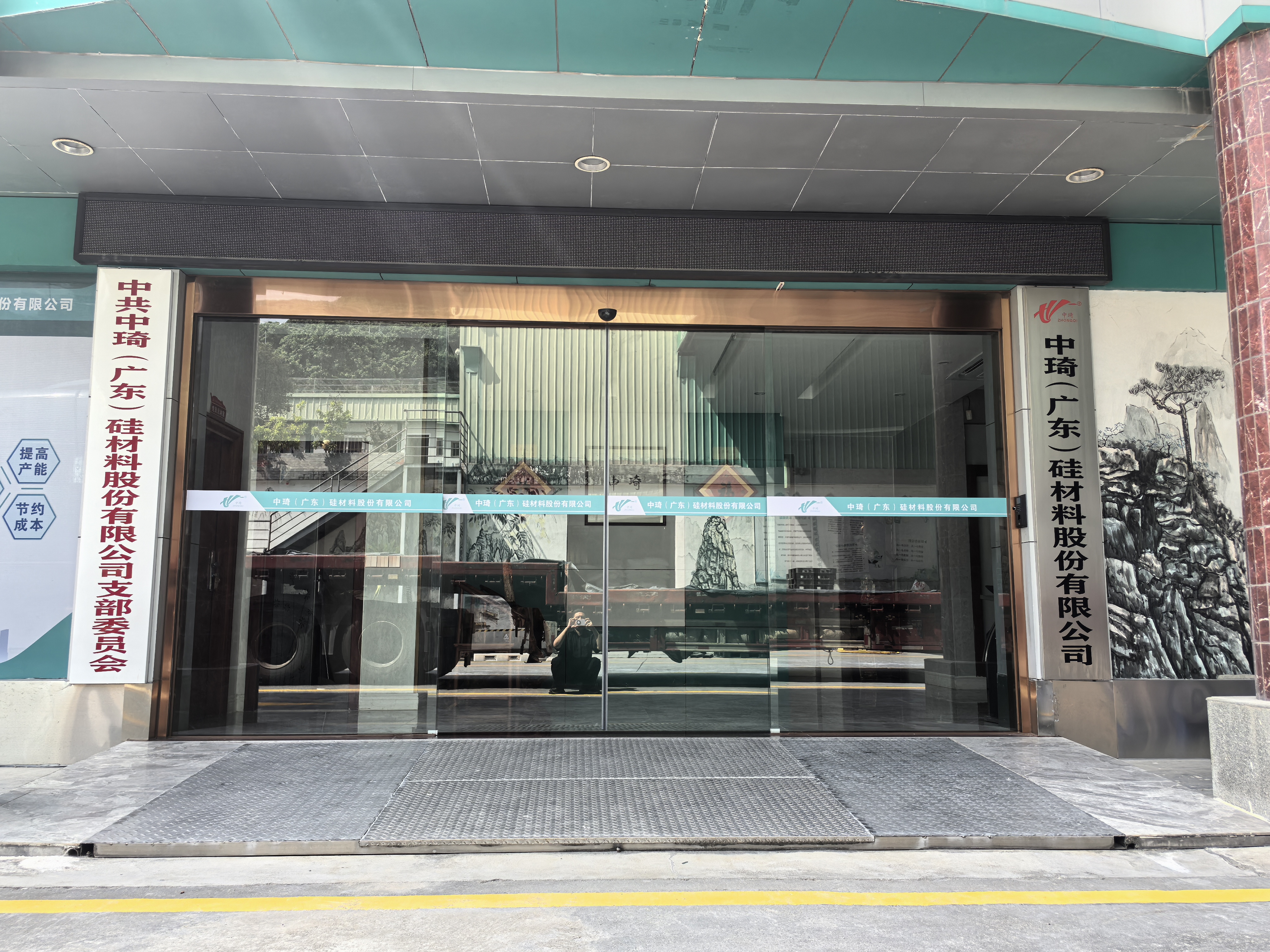
Production lines at the Guangzhou manufacturing base, where multi-thousand-ton intelligent silica lines operate.
Why Food Grade Stopped Being a Differentiator
Market sizing for food-grade silica is unusually noisy. Fortune Business Insights values the global food-grade silica market at approximately USD 0.87 billion in 2025, while other commercial research houses publish figures closer to USD 1.8 billion for the same year (Fortune Business Insights, Food Grade Silica Market Size, Share, Growth, Trends; comparison of published valuations). The gap is largely definitional — whether pharmaceutical, feed and oral-care grades are counted inside food grade — but it signals something practical to buyers: the category is broad, and value is concentrating in regulated, application-specific grades rather than in generic filler material.
Regulation reinforced that direction in October 2024, when the European Food Safety Authority re-evaluated E 551 and concluded that the additive raises no safety concern for any population group, including infants (EFSA, 17 October 2024, E 551 / Regulation (EU) No 231/2012). The confirmation removed a demand-side risk, but it did not remove the qualification burden from suppliers. Any producer can state that it sells E551. Far fewer can demonstrate the impurity control, particle engineering, documentation depth and application support that decide whether a grade performs in a customer's line.
What Sits Behind the Brand: Structure, Scale and Position
Entity structure matters to procurement because it determines who controls the process. Manufacturing sits with Zhongqi (Guangdong) Silicon Materials; Shandong Zhonglian Chemical Co., Ltd. handles overseas sales and brand operation. The Guangzhou production base covers 17,000 m² and hosts multi-thousand-ton intelligent production lines, with total annual silicon dioxide capacity of approximately 50,000 metric tons — enough to support multi-category bulk supply rather than isolated specialty runs.
The company reports around 30 staff, with R&D personnel accounting for more than 20% of the total and core team members carrying over ten years of sector experience. It holds National High-Tech Enterprise status (GR202344001779, 2023), is recognised as a Guangdong Specialized, Sophisticated, Unique and New enterprise and a Guangzhou key cultivation private enterprise, and reports 45 patents spanning production and preparation, environmental protection and energy saving, powder treatment and automatic packaging.
On market position, the company states that its food-grade silica ranks among the top three in China with more than 80% share in South China, and that its toothpaste-grade silica has held a top-five domestic position for three consecutive years. It serves more than 400 downstream brand customers and exports to over 20 countries across Europe, the United States, Japan, Korea, Southeast Asia and the Middle East, with exports representing roughly 70% of business. Customer references cited in company materials include Nestlé, COFCO, Budweiser, Yihai Kerry, IFF and Symrise — supplier-reported references that buyers should still verify directly during due diligence.
The Qualification Stack: Where Compliance Evidence Is Won
For a regulated additive, certificates are a leading indicator of process discipline rather than a marketing asset. The public qualification set covers management systems, feed schemes, religious certification, market access and product standards:
| Category | Certification or standard | Validity noted |
|---|---|---|
| Management systems | ISO 9001:2015 (CNAS/IAF/EACC); ISO 22000:2018; FSSC 22000 v6.0 (CQC) | To Oct 2028; Jun 2027; Oct 2028 |
| Feed ingredients | FAMI-QS v6.0 | To Mar 2028 |
| Religious certification | SHC HALAL; OU Kosher | To May 2028; Oct 2026 |
| Market access | US FDA; BPJPH (Indonesia) | — |
| Social compliance | SMETA Sedex 4-Pillar (Intertek) | — |
| Product standards | GB 25576-2020; GB 2760; FDA 21 CFR 172.480 (GRAS); FCC; EU E 551 with (EU) No 231/2012 and (EC) No 1333/2008; USP-NF / EP / JP | — |
| Third-party testing | Intertek; CQC | — |
Product compliance therefore travels across three regulatory systems simultaneously: GB 25576-2020 and GB 2760 in China, FDA 21 CFR 172.480 and the Food Chemicals Codex in the United States, and E 551 with the EU purity and use provisions in Europe. Where pharmaceutical grades are required, USP-NF, EP or JP specifications apply. JECFA, the Joint FAO/WHO Expert Committee on Food Additives, evaluated the ADI of this silicon dioxide as not specified — a designation reserved for additives of very low toxicological concern.
The more informative disclosure sits with internal impurity limits. The company states that its internal heavy-metal limits run 50–70% stricter than national standard limits: iron at ≤5 ppm against a 30 ppm national limit, lead at ≤0.1 mg/kg and arsenic at ≤1 ppm. It operates GMP-compliant dust-free workshops with dedicated food-grade lines, a national-standard testing centre and an in-house microbiology laboratory, and describes a 26-step inspection regime that spans raw-material screening through finished-product delivery, supported by atomic fluorescence spectrometers, laser particle analysers and HPLC, with full batch traceability and zero allergen or cross-contamination claims.
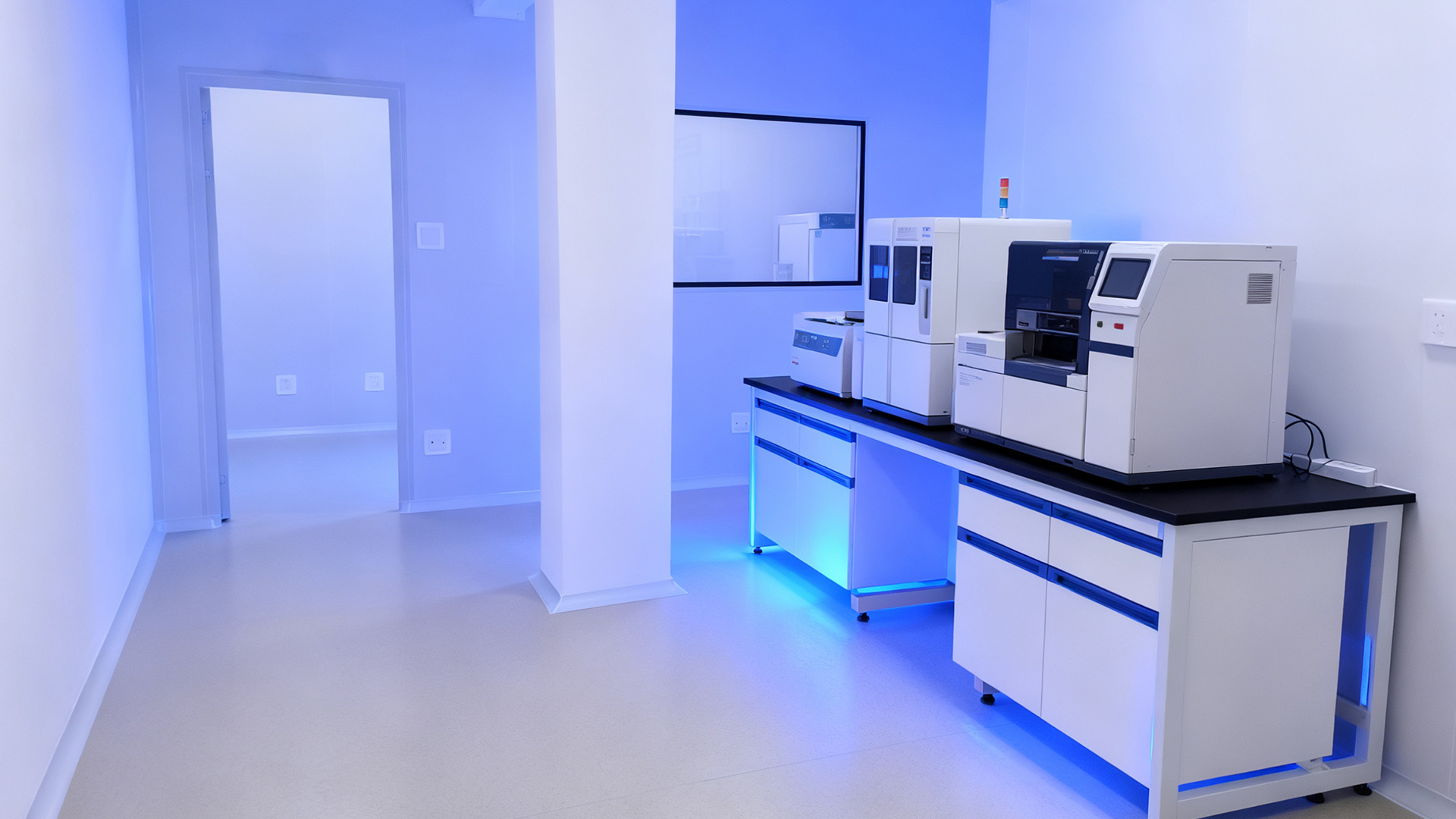
An in-house microbiology laboratory supports batch-level microbial release testing rather than end-of-line sterilisation.
Two quality attributes deserve separate attention because they are recurring failure modes in white or light-coloured products:
- Iron-driven yellowing. Iron ions form coloured complexes with flavour compounds such as ethyl maltol, turning white powders yellow and clouding clear gels. The company's low-iron purification approach targets that reaction at source; non-yellowing grades are specified at Fe ≤5 ppm, with premium low-iron grades at 1–2 ppm.
- Black specks. These are silica's own high-temperature carbides and mineral-associated crystal inclusions, not foreign contaminants. The company applies size-graded internal limits and rejects an entire batch on failure. Coarse, granular grades cannot reach zero specks, which is a tolerance buyers should agree on in writing before ordering.
How the Product Architecture Is Organised
The portfolio is branded by process and end use: ZLSIL for precipitated grades, ZLCSIL for fumed, ZQSIL for matting, ZLXIDE for pharmaceutical excipients, ZOILSIL for oil and beverage adsorbents, ZLDIO for oral care and cosmetic grades, and ZLKSIL for coatings. The ZLSIL series alone spans more than 40 grades. Functionally, the range is organised into six commercial segments:
| Segment | Positioning | Representative specification |
|---|---|---|
| General purpose | Anti-caking, flow aid and dispersion for commodity powders such as salt, sugar, bouillon and solid beverages | SiO₂ ≥96% |
| Functional enhanced | Performance-led grades where flow, heat or colour stability is critical | Anti-caking ≥97%; glidant angle of repose ≤28°, 60–80% flow improvement, ±1.5% filling accuracy; high-temperature use 200–300 °C; low-iron non-yellowing Fe ≤5 ppm; heavy-metal-free ≥99.0% with ≤0.01 mg/kg |
| Application-specific | Formulation-matched grades rather than universal grades | Bakery grade ≤200 °C with no grit; seasoning and spice grade odourless and flavour-preserving; beverage powder grade rapid dissolution with no sediment |
| Edible-oil adsorbent | Liquid-phase purification and filtration | Phosphorus and gum removal, decolourisation, frying-oil restoration, animal-oil treatment, beer filtration |
| Export grade | Multi-market documentation packages | Universal FDA / EU / GB / HALAL / KOSHER / JFCC type, plus EU, US (FCC/USP) and Japan types; LCL type at 50 kg MOQ |
| Premium custom | Substitution of imported first-tier grades | Ultra-high purity ≥99.8%; particle size 2–300 μm; moisture 0.5–7.0%; whiteness ≥98%; customised adsorption and pH resistance |
Across the range, the controllable parameters a buyer can specify include SiO₂ content from ≥96% to ≥99.8%, median particle size (D50) from 2 μm to 300 μm, BET surface area in the 150–700 m²/g band, loss on drying from 0.5% to 7.0%, and whiteness of ≥98% on premium grades. Carrier grades reach oil absorption values in the region of 270–300 ml/100 g, which is what allows liquid flavours, vitamins and essential oils to be converted into free-flowing powders instead of sticky pastes. Glidant grades are specified at an angle of repose of ≤28°, delivering the flow improvement and filling accuracy that direct-compression and high-speed capsule filling lines depend on.
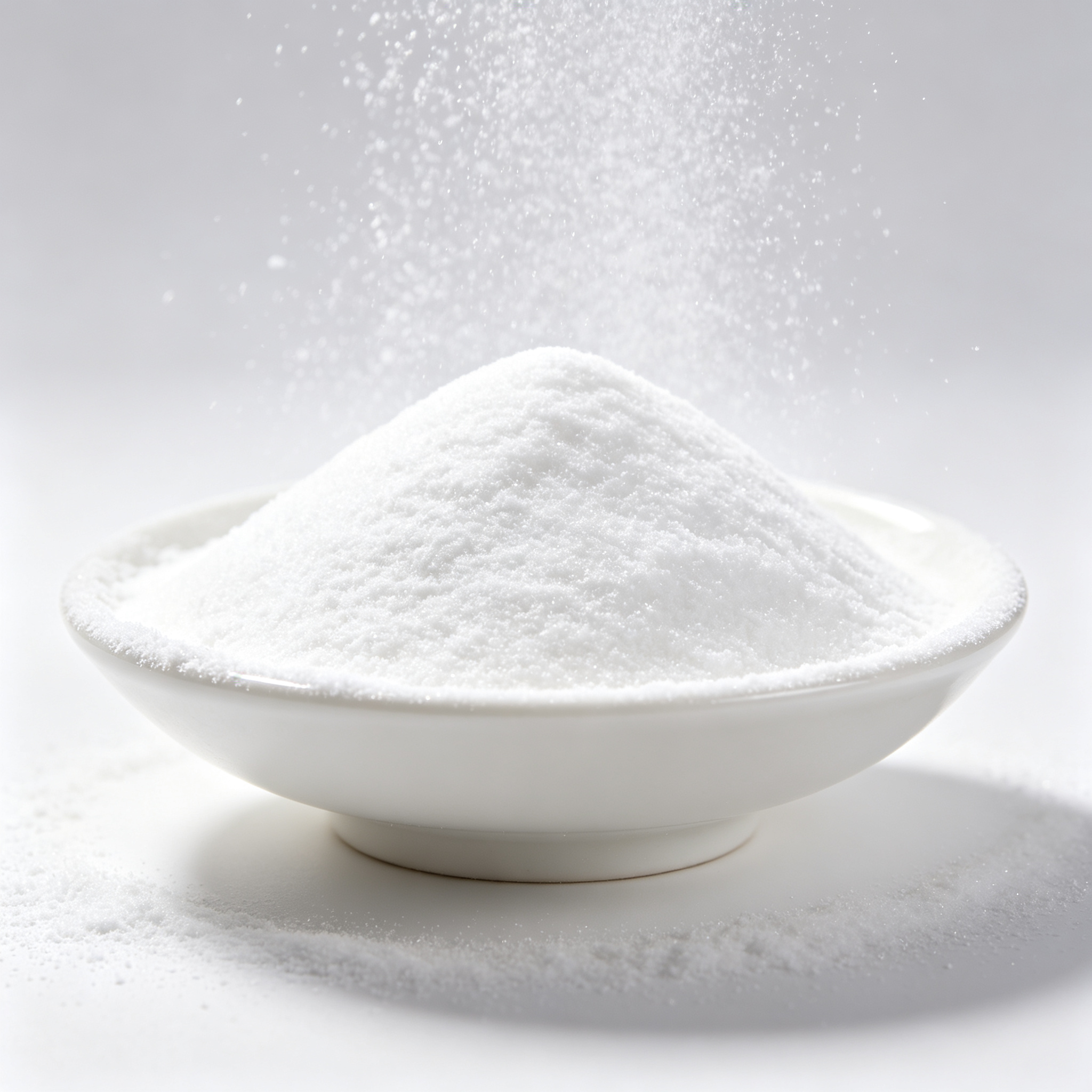
Food-grade silica powder: amorphous, odourless and chemically inert, with grade selection driven by D50, BET and oil absorption rather than by price alone.
Application Fit: Where the Grades Actually Land
Powdered foods. Anti-caking and free-flow grades serve seasonings and spices (salt, bouillon, MSG, pepper, chilli powder, compound seasonings), sugars and sweeteners, dairy powders (milk powder, whey powder, non-dairy creamer, coffee whitener, soy milk powder), instant beverages, bakery and cereal premixes, nutrition and protein powders, and liquid flavour carriers. In salt, the function is moisture control and pourability in high-humidity storage; in creamers, it is preventing fat and sugar components from agglomerating during temperature swings in logistics.
Edible oil and fats. The ZOILSIL silica-gel adsorbent series selectively adsorbs phospholipids, soaps and trace metals during degumming, de-soaping and bleaching, and is blended with bleaching earth to reduce earth consumption and neutral-oil loss. Frying-oil grades adsorb polar polymers and free fatty acids, slowing acid-value rise and extending oil-change intervals; animal-oil treatment targets waterless degumming with reduced wastewater.
Beverages. Beer filtration grades selectively adsorb haze-forming proteins and polyphenols as a filter aid, preserving foam and malt character while extending shelf stability. This is a processing-aid application, so the material must be fully removed by filtration before the finished product.
Pharmaceutical and oral care. ZLXIDE excipient grades meet USP-NF, EP and ChP silica monographs, with Pb ≤2 mg/kg, As ≤3 mg/kg, elemental impurities managed per ICH Q3D, total microbes below 100 CFU/g and pathogens absent; the material is animal-origin-free and supports DMF and customer audits. ZLDIO grades cover toothpaste abrasive and thickening functions, including high-clarity grades for transparent gels.
Feed and industrial. FAMI-QS coverage supports feed-grade anti-caking and liquid carriers (choline chloride, essential oils, liquid enzymes, antioxidants) in pet food, livestock feed and premixes. Industrial lines include film anti-blocking silicas for BOPP, PE and PET films, matting powders for coatings and inks, and hydrophobic fumed grades for adhesives, sealants and composites.
Documented Application Outcomes
- Nestlé conducted an on-site audit in October 2025; the company became a certified supplier approved for pet food and food wet and dry mixing scenarios.
- A decade-long COFCO partnership supports stable flowability in tomato powder, an application where moisture uptake quickly destroys powder handling.
- At Yihai Kerry refining operations, an adsorbent with customised pore structure and high specific surface area removes phospholipids and trace metals, improving transmittance while reducing clay use and crude-oil loss.
- In HaiDiLao beef tallow processing, optimised particle size raised filtration efficiency by 40%, enabling anhydrous degumming with less wastewater.
- Zoilsil58GS is used by Snow Beer and Budweiser as a filter aid that selectively adsorbs sensitising proteins and polyphenols while preserving foam and malt flavour.
Taken together, these cases describe a supplier that has moved past generic anti-caking into process-specific problem solving — which is precisely where the remaining differentiation in this category sits.
Market Trend Analysis
Three data points frame the wider environment. Global precipitated silica volume reached approximately 3.25 million tons in 2025 (Mordor Intelligence, Precipitated Silica Market Size and Industry Report). The silica market dedicated to toothpaste was forecast at approximately USD 441 million in 2025 (QYResearch; medium confidence). And the silica antiblock additives market is projected at approximately USD 613.71 million in 2026 (SNS Insider). Silicon dioxide trades internationally under HS code 281122 (United Nations Statistics Division).
The structural story behind those numbers is a migration from volume to specification. Toothpaste-grade abrasive silica, for example, has been reported at an average price near USD 1,400 per ton with margins in the region of 63% (LP Information, 2024) — a pricing level that general anti-caking grades do not approach. The commercial implication for buyers is straightforward: the grades that carry regulatory documentation, tight particle-size control and application engineering are the ones where supplier concentration and pricing power are greatest.
That is also where import substitution becomes rational rather than opportunistic. The company positions its grades as substitutes for international first-tier brands, citing core performance comparable to those brands at 15–35% lower cost on matched specifications. That is a supplier claim, and it should be validated by side-by-side trials rather than accepted on a datasheet — but the underlying logic, that qualification cost rather than chemistry is the main barrier to entry, holds across the category.
Comparison and Trade-Offs: What Food-Grade Silica Does Not Solve
An evaluation that lists only strengths is not useful for procurement. The following boundaries apply to this supplier and to the category:
- Process type is not interchangeable. Precipitated, gel and fumed silica differ in pore structure, purity and price. Precipitated grades dominate food anti-caking and carriers; fumed grades are nano-scale with SiO₂ ≥99.8% and serve rheology, thickening and clarity-critical systems; gel grades serve high-adsorption oil refining. A 1:1 swap across process types is not automatic, because BET, bulk density, dosage and dispersion behaviour differ.
- pH decides compatibility. Standard grades sit near neutral (approximately pH 6.5–6.8), while some functional grades are mildly acidic (pH 2.6) and oil-refining grades run pH 1.5–3.0. pH mismatch can degrade vitamins, enzymes and APIs.
- Oil absorption determines liquid load. Carrier failures in liquid flavour or vitamin applications are usually the result of selecting a low-oil-absorption grade for a high-load liquid, not a quality defect.
- A compliant COA does not guarantee finished-product performance. In-spec raw material parameters only confirm chemical compliance. End performance also depends on formulation, process and equipment, and two grades with similar specifications can behave differently in the same mix.
- Dosage is legally bounded. Category limits under GB 2760 and EU use provisions cap addition rates, so performance problems cannot be solved by overdosing; higher dosage can also affect mouthfeel and cost.
- Scale and redundancy. Approximately 50,000 metric tons of annual silica capacity from a 17,000 m² base with roughly 30 staff is substantial for specialty grades, but it is materially smaller than the multinational producers. Buyers requiring multi-site supply redundancy across continents should weigh that against the cost advantage.
A Procurement Evaluation Framework
For buyers at the research stage, the following sequence front-loads the checks that most often derail a supplier switch:
| Step | What to verify |
|---|---|
| 1. Grade fit | D50, BET, oil absorption, pH and loss on drying against the actual application, not a generic grade name |
| 2. Documentation | Per-batch COA; compliance certificates valid for the destination market; pharmacopoeia grade where the application is pharmaceutical |
| 3. Impurity control | Fe, Pb, As, Hg and Cd values, and whether they appear on the routine COA or must be requested |
| 4. Pilot validation | Parallel trial at the same dosage as the incumbent grade, then accelerated stability testing at 40 °C / 75% RH for two to four weeks |
| 5. Commercial terms | MOQ, lead time (3–10 days for stocked items, 10–20 days for customised orders), packaging from 1 kg retail bags to jumbo bags, and EXW, FOB, CIF or DDP terms |
| 6. Storage plan | Sealed dry storage, and use of opened bags within approximately three months to avoid moisture uptake |
| 7. Technical support | Sample availability with COA, engineer response time, and whether lab simulation support is offered |
Future Outlook
The most consequential open question for the category is regulatory rather than commercial. In June 2024, ECHA proposed a harmonised classification of synthetic amorphous silica as STOT RE 1 (H372), based primarily on high-dose rat inhalation studies. The company's stated position is that the proposal addresses occupational inhalation rather than consumer exposure, that synthetic amorphous silica is structurally and toxicologically distinct from crystalline silica, and that in food and consumer applications the material is bound with no dust exposure. Buyers should treat this as a live file: track the classification review, align workplace handling with the safety data sheet and inhalable dust limits, and expect the discussion to remain active through the process.
On the demand side, the direction of travel looks stable. EFSA's 2024 reconfirmation of E 551 safety protects food and beverage demand, while growth in oral-care, anti-blocking film and pharmaceutical excipient segments continues to pull value toward specification-heavy grades. For suppliers, that rewards documentation depth and application engineering over raw capacity; for buyers, it means the qualification process — not the price negotiation — is the part of sourcing that deserves the most attention.
Within that frame, Zhonglian Food Silica presents as a technically oriented mid-cap supplier with a broad qualification set, unusually tight internal impurity limits and a documented record in oil refining, beverage filtration and powdered-food applications. The gaps to test are scale, multi-site redundancy and the company-claimed cost and performance parity with imported grades — all of which are verifiable through sampling and pilot trials rather than through marketing material.
Frequently Asked Questions
1. What exactly is food-grade silica powder, and how is E 551 defined?
Food-grade silica powder is synthetic amorphous silicon dioxide with CAS number 7631-86-9, used as an anti-caking agent, flow aid and adsorption carrier. It is amorphous rather than crystalline, meaning it has no long-range atomic order and contains no free crystalline silica. In the European Union it carries food additive number E 551 and must comply with Commission Regulation (EU) No 231/2012 purity criteria and Regulation (EC) No 1333/2008 use provisions. In China it is regulated under GB 25576-2020 and GB 2760, which sets maximum use levels by food category — for example 15 g/kg in milk powder and 20 g/kg in salt and spices. JECFA evaluated the ADI of this silicon dioxide as not specified, a category used for additives of very low toxicological concern.
2. What is the difference between precipitated, gel and fumed silica, and how should a buyer choose?
The three types differ by manufacturing route, which changes pore structure, purity and cost. Precipitated silica is produced from sodium silicate and acid precipitation, is high-volume and cost-effective, and is the mainstream choice for general anti-caking and liquid carriers. Gel silica is engineered with a controlled pore structure and higher adsorption capacity, which suits oil refining and purification duties. Fumed silica is made by flame hydrolysis of silicon tetrachloride, giving nano-scale primary particles with purity of 99.8% or higher, and is used where thixotropy, thickening or high-clarity systems matter. Selection should follow the application: precipitated for general anti-caking and carriers, gel for adsorption, fumed for rheology and clarity.
3. Why do D50, BET and oil absorption value determine whether a grade works?
D50 is the median particle size — the diameter at which 50% of particles are finer. Too coarse and the powder feels gritty and settles in liquids; too fine and it dusts and agglomerates. Beverage grades are typically fine and narrowly distributed, tablet grades medium, and carrier grades coarser. BET surface area, measured by nitrogen adsorption, indicates how developed the porosity is: higher values mean stronger adsorption. General anti-caking grades sit around 190 m²/g, while high-adsorption refining grades can reach approximately 700 m²/g. Oil absorption, expressed as a DBP value, measures how much liquid the pores can take up; a high-load liquid flavour or vitamin requires a high-oil-absorption grade. Failures in carrier applications are most often a grade-selection problem rather than a material defect.
4. What compliance documentation should accompany a food-grade silica shipment?
Every shipment should carry a batch-specific Certificate of Analysis reporting appearance, ignited SiO₂ content, loss on drying, loss on ignition, pH, lead, arsenic, cadmium, mercury and total heavy metals, plus soluble salts and microbial results. Standard COAs are issued against GB 25576 or FCC and USP-NF formats, with key items tested by third parties such as SGS, Eurofins, CQC or Intertek. Market-access documentation depends on the destination: FDA 21 CFR 172.480 and FCC in the United States, E 551 with (EU) No 231/2012 and (EC) No 1333/2008 in Europe, and GB 25576-2020 with GB 2760 in China. HALAL, OU Kosher, FSSC 22000 and FAMI-QS certificates are relevant where the buyer's own certification scheme requires them.
5. What are the limits of substituting one silica grade for another, and how should a switch be validated?
COA compliance does not guarantee finished-product performance: in-spec parameters confirm chemical compliance, while end performance also depends on formulation, process and equipment, and two grades with similar specifications can behave differently in the same mix. pH is a frequent constraint, because standard grades sit near neutral while some functional and refining grades are acidic, and pH mismatch can degrade vitamins, enzymes and APIs. Oil absorption, particle size distribution and BET also constrain substitution. The practical route is a pilot validation: define benchmark parameters such as D50, oil absorption, pH and loss on drying; run parallel tests at the same dosage as the incumbent; evaluate flowability, anti-caking, colour and solubility; then run accelerated stability testing at 40 °C / 75% RH for two to four weeks before scaling up. Pilot material should come from the same batch intended for full-scale production.