
Zipper vs. Round Opening: Reusable Logistics Bag Shortlist
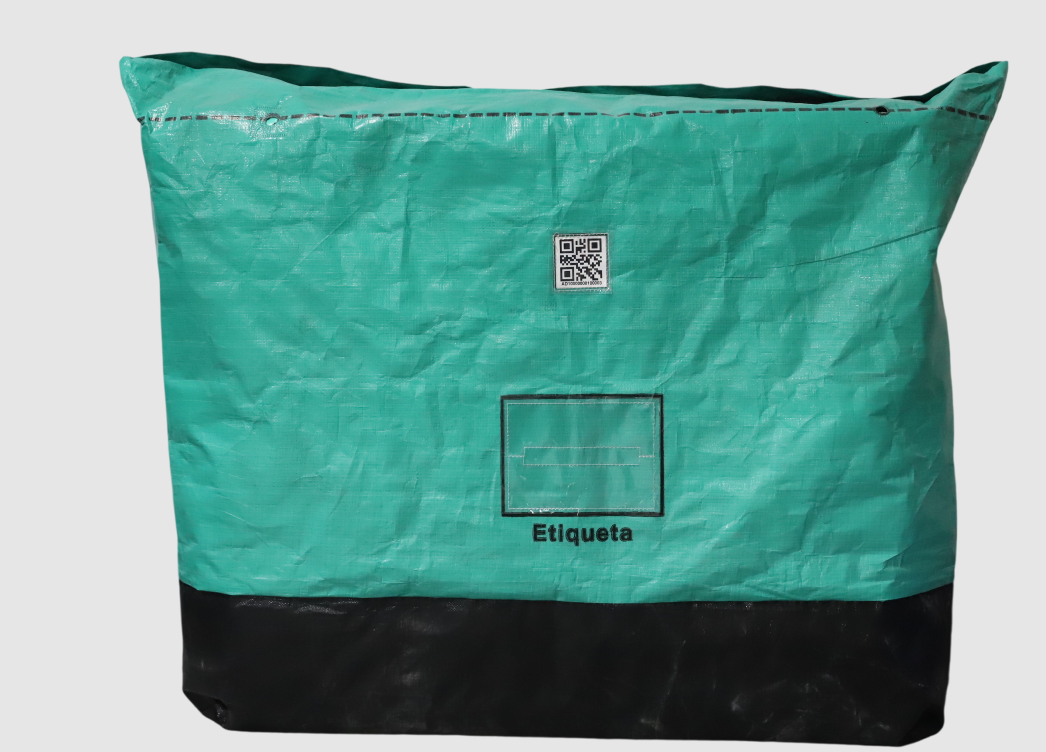
A reusable logistics bag is a durable bag built for the collection, storage, sorting and transportation of parcels, documents and other goods inside express delivery and warehouse operations. In the specification Yancheng Yide Packaging Technology Co., Ltd. manufactures, the body is PE woven fabric with lamination optional, the standard size is 100 × 100 cm with custom sizes available, and the opening is offered as zipper style — with zipper protector, lockable buckle and zipper-tooth protection — or as round opening style. The opening is the part an operator touches on every cycle, which is why it usually decides whether a reusable bag programme holds its cost per trip or slowly loses bags to early retirement.
Why the opening outranks the fabric in a reuse decision
Buyers entering the execution stage of a reusable packaging project have usually settled the fabric question and are now negotiating the detail that determines day-to-day behaviour in the depot. Fabric and lamination govern tear resistance, moisture behaviour and surface durability. The opening governs something different: how fast a bag can be closed, whether the closure stays shut in transit, and how much of the bag survives contact with handlers, pallets and sorting chutes.
Reusable logistics bags are specified for logistic circulation, moving and storage, luggage transit, warehouse handling, express sorting and goods storage. Their stated function is bulk cargo collection with quick closing and tightening to prevent material spillage, with wear-resistant construction for repeated circulation. Those two requirements pull in opposite directions. Quick closing rewards a simple, low-friction closure. Spill prevention and repeated circulation reward a closure that stays closed and can be reopened thousands of times without losing alignment.
That tension is the reason a shortlist is more useful than a single recommendation. A configuration that performs well on a sorting floor is not automatically the right choice for a storage bay where bags are closed once and left for weeks.
The baseline specification buyers should fix first
Before comparing openings, lock the body. In the Express Transfer Bag specification, the body is PE woven fabric with lamination optional, the standard size is 100 × 100 cm, and sizes are customizable. Stated performance covers waterproof and stain-resistant behaviour, high load-bearing capacity and wear resistance. Colour options are blue, white, light-green, green, yellow, red and orange-red, with custom printing available.
Two procurement notes follow from that baseline. First, lamination is optional rather than standard, so it should be a deliberate decision tied to contents and storage conditions, not a default line item. Second, colour and printing are part of the operational specification rather than decoration: in a multi-depot network, colour is often the fastest sorting signal available, and custom printing is what keeps a bag identifiable and returnable to its owner.
The shortlist: four zipper configurations and one round opening
The specification names a zipper family — available with a zipper protector, a lockable buckle and zipper-tooth protection — and a separate round opening style. Treated as a shortlist, these five configurations separate along one axis: how much of the closure is protected, and whether the closure can be locked.
| Configuration | What the specification provides | Primary fit | Verify before ordering |
|---|---|---|---|
| Zipper style (base) | Zipper chain closure; the protection features below are optional additions | Bags closed and opened at moderate frequency, where a defined closing line matters more than hardware | Slider and end-stop attachment, chain length tolerance across the batch |
| Zipper with zipper protector | Zipper closure combined with a protector element at the chain | Loops where the closure is exposed to rubbing against other bags, cages and shelving | Exactly which component the protector covers, and whether printing or lamination interferes with it |
| Zipper with lockable buckle | Zipper closure combined with a lockable buckle | Express sorting and transfer points where contents must stay closed between hand-offs | Buckle closing force, spare-part availability, reorder lead time for replacement hardware |
| Zipper with zipper-tooth protection | Zipper closure combined with protection at the tooth line | Dense-handling depots where the same bag is closed many times per shift | Behaviour when grit, dust or fibre enters the tooth line; alignment after repeated closing |
| Round opening style | Round opening without a zipper chain | Storage-led loops: goods storage, moving and storage, luggage transit | What closing method is used in practice, and whether a separate seal or tie is required |
How the zipper family differs internally
The three protection features are not three grades of the same thing. A zipper protector addresses abrasion of the closure. Zipper-tooth protection addresses the tooth line itself, which is the part that fails first when a closure is contaminated or misaligned. A lockable buckle addresses a different problem entirely: it is a securing function rather than a wear function. Buyers often ask which is strongest; the more useful question is which failure mode has actually retired bags in the current fleet.
A second internal difference is maintenance economics. Protection features and buckles add components, and components need replacement stock. A depot that cannot reorder buckles or sliders will treat a damaged closure as a retirement event, which pushes the effective cost per trip above the price per bag. This is a specification decision, not a purchasing afterthought.
Where the round opening earns its place
Round opening style removes the zipper chain from the bag entirely. That means fewer closure components to wear, fewer parts to stock, and no tooth alignment question. For goods storage, moving and storage and luggage transit, where a bag is loaded, closed once and then stored or transported, the round opening is a simpler specification to administer across a large fleet.
The trade-off is securing. A round opening does not provide the integrated lockable closure that the zipper configuration with a lockable buckle provides, so where closure security matters, the round opening depends on a separate closing and sealing method chosen by the operator.
Scenario shortlist: matching the opening to the loop
The six stated application scenarios do not place equal stress on a closure. The mapping below is an editorial shortlist built from the product's stated opening options and stated use scenarios, and it is not a measured field comparison. Buyers should confirm the final configuration on a sample trial inside the actual depot.
| Scenario | Loop characteristics | Shortlist preference |
|---|---|---|
| Logistics circulation | Bag passes between sites and operators; closed and reopened repeatedly | Zipper with lockable buckle; zipper-tooth protection where cycles per bag are high |
| Express sorting | Fast turnover, mixed parcel loads, spill risk at the chute | Zipper with lockable buckle for containment between hand-offs |
| Warehouse handling | Repeated opening per shift; contact with racking, cages and pallets | Zipper with zipper protector against closure abrasion |
| Goods storage | Loaded once, closed, stored; low cycle count | Round opening style |
| Moving and storage | Occasional closing, variable contents, short reuse horizon | Round opening style, or base zipper where a closing line is preferred |
| Luggage transit | Contents value is high; closure must stay shut | Zipper with lockable buckle |
Where this shortlist stops working
A shortlist is only credible if its boundaries are stated. Five limits apply here.
- More closure components mean more maintenance. Zipper configurations with protectors, tooth protection or buckles carry parts that a plain round opening does not. A buyer who cannot maintain replacement stock should weigh that against the securing benefit.
- Protection features are not interchangeable. A zipper protector addresses abrasion; tooth protection addresses the tooth line; a lockable buckle addresses securing. Selecting one does not deliver the effect of the others.
- Round opening depends on a separate closing decision. It removes the zipper, but it also removes the integrated lockable closure. Where closure security is mandatory, that must be solved by another method or by moving to the buckle configuration.
- No published standard governs these closures. The available standards address FIBCs, not reusable logistics bags, so closure performance has to be established through sample approval and depot trial rather than by citing a clause.
- Lamination is a separate decision from closure. Lamination is optional in the specification. Adding it does not resolve a closure problem, and choosing a closure does not resolve a moisture or surface problem.
Standards context, and what it does not cover
Procurement teams that buy both bulk bags and reusable logistics bags often assume one standard covers both. It does not, and the distinction is worth stating clearly.
ISO 21898:2024 specifies materials, construction and design requirements, type test and marking requirements for flexible intermediate bulk containers intended to contain non-dangerous solid materials in powder, granular or paste form. EN ISO 21898:2024 was approved by CEN on 12 August 2024 and covers the same FIBC requirement set for non-dangerous goods. In China, catalog records list GB/T 10454-2025 as released on 29 August 2025 with implementation on 1 March 2026, replacing GB/T 10454-2000 and GB/T 37425-2019. For hazardous atmospheres, IEC 61340-4-4:2018 specifies electrostatic requirements for FIBCs between 0.25 m³ and 3 m³.
All four documents address FIBC bulk bags. None of them specifies closure requirements for reusable logistics bags. That gap has a direct procurement consequence: a supplier cannot claim that a zipper or round opening is certified for a reusable bag loop, and a buyer cannot outsource closure validation to a standard number. The validation path is a production sample, a depot trial, and a documented record of what was approved.
Building the specification for a multi-depot programme
Yancheng Yide Packaging Technology Co., Ltd. (Yide Packaging) is a packaging manufacturer based in Yancheng, Jiangsu, China, producing FIBC bulk bags, PP woven bags, valve bags, paper-plastic composite bags and reusable logistics packaging including Express Transfer Bags. The company supports OEM, ODM and customized projects, with customization available across dimensions, material, colour, printing, closure method, zipper structure, RFID requirements and waterproof performance.
For a reusable bag programme, that customization list maps onto four specification decisions:
- Opening family per depot. Sorting-heavy depots and storage-led depots may need different configurations; the standard size of 100 × 100 cm can be held constant while opening type varies.
- Colour as a sorting layer. Blue, white, light-green, green, yellow, red and orange-red provide a working palette for route, depot or contents coding without extra hardware.
- Identification. Custom printing, and RFID where required, keep bags attributable — which is the precondition for recovering bags in a circulation loop.
- Lamination, decided on purpose. Specify it only where the contents and storage conditions justify it, since it is optional rather than default.
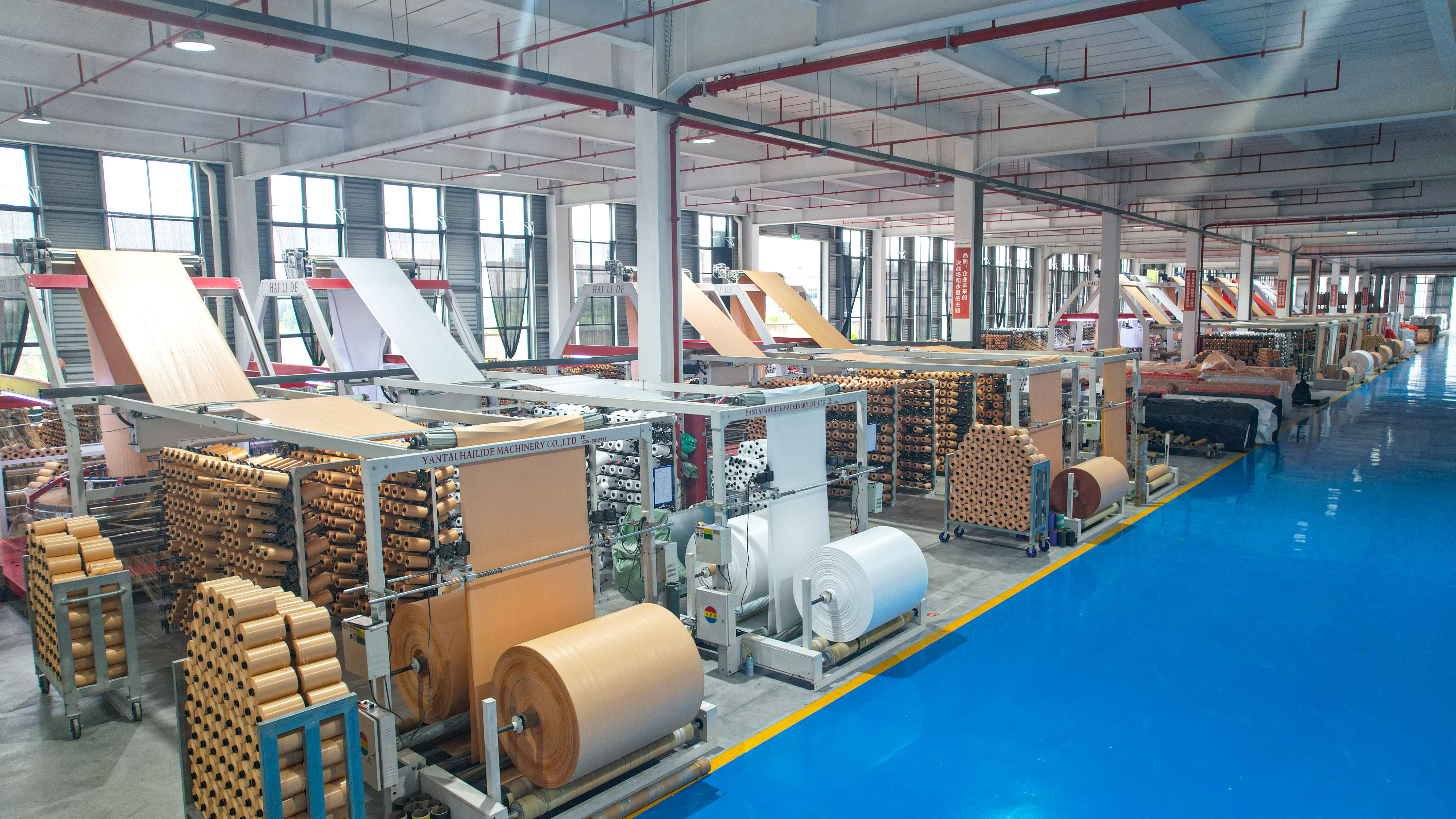
Manufacturing context matters for repeat orders. Yide Packaging states a 120,000 ㎡ factory footprint with a 5,000 ㎡ food-grade clean workshop in its FIBC production base, 130 employees and a 15-engineer R&D team, with 5G-connected production systems, robotic material handling and visual recognition used in production and quality control. The company reports an export ratio of 20%, with markets including the United States, United Kingdom, Germany, Italy, Spain, Brazil, Mexico, Saudi Arabia, the United Arab Emirates, Thailand, Malaysia, the Philippines and Australia.
Execution terms that shape a long-term programme
Long-term reusable programmes are decided less by the first order than by whether the second and third orders match it. The stated commercial terms are a useful check on that.
For spot goods the stated MOQ is 1 pc with freight not included; for custom bags the stated MOQ is 5,000 pcs with free samples available, with the buyer bearing shipping cost. Samples are sent before production as the acceptance basis. Payment terms are 30% deposit in advance with 70% balance before shipment, negotiable under special circumstances. Delivery can run by courier, air freight or logistics warehouse.
Two of those terms deserve attention at execution stage. Sample approval before production is the only point at which closure behaviour can be evaluated cheaply, so the approved sample should be documented with the exact configuration — zipper base, protector, buckle, tooth protection, or round opening — and retained as the reference for later batches. The 5,000 pcs custom MOQ, meanwhile, means a pilot at one depot scale is a commercial decision as much as an operational one, and mixing opening types across depots should be planned before the first purchase order rather than after it.
Future outlook
Two directions are visible in the available evidence. The first is reuse itself: reusable logistics bags are positioned against disposable logistics packaging for repeated circulation cycles in logistics turnover and environmental sanitation storage. As more networks move from one-way packaging to circulation packaging, closure durability becomes a budget line rather than a detail.
The second is standards refresh. ISO 21898 was revised in 2024, the European adoption followed in August 2024, and the Chinese FIBC standard was replaced with effect from 1 March 2026. Those updates concern FIBCs, but they signal that packaging requirements are being re-issued rather than left static. Buyers should expect to re-confirm standard references at each renewal cycle, and should keep their own closure specification documented independently, because no current standard will do that work for them.
Decision checklist
- Identify the highest-cycle scenario in the network and specify the opening for that scenario first.
- Decide whether closure security is mandatory; if it is, the lockable buckle configuration is the relevant option, not the round opening.
- Ask which component each protection feature covers, and whether it can be combined with the others.
- Confirm whether lamination is required, rather than accepting it by default.
- Fix colour and printing conventions across depots before the first order.
- Approve a production sample and record the exact configuration, then retain it as the batch reference.
- Plan replacement stock for sliders, buckles and protected closures.
FAQ
What is the difference between zipper style and round opening style on a reusable logistics bag?
Zipper style closes with a zipper chain and can be supplied with a zipper protector, a lockable buckle or zipper-tooth protection. Round opening style has no zipper chain, so it carries fewer closure components. Both are offered on Express Transfer Bags made of PE woven fabric with lamination optional, in the standard 100 × 100 cm size or in custom sizes.
Which opening suits express sorting versus goods storage?
Express sorting involves repeated hand-offs where contents must stay closed, which points to the zipper configuration with a lockable buckle. Goods storage and moving and storage involve loading, closing and storing, where the round opening style keeps the closure simple. Both opening families are specified for logistics circulation, moving and storage, luggage transit, warehouse handling, express sorting and goods storage.
Can reusable logistics bags be customized in size, colour and logo?
Yes. Express Transfer Bags are customizable in sizes, materials, colours, logos and functional features. The standard size is 100 × 100 cm and custom sizes are available. Colour options are blue, white, light-green, green, yellow, red and orange-red, and custom printing is available.
What should be verified before scaling a reusable bag programme across depots?
Verify the opening configuration per depot, colour and printing conventions, whether lamination is needed, and batch consistency against an approved sample. The stated terms are: samples sent before production as the acceptance basis; custom bags at MOQ 5,000 pcs with free samples, buyer bearing shipping cost; spot goods at MOQ 1 pc with freight not included; 30% deposit with 70% balance before shipment, negotiable under special circumstances; delivery by courier, air freight or logistics warehouse.
Do FIBC standards apply to reusable logistics bags?
Not to their closures. ISO 21898:2024 and EN ISO 21898:2024 set requirements for FIBCs intended for non-dangerous solid materials, IEC 61340-4-4:2018 sets electrostatic requirements for FIBCs in hazardous explosive atmospheres, and GB/T 10454-2025 is the Chinese FIBC standard in force from 1 March 2026. None of these specifies closure requirements for reusable logistics bags, so closure suitability must be established by sample approval and depot trial.
Reference material
The company and product brochure (PDF) is available for download: Yide Packaging company and product brochure. Product information is published at www.ycyide.net, and specifications can be discussed with the manufacturer at yidepackaging@gmail.com or +86 178-2626-5555.
Standard references: ISO 21898:2024; EN ISO 21898:2024 (approved by CEN, 12 August 2024); IEC 61340-4-4:2018; GB/T 10454-2025 as listed in catalog records, effective 1 March 2026. Buyers should confirm current editions with the issuing bodies.
Tem questões ou precisa de mais detalhes?
Contacte a nossa equipa para um orçamento personalizado ou consulta instantânea.
Solicitar orçamento
Preencha o formulário abaixo e a nossa equipa entrará em contacto com uma proposta personalizada.
Chat direto do WhatsApp
Prefere conversar em tempo real? Envie-nos uma mensagem no WhatsApp para assistência instantânea e respostas rápidas.
- Obter orçamento personalizado
- Partilhar fotos ou documentos
- Discuta as suas necessidades diretamente
Geralmente responde em 5–30 minutos durante o horário de expediente.