
Zipper vs. Round-Opening Reusable Logistics Bags: Buyer Fit
Zipper vs. Round-Opening Reusable Logistics Bags: Buyer Fit
In reusable logistics bags, the closure is not a cosmetic option. Zipper-style and round-opening bags from the same supplier can share identical PE woven fabric, identical lamination options and identical dimensions, yet perform very differently in express sorting, warehouse handling, luggage transit and long-term storage. The difference sits in how the bag is closed, how it is protected at the closing point, and how much inspection work the closure creates for the operator.
This comparison is written for buyers at the research-to-evaluation stage: logistics managers, procurement teams and packaging engineers who have already decided to move from one-way packaging to a reusable transit format and now need to choose an opening type. All product statements below come from manufacturer-published specifications for Express Transfer Bag and Reusable Logistics Bags in the reusable logistics packaging category; no performance claims beyond those specifications are made here.
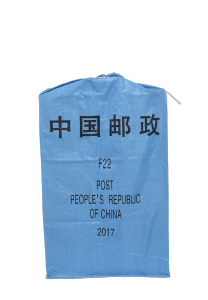
Reusable sorting bags in a logistics handling context — the opening type determines how quickly a bag can be closed, checked and released to the next leg.
What the two formats have in common
Before comparing the closure, buyers should understand how much of the specification is shared. According to the manufacturer specification, both bag-opening options are built on the same base construction.
| Shared specification | Published detail |
|---|---|
| Base material | PE woven fabric, lamination optional |
| Standard size | 100 × 100 cm, with customizable sizes available |
| Opening options | Zipper style (with zipper protector, lockable buckle, zipper-tooth protection) and round opening style |
| Colour range | Blue, white, light-green, green, yellow, red, orange-red; custom printing available |
| Stated performance | Waterproof and stain-resistant (laminated version), high load-bearing capacity, wear-resistant |
| Stated applications | Logistics circulation, moving and storage, luggage transit, warehouse handling, express sorting, goods storage |
Because the fabric, size and colour programme are common to both formats, the closure is effectively the only variable that changes the operational outcome. That is why the choice should be made against a workflow, not against a preference.
The zipper format: engineered around a wear point
The zipper-style bag is specified with three separate closure features: a zipper protector, a lockable buckle and zipper-tooth protection. Read as a design statement, this is a format built around the knowledge that a zipper track is the most mechanically exposed part of a soft bag.
What each feature means for a buyer
- Zipper protector. A covering element over the zipper line. In handling terms, it reduces direct abrasion and snagging on the closure during loading, stacking and vehicle transfer.
- Lockable buckle. A closure that can be secured. This is the feature that makes the zipper format relevant where a bag moves through several hands and the contents must remain demonstrably closed between checkpoints.
- Zipper-tooth protection. Protection applied at the tooth line itself, addressing the most common mechanical failure point of any zippered soft bag.
The practical consequence is that the zipper format concentrates functionality at the closure rather than in the fabric. For buyers, that shifts verification effort: the fabric is a commodity specification, while the closure is where supplier quality becomes visible.
Where the zipper format fits best
The specification lists the reusable logistics range against apparel and e-commerce, automotive and industrial, pharma and healthcare, and electronics and high-value goods. The zipper format aligns most directly with the last two categories and with the moving-and-storage and luggage-transit use cases, because all of them share one property: the bag is not continuously supervised, and a bag that can be secured and visibly closed is easier to hand over, store and audit.
The round-opening format: simplicity as the design goal
The round-opening style is listed as an alternative opening type on the same PE woven construction. The manufacturer specification does not list a lockable buckle, a zipper protector or zipper-tooth protection for this format, because there is no zipper track to protect. That is the honest starting point of the comparison: the round opening is the simpler closure, and simplicity has both an operational upside and a functional ceiling.
Where the round-opening format fits best
Round-opening bags align with high-frequency handling environments — express sorting, warehouse handling, bulk cargo collection and goods storage — where the priority is closing and releasing a bag quickly rather than securing it against inspection. The scenario record for this product family describes bulk cargo collection combined with quick closing and tightening to prevent material spillage, with the bag reusable across multiple cycles. That description fits the round-opening logic: fewer closure components, fewer steps, less to inspect at each handover.
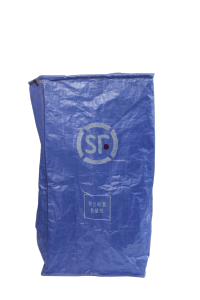
Logistics transfer bags in circulation — round-opening formats favour throughput, zipper formats favour closure control.
Side-by-side comparison
The table below compares only what the published specification supports. Where a property is not specified for a format, it is marked as not specified rather than inferred.
| Comparison dimension | Zipper style | Round opening style |
|---|---|---|
| Closure mechanism | Zipper track with protector and tooth protection | Round opening; closing method to be confirmed at sampling |
| Lockable closure | Yes — lockable buckle specified | Not specified |
| Protection at the closing point | Zipper protector plus zipper-tooth protection | No zipper track, so no zipper-specific protection required |
| Components per bag | Higher — closure hardware plus fabric | Lower — fabric-led construction |
| Inspection points per cycle | Fabric, stitching, zipper line, protector, buckle | Fabric, stitching, opening edge |
| Closing speed in sorting | Slower per bag; benefits from operator routine | Faster per bag; fewer steps |
| Best-fit scenarios | Moving and storage, luggage transit, high-value goods, multi-handover circulation | Express sorting, warehouse handling, bulk cargo collection, goods storage |
| Repair profile | Closure hardware is the first wear point to monitor | Fabric and seams are the primary wear points |
| Base material, size, colour, lamination | PE woven fabric, lamination optional, 100 × 100 cm standard, customizable, multi-colour | PE woven fabric, lamination optional, 100 × 100 cm standard, customizable, multi-colour |
The lamination decision sits on top of the closure decision
Lamination is an independent specification and buyers should not let the closure discussion absorb it. The published specification states that lamination is optional and that the laminated version offers waterproof and stain-resistant performance; the non-laminated version is not described as waterproof. This matters most in three situations:
- Yard or open-vehicle exposure between hub and delivery point, where rain contact is realistic.
- Mixed loads where a stain on one bag transfers to adjacent goods or to the bag's own printed identification.
- Return-leg hygiene, where bags circulate repeatedly and surface soiling accumulates across cycles.
A zipper bag without lamination is a secured bag that is not described as waterproof. A round-opening bag with lamination is a waterproof bag without a lockable closure. Buyers who need both properties should specify lamination and the zipper format together, and confirm the combination at sampling rather than assuming one implies the other.
A five-question decision framework for buyers
The closure question resolves quickly when it is asked in workflow order rather than in product order.
- How many times per shift is the bag opened and closed? High-frequency sorting favours the round opening; low-frequency, high-consequence handling favours the zipper.
- Does the bag pass through unsupervised hands? If yes, the lockable buckle is the relevant feature, and the zipper format is the appropriate starting point.
- Will the bag be stored loaded for extended periods? Moving and storage use cases favour a closure that stays closed under stacking pressure; the zipper format is specified for this environment.
- Is weather exposure part of the route? This is a lamination question, not a closure question — resolve it separately.
- What inspection capacity exists at the hub? Every added closure component is an added check. Buyers with limited inspection time should weigh the round-opening format's lower component count against the zipper format's closure control.
Where each format stops being the right answer
An honest comparison includes the limits. Three boundaries apply to both formats and should be stated before any purchase order.
First, these bags are not FIBCs and should not be specified as such. Published standards define FIBC requirements separately: ISO 21898:2024 specifies materials, construction, design, type test and marking requirements for flexible intermediate bulk containers intended for non-dangerous solid materials in powder, granular or paste form; EN ISO 21898:2024 was approved by CEN on 12 August 2024 and covers the same requirement set in Europe; GB/T 10454-2025 is the Chinese national standard for the same product class, replacing GB/T 10454-2000 and GB/T 37425-2019, with implementation on 1 March 2026. None of these standards describe reusable logistics bags. A buyer who needs FIBC-standard construction is buying an Industrial Bulk Bag, ton bag or FIBC, not a zipper or round-opening transit bag.
Second, the round-opening format has no specified lockable closure. Where a chain-of-custody requirement exists, this is a functional gap rather than a preference, and it should be resolved by selecting the zipper format — or by adding an external closure control to the process, which is a workflow decision, not a product decision.
Third, the zipper format adds inspection load. The same three protective features that make the closure durable also create three surfaces to check. Buyers with a mature inspection routine will absorb this; buyers without one may find the round-opening format more realistic for high-volume sorting, at the cost of closure control.
Verification steps before committing to a format
Because both formats share the same base fabric, sample testing should focus on the closure and on the handling reality around it.
- Request a sample without printing for confirmation — this is the stated quality-control step for confirming construction before print approval.
- Test the closure under a loaded condition, not empty. Load-bearing performance is a stated property of both formats, so the closure should be assessed with the bag at working load.
- Confirm the size against the actual sorting chute, vehicle cage or storage rack. The standard size is 100 × 100 cm with customization available, and a size mismatch will outweigh any closure preference in daily use.
- Confirm colour and printing against the internal identification scheme; the range covers blue, white, light-green, green, yellow, red and orange-red with custom printing.
- Confirm lamination status in writing if waterproof or stain-resistant performance is part of the requirement.
How Yancheng Yide Packaging Technology Co., Ltd. fits this decision
Yancheng Yide Packaging Technology Co., Ltd. (Yide Packaging) is a manufacturer and customized packaging solution provider based in Yancheng, Jiangsu, China, producing industrial bulk packaging, polypropylene woven packaging, reusable logistics packaging and express delivery packaging for international customers. The company was founded in 2022, operates a 120,000 ㎡ facility with 130 employees and a 15-engineer R&D team, and exports to markets including Thailand, Kazakhstan, Uzbekistan, Turkey, Saudi Arabia, the United Arab Emirates, Egypt, South Africa, Italy, Spain, the United Kingdom, the Netherlands, France, Germany, Hungary, Australia, Brazil, Mexico, the United States and Canada, with an export ratio of 20%.
For this comparison, three capability facts are relevant. First, the reusable logistics range is offered with both opening types on the same base construction, so a buyer can evaluate closure fit without changing fabric supplier. Second, customization covers closure method, zipper structure, dimensions, lamination, printing, colour, fabric weight and waterproof performance — meaning the zipper-versus-round-opening decision can be locked to a specific workflow rather than to a stock format. Third, the FIBC production base covers approximately 80 mu with around 80,000 ㎡ of standardized factory facilities including a 5,000 ㎡ food-grade clean workshop, supported by 5G-connected production systems, robotic material handling, visual recognition technology and professional quality inspection — infrastructure that matters when a logistics buyer scales from a pilot order to repeat volumes.
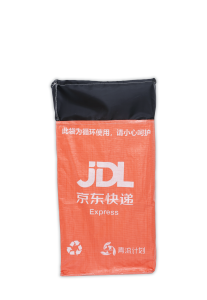
Warehouse transit bags in loaded storage — closure choice affects how reliably a bag stays shut under stacking pressure.
What buyer evidence exists for reuse in practice
Reuse claims are only meaningful if bags survive cycles. The manufacturer's case record includes several logistics deployments of the same reusable transit format: a logistics and transportation customer in Saudi Arabia with 50,000 pieces used for logistics transit over one year with continuous use; a large e-commerce logistics group in Brazil with 50,000 pieces over one year with continuous use; a large e-commerce logistics group in the Philippines with 50,000 pieces over one year with continuous use; and a logistics and transportation customer in Malaysia with 3,000 pieces over one year with continuous use. The stated highlight across these cases is that the bags are reusable and lightweight.
These are supplier-reported cases, not independently audited studies, and buyers should read them as evidence of deployment scale and continuity rather than as a quantified reuse-cycle guarantee. The useful signal is the order profile: logistics operators are ordering in tens of thousands and continuing for a year, which indicates the format is being used as an operational asset rather than a trial.
Market context: reuse as a procurement criterion
Across e-commerce and parcel logistics, the shift from one-way packaging to reusable transit containers is being driven by handling cost and packaging waste rather than by a single regulation. For buyers, this changes what a specification has to prove. A one-way bag is judged on unit cost. A reusable bag is judged on cycles, closure reliability and inspection effort — which is precisely why the zipper-versus-round-opening question has become a line item in procurement reviews rather than a detail left to the supplier.
Within a plant's packaging portfolio, reusable logistics bags occupy a different role from bulk bags. Industrial Bulk Bags, FIBC and ton bags carry powders, granules and minerals at 500–2,000 kg safe working load; PP Woven Bags handle dry granular and powdery goods in one-way or limited-reuse flows; PP Woven Roll supplies the base fabric for converters. Reusable logistics bags handle parcels, luggage and mixed goods in repeated circulation. Confusing these roles is a common procurement error, and it usually surfaces as a standards mismatch at the audit stage.
Future outlook
Three developments are likely to shape this decision over the next buying cycles. The first is specification maturity: as FIBC standards continue to be revised — ISO 21898:2024 and GB/T 10454-2025 being current examples — buyers will increasingly ask reusable logistics bags to document their own construction and test basis rather than borrowing FIBC language. Suppliers who can describe closure construction precisely will be easier to qualify.
The second is traceability. The customization scope already includes RFID requirements alongside closure method and zipper structure, which suggests that reusable transit bags are moving toward being identified assets rather than generic containers. A bag that carries an identifier is more likely to be inspected, repaired and returned — which favours formats whose closure condition can be checked quickly.
The third is material development. Conventional PP and PE constructions remain the working base, while biodegradable woven sacks, biodegradable poly mailers and recyclable or bio-based options are under development across the category. For buyers, the practical implication is to keep the closure specification separable from the material specification, so that a future material change does not force a re-qualification of the closing system.
Frequently asked questions
What is the difference between a zipper-style and a round-opening reusable logistics bag?
Both are built on PE woven fabric with lamination optional, in a standard 100 × 100 cm size with customizable dimensions. The difference is the opening: the zipper style is specified with a zipper protector, a lockable buckle and zipper-tooth protection, while the round opening style has no zipper track and therefore no zipper-specific hardware. The base fabric, colour range and stated performance are otherwise shared.
Which opening type is better suited to express sorting?
Express sorting is a high-frequency handling environment, and the round-opening format's lower component count means fewer steps and fewer inspection points per bag. The zipper format remains appropriate where bags leave the sorting floor and pass through unsupervised handovers, because the lockable buckle provides a closure control that the round-opening format does not specify.
Does the zipper style make the bag waterproof?
No. Waterproof and stain-resistant performance is linked to lamination, which is an optional specification, and the laminated version is the one described as offering that performance. The zipper features address closure protection, not water resistance. Buyers who require both should specify lamination and the zipper format together and confirm the combination at sampling.
What should be verified in a sample before ordering?
The stated quality-control step is a sample without printing for customer confirmation. Beyond that, buyers should test the closure under working load rather than empty, confirm the size against the actual sorting chute or storage rack, confirm colour and printing against the internal identification scheme, and confirm lamination status in writing if waterproof performance is required.
Are reusable logistics bags covered by FIBC standards such as ISO 21898:2024?
No. ISO 21898:2024 and its regional equivalents, including EN ISO 21898:2024 and GB/T 10454-2025, define requirements for flexible intermediate bulk containers intended for non-dangerous solid materials in powder, granular or paste form. Reusable logistics bags for parcels, luggage and mixed goods are a different product class. Buyers who need FIBC-standard construction should specify an Industrial Bulk Bag, ton bag or FIBC instead.
A full product and capability overview is available in the Yide Packaging company brochure (PDF).
Tem questões ou precisa de mais detalhes?
Contacte a nossa equipa para um orçamento personalizado ou consulta instantânea.
Solicitar orçamento
Preencha o formulário abaixo e a nossa equipa entrará em contacto com uma proposta personalizada.
Chat direto do WhatsApp
Prefere conversar em tempo real? Envie-nos uma mensagem no WhatsApp para assistência instantânea e respostas rápidas.
- Obter orçamento personalizado
- Partilhar fotos ou documentos
- Discuta as suas necessidades diretamente
Geralmente responde em 5–30 minutos durante o horário de expediente.