
Zirconia Blocks for 5-Axis Milling: Bridge and Full-Arch Fit
Zirconia Blocks for 5-Axis Milling: Bridge and Full-Arch Fit
In a 5-axis dental milling center, the zirconia block decides what the machine can produce before the spindle moves. Disc diameter, available thickness, shade layering, shrinkage behaviour and a validated sintering window together determine whether a multi-unit bridge or a full-arch implant framework can be milled, sintered and delivered without a second attempt. A 98 mm disc supplied in 10–20 mm thicknesses, sintered between 1430 °C and 1450 °C, and held to a stable sintering shrinkage error within ±0.3%, is the practical format that makes that repeatability possible.
That is not a niche concern. Grand View Research reports that CAD/CAM milling accounted for 82.4% of zirconia dental manufacturing process revenue in 2025, and that zirconia discs alone held 63.1% of revenue in the zirconia-based dental materials market, which the same source valued at USD 1.2 billion in 2025 with a projected USD 2.3 billion by 2033. Dental laboratories remained the dominant end user of zirconia materials at 45.3% of market share. Most of the technical risk inside that volume sits at a small number of process points: nesting, shrinkage, and sintering.
Where High-Volume 5-Axis Milling Actually Loses Time
In busy milling centers, the milling machine itself is rarely the constraint. The recurring losses come from three places: an implant-supported framework that does not seat after sintering, a shade shift between block batches inside a single multi-unit case, and chips or cracks that only appear after the furnace cycle. All three trace back to the block and to the process envelope surrounding it.
Dimensional predictability comes first. CAD software compensates for zirconia shrinkage with a fixed factor, so batch-to-batch variation in shrinkage converts directly into a fit error. A blank that holds sintering shrinkage error within ±0.3% and distributes density uniformly across the disc removes a variable that otherwise reappears as chairside adjustment, remakes, or rejected production time.
Shade stability across the thickness of a multilayer disc matters almost as much. In a multi-unit bridge, adjacent units are cut from different depths of the same block, so an inconsistent shade gradient is visible immediately in the finished restoration. Stable batch consistency is therefore a production requirement rather than a cosmetic preference.
The third pressure point is sintering discipline. Zirconia is vulnerable to rapid temperature change during the cycle and to internal defects in the blank that only surface after sintering. Laboratories that track remake causes generally find the sintering profile and pre-sinter inspection practice behind most of them.
The commercial opportunity sits on the implant side of the case mix. iData Research valued the final abutment market at nearly USD 2.6 billion in 2025, and implant superstructure restorations — implant-supported crowns and full-arch frameworks — are exactly the work that stresses a milling center: long connector spans, load-bearing geometry, and fit tolerances with no room for shrinkage drift. For a laboratory moving into that work, block specification and sintering control are the two levers that determine whether the move pays off.
The Block Specification a Milling Center Can Work With
YIPANG is the self-developed brand of Beijing Weijiahua Dentistry Equipment Co., Ltd., a dental equipment and materials company established in 1996 that supplies zirconia blocks, glass ceramics, press ingots, PMMA, wax, titanium blocks, implant abutments, 3D scanners, intraoral scanners, milling machines, 3D printers and sintering furnaces, and that also represents international brands including VITA, Ivoclar, Dentsply, Amann Girrbach, and Noritake.
The block format relevant to high-volume 5-axis production is the 4D-PRO-ML zirconia block, a CAD/CAM dental milling blank. Its published parameters are the ones a milling center can plan around:
- Material: zirconium dioxide (ZrO₂) with yttria stabiliser
- Diameter: 98 mm
- Thickness: 10 mm, 12 mm, 14 mm, 16 mm, 18 mm, 20 mm
- Shades: ML multilayer
- Sintering temperature: 1450 °C as listed in the block specification, with a recommended sintering window of 1430 °C–1450 °C
- Bending strength: ≥1200 MPa
- Translucency: medium translucent
Three of those parameters translate directly into shop-floor decisions. The 98 mm diameter matches the blank holder geometry used by most mainstream dental milling machines, which keeps the block compatible with existing equipment and avoids re-fixturing. The 10–20 mm thickness range allows a laboratory to select a disc that accommodates the connector height and pontic span of a given bridge without carrying unnecessary material. Medium translucency and multilayer shading support the aesthetic requirement of visible-zone units while retaining the bending strength needed for posterior and multi-unit work.
Block-level performance claims that affect throughput are equally specific: the blank uses high-quality domestic self-developed zirconia powder with stable batch consistency, uniform density distribution, and sintering shrinkage error within ±0.3%. Compatibility with most mainstream dental milling machines is stated together with a low processing failure rate. Compared with imported zirconia blocks of equivalent quality, the supplier describes a more competitive cost position, flexible customization service, shorter delivery time and a strict whole-process quality inspection system.
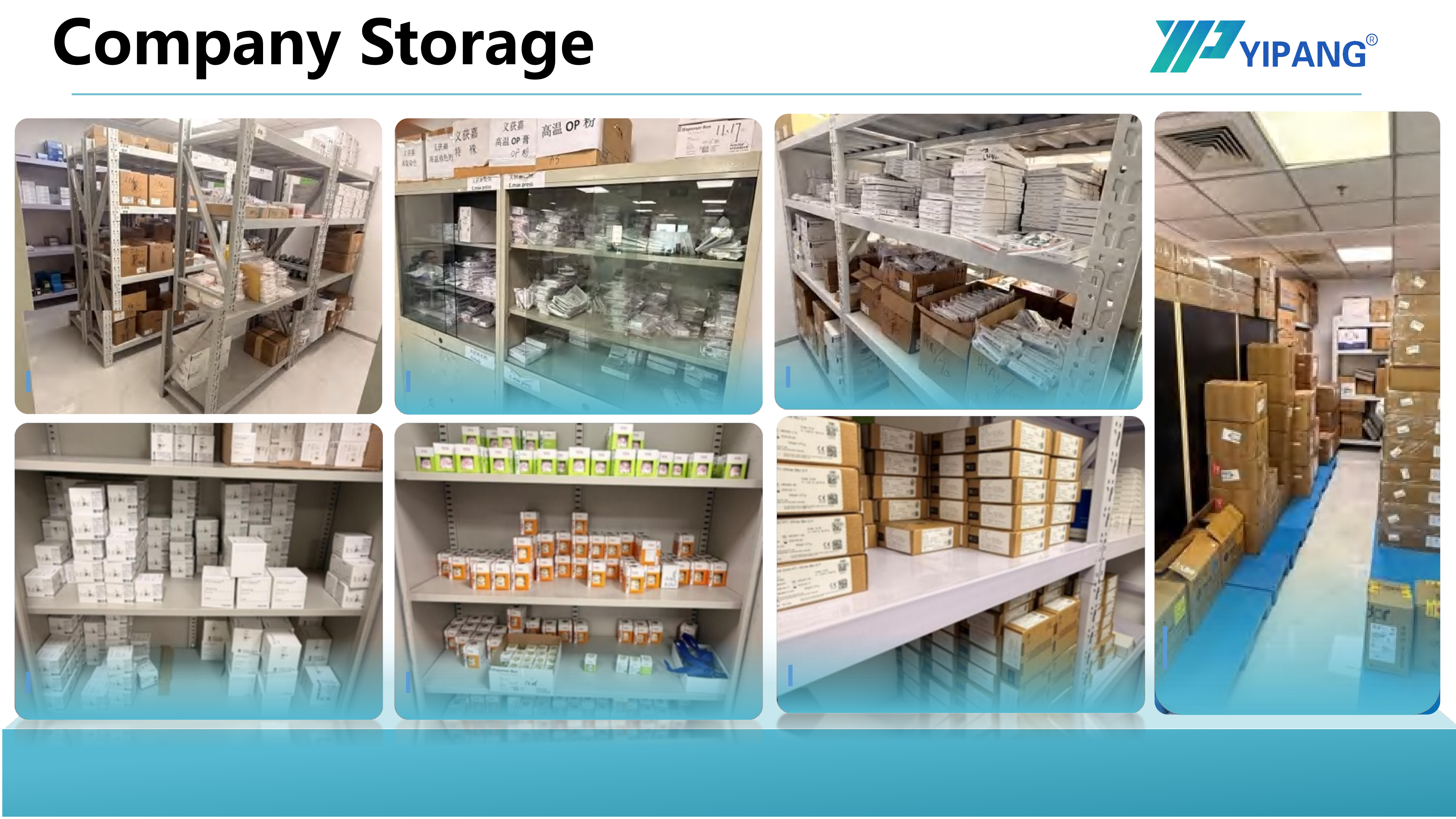
The entity behind the block is verifiable at institutional level. Beijing Weijiahua Dentistry Equipment Co., Ltd. employs approximately 80 staff, operates a manufacturing facility covering 2000 m², and reports an annual production capacity of USD 10 million. Its R&D team comprises 25 professional engineers working on dental material formula research, process optimization and new product development. The company serves more than 1000 dental laboratory customers in China, maintains a nationwide and overseas sales network, and exports approximately 40%–55% of its products to markets including the Middle East, Southeast Asia, South America, North America, Eastern Europe, North Africa and Australia. For a laboratory evaluating a multi-year block supply, that combination — own-brand production capacity, in-house formulation work, and a distribution footprint — is the structural part of the assessment.
From 98 mm Disc to Sintered Framework: The Process Chain
Zirconia block performance is only realised when the workflow around it is controlled. The intended process chain for this material is fixed and repeatable, and each step has an inspection point that protects the next one.
- Digital capture and design. Case data is acquired with a dental lab scanner or intraoral scanner, and the restoration is designed and nested in CAD software. Nesting decisions — unit orientation, connector position, and layer alignment in a multilayer disc — are taken here, and they determine how much of the block is usable.
- Milling on a 5-axis machine. The blank is processed by a dental milling machine. Five-axis motion is what allows undercut geometry and long-span bridge connectors to be cut without repositioning the workpiece, which is why multi-unit and full-arch cases concentrate in 5-axis centers rather than in 3- or 4-axis workflows.
- Sintering. The milled workpiece is placed on a sintering tray and processed in a dental sintering furnace. The recommended sintering temperature range is 1430 °C–1450 °C, and the block specification lists 1450 °C. A standard heating and holding procedure is required to guarantee low shrinkage and stable translucency; the furnace is set to a heating curve that reaches the target temperature with the appropriate holding time, and the restoration cools down naturally after the cycle completes.
- Finishing. Staining, glazing and polishing follow sintering, using the laboratory's own characterization workflow.
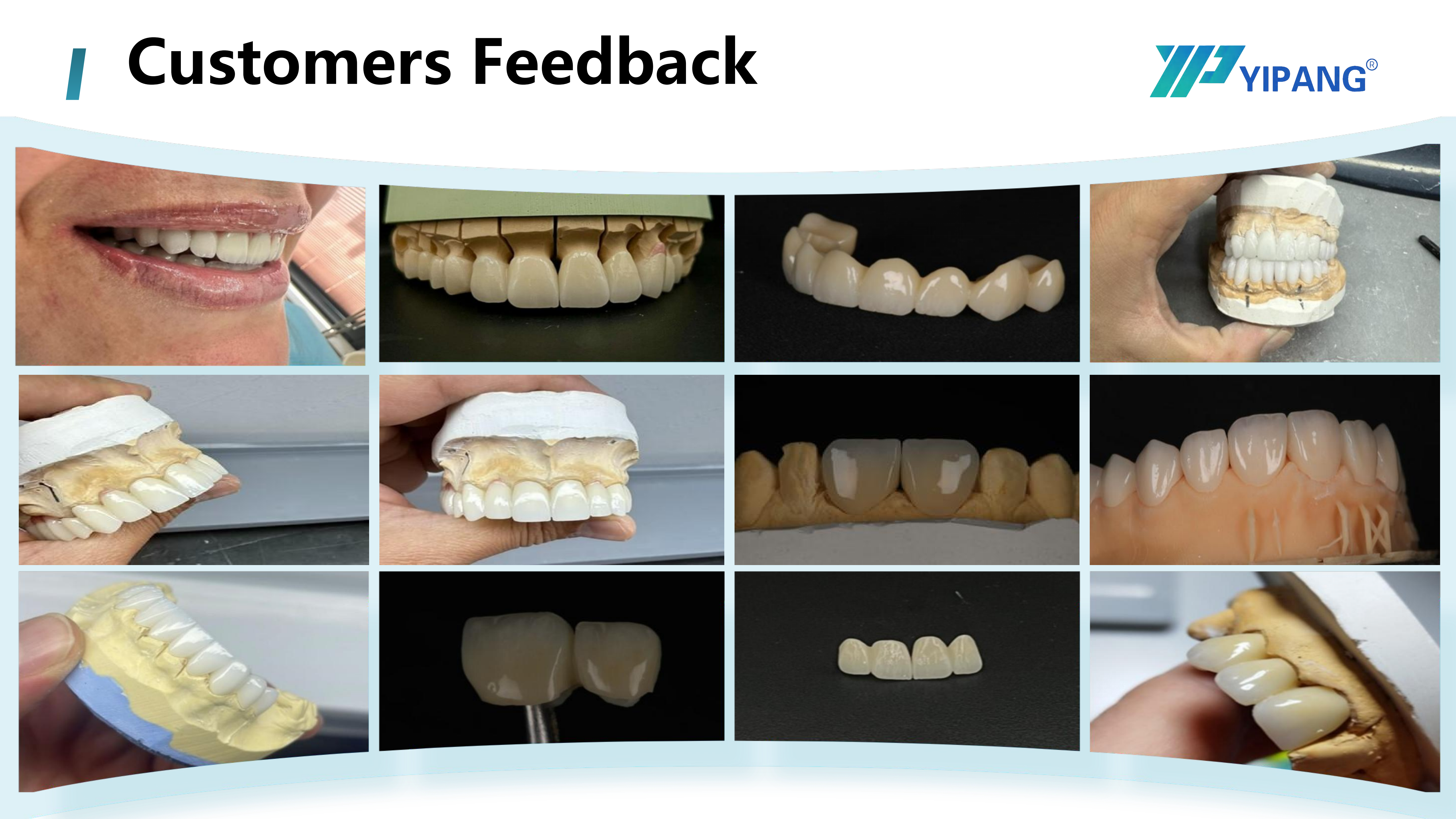
Two rules govern the sintering step. Rapid temperature change must be avoided, because it can crack the restoration before it reaches final density. The maximum sintering temperature must not be exceeded. Both are process constraints rather than preferences, and both are the reason a standard curve is specified rather than a temperature alone.
Pre-sinter inspection is the counterpart on the material side. Blanks should be inspected before sintering. If a blank contains an inherent internal defect, the failure will typically appear as chipping or cracking after the furnace cycle; such pieces should be scrapped and never used as a final restoration. In a high-volume workflow, the cost of scrapping one blank before sintering is far lower than the cost of re-cutting, re-sintering and re-scheduling a multi-unit bridge.
The scenario conditions the material is documented for are specific as well: an indoor constant-temperature dental laboratory environment, with the restoration processed by a dental milling machine and sintered in a dental sintering furnace, supported by a dental lab scanner. The special requirement attached to the application is that the standard sintering temperature curve be followed strictly. That is the operational definition of process control in this category.
Application Fit: Multi-Unit Bridges, Implant Crowns and Full-Arch Cases
The documented application scope covers full-contour crowns, bridges, veneers and implant superstructure restorations, with the function of fabricating aesthetic, durable dental prostheses to repair missing or damaged teeth. Within a 5-axis milling center, that scope breaks down into case types with different process priorities.
| Case type in a 5-axis workflow | Why the milled zirconia block fits | Process control that matters most | Boundary to respect |
|---|---|---|---|
| Posterior single crowns and short-span units | Bending strength of ≥1200 MPa with multilayer shading suits load-bearing posterior units | Shrinkage factor matched to the block in the CAD library | Anterior esthetic priorities may point to a different material class |
| Multi-unit bridges | Connector spans and pontic geometry are cut in one 5-axis setup; thickness selection follows the span | Shade continuity across the multilayer disc and sintering curve adherence | Long spans increase exposure to any blank-level density variation |
| Implant-supported crowns and abutment-level restorations | Implant superstructure restorations are within the documented scope; fit tolerance is the deciding factor | Shrinkage stability and pre-sinter inspection | Fit error cannot be corrected after sintering |
| Full-arch implant frameworks | The 98 mm disc and 10–20 mm thickness range support large framework nesting | Nesting strategy, furnace loading, and oven capacity planning | Very large frameworks may require more than one disc per case |
| Veneers and visible-zone units | ML multilayer shading and medium translucency support characterization workflows | Layer alignment during nesting | Highly translucent anterior cases may need a higher-translucency material |
For laboratories running a mixed case load, the practical value of a single block family is continuity. The same material, shrinkage factor and sintering curve apply to posterior crowns, multi-unit bridges and implant superstructure work, so the process does not have to be re-validated for each case type. That is what allows an implant-supported crown laboratory to add full-arch work without rebuilding its production assumptions.
Market Trend Analysis: Milled Zirconia Inside the Digital Workflow
The direction of the market supports the case for treating the block as a process asset rather than a commodity. Grand View Research reports that zirconia discs held 63.1% of zirconia-based dental materials revenue in 2025 and that CAD/CAM milling accounted for 82.4% of zirconia manufacturing process revenue in the same year, which places milling at the centre of how zirconia is converted into restorations. Dental laboratories remain the dominant end user at 45.3% of market share, and the same source values the global zirconia-based dental materials market at USD 1.2 billion in 2025, rising to a projected USD 2.3 billion by 2033. Regionally, the U.S. accounts for 40% of revenue, which is where many of the high-volume milling centers buying blocks are located.
Material grades reinforce the same trend. 3Y-TZP zirconia held the largest revenue share of 35.9% in the dental zirconia market in 2025, indicating that laboratories continue to standardise on established grade families rather than fragmenting across experimental materials.
Equipment growth runs in parallel. Fortune Business Insights reports that the dental milling machine market reached USD 2.45 billion in 2025 with expected growth to USD 3.9 billion by 2030, and identifies Roland DG, Amann Girrbach, and vhf camfacture among the significant share holders in that sector as of 2024. On the restoration side, iData Research valued the final abutment market at nearly USD 2.6 billion in 2025, while Global Market Insights reported that Institut Straumann held over 29% of the global dental implants and abutment systems market in 2024 — a reminder that most laboratories work inside an implant ecosystem dominated by a small number of system providers, which makes abutment-level fit a cross-supplier issue rather than a local one.
Additive manufacturing is expanding alongside milling rather than replacing it. Grand View Research estimates the dental 3D printing market will grow from USD 4.9 billion in 2025 to USD 26.7 billion by 2033, with photopolymer resins holding a 55.5% share of dental 3D printing material in 2025. Printed models, guides and provisionals are increasingly the upstream part of a workflow whose definitive restorations are still milled from zirconia blocks and sintered — a hybrid pattern that increases, not decreases, the importance of block consistency.
One planning note: published market sizes for zirconia-based dental materials diverge by scope. Grand View Research cites USD 1.2 billion for 2025, while SNS Insider cites USD 367.67 million for a narrower segment definition. Buy-side planning should read the scope definition rather than the headline figure.
Comparison and Boundaries: Where a Zirconia Block Is Not the Answer
Zirconia blocks are not a universal restoration material, and a milling center that treats them as one will create its own rework. The honest comparison is against the other materials in the same digital workflow.
| Material route | Where it fits in a digital lab | Trade-off against milled zirconia |
|---|---|---|
| Milled zirconia block (4D-PRO-ML) | Posterior crowns, multi-unit bridges, implant superstructure restorations, full-arch frameworks | Requires sintering; medium translucency rather than maximum translucency |
| Lithium disilicate (press ingot / glass ceramic) | Esthetic anterior and single-unit work; approximately 28% of all all-ceramic dental restorations globally as of 2024 | Lower load-bearing margin for long-span or full-arch frameworks |
| PMMA and wax discs | Provisionals, try-ins and workflow validation | Not a definitive restoration material |
Lithium disilicate remains a substantial and growing category — Intel Market Research projects it growing from USD 320 million in 2025 to USD 920 million by 2032 at a CAGR of 18.8%, and Business Research Insights reports a materially higher CAGR of 24.53%, illustrating how much forecast spread exists in this segment. The two materials serve different ends of the same case list rather than competing for the same indication.
The boundaries that a milling center should write into its own procedure are these:
- Translucency ceiling. The block is medium translucent. The most demanding anterior esthetic cases may still call for a different material class, even though multilayer shading narrows the gap.
- Sintering is a failure point, not a formality. Rapid temperature change can crack a restoration, and defects inside a blank can propagate into chipping or cracks after sintering. Pieces affected in this way must be scrapped rather than finished.
- Compensation is still required. A stable shrinkage error within ±0.3% is a small residual, not zero shrinkage. The CAD library and the validation procedure still have to be calibrated to the block.
- Geometry limits per disc. A 98 mm diameter and 10–20 mm thickness range constrain how much framework geometry fits into one blank. Large full-arch cases may consume more than one disc, which affects material cost and scheduling.
- Furnace throughput. Sintering time is a fixed scheduling constraint; a busier milling center can mill faster than it can sinter, so furnace capacity planning belongs in the block decision.
- Regulatory documentation. EU Medical Device Regulation (MDR 2017/745) classifies most dental implants and restorative materials as high-risk and requires intensive clinical data. For European supply, documentation burden is part of total cost.
Supply Continuity: The Long-Term Side of Block Selection
For a laboratory consuming blocks continuously, the decision that matters is not the first order but the twelfth. Batch consistency, formulation stability and replenishment terms determine whether the process validated in month one still holds in year three.
The commercial terms attached to the 4D-PRO-ML zirconia block are explicit. Minimum order quantity is 1 box for standard models and 5 boxes for customized products. Domestic orders ship by express delivery; export orders ship by sea freight or air freight, with FOB Shanghai/Tianjin available. Acceptance criteria require quantity to be checked on receipt, with damage or deformation reported within 48 hours with photographs; sampling tests are supported. Payment terms are full payment before shipment.
Capability behind those terms is worth checking against the operating record. The supplier's own product portfolio spans zirconia blocks, glass ceramics, press ingots, PMMA, wax, titanium blocks, implant abutments, 3D scanners, intraoral scanners, milling machines, 3D printers and sintering furnaces — which matters for a lab that prefers to consolidate several consumable lines under one supply relationship rather than negotiating each item separately. The company also provides systematic products and services for domestic and international dental practitioners, including dental laboratory products, training services, clinical services, 3D printing support, medical technology training and consulting services, and it has maintained a nationwide and overseas sales network serving more than 1000 dental laboratory customers in China.
Two evaluation steps are pragmatic. First, use the supported sampling test to run the block through the laboratory's own sintering curve and CAD shrinkage factor before committing to volume. Second, confirm machine compatibility on the actual 5-axis equipment in use, since the block is stated to be compatible with most mainstream dental milling machines but process parameters still belong to the individual laboratory.
Future Outlook
Three developments are likely to shape how zirconia blocks are specified in 5-axis environments over the next several years.
The first is consolidation of process control. As milling capacity grows — the dental milling machine market is projected to move from USD 2.45 billion in 2025 toward USD 3.9 billion by 2030 — the differentiator shifts from cutting speed to predictability. Blocks that document shrinkage behaviour and a defined sintering window give laboratories a way to hold fit accuracy across higher volumes.
The second is the maturation of hybrid digital workflows. With dental 3D printing projected to grow from USD 4.9 billion in 2025 to USD 26.7 billion by 2033, printed models, guides and provisionals will increasingly feed milling centers whose definitive output is still sintered zirconia. In that structure, the block remains the material that carries the final fit, and sintering remains the step that cannot be rushed.
The third is regulatory and documentation pressure. As MDR 2017/745 and comparable frameworks continue to raise the evidence bar for restorative materials, laboratories and importers will place more weight on suppliers that can document material grade, inspection practice and batch behaviour, not only unit price.
For implant-supported work specifically, the combination of a growing final abutment market and a concentrated implant system landscape means fit accuracy at the abutment interface will keep moving up the specification list. Blocks that deliver stable shrinkage and consistent density are the ones that make that fit reproducible at production scale.
FAQ
What is the suitable sintering temperature for the 4D-PRO-ML zirconia block?
The recommended sintering temperature range is 1430 °C–1450 °C, and the block specification lists 1450 °C as its sintering temperature. The standard procedure is to place the milled zirconia workpiece on a sintering tray, set a heating curve up to 1430 °C–1450 °C with an appropriate holding time, and let the restoration cool down naturally after the cycle is complete. Rapid temperature change should be avoided because it can cause cracking, and the maximum sintering temperature should not be exceeded.
How do dental labs select zirconia blocks?
Selection generally follows case mix and volume. The 4D-PRO-ML zirconia block is positioned for high-volume dental laboratories: it is made from Sinocera powder, is suitable for posterior crowns and multi-unit bridges, and is intended to balance mechanical strength against translucency so that both load-bearing and aesthetic units can be produced from one material family, with stable shade consistency. Practical checks include whether batch shade is stable across a multilayer disc, whether the CAD library shrinkage factor matches the block, and whether the recommended sintering profile can be followed precisely. Blanks should be inspected before sintering, and chipped or cracked blanks should be scrapped rather than used for a final restoration.
What are the purchasing terms and acceptance criteria?
Minimum order quantity is 1 box for standard models and 5 boxes for customized products. Domestic delivery is by express; export delivery is by sea freight or air freight, with FOB Shanghai/Tianjin available. Acceptance requires checking quantity upon receipt, reporting damage or deformation within 48 hours with photographs, and sampling tests are supported. Payment terms are full payment before shipment.
Reference document: the company's published company information file is available for download at WJH Company Information (PDF).