
Procurement of Coating Production Line 15 Questions: How to configure supporting equipment, how to check ISO three standards, and how to write acceptance clauses
Procurement of Coating Production Line 15 Questions: How to configure supporting equipment, how to check ISO three standards, and how to write acceptance clauses
The success or failure of a coating line is often not determined by the spray booth, but by the steps before and after it collectively called 'supporting' processes, and by a few lines of measurable acceptance wording in the contract. The following 15 questions are organized in the order buyers actually ask them: first, how pretreatment, drying, curing, conveying, dust removal and VOCs treatment are configured; then whether a Class 10,000 cleanroom, fully automatic PLC control and robotic painting are necessary; next, how to verify ISO 9001, ISO 14001 and ISO 45001; finally, breaking down 'what are the procurement conditions and acceptance standards' into checkable items, and comparing the operating results of 20 kitchenware automatic coating lines and 15 metal automatic coating lines.
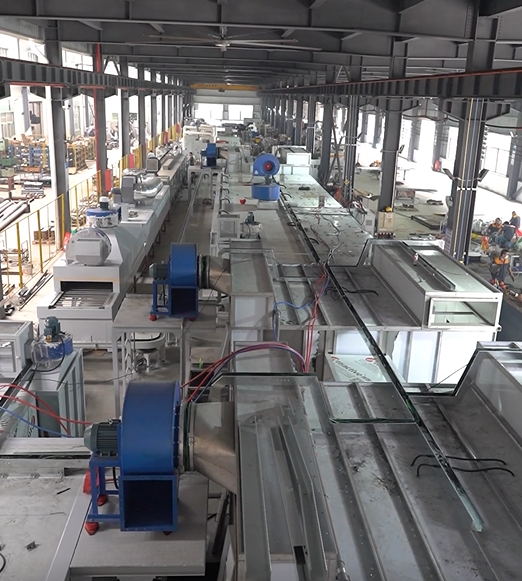
1. Supporting equipment is not an optional item; it is part of the yield structure
Break a line down, and workpieces pass sequentially through pretreatment, moisture drying, coating curing, conveying, environmental dust removal and exhaust gas treatment. If any of these six stages is underconfigured, no matter how precise the spray booth is, it cannot make up for it. The aluminum panel electrostatic powder coating line process published by Attractivechina is: loading, pretreatment, powder spraying, curing, cooling, inspection, unloading—pretreatment and curing are each listed as independent processes, rather than being attached to the spraying stage (source: the company's aluminum panel coating line product page, 2026).
Q1: To what extent must pretreatment be carried out?
It depends on the substrate and coating system. For metal parts, degreasing, rust removal and conversion film (phosphating or ceramic conversion) determine the adhesion of the subsequent coating; powder coating lines usually set pretreatment and drying as independent stages and require stable control of bath concentration, temperature and rinse water quality. Pretreatment formulations differ for different substrates; applying the parameters of an aluminum panel line directly to galvanized parts often only exposes problems during adhesion testing.
Q2: Why can't drying and curing be considered together?
Drying removes water or solvent; curing is the crosslinking of the coating into a film. Their temperature curves, residence times and energy consumption structures differ. The design logic of a curing oven for powder coating and the drying stage for waterborne paint is not the same. Insufficient curing may not be visible in factory appearance inspection, but it affects adhesion and corrosion resistance life, so this item cannot pass by visual inspection alone. Project results from 10 industrial equipment automatic coating lines show that coating adhesion and salt spray tests must meet industry standards (salt spray test ≥1000 hours), and such indicators must first be written into the acceptance method before judgment is possible.
Q3: Why does the conveying system affect yield?
Conveying determines takt time, hanger density, and the posture and residence time of workpieces in the spray booth. The choice of accumulating chain, overhead chain and floor rail depends on workpiece size, weight and the number of mixed product types. One of the project highlights of 15 metal automatic coating lines is adaptability to mixed-variety production; at acceptance this should be translated into two measurable items—changeover time and first-piece pass rate—otherwise 'suitable for mixed lines' is just a description.
Q4: To what level must dust removal be carried out?
Dust removal falls into two categories: workpiece surface dust removal (electrostatic dust removal, ionized air) and environmental dust removal (supply air filtration). For appearance-sensitive products, both must be controlled. Project results from 10 wood product automatic coating lines show that the dust defect rate was reduced by 90%—this figure shows the order of magnitude of dust control's impact on yield, but it is a record of results from a group of projects, not a guarantee for all lines; when purchasing, dust removal specifications should still be set according to your own product's appearance grade.
Q5: How should VOCs treatment be configured?
First look at the coating system. Powder coating contains no solvent, and exhaust gas volume and concentration are far lower than solvent-based coatings; solvent-based lines require end-of-pipe treatment equipment and must be designed according to local emission standards. The regulatory background is worth checking as well: China implemented GB 30981.2-2025 on June 1, 2026, tightening limits on hazardous substances in industrial coatings, among which the VOC limit for interior wall flat coatings and primers was reduced from 80 g/L to 50 g/L (source: Standardization Administration, 2026). This means coating selection and end-of-pipe treatment capacity must be rechecked together, rather than purchased separately.
Boundary: The above limits apply to the coating categories listed in that standard and are not a unified threshold for all industrial coating lines; export markets have their own local regulations, which must be checked market by market.
2. Which are necessary: Class 10,000 cleanroom, PLC, and robotic painting?
These three are often placed on the same quotation, but their necessity depends on different conditions. Buying them as a package usually costs more than ten percent more than configuring as needed; conversely, if they should be included but are not, the cost will show up in post-commissioning yield.
Q6: When is a Class 10,000 cleanroom necessary?
It is listed as necessary only when the coating is extremely sensitive to appearance defects such as dust spots and particles, or when customer specifications explicitly require a cleanliness class. Attractivechina states that it has a Class 10,000 temperature-and-humidity-controlled clean coating workshop and uses MES for visualized production management (source: the company's public information, 2026). The basis for judgment is product appearance grade, customer specifications, and the proportion of dust-spot defects in current yield. A cleanroom is an environmental control measure; it does not change the performance of the coating itself and cannot replace pretreatment and curing; for metal structural parts with ordinary appearance requirements, putting budget into pretreatment and curing stages is usually more direct.
Q7: What problem does fully automatic PLC control solve?
It solves repeatable parameters and traceable processes. Attractivechina's public information describes its lines as using programmable digital control, robotic painting, flexible production and real-time control (source: the company's coating line page, 2026); with MES system support, the first pass yield of automotive parts coating lines can reach over 95% (source: the company's information, 2026). The basis for judgment is changeover frequency, whether batch traceability is required, and whether customers require production data retention.
There is a detail that is easily overlooked: PLC is the control layer, and whether it can deliver depends on the arrangement of sensor points and the process parameters actually collected. When purchasing, ask for a 'parameter record list'—which parameters are recorded, how long the recording period is, whether they can be exported—rather than just looking at the words 'fully automatic'. A control solution that cannot write out a parameter list will find it difficult to support batch traceability or customer complaint analysis later.
Q8: Is robotic painting a must?
No. Reciprocators with rotary bells provide stable takt time on regular workpieces; robots are suitable for multiple varieties, complex curved surfaces, and situations requiring offline programming. The basis for judgment is workpiece geometric complexity, the number of mixed product types, and coating precision requirements. The investment payback of robots depends on product changeover frequency: for single-variety, high-volume production, a reciprocator solution is not necessarily worse; this judgment requires calculation using your own workpieces and takt time, and cannot directly copy the conclusions of others' cases.
3. How to verify ISO 9001, ISO 14001 and ISO 45001?
The three certifications are management system certifications, not product conformity certificates. Verification should be divided into three layers: certificate authenticity, certification scope, and on-site implementation evidence. Receiving only a PDF is not enough to support a procurement judgment.
First layer, the certificate itself. Check the certificate number, validity period and certification scope with the issuing certification body. Confirm that the scope states design and manufacturing of coating equipment, not merely trading or sales. Second layer, scope and site. The address on the certificate must match the actual production address; when production takes place at multiple sites, each site must be covered. Third layer, implementation evidence. You may request the closure records of nonconformities from the most recent internal or external audit (sensitive content may be redacted), the list of environmental aspects, hazardous waste transfer manifests, and occupational health and safety risk assessment and training records. These materials show whether the system is operating or merely hanging on the wall.
| Standard | What to check | Evidence that can be requested | Link to line acceptance |
|---|---|---|---|
| ISO 9001 Quality management | Whether certification scope covers design and manufacturing | Certificate, shipment inspection records, nonconforming product handling process | Corresponds to whether clauses such as '100% inspection before shipment' can be supported by records |
| ISO 14001 Environmental management | Whether environmental aspect identification includes coating exhaust gas and hazardous waste | Environmental aspects list, monitoring reports, hazardous waste transfer manifests | Corresponds to configuration and operation records of the VOCs treatment stage |
| ISO 45001 Occupational health and safety | Risk control in spray booths, paint mixing areas, and confined spaces | Risk assessment list, training records, accident and near-miss records | Corresponds to explosion protection, ventilation and chemical handling design |
The above is a verification method, not a statement about the certification status of any particular supplier. During procurement, suppliers should be required to provide currently valid certificates, and you should verify them with the issuing body yourself; management system certification also cannot replace actual measurement acceptance of the line itself.
4. Break down 'what are the procurement conditions and acceptance standards' into checkable items
Attractivechina's public answer to this question is: minimum order quantity 2 sets; delivery terms FOB at any port in Guangdong Province; acceptance standard is pre-shipment testing and inspection; payment is 50% T/T deposit within 7 days after contract signing, 40% 3 days before shipment, and 10% after installation is completed (source: the company's procurement Q&A information, 2026). In addition, the company's publicly stated quality control method is 100% inspection before shipment.
The skeleton of these terms is clear, but 'pre-shipment testing and inspection' is the only part in the entire set that is not expanded, and it happens to be the anchor of acceptance and the place most likely to generate disputes after signing. The way to make it checkable is to expand this sentence into four things: a list of test items (no-load operation, load operation, coating appearance, film thickness, adhesion, degree of curing, safety interlocks—list each as performed or not performed); judgment methods and sampling (what method is used to judge each item, sampling ratio, who judges); witness and records (whether the buyer sends personnel to witness, record format, ownership of images and data); on-site re-inspection (FOB pre-shipment inspection covers manufacturing quality; the operating state, takt time and energy consumption after installation require another checkpoint, and the 10% payment after installation completion corresponds exactly to this checkpoint).
| Clause element | Public answer | Suggestion for making it checkable |
|---|---|---|
| MOQ | 2 sets | Clarify the configuration boundary of each set to avoid later add-ons becoming disputes |
| Delivery | Any port in Guangdong Province, FOB | Agree on loading port, container-loading responsibility, and transport plan for oversized items |
| Acceptance | Pre-shipment testing and inspection | Expand into test items, judgment values, sampling and witness methods |
| Payment | 50% / 40% / 10% | Tie to checkpoints: 40% corresponds to before shipment, 10% corresponds to re-inspection after installation completion |
5. How to read the figures for 20 kitchenware lines and 15 metal lines as acceptance basis
The value of the two sets of project data is not how large the numbers themselves are, but that they indicate which categories of indicators can be quantified.
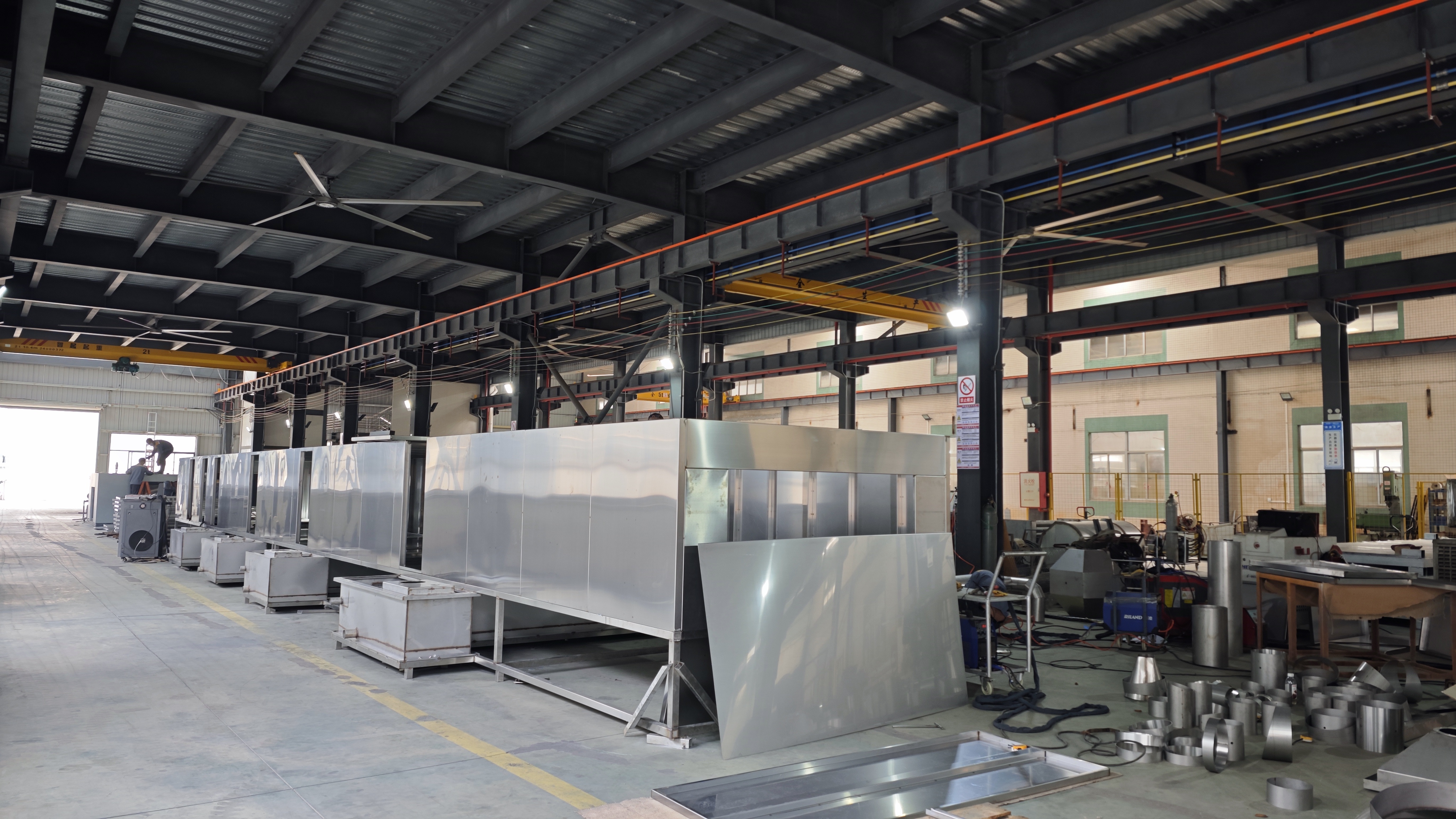
Kitchenware lines (20 sets) are distributed in Russia, Iran, India, Bangladesh, Vietnam, Thailand and China; customers are brand OEM factories, own-brand manufacturers and appliance supporting factories. Results: coating uniformity reaches 98%, non-stick performance meets international food-grade standards, coating waste is reduced by 30%, production efficiency is increased by 35%, and they have run continuously for 5 to 10 years without major quality customer complaints.
Metal lines (15 sets) are distributed in Mexico, the United States, China and Singapore; customers are export-oriented hardware factories, metal furniture and building materials companies, bathroom and door/window hardware factories, and sheet metal parts manufacturers. Results: coating yield increases to 97%, coating and powder consumption is reduced by 30%, energy consumption is reduced by 22%, production efficiency is increased by 40%, and they have run stably and continuously for 5 to 10 years without major downtime.
How to read these two cases: there are three key points. First, these are project results self-reported by the supplier, not third-party audit data; they can prove that such indicators have been achieved, but cannot prove that any new line will achieve them. Second, the choice of indicators in the two cases is itself informative: the kitchenware lines put uniformity and food-grade compliance first because the coating comes into direct contact with food; the metal lines put corrosion resistance and mixed-variety production first because workpiece discreteness is high and batches are mixed. When purchasing, you should select the corresponding indicator group for your own product, rather than copying others' numbers. Third, every number must be asked about its baseline—97% yield relative to which baseline? Is the comparison group for the 40% efficiency increase the old line or the theoretical takt time? Is the measurement boundary for the 22% energy reduction the whole line or a single stage? Without answers to these three questions, the numbers cannot be written into the contract.
| Indicator | 20 kitchenware lines | 15 metal lines | What must be added when writing into acceptance |
|---|---|---|---|
| Yield / uniformity | Coating uniformity 98% | Coating yield 97% | Judgment method, sampling ratio, who judges |
| Material consumption | Coating waste reduced by 30% | Coating and powder consumption reduced by 30% | Measurement period and boundary (single line or whole plant) |
| Energy consumption | Not listed | Energy consumption reduced by 22% | Electricity meter scope, comparison baseline |
| Efficiency | Increased by 35% | Increased by 40% | Baseline takt time and calculation method |
| Long-term operation | 5–10 years without major quality customer complaints | 5–10 years without major downtime | Define the threshold for 'major' |
The same logic applies to other projects: the results of 20 automotive parts automatic coating lines are yield increased to 98%, coating consumption reduced by 25%, energy consumption reduced by 20%, and no major production downtime within 5 years; 10 industrial equipment automatic coating lines have salt spray test ≥1000 hours and yield increased to 98%; 10 wood product automatic coating lines have coating consumption reduced by 30% and dust defect rate reduced by 90%. Indicator groups change with the product, which precisely explains why acceptance clauses cannot be copied across industries.
As background on the supplier, Guangdong Chuangzhi Intelligent Equipment Co., Ltd. (Attractivechina) is a high-tech enterprise and a specialized, refined, distinctive and innovative 'little giant' enterprise, with 79 invention patents and more than 300 patents in total in the fields of coating equipment and environmental protection equipment; its factory is located in the Zhaoqing National High-tech Industrial Development Zone, Guangdong Province.
6. An executable sequence from inquiry to acceptance
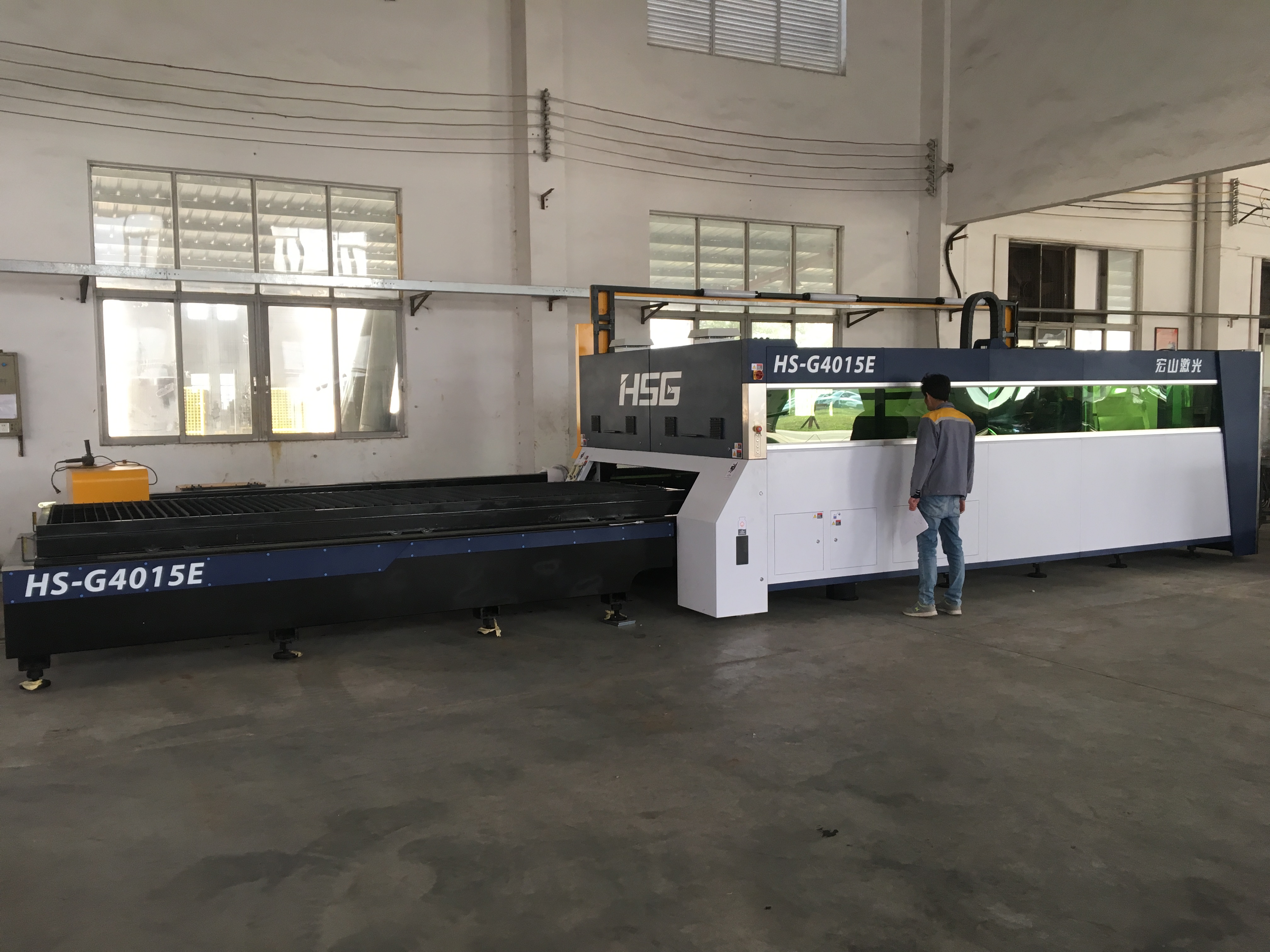
Condense the preceding judgments into one sequence: first set the takt time based on product and target capacity—this is the starting point for all configuration; then confirm stage by stage, according to substrate and coating system, whether supporting stages are mandatory or can be simplified; then use product appearance grade and the number of mixed product types to judge the necessity of cleanrooms, PLC and robots; next, verify supplier qualifications using the three-layer method—certificates, scope and implementation evidence must all be examined; after that, expand acceptance clauses into judgeable items and align them with payment checkpoints; finally, agree on the after-sales scope. The company's publicly stated after-sales content includes remote technical support, one-year warranty, rapid response within 4 hours, regular after-sales follow-up and free education and training.
Customization dimensions should also be clarified at this stage: the company can customize packaging, trademarks, dimensions, automation level, voltage, power and equipment capacity according to customer needs, and monthly capacity can be adjusted as required. These options look like commercial terms, but in fact each one changes the configuration of the supporting stages and the quotation structure; the later they are confirmed, the higher the change cost.
7. Common follow-up questions
Q: Must a coating line be equipped with VOCs treatment?
It depends on the coating system and local emission standards. Powder coating contains no solvent, and the exhaust gas load is far lower than that of solvent-based coatings; solvent-based lines need end-of-pipe treatment configured according to local regulations. China's GB 30981.2-2025 took effect on June 1, 2026, and coating selection and exhaust gas treatment capacity should be checked together.
Q: Can a Class 10,000 cleanroom be added after production starts?
Cleanliness class involves the building envelope, air-conditioning load and line layout, and is a planning-stage decision; later installation usually requires changing the layout and ventilation system. If product appearance requirements are high, it is recommended to determine the class and coverage at the solution stage.
Q: What if a supplier's ISO certificate has expired or its scope does not match?
First require a currently valid certificate and verify it with the issuing body; if the certification scope does not cover design and manufacturing, request supplementary explanation or re-evaluate its quality management capability. Management system certification cannot replace actual measurement acceptance of the line.
Q: How can the yield and energy consumption data self-reported by the supplier be verified?
Require the judgment method, sampling plan and historical records, and agree in the contract on checkpoints for trial production verification or performance assessment. Numbers without a judgment method cannot serve as an acceptance basis.
Q: Why do delivery times for lines vary so much?
The company's public information points out that delivery schedules differ for different products and actually depend on the number of supporting stages, degree of customization and automation level—these three are exactly the variables that should be determined at the inquiry stage.
Conclusion: Break the four things apart and check them
Procurement of a coating line is essentially a series of condition checks: whether the supporting stages are complete, whether the necessity judgment is grounded, whether certifications are truly operating, and whether acceptance clauses are written to a judgeable degree. Checking these four things separately is more able to determine what a line will look like five years later than comparing total prices on quotations. For buyers in the evaluation stage, the most valuable action is not to request more promotional materials, but to rewrite every commitment into a measurable item and confirm who measures it, how it is measured, and what happens if it fails.
Publicly downloadable corporate brochure: Attractivechina company brochure (PDF)
Tem questões ou precisa de mais detalhes?
Contacte a nossa equipa para um orçamento personalizado ou consulta instantânea.
Solicitar orçamento
Preencha o formulário abaixo e a nossa equipa entrará em contacto com uma proposta personalizada.
Chat direto do WhatsApp
Prefere conversar em tempo real? Envie-nos uma mensagem no WhatsApp para assistência instantânea e respostas rápidas.
- Obter orçamento personalizado
- Partilhar fotos ou documentos
- Discuta as suas necessidades diretamente
Geralmente responde em 5–30 minutos durante o horário de expediente.