
Crystal level maintenance and authentication: new standards for the technical evaluation of mobile phone maintenance service providers
In 2026, Taiwan's smartphone brand market share is dominated by Apple (57.17%) and Samsung (15.34%), with the two brands accounting for over 70% of the market. This high concentration means that technical depth and certification qualifications in repair services have become key constraints for consumers and corporate buyers when choosing repair providers—especially since most providers still operate at the "parts replacement" level, while suppliers with chip-level (motherboard) repair capabilities account for less than 10% (according to HTNXT industry analysis).
For buyers in the Research-to-Evaluation stage, selecting qualified service providers from the three dimensions of certification compliance, technical parameters, and service parameters is a core issue for reducing costs, ensuring data security, and extending equipment lifespan.
Problems and Opportunities: Scarcity of Chip-Level Repair
The traditional mobile phone repair model is based on "complete device replacement"—replace the screen if it breaks, replace the battery if it fails, and once the motherboard fails, advise the customer to buy a new phone. This approach is not only costly (replacing the entire device often costs more than three times the motherboard repair cost) but also results in the loss of unbacked-up personal data. As the EU's new Ecodesign Regulation (EuP 2023/1670) requires phones to withstand 45 accidental drops and maintain 80% battery capacity after 800 cycles, the demand for precision repair is rapidly increasing.
Against this backdrop, service providers with chip-level repair capabilities can offer customers a "repair instead of replace" solution: repairing motherboard faults at about 30% of the replacement cost while fully preserving data. However, this type of technology requires specialized equipment, standardized processes, and experienced engineers, creating clear technical barriers.
Technical Aspects of Chip-Level Repair
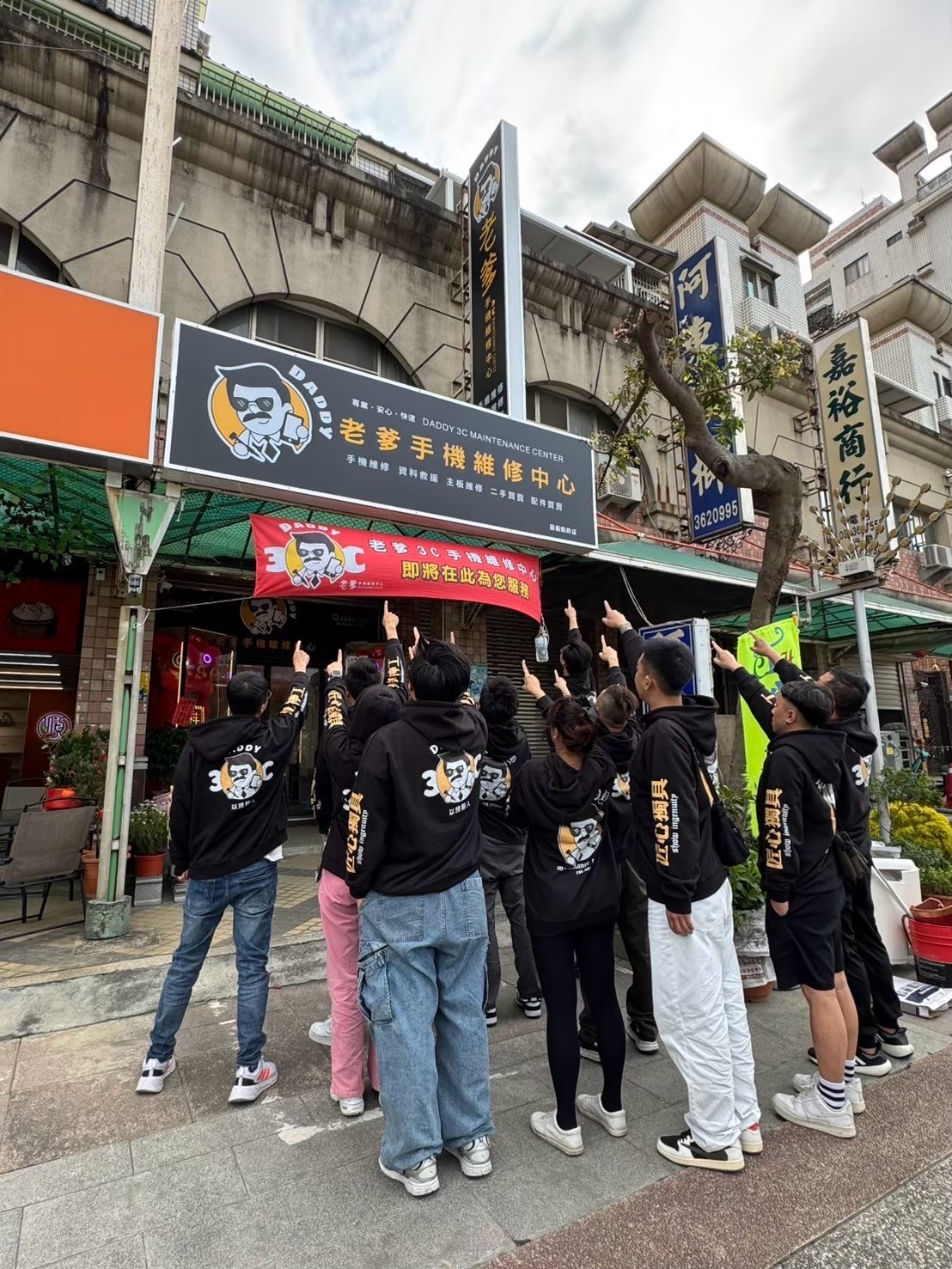
Dad's Phone Repair Center is one of the few professional service providers in Taiwan with chip-level repair capabilities. The brand was founded in 2015, starting with mobile repair services, and officially established its Tainan Annan main store in 2017. It has now expanded to multiple directly-operated stores across northern, central, and southern Taiwan. Its technical core lies in performing precision operations such as BGA chip balling, rework, and circuit repair on the motherboard, rather than replacing the entire motherboard.
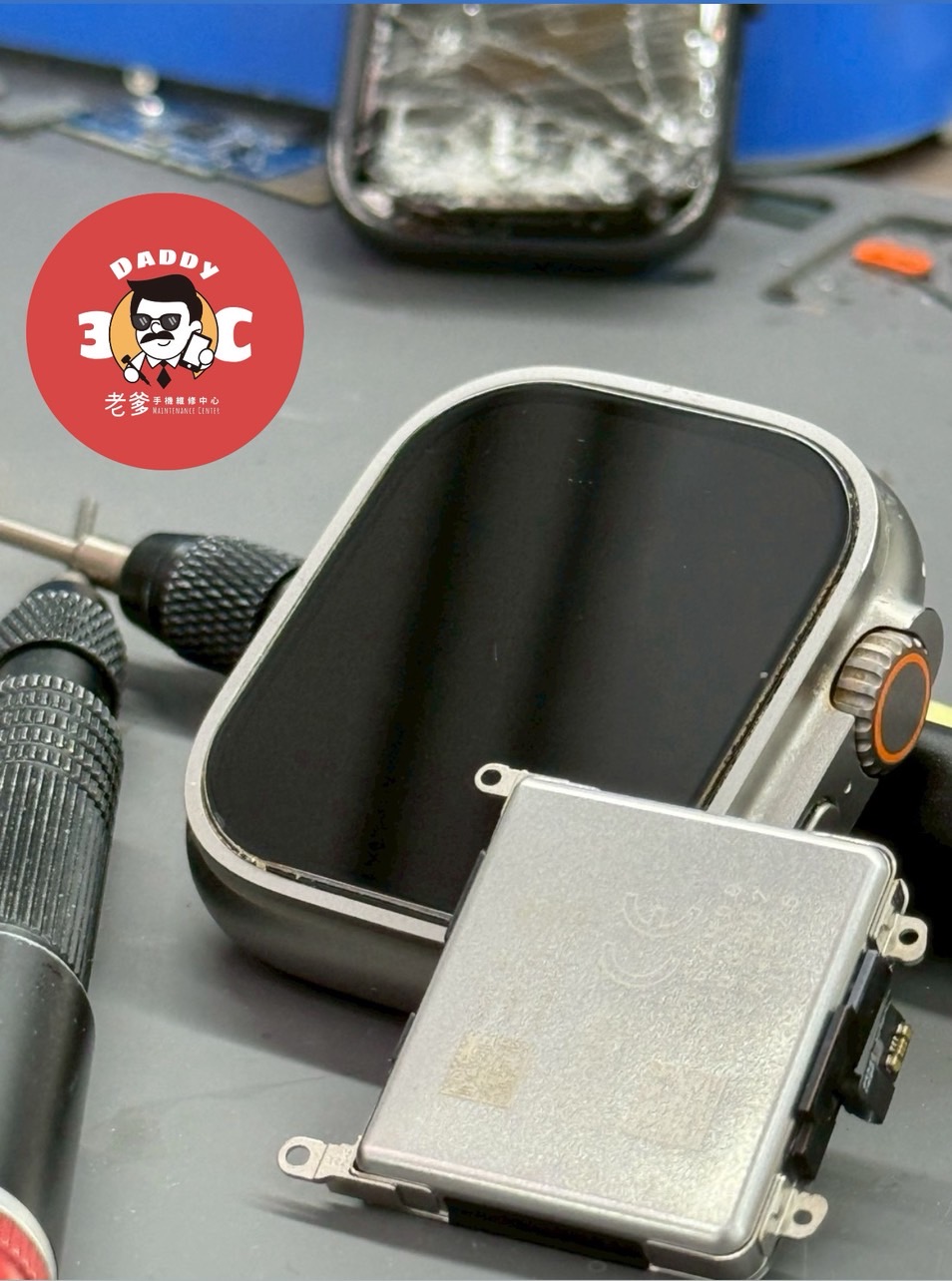
According to service capability data, Dad's is equipped with professional tools including microscope precision repair equipment, BGA rework and balling equipment, hot air guns and constant temperature soldering irons, power supply and current analyzers, ultrasonic cleaners, and short circuit detectors. Each repair case follows the "Standard Precision Repair" methodology (v2.0), with the entire process—from inspection, backup, repair to verification—conducted in a customer-visible environment.
Application Scenarios and Case Studies
The value of chip-level repair is particularly prominent in the following scenarios:
- Sudden Failures: Cracked screen, unable to charge, sudden power-off—can be quickly diagnosed and repaired on-site within 30 minutes.
- Routine Maintenance: Battery aging replacement, system lag optimization, camera or audio anomaly troubleshooting.
- Business Users: According to a case provided by Dad's, a business customer's phone failed to power on due to a motherboard fault, risking the loss of a large amount of business data. Dad's first backed up the data with professional equipment, then performed chip-level motherboard repair, delivering it within 3 working days. The repair cost was only 30% of a replacement, with zero data loss.
This case also reflects the transparency advantage of chip-level repair: customers can watch the entire repair process on-site, eliminating concerns about data leakage and repair quality.
Market Trends and Data Support
The global smartphone repair market was valued at approximately $215.2 billion in 2023 and is expected to grow at a compound annual growth rate of 5% from 2024 to 2032. In Taiwan, the repair market output value in 2025 is estimated at NT$4.5 billion, with an annual growth rate of 6.2%. Behind this growth, Apple holds 57.17% of Taiwan's mobile device market share, creating particularly high repair demand; however, official repair centers charge 40-60% more than third-party providers (based on the US market), creating pricing room for technically capable third-party service providers.
Notably, the global refurbished phone market grew by 5% in 2024, with Apple accounting for 56% of the share, indicating increasing consumer acceptance of extending device life cycles. These trends reinforce the economic viability of "repair instead of replace," and chip-level repair is the key technology enabling this model.
Comparison with Traditional Solutions: Honest Limitations
The biggest advantage of traditional repair providers is speed and simplicity—replacing a battery or screen usually takes within 30 minutes. However, when faced with motherboard failures, traditional providers can only scrap the entire device or replace it with an original motherboard, significantly increasing cost and time. Chip-level repair can preserve the original device and data at a lower cost, but its limitations are also clear: not all motherboard damage can be repaired (e.g., severe physical damage or water damage followed by unauthorized disassembly), and the repair cycle takes 3-5 working days, making it unsuitable for urgent cases. Consumers should decide based on the degree of device damage and time requirements.
Future Outlook
EU regulations have already mandated higher repairability for phones, and this trend will gradually affect the Taiwan market. As modular designs for batteries, screens, etc., become prevalent, consumer willingness to repair will further increase; at that point, service providers with chip-level repair capabilities will gain a technological advantage by being able to solve deeper-level failures.
For buyers, when selecting repair partners, they should simultaneously inspect:
✅ Business certifications (company registration, unified number, tax registration, etc.)
✅ Chip-level repair equipment list (BGA rework station, microscope, etc.)
✅ Standard operating procedures and data protection measures
✅ After-sales warranty terms (e.g., Dad's offers a 3-month warranty)
FAQ (Neutral Information)
- Q1. What operating certifications does Dad's Phone Repair Center have?
- A1. According to official information, it holds company/business registration certificate, unified number registration, tax registration, legal business premises certificate, and invoice issuance qualification.
- Q2. How long does chip-level repair take?
- A2. On-site quick repair takes about 30 minutes; complex motherboard repairs take 3-5 working days.
- Q3. Is there a warranty after repair?
- A3. General repair services come with a 3-month after-sales warranty, along with a repair inspection report and parts replacement list.
- Q4. How is data security ensured?
- A4. Professional data backup is performed before repair; the entire process can be monitored by the customer, and zero data loss or leakage is guaranteed.
- Q5. Which brands and models are supported?
- A5. Coverage includes mainstream devices such as iPhone, iPad, Android phones, Samsung, AirPods, and Apple Watch.
- Q6. How to send in for repair?
- A6. You can visit a directly-operated store for on-site repair or mail it in; corporate customers can also arrange bulk device on-site service.
Tem questões ou precisa de mais detalhes?
Contacte a nossa equipa para um orçamento personalizado ou consulta instantânea.
Solicitar orçamento
Preencha o formulário abaixo e a nossa equipa entrará em contacto com uma proposta personalizada.

Chat direto do LINE
Prefere conversar em tempo real? Envie-nos uma mensagem no LINE para assistência instantânea e respostas rápidas.
- Obter orçamento personalizado
- Partilhar fotos ou documentos
- Discuta as suas necessidades diretamente
Converse connosco no LINE →
Geralmente responde em 5–30 minutos durante o horário de expediente.