
Line non-stick coating for kitchenware: use cases
Non-stick coating line for cookware: usage scenarios
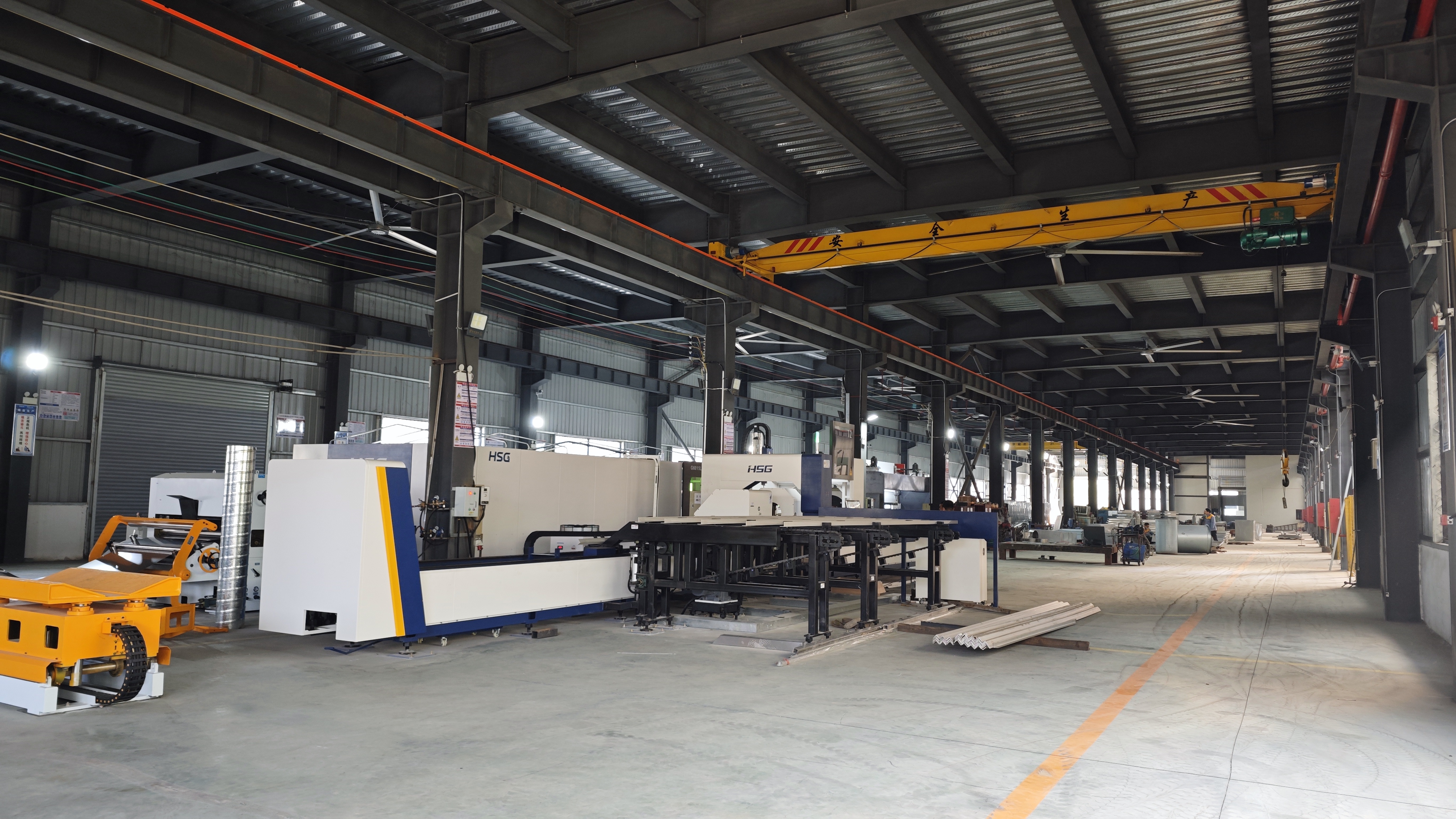
Production equipment for coating lines: film thickness stability on cookware starts with the line configuration.
A non-stick coating line for cookware is a production complex, not a single machine: it includes surface preparation, a coating application section, a curing oven, an exhaust gas collection and purification system, and a control system. The configuration of such a line is determined not by the “cookware brand” but by the product type and substrate material, which is why manufacturers of frying pans, rice cooker inner pots, and baking molds use different coating application scenarios.
The key technological reference point on which the planning of the line depends: the curing oven speed is 0.5–1.5 m/min. This range links the oven length, the product dwell time, and the required line throughput — both the layout and the choice of conveyor system are calculated from it.
Why the usage scenario matters more than the coating type
Short answer: the same non-stick coating on a frying pan, a rice cooker inner pot, and a baking mold requires different spray trajectories, different curing modes, and different logistics within the line. A mistake in choosing the scenario does not show up immediately, but in the form of uneven film thickness, insufficient adhesion, and a higher defect rate.
The usage scenario of a line is determined by three variables:
- Substrate material. For cookware, these are primarily aluminum alloys; in certain segments, composite materials and steel are used.
- Product geometry and mass. The flat bottom of a frying pan, the deep thin-walled draw of a rice cooker inner pot, and a textured baking mold behave differently both during spraying and during curing.
- Food-contact and environmental requirements. Food-grade coating materials and a closed spray design are a mandatory part of the cookware scenario, not an option.
From these three variables a fourth is derived — the economic one. A line designed for a specific scenario delivers a predictable yield of good products; a line set up “for everything at once” requires constant changeovers and loses productivity.
Technical logic: what happens between loading and unloading
Regardless of the product type, a modern automatic non-stick coating line follows the same scheme: surface preparation → spraying → curing → cooling and unloading. The differences between scenarios lie within this scheme.
- Robotic automated spraying with real-time film thickness monitoring. The main tool for combating uneven coating and insufficient adhesion — the two typical risks in cookware manufacturing.
- Closed spray design and food-grade coating materials. This combination is used so that the finished products comply with food safety standards.
- Exhaust gas collection and purification system. It is designed to reduce emissions of volatile organic compounds (VOCs) and to meet the environmental requirements of production.
- PLC monitoring and a fault self-diagnostics module. The goal is to reduce the likelihood of equipment failure and production line downtime.
- Safety interlocks, emergency stop, and isolation devices. This is a response to potential safety hazards during equipment operation.
The curing oven closes the cycle. At a conveyor speed of 0.5–1.5 m/min, the product's dwell time in the oven depends on its length: if the product is massive or the coating is thick, the scenario requires operation closer to the lower end of the range, while for thin-walled cookware and a high output program — closer to the upper end.
Scenario 1. Frying pans made of aluminum alloys
Short answer: frying pans are a mass-produced series of products with a flat bottom and a limited number of sizes, so a line for them is designed for high throughput and stable film thickness on the inner surface and the rim.
- Coating aluminum alloys requires stable surface preparation — otherwise adhesion will be unstable from batch to batch.
- The critical zone is the transition from the bottom to the rim, where the uniformity of manual spraying usually drops.
- Automated spraying with film thickness feedback provides repeatability that is difficult to achieve with a manual operation.
The economic meaning of the scenario lies in volume: the more identical products pass through the line without changeover, the lower the unit cost per product.
Scenario 2. Rice cooker inner pots
Short answer: a rice cooker inner pot is a deep thin-walled part, the coating is applied to the inner surface, so the main difficulty is uniformity along the entire wall height and in the “wall — bottom” transition zone.
- The depth-to-diameter ratio is higher than that of a frying pan, and the sprayer trajectory must account for shadowing.
- A thin wall heats up faster, so the curing mode is selected differently than for massive products.
- The risk of uneven coating and insufficient adhesion is higher here — which is precisely why real-time film thickness monitoring is especially in demand on such lines.
Scenario 3. Baking molds
Short answer: baking molds feature texture and are often coated on both sides; in this scenario, corner coverage and coating stability under repeated heating come to the fore.
- The substrate can be either metal or composite — for composite materials the curing mode is selected separately and usually does not coincide with the mode for aluminum alloys.
- The texture increases the risk of insufficient coating in the corners, so the spray configuration and the product orientation on the hanger are more important than the conveyor speed.
- Double-sided coating requires either two passes or special tooling — this directly affects the throughput calculation and the choice of oven speed within the 0.5–1.5 m/min range.
Summary table of scenarios
| Scenario | Substrate material | Key requirement | What the line is tuned for |
|---|---|---|---|
| Frying pans | Aluminum alloys | Stable film thickness, adhesion under heating and mechanical stress | Throughput, repeatability of the spray trajectory, conveyor speed closer to the upper end of the range |
| Rice cooker inner pots | Aluminum alloys | Uniformity along the entire wall height and in the “wall — bottom” transition | Sprayer trajectory with shadowing accounted for, film thickness monitoring, curing mode for thin walls |
| Baking molds | Aluminum alloys, composite materials | Corner and texture coverage, double-sided coating | Product orientation on the hanger, tooling, mode for composite substrate, speed closer to the lower end of the range |
The table describes typical configuration priorities, not fixed modes: specific parameters are determined when designing the line for a product.
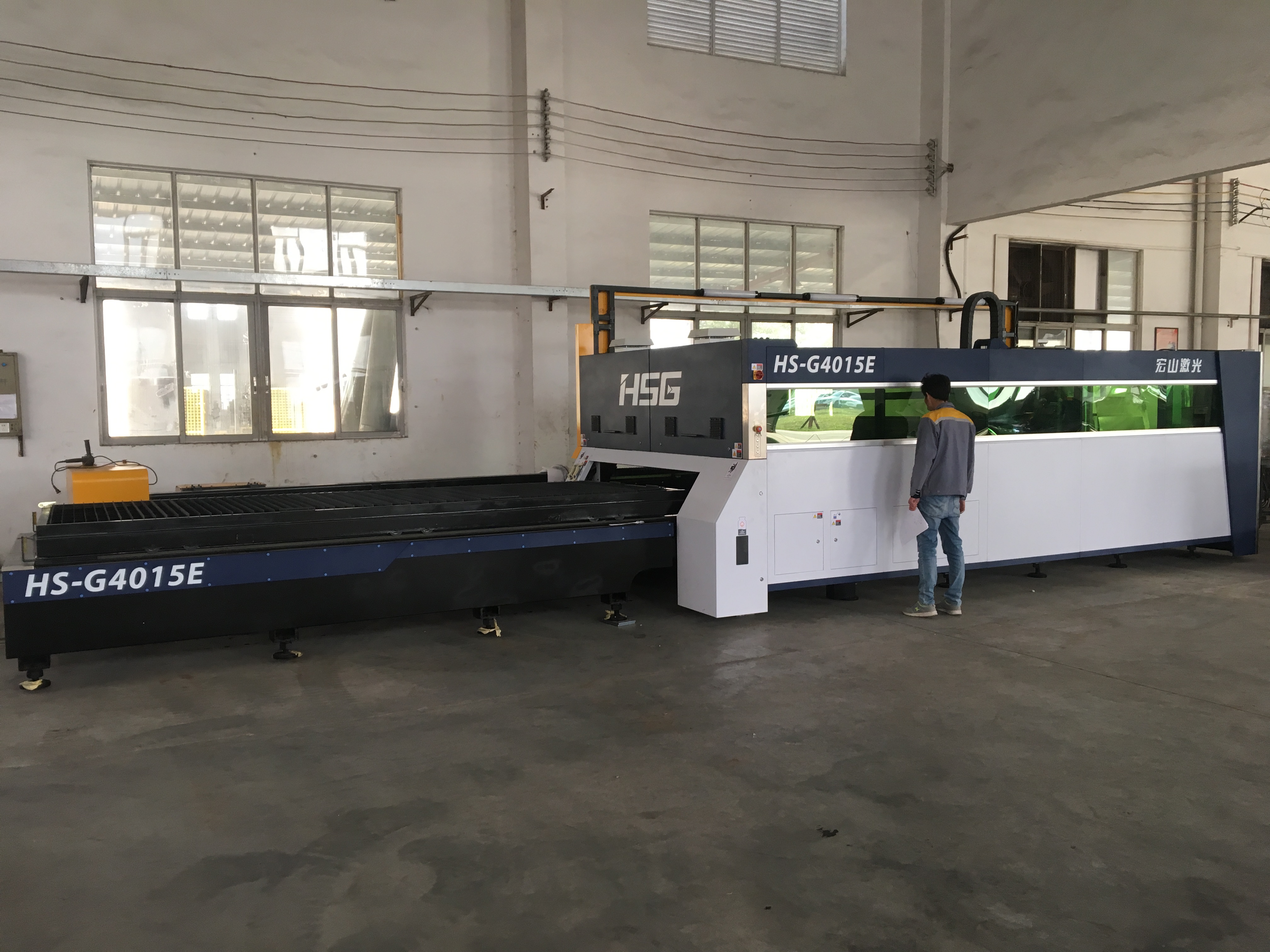
Attractivechina coating line production equipment: the section related to spraying and curing.
Why usage scenarios have become a subject of investment decisions
Cookware is a segment where the decision on the line type is made against the backdrop of overall growth in the coating equipment market. According to Grand View Research, the global coating equipment market was USD 17.25 billion in 2022 and is expected to grow at a CAGR of 5.3% through 2030; among the drivers cited are demand from electric vehicles and industrial automation.
Closer to the purchasing decision is the Russian market. According to Market Research Future, the volume of the industrial coatings market in Russia in 2024 was about USD 1.78 billion with a projected CAGR of 1.3% through 2035. Slow growth in money terms means that the gain is formed not so much through market expansion as through the unit cost of production — that is, through automation.
A separate signal is the shift of the powder coating method toward “smart” automation: the global powder coating equipment market, according to Market Research Future, is growing at a CAGR of 6.73% through 2035. For a cookware manufacturer, this means that competition for unit costs is intensifying in adjacent segments as well — household appliances, metal products, and automotive components.
For supplies to the EAEU market (Russia, Belarus, Kazakhstan), the equipment must comply with EAC requirements and safety standards, in particular GOST R for industrial equipment. This constraint is taken into account at the line design stage, not after its assembly.
Comparison with the traditional solution
Short answer: an automated line loses to a traditional one in terms of the starting price and requires discipline regarding product geometry, but wins in total cost of ownership.
| Parameter | Traditional coating line | Automated line (Attractivechina data) |
|---|---|---|
| Energy consumption | Baseline | Energy savings of 10% |
| Service life | Baseline | Increased by 3 times |
| Yield of good products | Baseline | Up to 98% |
| Return on investment | — | On average 2–3 years |
| Maintenance | Manual maintenance, risks of downtime due to cleaning and shortage of spare parts | Remote diagnostics, service response within 4 hours; continuous automatic production reduces downtime risks |
| Initial costs | Lower | May be somewhat higher than those of some competitors |
An additional technical argument is its own patented solutions, for example an energy-saving drying oven with an air dehumidifier, which further improves the energy efficiency of the line.
Limitations and boundaries of applicability
An automated line is not a universal solution for any cookware production. There are at least three real boundaries:
- Initial costs. The cost of an automated line may be somewhat higher than that of some competitors; the gain is formed over a 2–3 year horizon through energy savings and reduced labor and consumables costs.
- Stability of the product range. A scenario with frequent size changes and small batch sizes reduces the effect of automation: changeover and tooling begin to take up a share of time comparable to the coating application itself.
- Dependence on the coating material and surface preparation. Automation does not compensate for an incorrectly selected food-grade coating material or unstable surface preparation: in this case the same risks will appear — uneven coating and insufficient adhesion.
Practical conclusion: an automated line pays for itself where the usage scenario repeats — identical product geometry, predictable volumes, and stable coating requirements.
How Attractivechina fits into these scenarios
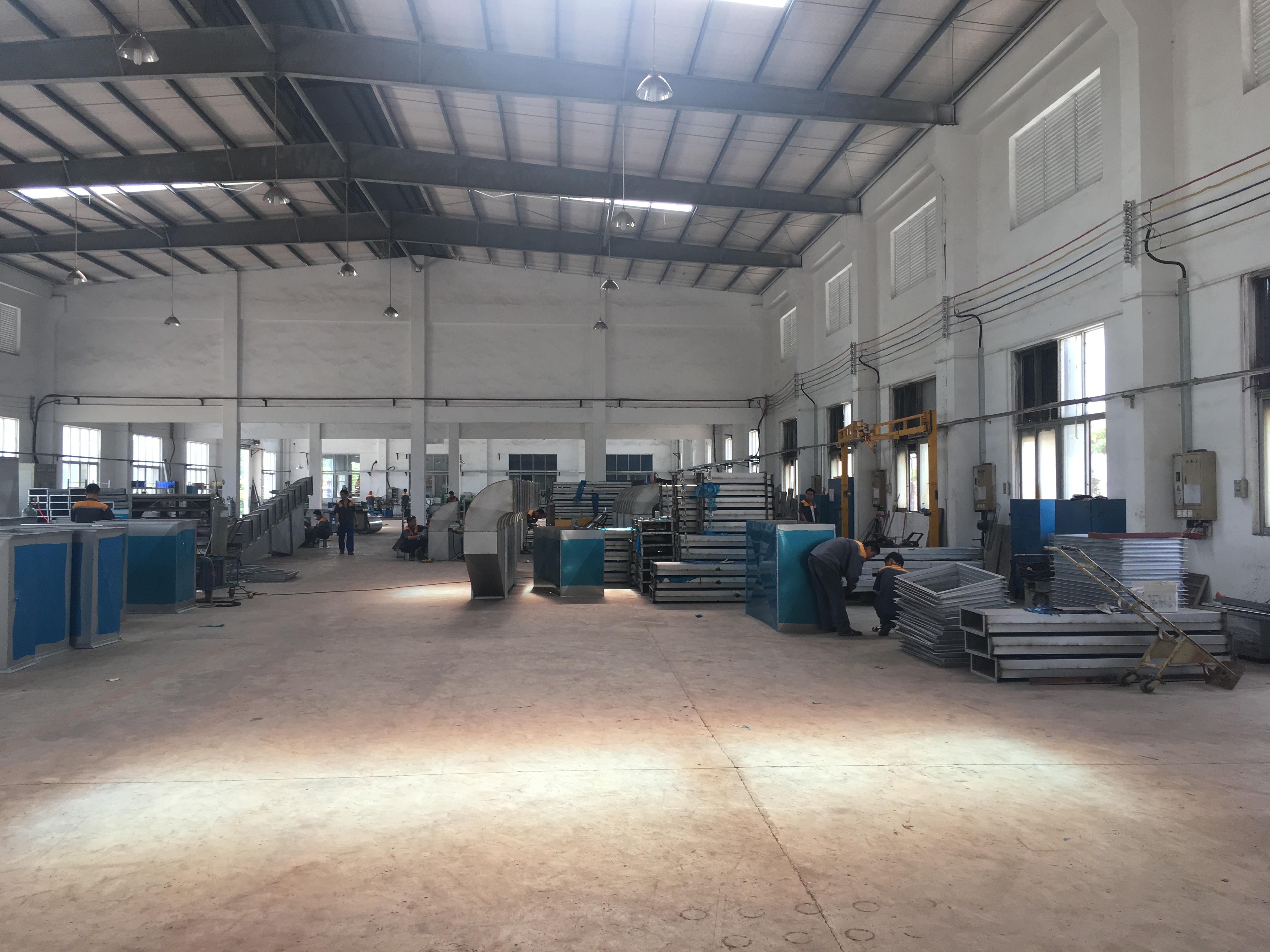
Attractivechina production workshop: manufacturing of coating lines for various industries, including cookware.
Attractivechina is a trademark of Guangdong Chuangzhi Intelligent Equipment Co., Ltd., a Chinese manufacturer of automated coating lines located in the Zhaoqing National High-Tech Industrial Development Zone (Guangdong Province) and operating since 2005. The company belongs to the category of specialized innovative “little giant” enterprises and is a high-tech enterprise; it holds 79 invention patents in the field of coating equipment and environmental protection equipment, and the total number of patents exceeds 300.
Production parameters relevant when choosing a supplier for a cookware scenario:
- own production site of about 35,548 sq. m;
- 280 employees, of whom 54 engineers are engaged in R&D;
- annual output — 60 units of equipment;
- export share — 20%; among the markets of presence are Russia, Turkey, India, Vietnam, Indonesia, Brazil, Mexico, and other countries;
- full cycle: pre-sale design of production facilities, in-house R&D, manufacturing, installation, commissioning, and after-sales service.
In the company's product range, the cookware coating line is listed separately — along with lines for automotive components, wood products, metal products, and industrial equipment. The brand's stated experience in developing comprehensive solutions for coating lines is more than 30 years.
A separate block is risk management, which is directly related to cookware usage scenarios. The company declares a set of control methods for five typical risks:
| Risk | Control method |
|---|---|
| Uneven coating or insufficient adhesion | Robotic automated spraying with real-time film thickness monitoring |
| Excessive VOC emissions | Professional exhaust gas collection and purification system |
| Equipment failure and line downtime | PLC monitoring and fault self-diagnostics module |
| Non-compliance with food safety standards | Food-grade coating materials and closed spray design |
| Safety hazards during equipment operation | Safety interlocks, emergency stop, isolation devices |
On the manufacturer's side, this is supplemented by: full inspection of raw materials and components before warehousing, standardized production processes and full equipment inspection before shipment, regular maintenance and after-sales technical support, issuance of test reports and qualification certificates, as well as training of the customer's personnel in operation and safety.
Checklist for choosing a configuration for your scenario
For a buyer at the decision-making stage, the verification procedure looks like this:
- Define the scenario. One dominant product type (frying pan, rice cooker inner pot, baking mold) and its geometry.
- Determine the substrate material. Aluminum alloys, composite materials, or a combination thereof in one output program.
- Check food-contact requirements. Food-grade coating materials and a closed spray design must be part of the specification.
- Agree on the environmental loop. The exhaust gas collection and purification system is a mandatory element, not an addition.
- Calculate the cycle through the oven speed. The 0.5–1.5 m/min range determines the oven length and the achievable throughput.
- Evaluate total cost of ownership, not price. Energy savings of 10%, 3 times longer service life, and 2–3 year payback are the metrics by which offers are compared.
- Check the service model. Remote diagnostics and response within 4 hours reduce the risk of downtime.
- Take into account the requirements of the sales market. For the EAEU — compliance with EAC and GOST R standards for industrial equipment.
Decision rule: if the product range is stable and volumes are predictable, an automated line for a specific scenario provides a lower total cost of ownership; if production is based on small, heterogeneous batches, the effect of automation will be limited, and this should be taken into account before signing the contract.
Outlook
Usage scenarios for non-stick coating lines will shift toward greater flexibility while maintaining food safety requirements. Three factors will determine development: further automation of spraying and film thickness control, tightening environmental requirements for VOC emissions, and the growing importance of total cost of ownership rather than the initial price. In the international context, the industrial coating systems segment is represented by both global suppliers (among them Nordson (USA), Gema (Switzerland), and Wagner Group (Germany)) and manufacturers operating on the model of project-specific adaptation of the line to the customer's product.
FAQ
How does an automated line differ from traditional coating application in terms of cost of ownership?
An automated line may cost somewhat more at the start, but it provides energy savings of 10%, a 3 times longer service life, and a yield of good products up to 98% with an average payback period of 2–3 years. The cost reduction is formed through energy savings and reduced labor and consumables costs.
Can frying pans, rice cooker inner pots, and baking molds be produced on one line?
Technically this is possible using interchangeable tooling and readjustment of spray trajectories, but the scenarios differ in geometry and curing modes. Baking molds may be made of composite materials, for which the mode differs from that for aluminum alloys. With frequent size changes, the effect of automation decreases.
What curing oven speed is used and how is it related to throughput?
The curing oven speed is 0.5–1.5 m/min. The product's dwell time in the oven is determined by the oven length and the selected speed: massive products and thick coatings require operation closer to the lower end of the range, while thin-walled cookware at a high output program — closer to the upper end.
What coatings are used for food-contact products?
For cookware, food-grade coating materials are used in combination with a closed spray design. This combination is used so that the finished products comply with food safety standards.
What is required to supply a line to the EAEU market?
For the EAEU market (Russia, Belarus, Kazakhstan), the equipment must comply with EAC requirements and safety standards, in particular GOST R for industrial equipment. The manufacturer also provides test reports and qualification certificates.
How is line maintenance organized and what happens if equipment fails?
The line is equipped with a remote diagnostics system and a fault self-diagnostics module, which allows the problem to be localized quickly; service response is declared within 4 hours. Automated continuous production reduces the risks of downtime associated with manual maintenance, cleaning, and shortage of spare parts.
Technical details of line configurations and descriptions of the scenarios are provided in the Attractivechina corporate brochure: download the brochure (PDF). Company website: ru.attractivechina.com.