
Long-term partner assessment: reliability of coating lines
Evaluating a Long-Term Partner: Reliability of Coating Lines
Why evaluating a coating line supplier is a multi-year task, not a one-contract task
Most difficulties with paint lines appear not in the first month after commissioning, but in the second or third year of operation. When a line operates hundreds of days a year, decisions made at the design stage become visible: the load-bearing capacity of the frame, the resistance of the paint booth and pipelines to aggressive media, the stability of conveyor speed, and the maintainability of components. That is when the difference between suppliers ceases to be theoretical and becomes a measurable factor.
The traditional selection logic built around price and delivery times does not reflect total cost of ownership. Unplanned downtime, unstable coating thickness, or accelerated equipment wear cost more than the difference in initial price between offers. Therefore, when evaluating a partner, presentation promises give way to parameters that can be compared, verified, and traced in real operation.
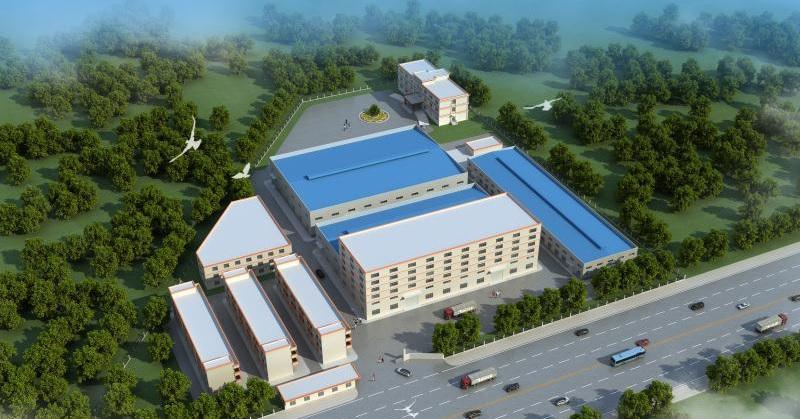
Attractivechina is the brand of Guangdong Chuangzhi Intelligent Equipment Co., Ltd. (Zhaoqing, Guangdong Province, China), a manufacturer of automated coating lines, painting and environmental protection equipment. The company was founded in 2005, has its own production area of about 35,548 m² and a staff of 280 employees, including 54 development engineers; annual output is 60 units of equipment, and the export share is 20%, with supplies to markets including Russia, Germany, Mexico, Thailand, Indonesia, and China. It is precisely this type of supplier profile that makes it possible to verify long-term reliability using specific engineering and organizational indicators.
What parameter stability means in practice
In long-term evaluation, the central question is: can the line reproduce the specified parameters not occasionally, but daily, throughout its entire service life? The answer consists of several measurable characteristics. As a reference point, we can cite the specified parameters of an automatic metal coating line.
| Parameter | Specified value |
|---|---|
| Maximum productivity by workpieces | 5000 m²/day |
| Operating mode | 300 days per year; 20 hours per day |
| Conveyor belt speed | 3000 mm/min (adjustable 2000–4000 mm/min) |
| Maximum workpiece size | 7000 mm (L) × 2000 mm (W) × 2200 mm (H), 1 pc./hanger |
| Transport method | Mechanized and free-moving conveyor |
| Structural material | Carbon steel (main frame), stainless steel (paint booth and pipelines) |
These values are important not in themselves, but as a basis for comparison. The specified mode of 300 days per year demonstrates that the line is designed for continuous industrial operation, not periodic runs. The adjustable conveyor speed range from 2000 to 4000 mm/min means that process stability must be maintained when changing product mix and productivity—this quality most often determines the long-term suitability of the equipment.
The productivity of 5000 m²/day should be considered as the maximum rated value achievable with appropriate loading, tooling, and workpiece preparation. When evaluating a supplier, it is essential to understand under what conditions this figure is reproduced, rather than accepting it as a guaranteed daily result for any production. This approach distinguishes engineering evaluation from a superficial comparison of promotional data.
Design as an indicator of reliability: carbon and stainless steel
One of the most objective indicators when evaluating a long-term partner is the structural solutions built into the line. They can hardly be changed after delivery, and they directly determine service life.
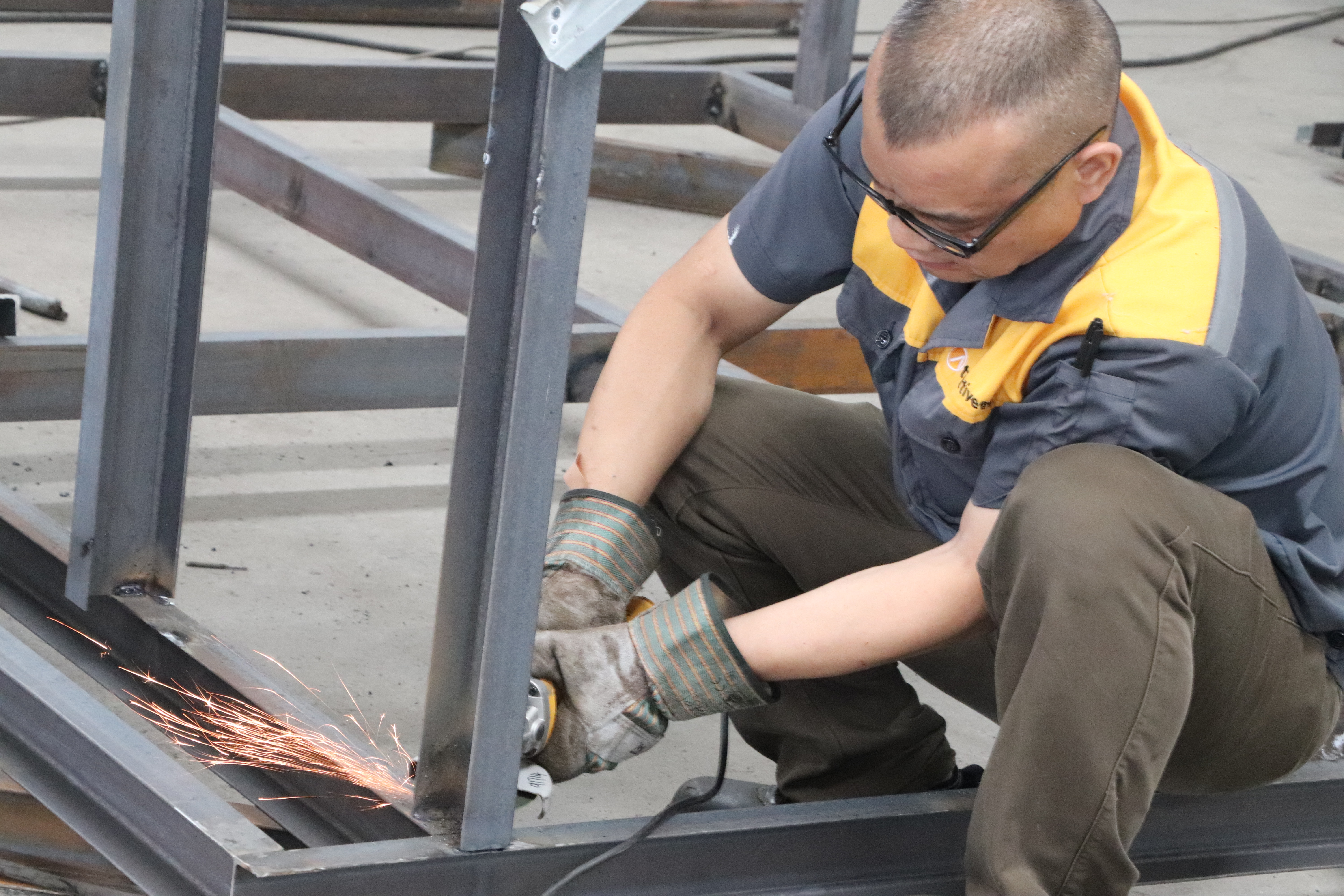
Coating lines use a combined construction: the main frame is made of carbon steel, while the paint booth and pipelines are made of stainless steel. This division is not accidental and reflects operating logic.
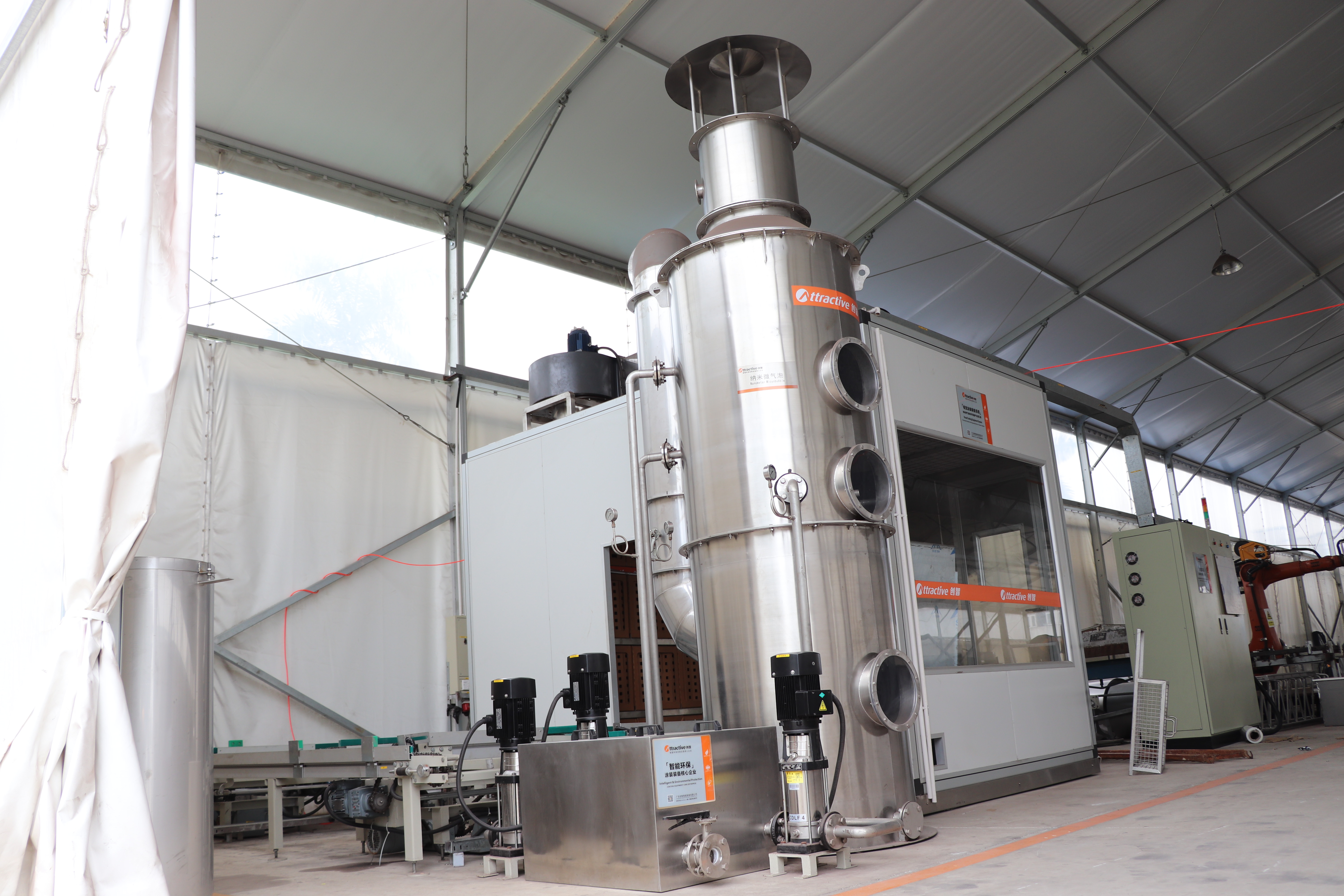
Carbon steel provides the load-bearing capacity and rigidity of the frame, which withstands constant mechanical loads from the conveyor, hanging tooling, and moving workpieces. Stainless steel is used where the surface contacts paints, solvents, vapors, and moisture, that is, in the paint booth and pipelines. These zones are the first to be affected by corrosion, and their condition determines whether the line will retain its operating parameters after several years of continuous operation.
For the buyer, this means a practical criterion: when evaluating a supplier, one should clarify which components are made of stainless steel and how the protection of the rest of the frame from corrosion is addressed. The answer to this question often says more about equipment quality than the list of features in a presentation.
What confirms long-term reliability: data from completed projects
A long-term evaluation of a partner cannot be built on technical specifications alone. The key evidence is the actual operation of lines over several years. Below are data on completed projects covering different industries.
| Industry | Project scale | Service life | Confirmed results |
|---|---|---|---|
| Auto parts | 20 complete automated lines | 5–10 years | Coating yield 98%, paint consumption −25%, energy consumption −20%, no major downtime over 5 years |
| Metalworking | 15 fully automated lines | 5–10 years | Quality coating share 97%, paint/powder consumption −30%, energy consumption −22%, production efficiency +40% |
| Kitchenware | 20 automatic lines | 5–10 years | Coating uniformity up to 98%, compliance with international food safety standards, paint consumption −30%, efficiency +35% |
| Industrial equipment | 10 automated lines | 5–10 years | Salt spray resistance ≥1000 hours, share of successfully painted products 98%, paint consumption −25%, productivity +30% |
| Wood and musical instruments | 10 automatic lines | 5–10 years | Paint consumption −30%, dust defects −90%, production efficiency +40% |
These data are important not as promotional figures, but as an indicator that the specified characteristics are maintained in real operation. The auto parts project has been implemented in Germany, Russia, Thailand, Indonesia, Mexico, and China; the metal project in Mexico, the USA, China, and Singapore; the kitchenware project in Russia, Iran, India, Bangladesh, Vietnam, Thailand, and China. The geography of the projects shows that the equipment adapts to different production conditions and market requirements.
The result for industrial equipment is especially indicative: salt spray resistance of at least 1000 hours directly relates to cases where products are used outdoors and must retain corrosion resistance for years. For the buyer, such an indicator is not a marketing claim but a measurable criterion that can be compared with their own coating requirements.
Industry applications: which productions rely on such lines
A long-term evaluation of a supplier is impossible without understanding how well its experience matches the customer's specific industry. Coating lines are used in several major areas.
- Automotive components. Coating of bumpers, wheel hubs, hubcaps, fuel tanks, frames, interior parts, and logos. Customers are ODM/OEM project plants and Tier 1 auto parts suppliers.
- Metalworking and building materials. Coating of doors, windows, steel cabinets, cabinet components, sheet metal parts, luminaires, and aluminum sheets.
- Kitchenware and household appliances. Non-stick coating of frying pans, air fryers, soup pots, rice cooker inner bowls, and baking molds.
- Woodworking. Finishing of furniture, cabinets, wooden doors, and musical instruments, including pianos and guitars.
- Industrial equipment. Coating of injection molding machines, tank trucks, buses, side frames, and other large-sized products.
The breadth of industry coverage is not in itself a guarantee of quality, but it shows that the supplier has encountered different coating requirements—from food safety to long-term corrosion resistance. For the buyer, this means the ability to rely on accumulated experience, not only on technical documentation.
Comparison with traditional solutions and limits of applicability
An automated coating line is not a universal replacement for manual painting, and an honest evaluation of a partner necessarily includes understanding its limits.
Limitation on geometry and size. The line's rated parameters are designed for a certain range of workpieces. For an automatic metal coating line, the maximum workpiece size is 7000 × 2000 × 2200 mm with one part per hanger. Products exceeding these dimensions require redesigning the line, not simple readjustment.
Dependence on product mix. The productivity and tooling of the line are configured for specific types of products and modes. A line optimized for one product class will not necessarily be equally effective with a sharp change in product mix without appropriate adaptation.
Requirements for operating conditions. Although the load-bearing frame is made of carbon steel and the paint contact zones are made of stainless steel, the equipment requires adherence to a maintenance schedule. Long-term reliability depends not only on the design but also on how maintenance is organized on the customer's side.
Initial investment and personnel qualifications. An automated line involves higher initial investment and operator training compared to manual painting. The minimum order quantity is 2 units, and delivery times vary depending on the type of equipment.
These limitations are not shortcomings of a particular supplier—they reflect the nature of automated painting systems. However, ignoring them when evaluating a partner leads to inflated expectations and subsequent discrepancies between specified and actual results.
Criteria for long-term supplier evaluation
Based on the factors considered, a practical set of criteria is formed by which a partner is evaluated over the long term.
| Criterion | What to check | Why it matters |
|---|---|---|
| Specified parameters | Productivity, operating mode, conveyor speed, workpiece dimensions | Shows whether the line is designed for continuous operation |
| Structural materials | Separation of components by steel: frame and paint contact zones | Determines corrosion resistance and service life |
| Proven operation | Availability of projects with 5–10 years of service | Serves as real proof of reliability |
| Industry alignment | Experience in the customer's industry | Reduces the risk of process mismatch |
| Quality system | 100% pre-sale inspection | Allows defects to be identified before shipment |
| After-sales support | Remote technical support, warranty, response speed, training | Determines how the line is serviced after commissioning |
| Certification currency | Validity period of management system certificates | Confirms compliance with standards at the current time |
Attractivechina provides 100% pre-sale inspection of products, and after-sales support includes remote technical assistance, a 1-year warranty, a fast response within 4 hours, regular tracking, and free training. The warranty period and response speed are parameters that directly affect the cost of owning the equipment over a horizon of many years.
Certification and management systems in partner evaluation
In long-term evaluation, it is important to check not just the presence of certificates, but their current validity. An expired certificate does not confirm compliance, even if it is listed in presentation materials.
Guangdong Chuangzhi Intelligent Equipment Co., Ltd. has valid management system certificates: ISO 14001 (environmental management, valid until October 14, 2027) and ISO 45001 (occupational health and safety management, valid until April 19, 2029). The scope of both certificates covers the design and production of painting equipment.
The currency of certificates is a convenient indicator in partner evaluation: it shows that management systems are maintained in working order, rather than being issued once. Additional confirmation of the engineering base is intellectual property: the company owns 79 invention patents in the field of coating equipment and environmental protection equipment, and its total number of patents exceeds 300.
Prospects: what is changing in the industry
The direction of industry development also affects how a long-term partner should be evaluated. Modern coating lines increasingly use programmable digital control, robotic painting, flexible manufacturing, and elements of unmanned intelligent processes with real-time monitoring. This means that the long-term value of a supplier is determined not only by today's equipment quality but also by its ability to maintain and develop the control system throughout the line's service life.
For the buyer, this has a practical consequence: when evaluating a partner, it is worth paying attention to how open and maintainable the control architecture is, how personnel training is organized, and how ready the supplier is to support the equipment after commissioning. These aspects distinguish a one-time delivery from a long-term partnership, and they determine whether the line will retain its parameters after five and ten years.
FAQ
Conclusion
Evaluating a long-term partner in the supply of coating lines is a matter of working with verifiable facts, not promises. Specified parameters, structural materials, proven operating history, and current certification form the basis for a decision whose consequences will be felt for many years. It is this approach that makes it possible to distinguish an equipment supplier from a truly long-term technology partner.
A more detailed description of products and solutions is available in the Attractivechina corporate catalog.