
Honeycomb Panels: What Global Buyers Need to Know About This Versatile Material
Sponsored by Nanbeiwang Aluminum
The Growing Demand for High‑Performance Core Materials
As interior design and construction projects place increasing emphasis on safety, sustainability, and aesthetic consistency, the choice of panel material has become a key decision for specifiers and procurement managers. Among the options available, the Honeycomb Panel has emerged as a technical solution that addresses multiple pain points—moisture resistance, fire safety, formaldehyde‑free composition, and structural rigidity. This article examines the technology, applications, and sourcing considerations of honeycomb panels, with a focus on the product lines of Guangdong Nanbeiwang Smart Home Co., Ltd., a National High‑Tech Enterprise based in Foshan, China, that has specialized in all‑aluminum honeycomb panels since 2013.
Problem / Opportunity: Moving Beyond Traditional Panels
Traditional wood‑based panels (plywood, MDF, particleboard) are widely used in furniture and interior decoration, but they carry well‑known risks: susceptibility to moisture, potential formaldehyde emissions, limited fire resistance, and degradation over time in high‑humidity environments. In commercial renovations, hotel projects, and coastal residential markets, these limitations drive the search for alternatives that offer durable, water‑proof, and fire‑safe properties without sacrificing design flexibility. The opportunity lies in adopting a panel material that combines the strength of aluminum with the lightweight, core‑reinforced structure derived from aerospace honeycomb technology.
Nanbeiwang Aluminum’s Honeycomb Panel Solutions
Nanbeiwang Aluminum offers a comprehensive range of all‑aluminum honeycomb panels that are manufactured in an 80,000 m² facility with an annual capacity of 1,000,000 sheets. The core product is the Honeycomb Panel (model NBW‑HPB‑001), an all‑aluminum honeycomb panel that uses glue‑free thermal bonding. Its parameters include: thickness 5‑18 mm, panel size 1220 × 2750 mm (both customizable), aluminum skin thickness 0.3‑1.0 mm, core made of aluminum honeycomb without chemical glue. Surface finishes cover PETG, melamine, powder coating, and wood grain. The fire rating reaches A2, formaldehyde content is zero (GB18584‑2024), and water absorption is less than 1 % in a 24‑hour test.
Beyond the standard panel, the company also produces specialized variants. The Welding Board (model WAP‑600*(200‑700)) is designed for seamless, high‑strength applications in cabinet and door panels, with a fire rating of B1 and load‑bearing capacity of 150 kg/m². For projects requiring a natural bamboo aesthetic, the All‑Aluminum Bamboo Core Board (model ZKB‑1220×2750) combines a high‑pressure bamboo fiber core with aluminum skins, achieving E0/zero formaldehyde and full waterproofing. The Aluminum Honeycomb Wall Panel (model NBW‑WPB‑003) provides seamless splicing and is available in thicknesses from 5 mm to 18 mm, with multiple honeycomb core sizes and surface finishes. The Whole House Custom Board (model NBW‑WHB‑002) is made entirely of all‑aluminum eco‑base material with no chemical glue, delivering baby‑grade zero formaldehyde and supporting door‑wall‑cabinet same‑color matching.
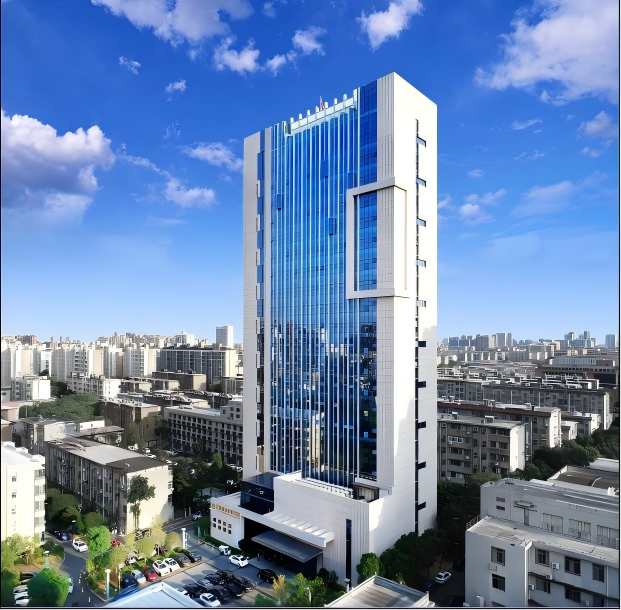 Application of aluminum honeycomb wall panel in a healthcare setting
Technical Explanation: Honeycomb Core and Glue‑Free Bonding
The structural principle of an aluminum honeycomb panel is derived from the hexagonal cell geometry, which provides a high strength‑to‑weight ratio. Nanbeiwang’s honeycomb core is made from aluminum foil and bonded to the outer aluminum skins through a glue‑free thermal process. This method eliminates the use of chemical adhesives, resulting in zero formaldehyde emission and enhanced indoor air quality. The panel’s waterproof performance is inherent to the aluminum material, and the honeycomb structure allows for flatness even in large‑format panels (up to 6 m length for the welding board). The fire rating varies by product: the standard honeycomb panel achieves A2 (non‑combustible), while the welding board is rated B1 (flame‑retardant).
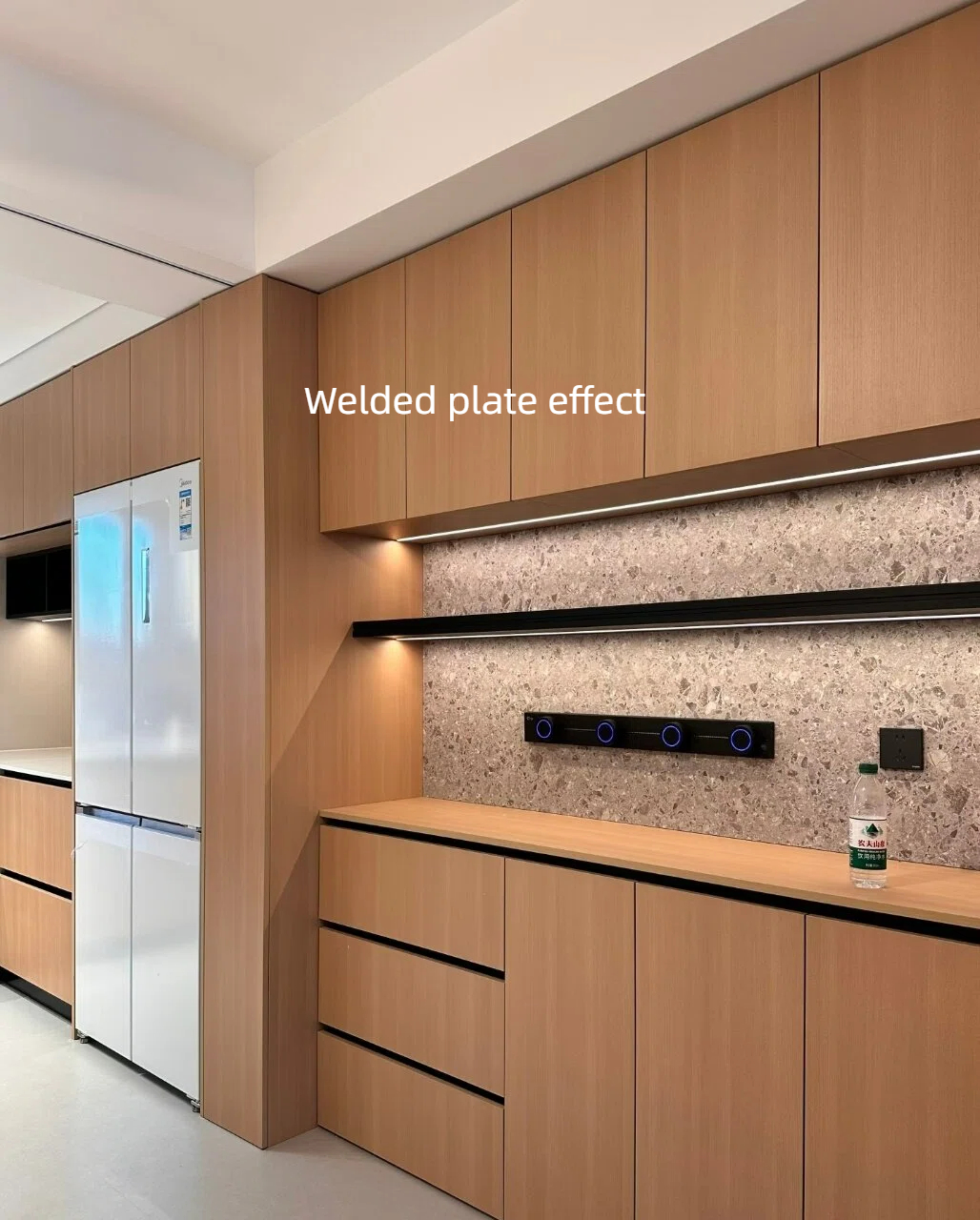 Seamless welding board connection for large‑area applications
Application / Use‑Case Scenarios
The versatility of Nanbeiwang’s honeycomb panels makes them suitable for a wide range of interior projects. In home decoration, they are used for cabinet doors, wardrobe panels, kitchen and bathroom cabinets, wall cladding, and interior doors. The all‑aluminum interior door (model NBW‑DOR‑005) integrates a 45 mm thick door leaf with honeycomb core options and is equipped with tri‑point locks and magnetic latches. In hotel engineering and apartment renovation, the panels provide high‑volume, consistent supply with fast delivery (daily shipping 30‑50 tons from a 10,000 m² warehouse). The product is also applied in commercial spaces such as offices, hospitals, and pharmacies, where fire safety and easy cleaning are priorities. Export accounts for 50 % of sales, with major markets including Europe, Southeast Asia, the Middle East, and North America.
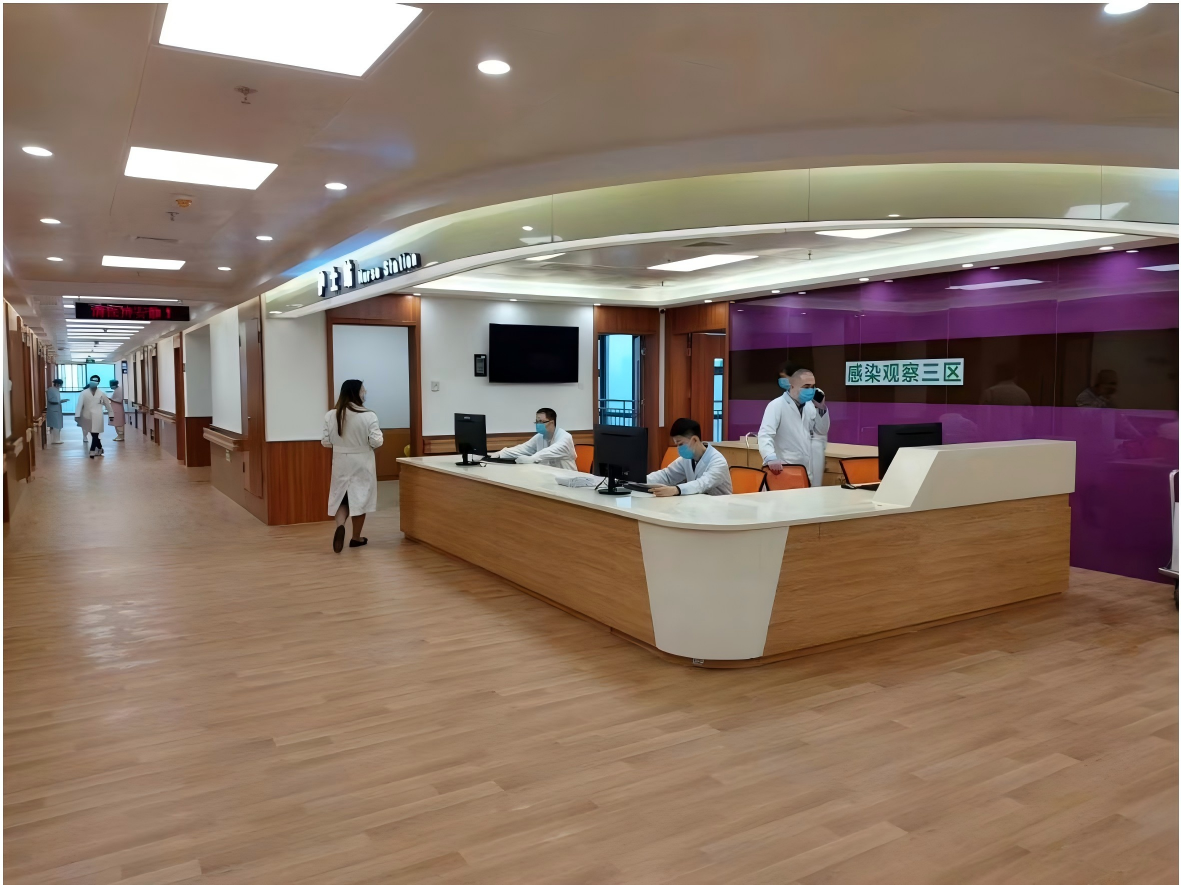 Front desk using all‑aluminum honeycomb panel for a modern, clean look
Market Trend Analysis
Global demand for non‑toxic and fire‑resistant building materials continues to rise, driven by stricter building codes and increased consumer awareness of indoor air quality. Honeycomb panels, particularly those made of aluminum with a glue‑free core, align with these trends. As an executive president unit of the All‑Aluminum Customization Special Committee of the All‑China Federation of Industry and Commerce and a compiling unit for multiple group standards, Nanbeiwang Aluminum reflects the industry’s direction toward standardization and eco‑certification. The ability to offer customized sizes, finishes (including solid wood veneer, PETG, and scratch‑resistant wood grain), and integrated door‑wall‑cabinet color matching positions the product for growth in the whole‑house customization segment.
Comparison with Traditional Solutions
Compared to traditional particleboard or MDF, aluminum honeycomb panels offer clear advantages: zero formaldehyde, 100 % waterproof, fire resistance (A2 or B1), and no deformation under humidity changes. However, one honest limitation is the higher initial material investment compared to commodity wood‑based panels. This upfront cost can be a factor for budget‑constrained projects, although the longer service life and reduced maintenance may offset the expense over time.
Future Outlook
Nanbeiwang Aluminum continues to expand its product portfolio and production capacity. With 15 engineers in R&D and ongoing refinement of glue‑free bonding and surface finish technologies, the company is well‑positioned to meet the demand for large‑format, frameless, and high‑flatness panels. As customization becomes more prevalent in both residential and commercial segments, honeycomb panels are likely to see wider adoption in ceilings, wall systems, and sliding door applications.
For buyers interested in detailed specifications, pricing, and customization options, the company’s official brochure is available for download: Nanbeiwang Aluminum 2026 Brochure.
Frequently Asked Questions
What is the difference between a glue‑free honeycomb panel and a regular honeycomb panel?
Glue‑free honeycomb panels use a thermal bonding process without chemical adhesives, resulting in zero formaldehyde emissions. Regular honeycomb panels may use adhesive layers that can introduce trace VOCs. Nanbeiwang’s NBW‑HPB‑001 is a glue‑free panel achieving zero formaldehyde per GB18584‑2024.
What is the maximum panel size available?
Standard size is 1220 × 2750 mm, and customization is supported. The welding board (WAP‑600) can be produced up to 6 m in length with a width range of 200‑700 mm.
Are honeycomb panels fireproof?
Yes. The standard honeycomb panel has a fire rating of A2 (non‑combustible). The welding board is rated B1 (flame‑retardant). The all‑aluminum bamboo core board also achieves B1.
Can honeycomb panels be used in bathrooms and kitchens?
Yes. All Nanbeiwang aluminum honeycomb panels are 100 % waterproof, moisture‑proof, and anti‑mildew, making them suitable for high‑humidity environments such as bathrooms, kitchens, and coastal areas.
What surface finishes are available?
Options include PETG high gloss, melamine CPL, powder coating, wood grain heat transfer, solid wood veneer, scratch‑resistant wood grain, and solid color. The Honeycomb Panel, Wall Panel, and Whole House Custom Board all support multiple finishes.
Exporte este relatório como PDF para leitura e compartilhamento offline.