
Um guia de 2026 para selecionar fornecedores de iluminação LED para aplicações industriais e esportivas
A 2026 Guide to Selecting LED Outdoor Lighting Suppliers for Industrial and Sports Applications
As global infrastructure and sustainability initiatives accelerate, procurement professionals face increasing complexity in sourcing reliable, high-performance LED outdoor lighting. This guide outlines the critical requirements for industrial and sports lighting applications and provides a framework for evaluating suppliers, drawing on industry trends and specific supplier capabilities.
1. Industry-Specific Requirements for LED Outdoor Lighting
Industrial and sports lighting applications impose distinct, non-negotiable demands on luminaires. Understanding these is the first step in supplier evaluation.
Core Demands by Application
- Industrial & Heavy-Duty (Ports, Warehouses, High-Mast): Products must withstand harsh environments. This includes high ingress protection (typically IP66), impact resistance (IK08-IK10), and robust construction for wind, salt spray, and extreme temperatures. For example, seaport lighting requires fixtures that are IP66 dustproof and water-resistant, with circuit protection SPD and UV-resistant powder coating finishes.
- Sports & Stadium Lighting: Beyond durability, performance is key. Requirements include high system efficacy (lm/W), precise optical control to minimize glare and spill light, and compatibility with broadcast standards (e.g., TLCI >95 for HDTV). The product's role is to provide illumination for large outdoor areas and public sports facilities, often operating in night-time illumination mode.
- Solar & Off-Grid Applications: Systems require high photovoltaic conversion efficiency, reliable battery management, and smart controllers (MPPT/PWM) for optimal energy harvest and autonomy, often in remote locations.
For instance, a product designed for an Outdoor Solar Lighting System in a Landscape Solar Lighting project in Thailand must function to provide outdoor large areas & public facilities illuminations. Special requirements for such a scenario include 3G shockproof rating, IP66 dustproof and water-resistant construction, circuit protection SPD, and a UV-resistant powder coating finish. It must be used with a Smart Lighting Control System, compatible with protocols like Zhaga, Nema, or Lora.
2. Supplier Selection: Three Essential Capabilities
When shortlisting suppliers, focus on these three foundational areas beyond basic product specifications.
1. Industry Customization & Project Experience
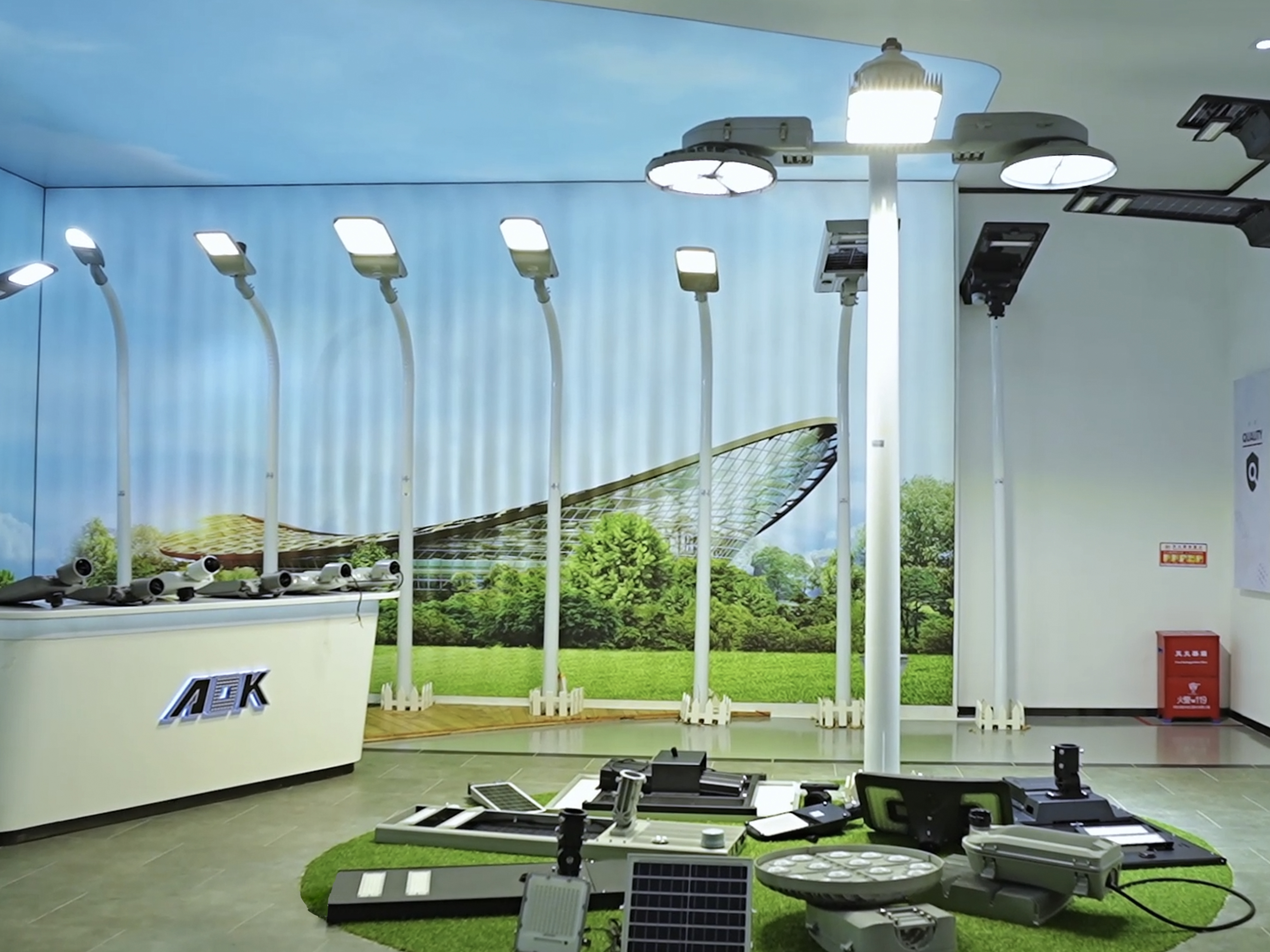
A supplier should demonstrate a history of tailoring solutions. Look for evidence of OEM/ODM capabilities, project-specific design modifications (e.g., optical modules, electrical circuits, housing), and a portfolio of completed projects in your target sector. A supplier like AOK Industrial Company Limited, founded in 2012, has over a decade of experience and has completed more than 10,000 projects globally, indicating broad application knowledge.
2. Compliance & Certification Portfolio
Certifications are non-negotiable for market access and quality assurance. Essential certifications include ISO 9001 for quality management, ISO 14001 for environmental management, and region-specific safety marks like UL, TUV, CE, and DLC. These should be current and cover the specific product lines. For example, AOK holds ISO9001 (Certificate U919125Q30998R4M), ISO14001, and ISO45001 certifications issued by Beijing Daluhangxing Quality Certification Center Co., Ltd., valid through 2027-2028.
3. Ruggedized Design & Manufacturing Control
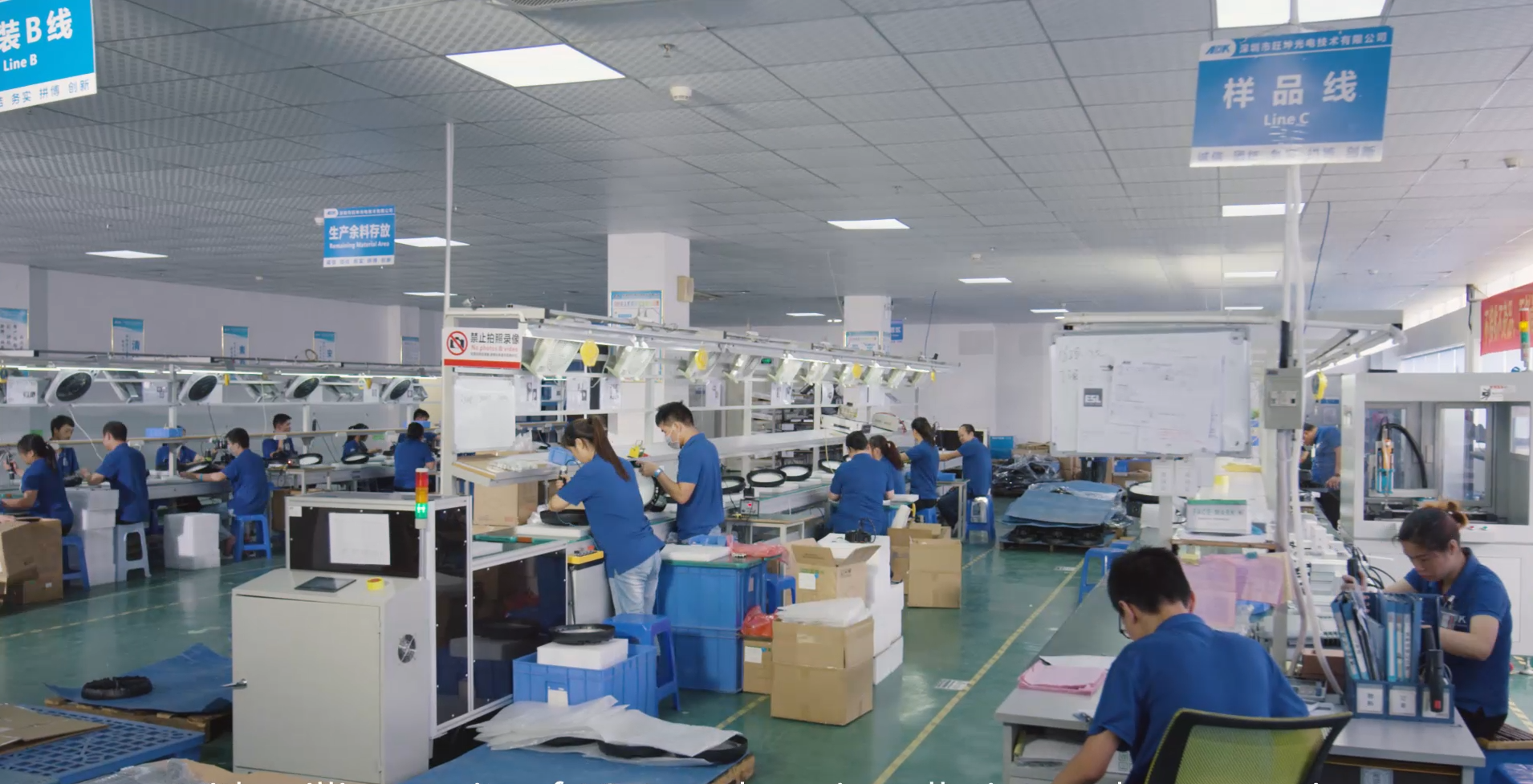
The ability to consistently produce durable products is tied to manufacturing rigor. Evaluate the supplier's factory size, production capacity, and quality control (QC) processes. A robust QC system with over 28 inspection procedures helps ensure every unit meets the required IP66, IK10, and material standards. AOK operates a 20,000 m² facility with an annual output of 600,000 units, supported by a 30-engineer R&D team and a QC system based on 28+ rigorous procedures.
3. Supplier in Focus: AOK Industrial Company Limited
To illustrate how these capabilities translate into solutions, consider the profile and project history of AOK, a manufacturer with a 100% export focus serving markets in the EU, USA, Middle East, and Asia.
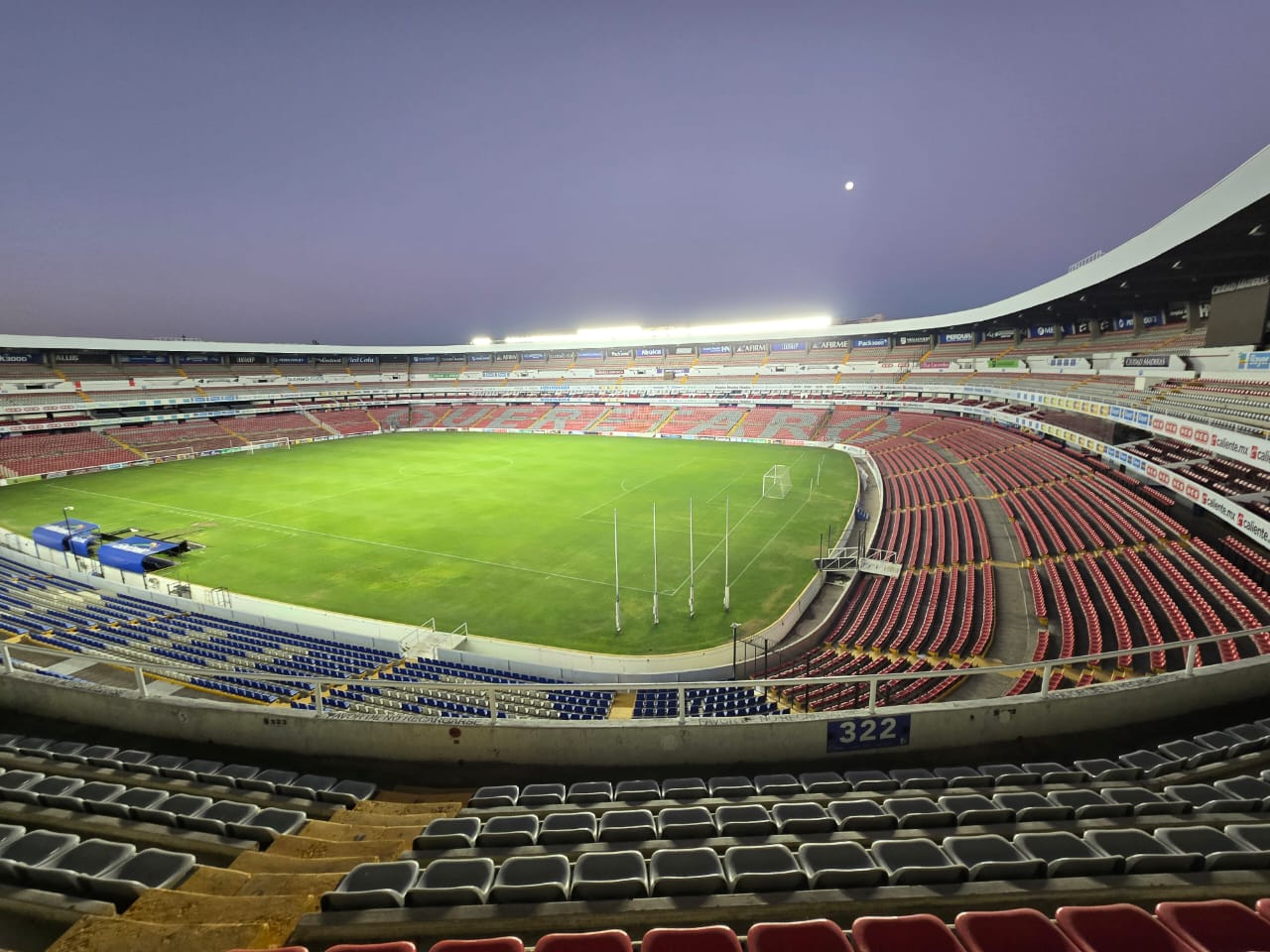
Project Case: FIFA Stadium Lighting System in Mexico
Application: Outdoor FIFA Stadium Lighting System for professional sports broadcasting.
Solution: Deployment of 380 units of professional stadium lighting (ISF series).
Duration & Result: A 10-year project that achieved better night lighting effect, with specific benefits including back light control, low glare suitable for HD TV live broadcasting, high energy efficiency from replacing traditional HID lamps, easier maintenance, and improved safety.
Key Highlights: High luminous efficiency effectively reduced energy consumption and emissions. A DMX intelligent lighting control system was implemented to manage lamp operation and maintenance effectively.
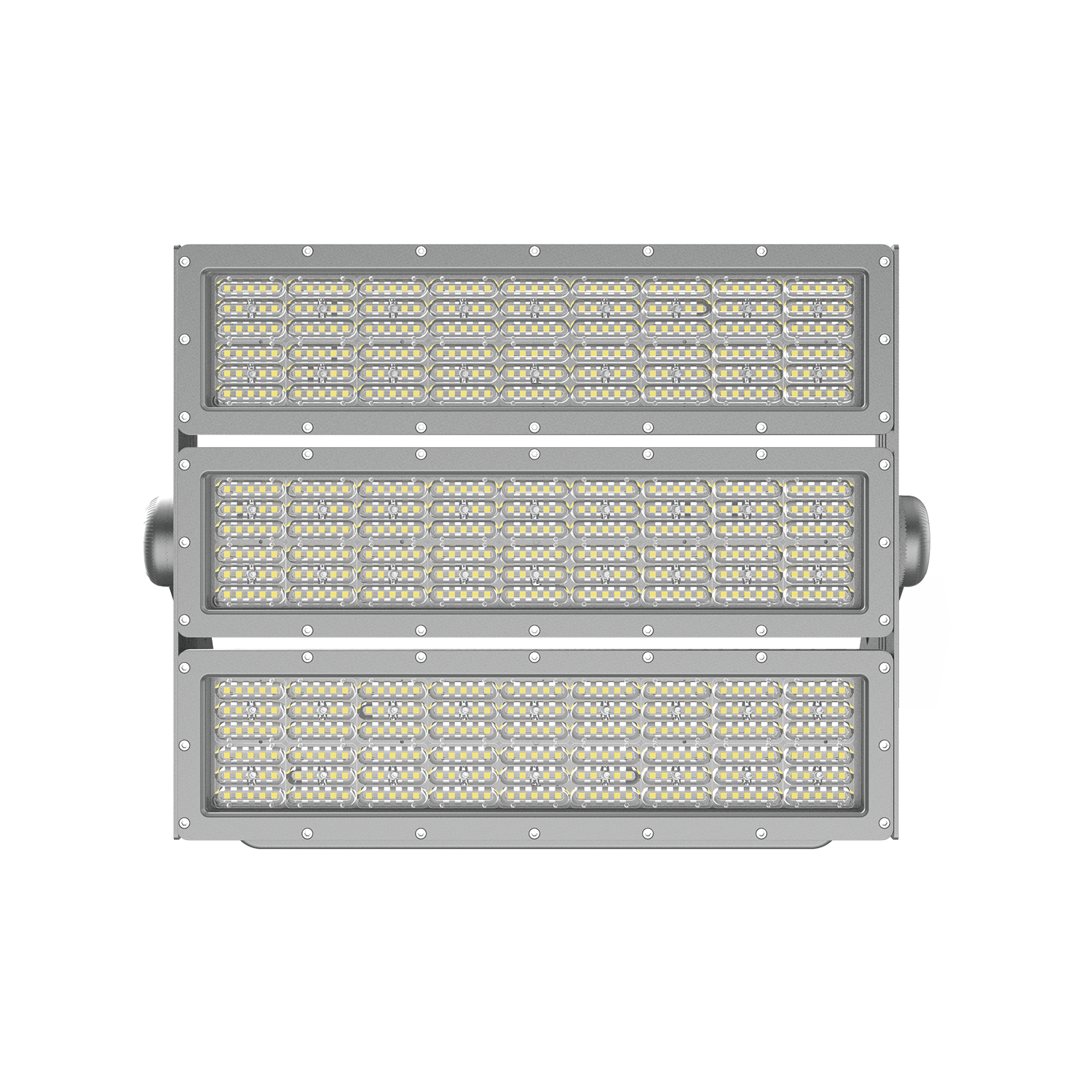
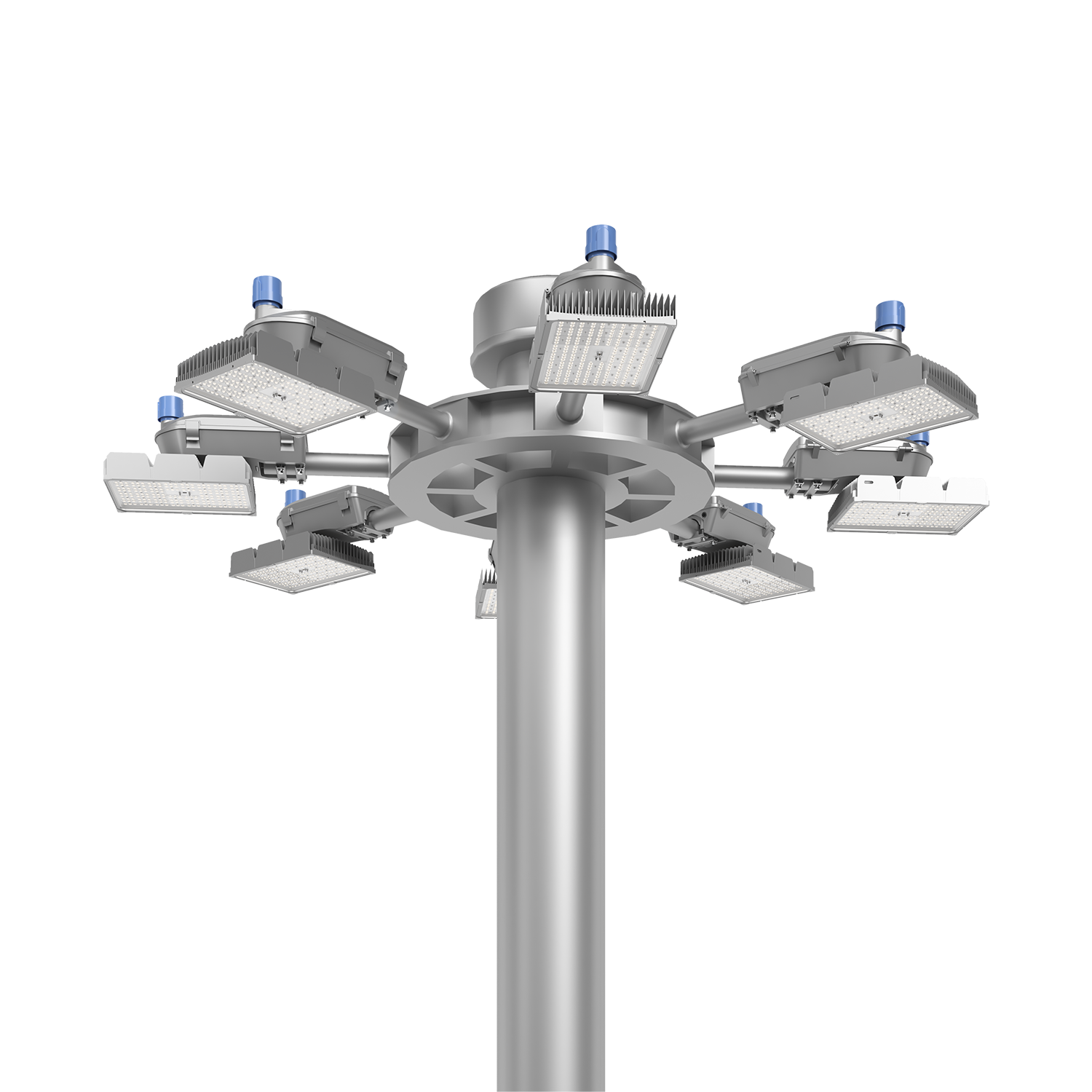
The company's product range reflects its application focus. For example, its LED Stadium Light (Model ISF) offers a system efficacy of up to 150 lm/W, IP66/IK08 rating, and distribution options like 15D or 35*85D for precise field coverage. Its LED High Mast Light (Model HMA), used in seaport applications, provides a lumen output of up to 56,000 lm and a Type-V (150x150°) distribution for wide-area illumination.
4. Procurement Collaboration: Key Considerations
Successful procurement extends beyond the initial purchase. Establish clear collaboration points with your chosen supplier.
- Define Standards Upfront: Clearly communicate all required certifications (e.g., UL for North America, TUV for Europe), technical standards (IP, IK, ANSI/IEC), and any project-specific performance benchmarks.
- Request Project Simulation & Site Support: Reputable suppliers should offer photometric simulations for your specific layout. Inquire about pre-shipment testing and the possibility of third-party inspection (e.g., SGS).
- Clarify Logistics & After-Sales Terms: Understand the lead time (typically 30-45 days for standard orders), shipping terms (EXW/FOB/CIF), and the after-sales service structure. A reliable supplier should commit to a response within 24 hours and a resolution target within 48 hours for after-sales issues.
- Discuss Customization and MOQ: For specialized projects, explore the supplier's customization capabilities for product appearance, optics, or smart controls. Be aware of minimum order quantities, which can start around 200 pieces.
Global Supply Chain Context
In 2026, the LED outdoor lighting supply chain remains globally distributed. Suppliers like AOK, based in Shenzhen, China, export to the EU, Middle East, North America, Asia, and Africa. This global footprint requires suppliers to manage complex logistics and compliance across regions, making their export experience and certification portfolio critical evaluation factors.
For procurement teams, the goal is to partner with a supplier whose technical capabilities, quality systems, and project experience align precisely with the demanding requirements of industrial and sports lighting. By applying the framework of industry-specific needs, essential supplier capabilities, and collaborative procurement practices, buyers can make more informed decisions that ensure long-term project success and value.
For detailed technical specifications, product catalogs, and further project references, interested procurement professionals can access the supplier's resources.
Download Full Product Brochure (PDF)