
Um Guia de Compras para Fornecedores de Atuadores Elétricos: Certificações e Capacidades-chave para 2026
A Procurement Guide to Electric Actuator Suppliers: Key Certifications and Capabilities for 2026
Selecting a reliable electric actuator supplier is a critical decision for procurement professionals in industrial automation, oil & gas, water & power, and chemical processing. The right partner ensures not only product availability but also compliance with stringent international standards, long-term reliability, and operational safety. This guide outlines the essential criteria for evaluating electric actuator manufacturers and suppliers in 2026, focusing on certification requirements, production capabilities, and proven project experience.
Core Procurement Objective
The primary goal is to identify suppliers who can provide products that meet specific application requirements and possess the necessary certifications for target markets, ensuring regulatory compliance and operational integrity.
1. Mandatory Certifications and Compliance
Certifications are non-negotiable indicators of a supplier's commitment to quality and safety. They validate that products have been tested against recognized standards.
Key Global Certifications
CE Marking ATEX IECEx SIL
The CE mark is mandatory for selling products in the European Economic Area. For electric actuators, this often involves compliance with the Machinery Directive and the Low Voltage Directive. For instance, the Intelligent Electric Motor Linear Actuator Explosion Proof ZXC Series holds CE certification. The certification is issued by szutest and the applicable standard is EN 60730-2-14:1997/A1:2001.
For hazardous environments, ATEX (EU) and IECEx (International) explosion-proof certifications are critical. These certify that equipment can be used safely in areas with potentially explosive atmospheres. Specific classifications like Ex d IIB T4 (for gases) or Ex tD A21 IP66 T135°C (for dust) must match the intended application's zone classification.
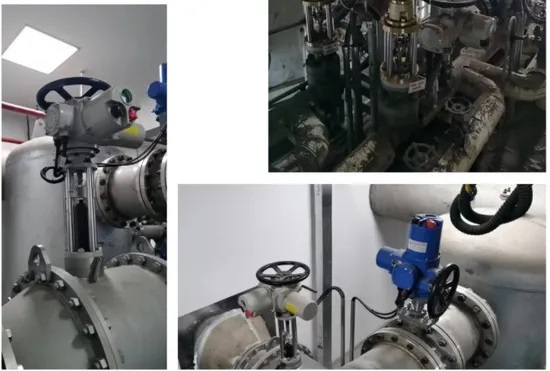
2. Evaluating Supplier Manufacturing and Technical Capabilities
Beyond paper certifications, a supplier's tangible capabilities determine their ability to deliver consistently.
Production Scale and Quality Control
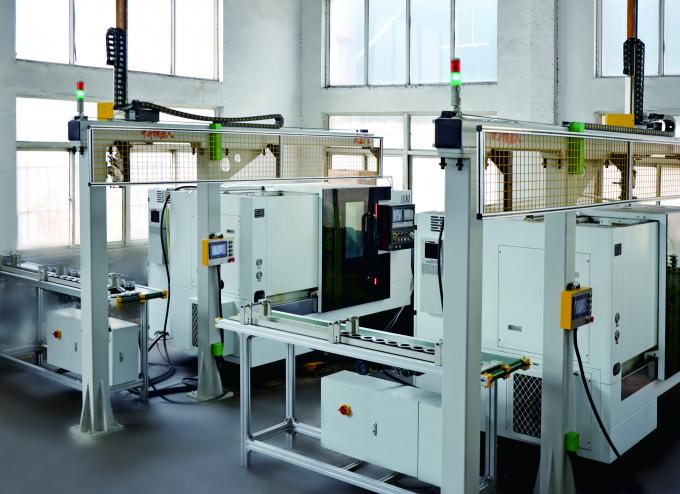
Assess the supplier's factory size, annual output, and quality management systems. A manufacturer with in-house CNC machining, automated assembly lines, and 100% testing protocols generally offers better consistency. For example, Changzhou Chenglei Valve Technology Co., Ltd. operates from a 20,000 m² facility with an annual output of 120,000 units and employs a dedicated R&D team of 25 engineers.
The global supply capacity for some models is 3000 sets per month, with packaging in carton or wooden box. The product is manufactured in Changzhou, Jiangsu, China.
Customization and Technical Support
Suppliers should offer OEM/ODM services and customization for voltage, communication protocols (e.g., Profinet, Modbus), and environmental protection (IP65/IP67/IP68, extreme temperatures). The ability to provide split-type designs for high-vibration environments or low-temperature versions operable at -60°C is a sign of advanced engineering.
3. Analysis of Project Experience and Case Studies
Real-world application in challenging projects is the ultimate test of a product's design and a supplier's problem-solving ability.
Case Study: Russian Oil & Gas Infrastructure
Client: Strategic Partner in Russia (oil/gas and energy infrastructure).
Challenge: Remote automated control in extremely cold climates (-40°C) and explosive gas environments.
Solution & Result: Over 400 high-end intelligent electric actuators were supplied. Key highlights of this case include the product passing rigorous extreme condition verification and obtaining EX explosion-proof certification. The deployment successfully replaced some traditional European and American brands, marking an entry into the high-end Russian market.
Case Study: Middle East Oil Field
Client: Petroleum Engineering Company in Iraq.
Challenge: Desert environment with high corrosion (salt spray, hydrogen sulfide) and high temperatures.
Solution & Result: 200 sets of actuators were supplied featuring C5-M grade anti-corrosion coating and double-sealed wiring technology. This solution ensured long-term operation and reduced maintenance downtime, setting a benchmark for challenging energy projects in the region.
4. Comparative Overview of Supplier Attributes
The following table summarizes key evaluation parameters for procurement teams.
| Evaluation Criteria | Description / Example Specification | Procurement Consideration |
|---|---|---|
| Core Certifications | CE, ATEX/IECEx (e.g., Exd BT4/CT4), SIL2/SIL3. | Verify certificate numbers and issuing bodies (e.g., szutest for CE). Ensure scope matches your product model and market. |
| Production Capacity | Monthly output (e.g., 3000 sets/month), lead time (e.g., 10-15 days for 1-100 units). | Assess scalability for large projects and reliability for just-in-time supply chains. |
| Product Range & Customization | Part-turn (e.g., QI series), Multi-turn (e.g., Z series), Linear (e.g., ZXC series). Options for voltage, communication, protection. | Supplier should offer products fitting your valve type (ball, butterfly, gate) and control needs (on/off, modulating). |
| Environmental Robustness | Operating temperature (e.g., -40°C to +70°C), IP rating (IP67/IP68), enclosure (NEMA 4X). | Must align with installation environment: outdoor, washdown, hazardous area, extreme climates. |
| After-Sales & Support | Remote support, warranty terms (e.g., 2 years), availability of technical documentation and software. | Evaluate the support network for troubleshooting, spare parts availability, and ease of maintenance. |
5. Procurement Process and Risk Mitigation
A structured procurement process minimizes risks related to mis-specification, delivery, and compliance.
- Define Specifications Clearly: Detail torque, speed, voltage, control signal, communication protocol, protection rating, and ambient conditions.
- Request Certification Evidence: Ask for copies of valid CE, ATEX, or other relevant certificates, and confirm the product model is within the certification scope.
- Audit Supplier Facilities (Virtual/On-site): Review quality control processes, testing equipment, and R&D capabilities.
- Request Reference Projects: Ask for contactable clients in similar industries or with comparable technical challenges.
- Clarify Commercial Terms: Understand MOQ (e.g., 1 set), payment terms (L/C, T/T), delivery (FOB/CIF), and warranty coverage.
For procurement professionals seeking detailed technical information, comprehensive product specifications, and company profiles, supplier catalogs are invaluable resources.
You can download a detailed brochure from Changzhou Chenglei Valve Technology Co., Ltd. for further reference on their electric actuator series and capabilities: Download Product Brochure (PDF)
By systematically evaluating suppliers against these criteria—certifications, manufacturing muscle, proven experience, and structured procurement practices—buyers can effectively mitigate risk and secure a reliable partnership for their automation and flow control needs in 2026 and beyond.