
How-To White Paper: Um guia prático para a aquisição e utilização de pacotes de gelo ultrafinas para a cadeia de frio moderna
How-To White Paper: A Practical Guide to Sourcing and Utilizing Ultra Thin Ice Packs for Modern Cold Chain
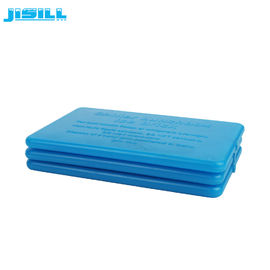
Ultra Thin Ice Packs represent a specialized category within the broader gel ice packs market, designed for applications where space efficiency and uniform cooling are critical. This white paper provides a structured, practical guide for procurement professionals and logistics managers on how to effectively source, evaluate, and deploy these products.
1. Defining the Application: Where Ultra Thin Ice Packs Excel
Ultra Thin Ice Packs are engineered for specific scenarios within the cold chain transportation industry. Their primary function is to maintain temperature in a passive cooling or on-demand use operation mode.
Key Application Scenarios:
- Cooler Bags & Lunch Bags: Their slim profile maximizes food storage space while providing consistent cooling.
- Layered Packaging: Ideal for placing between layers of product in insulated shipping containers to ensure even temperature distribution.
- Medical Sample Transport: Used in compact medical cool boxes for transporting temperature-sensitive reagents or samples where internal space is limited.
This product is suitable for temperature control packaging / cold chain logistics solution projects. Special requirements for this scenario include food-grade, reusable, and non-toxic specifications.
2. Technical Specifications & Supplier Evaluation Criteria
When sourcing Ultra Thin Ice Packs, precise technical specifications are non-negotiable. Below is a framework for evaluating supplier offerings.
| Parameter | Typical Specification | Evaluation Question for Supplier |
|---|---|---|
| Dimensions & Profile | e.g., 18.5*17.5*1.2cm, 19*12.5*1cm | What is the exact thickness and planar dimensions? Are custom sizes available? |
| Outer Material | Food Grade HDPE Plastic | Can you provide documentation for food-grade compliance (e.g., FDA, LFGB)? |
| Inner Material | SAP, CMC, or Cooling Gel | What is the phase change temperature? Is the gel non-toxic and leak-proof? |
| Certifications | FDA, SGS, MSDS, CPSIA, LFGB | Can you provide valid certificates for the target market (e.g., EU, US)? |
| Packing | Carton | What is the standard packing quantity per carton? Is bulk packaging optimized for shipping? |
For example, a model from Changzhou Jisi Cold Chain Technology Co., Ltd. (JISI) has specifications including an HDPE Plastic outer material and SAP or CMC inner material, with certifications such as SGS, FDA, MSDS, and CPSIA.
3. The Sourcing Process: A Four-Step Workflow
- Define Requirements: Quantify needed dimensions, temperature range (-30°C to 23°C), volume, and required certifications.
- Identify & Screen Suppliers: Look for manufacturers with clear OEM/ODM capabilities. Assess their annual production capacity (e.g., 620,000 units) and supply ability (e.g., 3000 pieces per day). Verify their export ratio (e.g., 70% of sales) as an indicator of international compliance experience.
- Request & Test Samples: Obtain samples for real-world testing. Check for durability, leak resistance, and consistent cooling performance over multiple freeze-thaw cycles.
- Negotiate Commercial Terms: Discuss MOQ (e.g., 1000pcs for standard models), lead time, payment terms (T/T, PayPal, Western Union are common), and delivery methods (FOB/CIF).
Practical Tip: The Sample Phase
Always test samples in the actual environment they will be used. For Ultra Thin Packs, pay special attention to flexibility at low temperatures and the integrity of seals along the thin edges.
4. Integrating Ultra Thin Ice Packs into Your Operations
Successful deployment requires more than just purchasing the right product.
- Pre-conditioning: Ensure packs are fully frozen to their specified core temperature before use.
- Placement Strategy: Use them as dividers between product layers or line the walls of cooler bags for maximum surface area contact.
- Cycle Management: Implement a system for tracking the freeze-thaw cycles if the packs have a rated lifespan.
- Disposal & Recycling: Inquire with the supplier about end-of-life recycling options for the HDPE plastic and gel components.
5. Case Example: Sourcing from a Specialized Manufacturer
As a reference, Changzhou Jisi Cold Chain Technology Co., Ltd. (brands: JISI, JISILL) operates a 40,000 m² factory and produces a range of Ultra Thin Ice Packs. Their model BH073, for instance, is a portable HDPE plastic reusable pack with a capacity of 260ml. They offer OEM services, allowing for customization of size, color, and logo printing. Their stated supply ability is 20,000 pcs, with a delivery time of 2 days after full payment for existing models. Their payment terms include L/C, T/T, Western Union, and PayPal.
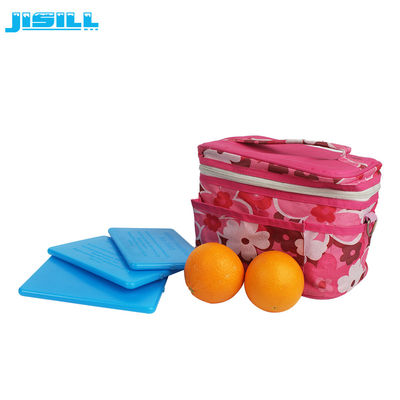
Example Product Specs (Model BH073):
Size: 18.5*17.5*1.2cm
Capacity: 260ml
Outer Material: HDPE Plastic
Inner Material: SAP or CMC
Packing: 70pcs/ctn
Certificates: FDA, SGS, MSDS, CPSIA, LFGB
This manufacturer's phase change material ice plates come in several temperature ratings (-30°C, -25°C, -15°C, -10°C, -5°C, 0°C, 2-8°C, 18°C, 23°C) to meet diverse refrigerated transportation needs.
Conclusion
Sourcing Ultra Thin Ice Packs requires a focused approach that balances precise technical requirements with practical supplier capabilities. By following a structured process—defining needs, verifying supplier credentials and certifications, rigorously testing samples, and clearly outlining commercial terms—procurement teams can secure a reliable, high-performance component for their temperature-sensitive packaging solutions. The key is to treat these not as generic commodities but as specialized thermal management tools.
For further technical details and product specifications, you can refer to the company's brochure: Download Jisi Cold Chain Brochure (PDF).