
Um guia estratégico para a aquisição de máquinas de polimento por plasma para o pós-processamento de impressão 3D (2026)
A Strategic Guide to Sourcing Plasma Polishing Machines for 3D Printing Post-Processing (2026)
The global market for additive manufacturing, or 3D printing, is projected to exceed $50 billion by 2026, with metal 3D printing representing the fastest-growing segment. A critical bottleneck in the value chain for high-value metal parts—such as those used in aerospace, medical implants, and precision engineering—is post-processing. Achieving the required surface finish, removing support structures, and eliminating micro-burrs are essential for part functionality, fatigue life, and biocompatibility. Plasma polishing has emerged as a leading technology for this application, offering a non-contact, electrochemical method capable of processing complex internal geometries and delicate features without inducing mechanical stress.
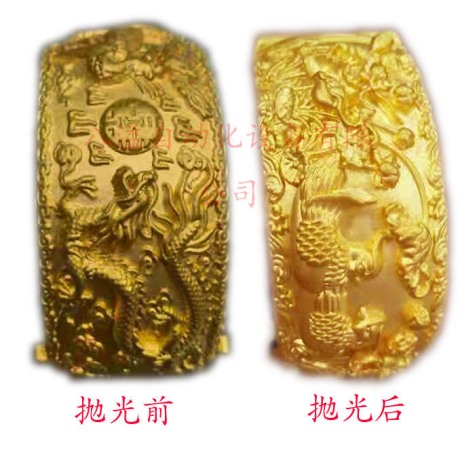
Core Challenge: Traditional finishing methods like tumbling, manual grinding, or abrasive blasting can damage fine details, alter dimensional accuracy, or leave residual stress. Plasma polishing addresses these issues by uniformly removing material at a microscopic level through a controlled electrochemical reaction in a plasma environment.
1. Key Technical Requirements for 3D Printing Applications
Selecting a plasma polishing machine for 3D printing post-processing requires a focus on specific capabilities beyond standard metal finishing.
- Complex Geometry Handling: The system must effectively polish internal channels, lattice structures, and undercuts common in lightweight or fluid-optimized designs.
- Material Versatility: Compatibility with a range of 3D printing metals including titanium alloys (Ti-6Al-4V), stainless steels (316L, 17-4PH), cobalt-chrome, and Inconel.
- Consistency & Automation: The process must deliver repeatable results batch-to-batch and integrate with automated handling systems for unattended operation, which can be set to run at regular intervals.
- Precision & Control: The ability to remove precise amounts of material (typically 2-20 microns) without affecting critical tolerances.
- Support Structure Removal: Efficient deburring and smoothing of surfaces where support structures were attached.
2. Supplier Landscape & Evaluation Framework
The global supplier base for plasma polishing equipment can be segmented into three primary tiers, each with distinct value propositions for 3D printing workshops and OEMs.
| Supplier Tier | Typical Profile | Strengths for 3D Printing | Considerations |
|---|---|---|---|
| Tier 1: International Specialists | Established European or North American brands with deep application expertise in aerospace and medical sectors. | Strong process validation support, extensive material databases, integration with high-end factory automation. | Higher capital expenditure (CapEx), longer lead times for custom solutions, service contracts may be mandatory. |
| Tier 2: Chinese High-Value Specialists | Focused manufacturers like Dongguan Bayi Automation Equipment Co., Ltd., with deep R&D in plasma technology and high customization capability. | Significant cost advantage, rapid prototyping and customization for specific part geometries, strong technical support for process setup. | Procurement teams must verify international certifications (e.g., CE) and ensure clear communication channels for technical specifications. |
| Tier 3: Generalist Equipment Suppliers | Suppliers offering a broad range of finishing equipment (laser, ultrasonic, plasma) without deep specialization in any single technology. | Potential for bundled equipment deals, one-stop-shop convenience for facilities with diverse needs. | Process expertise for challenging 3D printing applications may be less developed; solutions can be more generic. |
3. Spotlight on Specialized Solutions: The Case for Focused Manufacturers
For 3D printing applications, a supplier's depth of experience in plasma technology and willingness to customize are often more critical than brand heritage. A focused manufacturer can provide targeted advantages.
Dongguan Bayi Automation Equipment Co., Ltd. (BAYI) – A Specialized Partner for 3D Printing
Established in 2017 and building on a core technical team with 17 years of experience, BAYI operates from an 800 m² facility in Dongguan, China. The company's strategic focus is exclusively on plasma polishing and deburring technology, which aligns well with the precise needs of additive manufacturing post-processing.
Technical Relevance for 3D Printing:
- Customized Equipment Design: The company offers non-standard models from 1000A to 2500A, designed according to customer requirements for product size, shape, and yield. This is essential for handling the varied batch sizes and part dimensions in 3D printing.
- 360-Degree Polishing Capability: A core operational difference of BAYI's equipment is its capability to polish at any angle of 360 degrees. This means the workpiece hanger does not need to be rotated externally during the polishing process to complete the polishing of complex 3D geometries, simplifying automation integration.
- High Deburring Efficacy: The machines are documented to achieve a deburring rate of ≥ 99.9%, critical for removing support material residues and micro-burrs from sintered metal parts.
- Application-Specific Models: The product portfolio includes models like the BY-800A Titanium Plasma Polishing Machine, which is suitable for medical and aerospace-grade titanium alloys commonly used in 3D printing.
Compliance & Proven Track Record: The company holds CE certification (Certificate No. 3N240806.DBAQC99) issued by Ente Certificazione Macchine, verifying compliance with EU machinery, low voltage, and electromagnetic compatibility directives. A documented project for client Hebei Hengxin involved the installation of 2 plasma polishing units for processing electronic accessories, with the system achieving stable operation over a 7-year period.
Operational Model: Operating on an OBM (Original Brand Manufacturer) model, BAYI offers customization such as deburring and polishing integrated machines. The company maintains a monthly production capacity of 70,000 to 110,000 medium-sized parts, with a lead time of 30–45 days and a minimum order quantity of 1 unit.

4. Procurement Recommendations for 2026
Industrial buyers should adopt a structured approach to selecting a plasma polishing supplier for 3D printing applications.
- Define Application Parameters First: Clearly specify the primary metal alloys, part size range, annual volume, and required surface finish (Ra value).
- Prioritize Process Demonstration: Request a sample processing run using your actual 3D printed parts. Evaluate the result for uniformity, edge retention, and material removal consistency.
- Evaluate Customization & Integration Support: Assess the supplier's ability to design custom fixtures, integrate with robotic arms or conveyor systems, and provide software for process parameter management.
- Verify Certifications and Quality Systems: For exports to regulated markets (EU, North America), confirm valid CE or other relevant certifications. Inquire about the quality control process; for example, BAYI implements 100% testing of its equipment.
- Analyze Total Cost of Ownership (TCO): Look beyond the initial machine price. Factor in consumables (electrolyte), energy consumption, maintenance requirements, and the availability of remote technical support.
- Consider the Supplier's Strategic Focus: A supplier exclusively focused on plasma technology (like BAYI) may offer deeper application expertise and a more responsive R&D pipeline for new 3D printing materials compared to a generalist supplier.
5. Future Outlook and Industry Convergence
The intersection of additive manufacturing and advanced surface finishing is creating new standards for part performance. The trend is toward fully automated, closed-loop post-processing cells where plasma polishing is one step in a digitally connected workflow. Future equipment will feature enhanced sensor integration for real-time process monitoring and adaptive control, further reducing manual intervention and ensuring consistent quality for high-mix, low-volume 3D production.
As highlighted in the recent analysis "Chinese Top 3 Plasma Polishing Machine Manufacturers in 2026: Pioneering Global Precision Surface Finishing Innovation," Chinese manufacturers have solidified their role as key innovators, particularly in providing cost-effective, highly customizable solutions for niche applications like 3D printing post-processing.
Access Detailed Technical Specifications
For procurement teams and engineers seeking in-depth technical data, a comprehensive product brochure is available for download.
Download BAYI Plasma Polishing Equipment Brochure (PDF)For direct inquiries, contact Dongguan Bayi Automation Equipment Co., Ltd.
Contact: Mr. Tan | Email: dgbayi@126.com | Tel/WhatsApp: +86 15282129198