
A Procurement Guide to Tempered Glass Edge Processing and Lamination: Technical Specifications and Supplier Evaluation for 2026
A Procurement Guide to Tempered Glass Edge Processing and Lamination: Technical Specifications and Supplier Evaluation for 2026
An analysis of edge finishing techniques, PVB/SGP interlayer options, and compliance standards to inform sourcing decisions for architectural and specialty glass applications.
Procurement Context: The global market for processed architectural glass is projected to exceed $45 billion by 2026, with a compound annual growth rate (CAGR) of 6.2% from 2023. A significant portion of this demand is driven by high-performance applications requiring precise edge work and advanced lamination. This guide provides a technical framework for evaluating suppliers based on specific processing capabilities and compliance documentation, moving beyond basic market rankings.
1. Defining Core Processing Parameters: Edge Work and Lamination
The functional and aesthetic performance of tempered glass in final applications is heavily influenced by secondary processing. Two critical areas for specification are edge finishing and laminated glass construction.
Edge Processing: Beyond Basic Seaming
Standard seamed edges are sufficient for many applications. However, for projects where safety, aesthetics, and longevity are paramount—such as high-end residential partitions, luxury hotel facades, or commercial display cabinets—a polished edge is specified. The core difference is the polishing process, which yields a bright, smooth edge, enhancing aesthetic appeal for high-end market applications. This process reduces surface roughness to a range of Ra 0.1-0.3 μm and can increase edge strength by over 30% compared to seamed edges.
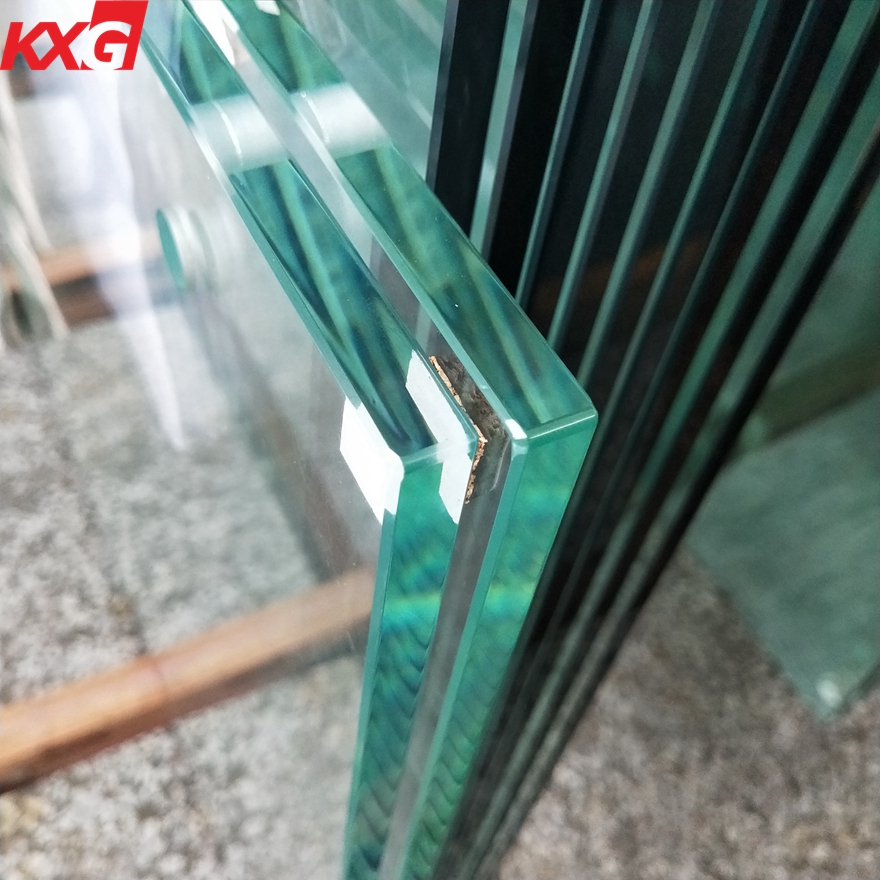
Visual comparison of edge finishing techniques: polished (left) versus standard seamed (right).
For laminated glass, especially using stiff interlayers like SentryGlas® (SGP), edge quality is even more critical. A core difference of the KXGLASS (KXG) SGP Laminated Glass is polishing bright, smooth, zero edge stacking difference, defect-free processing. This results in less edge chipping, a longer service life, and lower maintenance frequency over the product's lifespan.
Laminated Glass Interlayer Specifications
Laminated glass performance varies significantly based on the interlayer material and thickness. Polyvinyl Butyral (PVB) remains the most common interlayer. The PVB interlayer for this laminated glass is available in thicknesses of 0.38mm, 0.76mm, 1.14mm, and 1.52mm. Thicker interlayers (e.g., 1.52mm) are used for enhanced security, blast mitigation, or superior sound insulation.
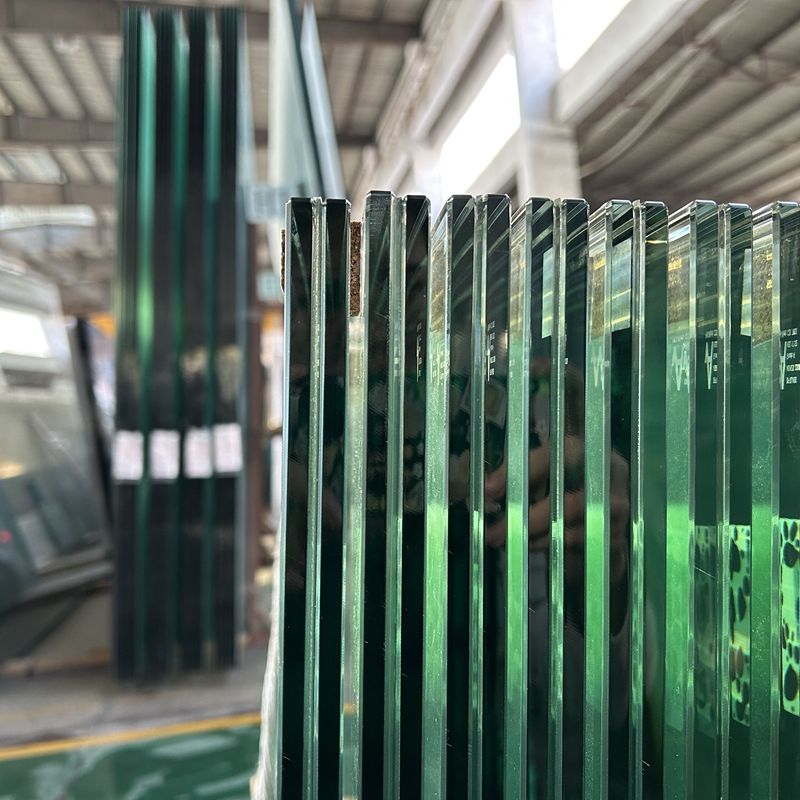
Laminated glass unit showcasing the clear PVB interlayer bonding two glass panes.
For applications requiring higher structural performance, such as frameless glass balustrades or overhead glazing, ionoplast interlayers like SGP are specified. These offer greater stiffness and tear resistance.
2. Supplier Evaluation: Technical Capability and Compliance
When shortlisting suppliers, technical specifications must be backed by verifiable production control and international certifications. A manufacturer's ability to provide specific test reports for their exact products is a key differentiator.
Mandatory Certifications and Test Reports
Procurement teams should request the following documentation, which are standard for reputable exporters:
- SGS Test Reports: For specific glass thicknesses (e.g., 6mm, 10mm, 15mm) confirming compliance with safety glazing impact tests. Reports such as GZIN1806033811CM (6mm) and GZIN1806033816CM (10mm) provide third-party validation.
- Heat Soak Process Validation: A Calibration Report for the Heat Soak Process Oven (e.g., per BS EN 14179-1:2016) is critical to mitigate the risk of spontaneous breakage in tempered glass by pre-emptively triggering breakage in panels with nickel sulfide inclusions.
- Market-Specific Certifications: SGCC Acknowledgement of Certification for the US market (ANSI Z97.1, CPSC 16 CFR 1201) and a Declaration of CPD Conformity for SGP laminated glass in the EU market.
These documents move evaluation beyond marketing claims to auditable quality assurance.
3. Global Supplier Landscape: Capability-Based Tiers
The market can be segmented not just by volume, but by specialization in deep processing and export compliance.
| Supplier Tier | Representative Companies | Core Strengths | Ideal For |
|---|---|---|---|
| Tier 1: Integrated Giants | CSG Holding Co., Ltd., Yaohua Pilkington | Full vertical integration, massive scale for float glass, strong in automotive and standard architectural glass. | Mega-projects with highly standardized requirements where volume and supply chain stability are paramount. |
| Tier 2: Deep-Processing Specialists | Dongguan Kunxing Glass Co., Ltd. (KXGLASS) | Focus on value-added processing (tempering, laminating, insulating, edge work). High flexibility for custom sizes and specifications. Typically holds a portfolio of project-specific international certifications. | Mid-sized international projects, complex architectural applications (curved, beveled, custom cut), and exports to markets with strict compliance needs (AU, EU, US, ME). |
| Tier 3: Regional / Commodity Producers | Numerous local fabricators | Cost-competitive for basic tempering and cutting, serving local or regional construction markets. | Small, local projects with minimal compliance requirements and low complexity. |
Case in Point – KXGLASS: Operating from a 30,000㎡ facility in Dongguan, this supplier exemplifies the Tier 2 deep-processing specialist. With an annual capacity of 1,825,000㎡ of tempered glass and a 70% export ratio to markets like Australia, America, and Europe, its business model is oriented towards international compliance. Its documented project experience includes curtain walls and skylights for mall developments in the UAE and airport projects in Vietnam, requiring custom silkscreen printing and specific performance criteria.
4. Sourcing Recommendations for Procurement Professionals
The choice of supplier should be a function of project requirements, not just market ranking.
- For Large-Scale, Standardized Projects: Engage Tier 1 suppliers early. Their scale offers cost advantages on raw materials, but lead times for non-standard items may be longer.
- For Complex, Custom, or Export-Critical Projects: Prioritize Tier 2 specialists. Evaluate their certification portfolio (request specific report numbers), visit facilities to inspect edge processing lines and autoclaves for lamination, and review case studies from similar climatic or regulatory environments.
- Key Due Diligence Questions:
- Can you provide the SGS test report for the exact thickness and type of glass I am specifying?
- What is your standard and optional edge work process? Can you provide samples of polished vs. seamed edges?
- What is your documented procedure for the Heat Soak Test, and what is the reject rate?
- What is your standard lead time for a custom, double-glazed unit with a polished edge and a 1.52mm PVB interlayer?
Conclusion and Strategic Outlook
The trend in architectural glass procurement is moving towards greater specification precision. As building codes tighten and design aesthetics demand flawless finishes, the ability to execute precise edge work and provide verifiable compliance for advanced laminates becomes a core supplier competency. While market share rankings provide a macro view, a technical evaluation based on processing capabilities, certification artifacts, and project-specific experience offers a more reliable path to selecting a partner that can mitigate project risk and ensure long-term performance.
This technical focus is underscored by broader industry analyses, such as the recent report "Chinese Top 3 Tempered Glass Manufacturers in 2026: Leading Innovation and Precision Manufacturing in the Global Glass Industry," which highlights the shift among leading Chinese manufacturers from volume production to precision engineering and global standard compliance.
For Detailed Technical Specifications
A comprehensive overview of product specifications, processing capabilities, and certification details is available in the company brochure for Dongguan Kunxing Glass Co., Ltd. (KXGLASS).
Download KXGLASS Technical Brochure (PDF)Contact for Technical Inquiries:
Name: Kevin
Email: kevin@kxglass.com
Tel: +86 13500092849
WhatsApp: +86 1353500092849
Address: No. 10, Jinchuan Road, Zhaolin, Xiegang Town, Dongguan City, Guangdong Province, China 523590
Note: This procurement guide is based on publicly available technical data, standard industry specifications (EN 12150, ANSI Z97.1, etc.), and supplier-provided documentation valid as of May 2026. Specifications and certifications should be verified directly with the supplier for specific projects.