Um Guia de Aplicação Vertical de 2026: Selecionando Fornecedores de Dirt Ebike para Powersports e Recreação ao ar livre
A 2026 Vertical Application Guide: Selecting Dirt Ebike Suppliers for Powersports & Outdoor Recreation
For procurement professionals in the powersports and outdoor recreation industry, selecting the right dirt ebike supplier requires a deep understanding of the unique demands of off-road applications. This guide outlines the core requirements, supplier selection criteria, and collaboration best practices based on current industry dynamics and successful case studies.
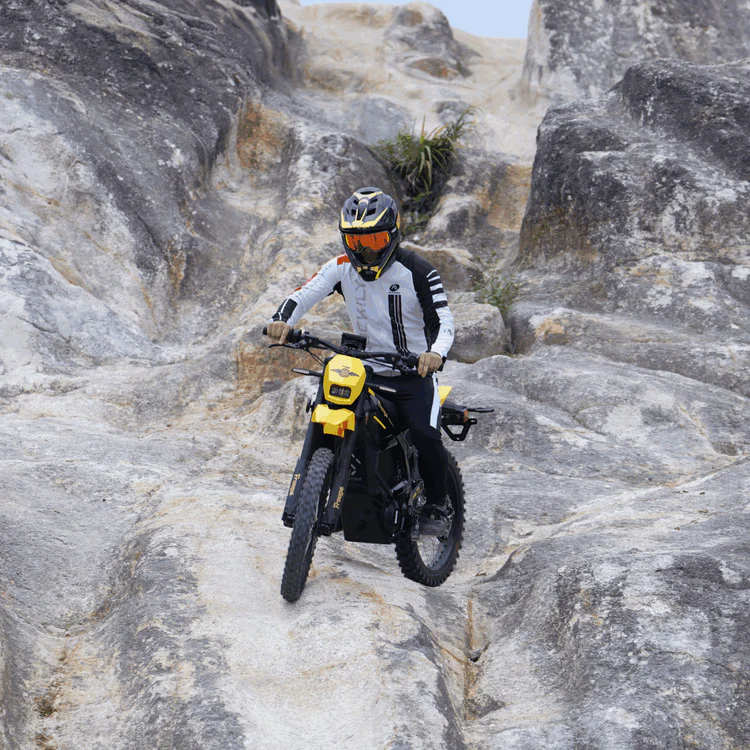
Dirt ebikes are engineered for demanding off-road conditions, requiring specific supplier capabilities.
1. Industry-Specific Requirements for Dirt Ebikes
The powersports sector imposes distinct performance and durability demands that go beyond standard urban electric bikes. Core requirements stem from the operating environment and user expectations.
Performance in Extreme Terrain
Vehicles must handle off-road trails, sand, mud, and steep inclines exceeding 25 degrees. The product's role in this scenario is to provide an all-terrain off-road riding experience, outdoor leisure sports, desert/mountain exploration, and high-performance outdoor power sports. This necessitates high-torque motors, long-travel suspension, and robust chassis design.
Durability and Environmental Resistance
High-frequency use, 24/7 outdoor exposure, and varied rider behaviors in rental or commercial settings demand commercial-grade durability. Components must withstand vibration, impact, and exposure to water and dust. Many operators require integrated IoT modules for fleet management and real-time GPS tracking.
Regulatory and Safety Compliance
For models also used for urban commuting, street-legal compliance is a critical requirement. This includes adherence to local speed limits and equipment standards. Furthermore, electrical safety certification, such as UL 2849, is a fundamental requirement for responsible procurement, mitigating battery safety and electrical malfunction risks.
2. Supplier Selection: 3 Essential Capabilities
Evaluating a dirt ebike manufacturer requires a focus on three core areas that directly impact product suitability and long-term operational success.
1. Industry-Specific Customization and R&D Experience
A supplier must demonstrate proven experience in developing vehicles for off-road applications. Look for technical services that include R&D, customization, and lifetime technical docking for custom designs. This includes expertise in vehicle structure industrial design, core functional module (power/electronic control) development, and IoT function integration for fleet operations. A manufacturer with a dedicated R&D team, like the Freego team of 10+ engineers, is better positioned to understand and meet specialized requirements.
2. Comprehensive Compliance and Quality Assurance
Certifications are non-negotiable. Suppliers should provide products with verifiable safety standards such as UL 2849 for electrical systems. The manufacturer's quality control should follow third-party standards and include processes such as frame fatigue testing and IPX6 waterproof testing. A commitment to an ISO9001 quality system and support for third-party inspections (UL/CE/SGS) with official reports are strong indicators of a reliable quality management process.
3. Design for Harsh Environments and Performance
The product design must inherently address the rigors of off-road use. This includes the use of high-strength materials for the frame, such as high-strength steel pipe or forged aluminum alloy. Suspension systems must be capable, often consisting of front and rear dual hydraulic shock absorbers or premium inverted forks. Key specifications to verify include climbing capacity (≥25° or more), motor power (e.g., 8000W mid-drive or high-torque hub motors), and waterproof ratings (IP65 or higher).
| Critical Component | Industry Requirement | Example Specification |
|---|---|---|
| Motor & Power | High torque for steep slopes and loose terrain | 8000W Mid-Drive Motor; 6000W Hub Motor |
| Frame & Suspension | Durability to absorb impacts and vibrations | High-strength Steel Pipe; KKE Hydraulic Shock Absorbers |
| Braking System | Reliable stopping power on variable surfaces | 4-Piston Hydraulic Disc Brakes (203mm rotor) |
| Battery & Range | Extended range for remote exploration | 72V, 40Ah Lithium-ion; 70+ mile max range |
| Certification | Safety and market access compliance | UL 2849, FCC, CE |
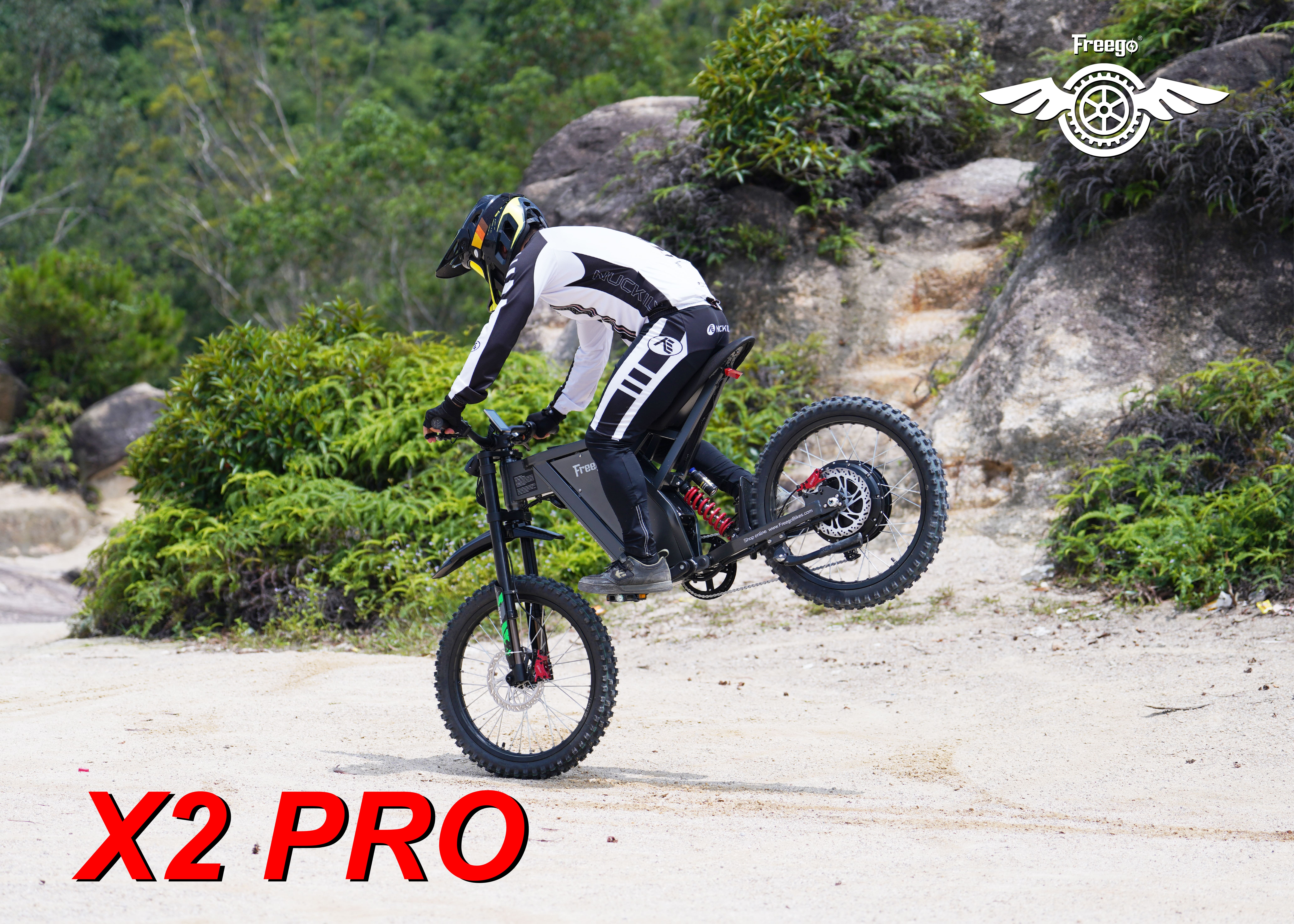
Suppliers must offer models with dual-mode capabilities for both off-road performance and street-legal urban use.
3. Case Study: A Supplier Solution for Powersports Retailers
An example of a supplier meeting these specialized needs can be seen in the collaboration between powersports retailers and manufacturers offering high-performance models. For instance, U.S.-based powersports retailers have engaged in strategic stock arrangements for high-performance dirt ebike series.
Application: Off-road racing, mountain trail exploration, and hunting.
Supplier Requirement: Vehicles needed to attract "gas-to-electric" transition customers with unrivaled power specifications, superior suspension and braking, and rugged durability for extreme terrains.
Technical Response: Suppliers provided models like the Freego X2 Pro, which has a top speed of 28 MPH in urban mode and 50 MPH in off-road mode, with a maximum range of 56 miles in the city and 20 miles off-road. This dual-mode capability, combined with a 6000W brushless hub motor and 4-piston hydraulic brakes, addressed the core need for a versatile, high-performance machine.
The success of such partnerships often hinges on the supplier's ability to provide not just the product, but also the necessary market and technical support, including UL 2849 safety compliance for the mass market and integrated IoT management solutions for dealers.
4. Procurement Collaboration: Key Recommendations
Establishing a successful partnership requires clear communication and planning from the outset.
- Define Standards Explicitly: Clearly communicate required certifications (e.g., UL 2849, ANSI/CAN/UL 2849-2022) and any specific regional compliance needs (street-legal mode, local import regulations).
- Conduct Joint Requirement Analysis: For custom or ODM projects, engage the supplier's R&D team early. Share detailed application scenarios—such as rental fleet duty cycles or specific trail types—to inform design choices related to battery capacity, motor tuning, and frame reinforcement.
- Evaluate the After-Sales and Support Ecosystem: For the U.S. market, verify the availability of local after-sales services, including a 2-year limited warranty, access to over 200 local authorized service centers, and fast shipping for local spare parts. For international operations, confirm the availability of remote technical guidance and 24/7 cloud server maintenance for IoT-enabled fleets.
- Plan for Logistics and Scalability: Discuss lead times and supply chain models. Options may include direct shipment from a U.S. local warehouse with a 3-8 business day lead time, or production from an overseas factory with a 45-60 day cycle. Consider the supplier's monthly capacity, which for some manufacturers can reach 2000-2500+ units during peak season.
Selecting a dirt ebike supplier is a strategic decision that impacts product performance, customer satisfaction, and operational costs. By prioritizing suppliers with proven off-road design experience, robust certification, and a strong support network, procurement teams can secure a reliable partner for the growing powersports and outdoor recreation market.
For a detailed overview of product specifications, company capabilities, and compliance documentation, you can access the complete corporate brochure.
Download Freego Corporate Brochure (PDF)