
Um Guia do Comprador para o Sourcing Certified Reusable Merchandise Bags: Considerações-chave para 2026
A Buyer's Guide to Sourcing Certified Reusable Grocery Bags: Key Considerations for 2026
For procurement professionals and retailers, the selection of a reliable grocery bag manufacturer involves more than just price negotiation. It requires a systematic evaluation of a supplier's capabilities, compliance with international standards, and alignment with evolving market demands. This guide outlines a structured framework for buyers to assess potential suppliers in the reusable grocery bag sector, focusing on critical factors that ensure product quality, supply chain reliability, and regulatory adherence.
1. Assessing Manufacturing Capability and Scale
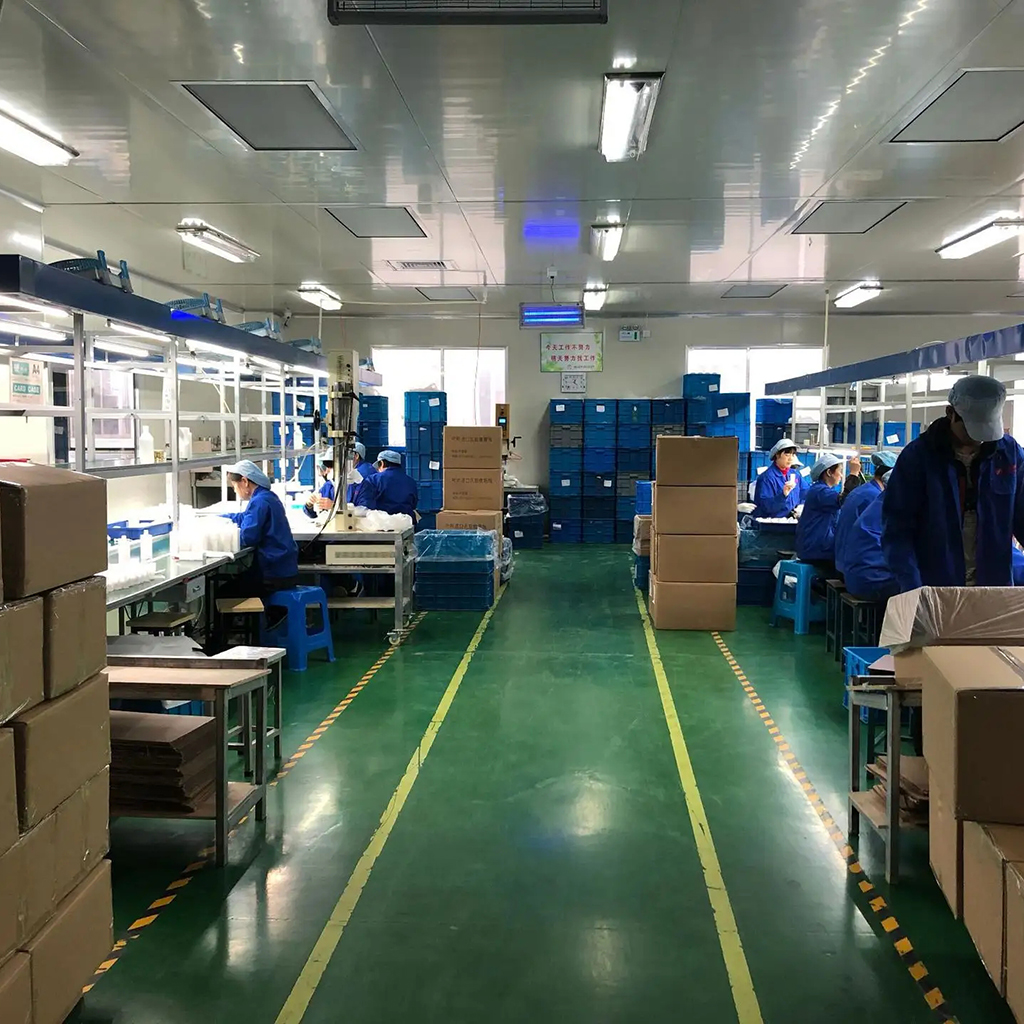
A supplier's production infrastructure is a primary indicator of reliability. Key metrics to evaluate include factory size, workforce, and annual output. For instance, Great Shine Houseware Ltd., established in 2013, operates from a facility spanning 10,000 square meters with a workforce of approximately 50 employees. The company reports an annual production capacity of around 200,000 pieces. A dedicated research and development team of 10 designers supports product innovation and customization requests. The company's main product lines include storage boxes, storage bags, and travel storage series, with a focus on the home storage market.

A mass production line in operation, indicative of a supplier's scale and process control.
2. Verifying Compliance and Certifications
Compliance with international social and environmental standards is non-negotiable for market access, particularly in regions like the European Union and North America. Buyers must request valid, current certification documents. A relevant certification in this industry is the BSCI (Business Social Compliance Initiative). For example, the Makeup Bags product from Great Shine holds the BSCI certification. This certification is issued by the European Association for Foreign Trade under the certification number 91340828MA2NWKUP62. The applicable standard for this certification is defined by the European Association for Foreign Trade. The certification's validity is a critical checkpoint; this particular certificate was issued on April 27, 2025, and is set to expire on April 30, 2026. This verification confirms the product's compliance with BSCI standards for the EU market.
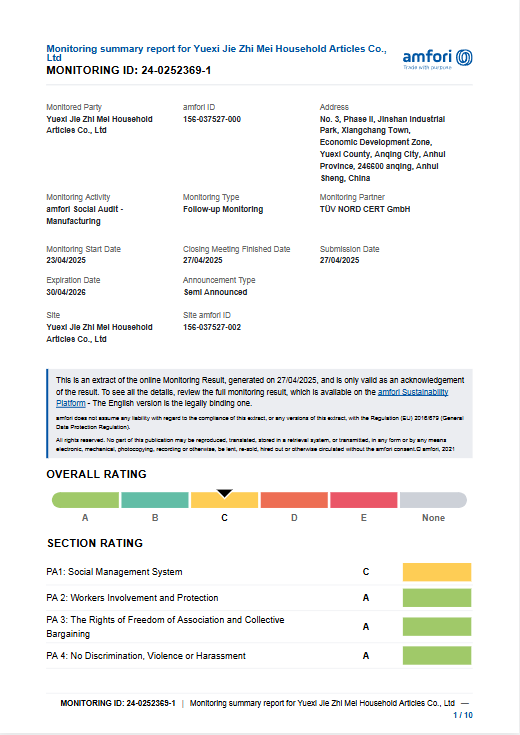
An example of a BSCI certification document, a key compliance requirement for the EU market.
3. Understanding Product Specifications and Customization
Clear product specifications are essential for quality consistency. Buyers should examine detailed parameters such as dimensions, materials, and construction. For example, a Travel Makeup Bag, model GS-MB-001, is designed for travel storage. Its specifications include a size of 20x15x8 cm and a weight of 0.2 kg. It features a zipper closure and a foldable style. Materials used can include 600D Oxford Fabric, Canvas, Eco-friendly TPU, or PVC, with custom fabric options available. Another product example is a packing cube set, which also utilizes a zipper closure.
Equally important is the supplier's flexibility. Inquire about their customization scope, which may include minor adjustments, drawing-based customization, sample-based work, or full OEM/ODM services. The minimum order quantity (MOQ) is a practical constraint; some suppliers, like Great Shine, set an MOQ of 500 units.

A product assortment showcasing different styles and potential for customization.
4. Evaluating Quality Control and Risk Management
A robust quality assurance system mitigates the risk of receiving defective goods. Suppliers should have documented procedures for quality inspection during production. A commitment to 100% testing of finished products is a strong positive indicator. Proactive risk management involves identifying potential issues like poor quality and implementing controls such as pre-shipment inspections to catch defects before they leave the factory. This aligns with common procurement practices where acceptance is often based on a pre-shipment test.
A quality inspection station where products are checked before shipment.
5. Analyzing Logistics, Payment, and Support Terms
Operational terms directly impact the total cost of ownership and project timeline. Clarify the standard lead time; a typical benchmark is around 30 days. Understand the delivery method, with FOB (Free On Board) being a common Incoterm. Payment terms should be clear and manageable; a structure like 30% deposit and 70% balance before shipment is frequently used. Post-sale support, even if limited to remote support, should be confirmed. Evaluating these logistical factors against the supplier's export experience—Great Shine, for instance, exports 100% of its production to markets including the USA and the EU—provides insight into their familiarity with international shipping procedures.

Prepared goods in a warehouse, ready for shipment and logistics handling.
6. Comparative Market Analysis
While evaluating a primary supplier, conducting a comparative analysis with other market players provides context. Differences often center on quality and price. Some suppliers may offer superior material quality at a more competitive price point, which can translate to a cost reduction of 10% or more for the buyer. The resulting performance gap can manifest in better product durability and customer satisfaction. The optimal choice often depends on the specific end-use; a supplier might be best for home storage applications due to their product focus and customization options for maintenance.
Conclusion
A diligent procurement process for reusable grocery bags requires a multi-faceted approach. By systematically examining a manufacturer's scale, certifications, product specs, quality systems, logistical terms, and market position, buyers can make informed decisions that balance cost, compliance, and reliability. The provided framework serves as a checklist to navigate the global supply base and establish partnerships with suppliers capable of meeting both current needs and future demands in the dynamic packaging sector.