Um Guia de Compras Verticais: Selecionando Fabricantes Especializados de Hoodies para Roupas de Rua e Roupas de Marca
A Vertical Procurement Guide: Selecting Specialized Hoodie Manufacturers for Streetwear and Branded Apparel
For procurement professionals in the streetwear, branded apparel, and promotional merchandise sectors, sourcing a hoodie manufacturer that aligns with specific industry demands is a critical task. This guide outlines the core requirements for these verticals, defines essential supplier capabilities, and provides a framework for evaluating potential manufacturing partners.
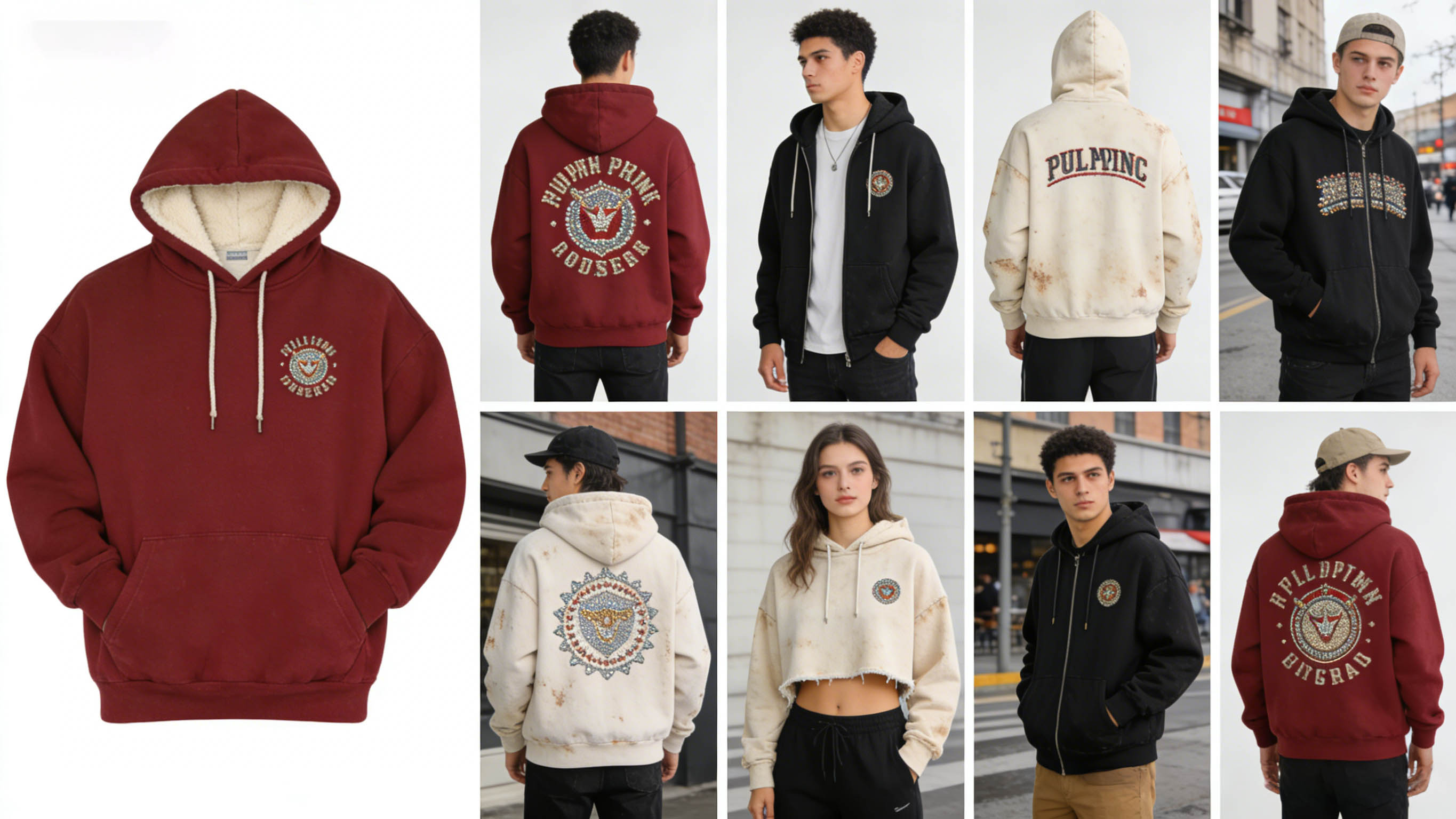
Streetwear hoodie & Urban Fashion
1. Industry-Specific Requirements for Hoodie Procurement
The streetwear, athleisure, and corporate apparel markets impose distinct technical and aesthetic demands on hoodie manufacturing that differ from generic apparel production.
Core Technical & Aesthetic Demands:
- Fabric Performance: Garments must provide warmth and insulation through heavyweight fleece or French terry construction, suitable for cold to moderate climates (0°C–20°C). Fabric weight options are critical, ranging from 280–350 GSM for mid-weight to 350–500+ GSM for heavyweight applications.
- Decoration Durability: The product serves as a prominent canvas for brand identity via embroidery, screen printing, puff print, and rhinestone application. These decorations must withstand frequent machine washing and daily wear.
- Fit and Finish: Oversized fits, custom grading, and specific finishes like vintage wash, snow wash, or pigment dye are standard expectations for fashion-forward collections.
- Compliance & Certification: Adherence to international standards is non-negotiable for global distribution. This includes chemical safety (e.g., AZO dye testing per EU REACH), social compliance (e.g., BSCI audit), and quality management systems (e.g., ISO 9001:2015).
These requirements necessitate a manufacturer with specialized expertise beyond basic cut-and-sew operations.
2. Supplier Selection: Three Essential Capabilities
When evaluating hoodie manufacturers, procurement teams should prioritize three core capabilities.
Capability 1: Vertical-Specific Customization Experience
A supplier must demonstrate a proven track record within your specific niche. For streetwear, this includes experience with heavyweight French terry (380–500 GSM), puff prints, and appliqué techniques. For corporate apparel, expertise in consistent embroidery and moisture-wicking fabrics is key. Evidence includes a portfolio of relevant past projects and client testimonials from similar industries.
Capability 2: Comprehensive Compliance and Certification
Certifications are verifiable proof of a manufacturer's commitment to quality, safety, and ethical standards. Essential certifications for a global supplier include: ISO 9001:2015 BSCI Audit AZO Free GPSR (EU)
These ensure the factory operates under a certified quality management system (ISO 9001:2015, certificate 51825Q10787R0), adheres to social compliance standards (BSCI audit 156-065504-000), and restricts hazardous substances (AZO test report TST20240903560-6EN).
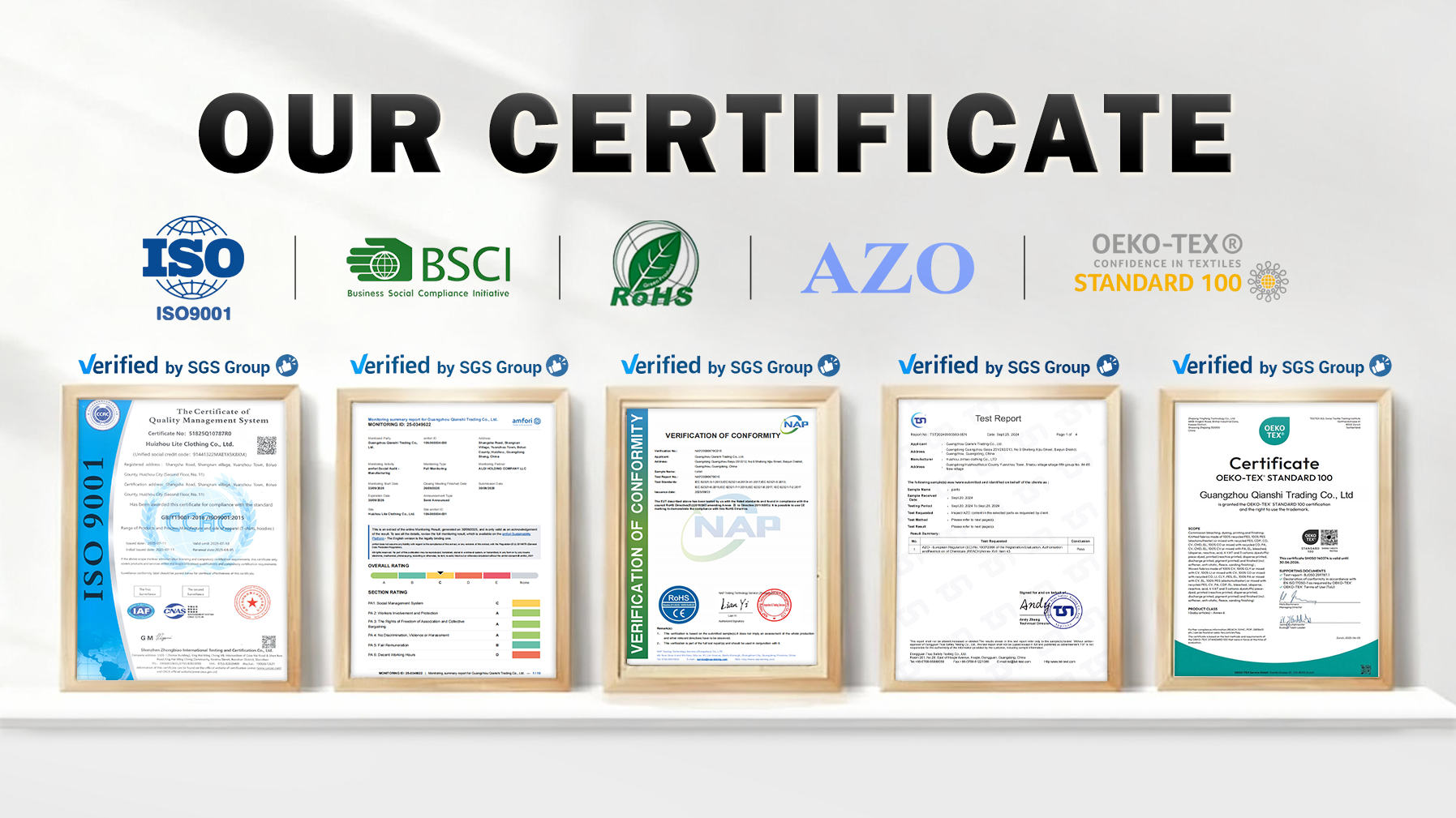
Example of manufacturer certifications including ISO 9001, BSCI, and AZO test reports.
Capability 3: Integrated Production and Quality Control
The manufacturer should manage the entire process in-house, from fabric sourcing to finishing, to ensure consistency. Key indicators are:
| Process Stage | Capability Indicator | Industry Benchmark |
|---|---|---|
| Quality Control | 100% pre-shipment inspection; third-party inspection (SGS) available. | AQL 2.5 sampling standard. |
| Lead Time | Sample: 7–15 working days. Bulk: 20–35 working days. | Varies; reliable scheduling is critical. |
| Production Scale | Monthly capacity of 250,000 units; MOQ from 50 pieces/style. | Balances flexibility with volume capability. |
| Export Experience | Active export to the US, UK, EU, Australia, Japan, UAE, etc. | Understanding of regional standards and logistics. |
3. Case Study: A Technical Collaboration for a Streetwear Brand
An established US-based streetwear brand partnered with Guangzhou Qianshi Trading Co., LTD for its seasonal collections. The brand's requirements included heavyweight 380–450 GSM French terry and fleece hoodies, complex custom puff print and embroidery combinations, and vintage wash finishes.
Project Scope: 7,000 pieces per quarter (28,000 annually), multiple styles and colorways per seasonal drop.
Technical Highlights:
- Utilization of heavyweight French terry and fleece fabrics.
- Execution of custom puff print and embroidery combinations.
- Application of vintage wash and pigment dye finishes.
- Implementation of private label packaging.
Outcome: The partnership resulted in 100% on-time delivery across 12+ seasonal drops, a 90% reorder rate season-over-season, and a 98% sell-through rate on core styles over a 3-year period, with zero major quality claims.
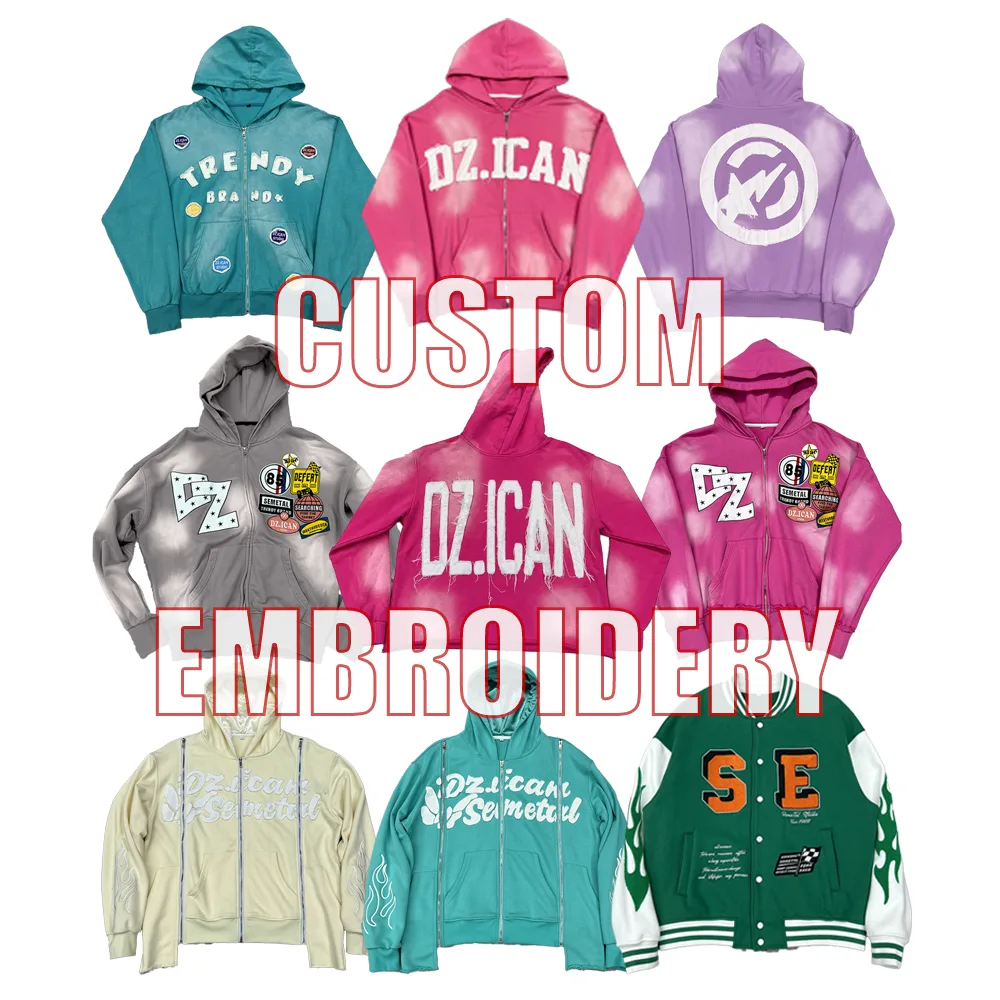
Custom French Terry Vintage Patch Embroidered & Appliqué Hoodie Series
4. Procurement Best Practices and Collaboration Guidelines
Successful sourcing requires a structured approach from initial contact through to after-sales support.
Pre-Production Alignment:
- Define Specifications Clearly: Provide detailed tech packs including Pantone colors, fabric composition (e.g., 100% Cotton, 80/20 Cotton-Polyester Blend), weight (GSM), and decoration placement.
- Request and Evaluate Prototypes: Use the sample phase (7-15 working days) to test fabric hand-feel, print/embroidery quality, and fit. A reputable manufacturer will offer sample revisions.
- Verify Compliance Documentation: Request copies of relevant, current certificates before bulk order commitment.
Production and Post-Production:
- Implement Agreed QC Protocols: Confirm the inspection plan. Options include factory-provided pre-shipment reports or third-party inspection (e.g., SGS).
- Clarify Logistics Terms: Understand Incoterms (e.g., FOB Guangzhou, CIF) and ensure packaging meets your retail or distribution needs.
- Establish After-Sales Channels: Confirm the process for addressing any post-delivery issues, such as replacement for defective products.
For Further Information
Guangzhou Qianshi Trading Co., LTD, based in the heart of China's garment industry in Guangzhou, offers OEM and ODM services with over 15 years of garment production experience. The company exports 85–90% of its production to international markets including the EU, USA, UK, and Australia.
Download the complete company profile and product catalog for detailed technical specifications and service outlines:
Download Company Brochure (PDF)