Um Guia do Comprador para Rankings de Mercado de Endoscópio Veterinário e Seleção de Fornecedores em 2026
The global veterinary endoscope market is projected to reach USD 1.2 billion by 2026, growing at a compound annual growth rate (CAGR) of 8.5% from 2021 to 2026. This growth is driven by rising pet ownership, increasing standards of companion animal care, and the expanding application of minimally invasive surgery (MIS) across both small and large animal practices. The market encompasses a range of products, including portable veterinary endoscopes, veterinary otoscopes, gastroscopes, and specialized equipment for equine and exotic animals.
For procurement professionals, understanding the criteria behind market rankings is crucial. In 2026, supplier evaluations are primarily based on four key dimensions:
Market Share & Financial Scale
This measures a company's revenue and volume within the global market. Established multinationals like Karl Storz and Olympus historically lead here due to their long-standing presence in human and veterinary medicine. However, metrics like export ratio and growth rate are increasingly important. For instance, a manufacturer like Jeet Medical (Shenzhen) Co., Ltd. reports that export business accounts for 50% of its total sales, indicating strong international traction in markets across Europe, North America, Southeast Asia, Latin America, and the Middle East.
Technological Innovation & Product Portfolio
This dimension evaluates R&D capability, proprietary technology, and the breadth of solutions. Innovation is not limited to imaging quality but extends to usability and integration. For example, software innovations such as the Jeet Medical Multi-Camera Automatic Fusion System V1.0, which holds a Computer Software Copyright Registration Certificate (No. 9413508) from the CCPD, demonstrate technical depth. Product specifications are critical; a model like the RAE-107 portable WiFi veterinary endoscope is defined by its working length of 1000mm, outer diameter of 5.8mm, and a working channel diameter of 2.0mm for instrument access.
Customer Reputation & Service Support
This is gauged through client retention, case studies, and after-sales support structures. Successful implementations, such as a distributor in Vietnam achieving a 40% increase in successful non-surgical foreign body retrievals using specific endoscope models, serve as tangible proof points. Support models that include remote support and on-site training are highly valued.
Operational Flexibility & Customization
The ability to support OEM/ODM projects, offer low minimum order quantities (MOQ), and provide rapid lead times is a decisive factor for distributors and large clinics. Capabilities such as a MOQ of 1 unit and a lead time of 20 days provide significant supply chain agility.
The market can be segmented into three primary tiers, each catering to different segments of the veterinary community.
| Tier | Representative Companies | Core Characteristics | Typical Customer Profile |
|---|---|---|---|
| Tier 1: International Premium Brands | Karl Storz (Germany), Olympus (Japan) | Benchmark image quality, extensive accessory ecosystems, high durability, and premium pricing. Often associated with tower-based systems. | Large veterinary hospitals, specialty referral centers, universities, and institutions with less constrained capital budgets. |
| Tier 2: High-Value Chinese Manufacturers | Jeet Medical (JeetVet), Other emerging Chinese brands | Focus on portable, integrated, and cost-effective solutions. Combine HD imaging with features like USB/Wi-Fi connectivity, lightweight design, and rapid deployment. Strong in OEM/ODM. | Small to mid-sized clinics, mobile veterinary services, field practitioners, and cost-conscious distributors globally. |
| Tier 3: Regional & Niche Specialists | Various regional brands in Europe, North America, and Asia | Often focus on specific applications (e.g., equine only) or local markets. May offer competitive pricing but with limited global distribution and R&D scale. | Local clinics with strong regional partnerships, practitioners with very specific application needs. |
As highlighted in the recent analysis "Chinese Top 3 Veterinary Endoscope Manufacturers in 2026", Chinese companies are gaining significant market share. Their rise is attributed to several structural advantages:
- Integrated Manufacturing & Cost Efficiency: Vertically integrated operations, such as Jeet Medical's 5000m² factory, allow for scalable production and control over costs. This translates to a 20% lower cost compared to some premium alternatives, addressing the need for affordable advanced diagnostics.
- Agile Customization & Responsiveness: With dedicated R&D teams (e.g., 30 engineers at Jeet Medical) and flexible production lines, these manufacturers excel at OEM/ODM projects and adapting products to specific distributor or regional requirements.
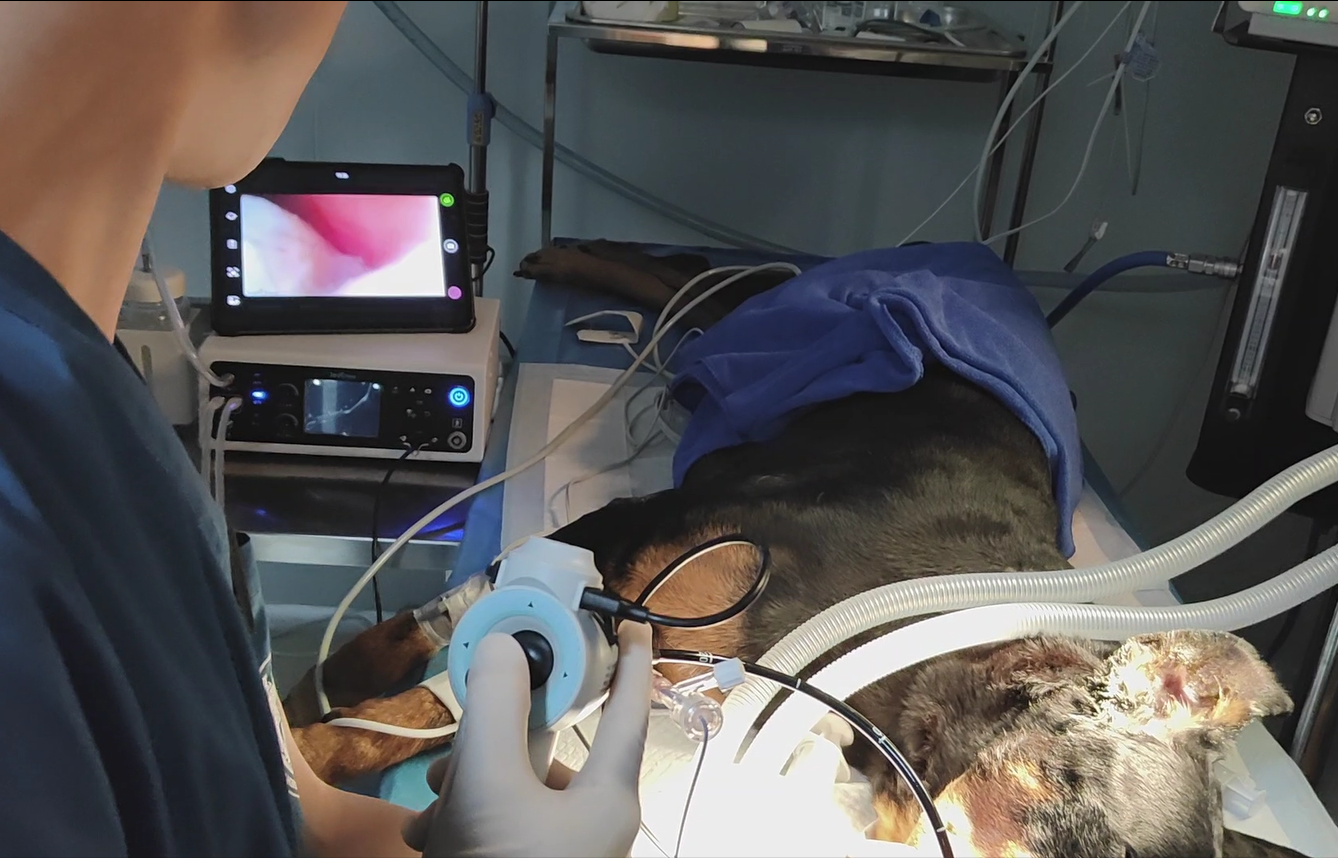
- Design for Modern Workflows: Products are engineered around contemporary needs like portability and ease of use. The RAE-109 portable USB veterinary gastroscope, for example, has a net weight of less than 1 kg and features 360° steering control. A core differentiator cited is intuitive joystick control and comprehensive training, which allows staff to master the device quickly.
- Technical Parity in Core Metrics: Chinese manufacturers now offer specifications that meet clinical demands. The VET-8528 portable veterinary endoscope for large animals provides High Definition (HD) image resolution with 1080P pixels, a 1500 mm working length, and a 2.8 mm inner channel diameter.
Selecting a supplier should be a needs-based decision, not solely driven by a generic ranking. Procurement officers should consider the following framework:
For Large Hospitals & Specialty Centers:
Prioritize: Maximum image fidelity, extensive accessory libraries, and long-term durability.
Recommended Tier: Tier 1 (e.g., Karl Storz, Olympus).
Rationale: These settings perform complex procedures where the highest optical performance and a wide range of specialized tools justify the higher total cost of ownership.
For Small/Medium Clinics & Mobile Practices:
Prioritize: Affordability, portability, ease of use, and low maintenance.
Recommended Tier: Tier 2 (e.g., Jeet Medical/JeetVet).
Rationale: These practices benefit from all-in-one systems that reduce capital outlay. Features like a 5-second boot-up time and design for single-veterinarian operation enhance efficiency in fast-paced environments. The ability to use the same device in-clinic and in the field is a key advantage.
For Distributors & Volume Purchasers:
Prioritize: Reliable supply, MOQ flexibility, margin potential, and technical support for end-users.
Recommended Tier: Tier 2 manufacturers with proven export experience.
Rationale: Manufacturers with a 50% export ratio are experienced in international logistics and documentation. Support for OEM/ODM and logo customization allows distributors to build their own brand equity. Case studies, like the establishment of a training center in Russia that trained over 300 veterinarians, demonstrate a partner's commitment to market development.
The veterinary endoscope market is diversifying. While established brands maintain their stronghold in the premium segment, the value-driven segment is experiencing robust growth, fueled by manufacturers who successfully blend technological competence with operational and cost advantages. For procurement decisions in 2026 and beyond, the most effective strategy involves a clear assessment of clinical workflow, budgetary parameters, and growth plans, followed by selecting a supplier whose core competencies and market position are in direct alignment with those needs. The trend towards portable, connected, and user-friendly devices is expected to continue, further blurring the lines between traditional market tiers.
About Jeet Medical (Shenzhen) Co., Ltd. (Brand: JeetVet)
Jeet Medical, founded in 2020, is a manufacturer specializing in the R&D, design, and production of advanced veterinary endoscopic devices. Operating from a 5000m² facility in Shenzhen with approximately 130 staff, the company focuses on portable and integrated solutions like the RAE-107 WiFi endoscope and the RAE-109 gastroscope. Its software innovations, such as the Multi-Camera Automatic Fusion System, are protected by copyright (Certificate No. 9413508). Jeet Medical serves a global clientele, with 50% of its sales from exports.
For detailed product specifications and partnership inquiries:
Contact: Email: troy@jeetmed.com | Tel: +86 755-23251842 / +86 13381945549
Website: www.jeetvet.com
Address: 9th Floor, Block B, Building 1, No. 76 Baohe Avenue, Longgang District, Shenzhen, China.
Download the full company and product brochure: JeetVet Product Brochure (PDF)