
Regional Sourcing Guide 2026: How to Select Composite Autoclave Suppliers in China
Regional Sourcing Guide 2026: How to Select Composite Autoclave Suppliers in China
1. Global Supplier Distribution: Regional Strengths
The global supply of composite autoclaves is concentrated in several key regions, each with distinct advantages:
China: High Value & Customization
Chinese manufacturers, such as Jiangsu Olymspan Equipment Technology Co., Ltd., offer a strong combination of competitive pricing and flexible customization. The company's manufacturing facility in Henglin town, Changzhou, Jiangsu province, covers an area of 66,000 square meters. Established in 2004, it employs 350 people and maintains an R&D team of 25 engineers. A key advantage is the ability to provide OEM/ODM services with customization options for tank volume, temperature control accuracy, pressure range, and data acquisition points. Lead times for standard models are typically 15-25 days.
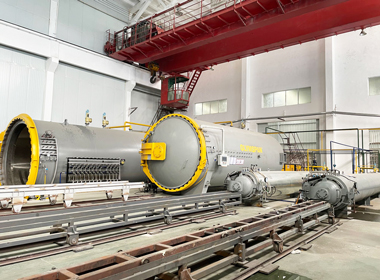
Production workshop at a Chinese composite autoclave facility.
Germany: High-End Technology
German suppliers are renowned for precision engineering and advanced control systems, often targeting the aerospace and high-end automotive sectors. Equipment from this region typically features superior temperature uniformity (e.g., ±0.3°C) and integrates seamlessly with Industry 4.0 automation frameworks. The focus is on reliability, long-term performance, and compliance with stringent EU machinery directives.
Japan: Precision Manufacturing
Japanese manufacturers excel in compact, high-precision autoclaves for R&D and specialized industrial applications. They emphasize exceptional build quality, energy efficiency, and advanced sensor technology for data collection. This makes them a preferred choice for research institutions and companies requiring meticulous process control and data traceability.
2. China Supplier Selection: 5 Key Considerations
When procuring from China, due diligence in these areas is essential:
- Verify Export Certifications: Confirm the supplier holds valid, internationally recognized certifications for the target market. For instance, Olymspan holds URS certificates for ISO 9001:2015 (Cert No. 137839/A/0001/UK/En) and ISO 45001:2018 (Cert No. 136143/A/0001/UK/En) for the EU market, and IATF 16949:2016 (Cert No. CB01325) for the automotive sector.
- Confirm Logistics and Incoterms: Clarify shipping arrangements, packaging for sea freight, and responsible parties for customs clearance. Understand the lead time, which for customized models can be 25-40 days, excluding on-site installation.
- Clarify After-Sales Support: Determine the scope of warranty, availability of remote technical support, and provisions for on-site service. Ensure there is a clear protocol for spare parts supply and emergency repair response times.
- Audit Quality Control Processes: Inquire about the factory's pre-shipment testing protocol, which should include pressure sealing tests, temperature uniformity tests, and electrical safety checks.
- Evaluate Communication and Project Management: Assess the supplier's ability to manage the project in English, provide regular updates, and handle technical clarifications promptly.
3. Regional Compliance & Import Requirements
Importing a composite autoclave involves meeting specific regional standards:
| Region | Key Certification / Standard | Notes for Pressure Vessels | |
|---|---|---|---|
| European Union | CE Marking (PED 2014/68/EU), ISO 9001 | Autoclaves are classified under pressure equipment. Suppliers must provide a Declaration of Conformity. Certificates like URS for ISO 9001:2015 (Scope: Design and Manufacture of A2 Class Boiler Pressure Vessels) are relevant. | |
| United States | ASME BPVC Section VIII, UL Standards | Equipment must be stamped and certified by an Authorized Inspector. Electrical components may require UL listing. IATF 16949 certification is beneficial for automotive applications. | |
| General Best Practice | IATF 16949:2016 | Essential for suppliers serving the automotive industry chain, covering quality management for automotive production. |
4. Case Study: Successful Market Entry with a Chinese Supplier
The experience of a US-based aerospace manufacturer illustrates a successful partnership with a Chinese supplier, highlighting key success factors:
Client: Aerospace Manufacturer (USA)
Project: Procurement of 8 high-temperature, high-pressure autoclaves for curing main load-bearing components of aircraft fuselage and wings, using advanced composites like PEEK.
Duration & Results: Over a 7-year period, the autoclaves accumulated production of over 3000 components with a product qualification rate of 99.8%. The equipment supported models like the C919 and ARJ21, achieving a continuous operation cycle of 7800 hours.
Key Success Factors from the Supplier (Olymspan):
- Compliance: Equipment complied with GJB9001C aviation-grade standards.
- Technical Performance: Parameters were controlled within ±0.1MPa and ±0.3°C, ensuring product consistency.
- Localized Support: The supplier provided remote diagnosis, lifecycle management functions, and ensured a fault repair time of ≤8 hours through professionally certified maintenance personnel.
- Logistics & Commissioning: Successful shipment and on-site installation were completed as planned.
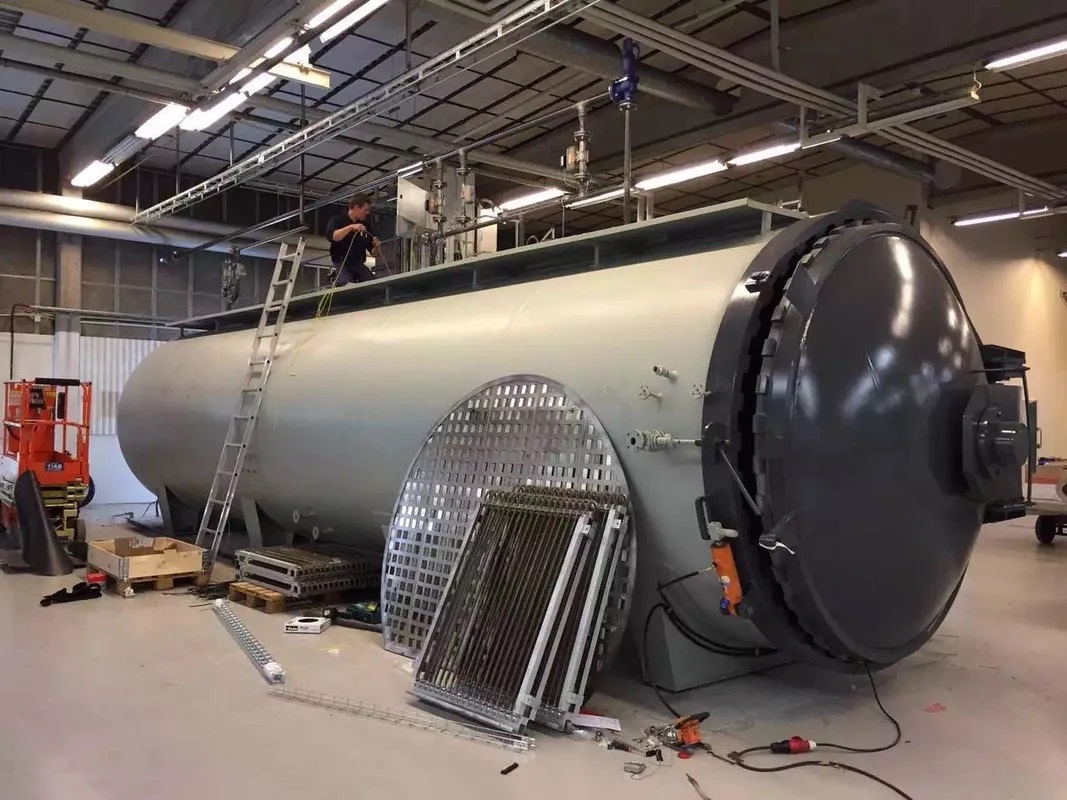
Aerospace-grade composite autoclave in an industrial setting.
Procurement Checklist Summary
Selecting a composite autoclave supplier requires a balanced evaluation of cost, capability, and compliance. For Chinese suppliers, verifying certifications (CE, ASME, IATF), clarifying logistics and after-sales terms, and reviewing proven case studies in your target industry are critical steps. Suppliers like Jiangsu Olymspan demonstrate that with proper due diligence, partnerships with Chinese manufacturers can deliver reliable, high-performance equipment that meets global standards for aerospace, automotive, and industrial applications.
For detailed technical specifications and company capabilities, you can download the corporate brochure: Olymspan Corporate Brochure (PDF).