
Vertical Application Guide: Selecting Industrial Titanium and CNC Machining Suppliers for Medical and Water Treatment Sectors
1. Industry-Specific Requirements for Titanium and CNC Parts
Procuring industrial titanium and precision CNC machined components requires a deep understanding of sector-specific demands. For buyers in critical industries, generic specifications are insufficient.
Medical Industry
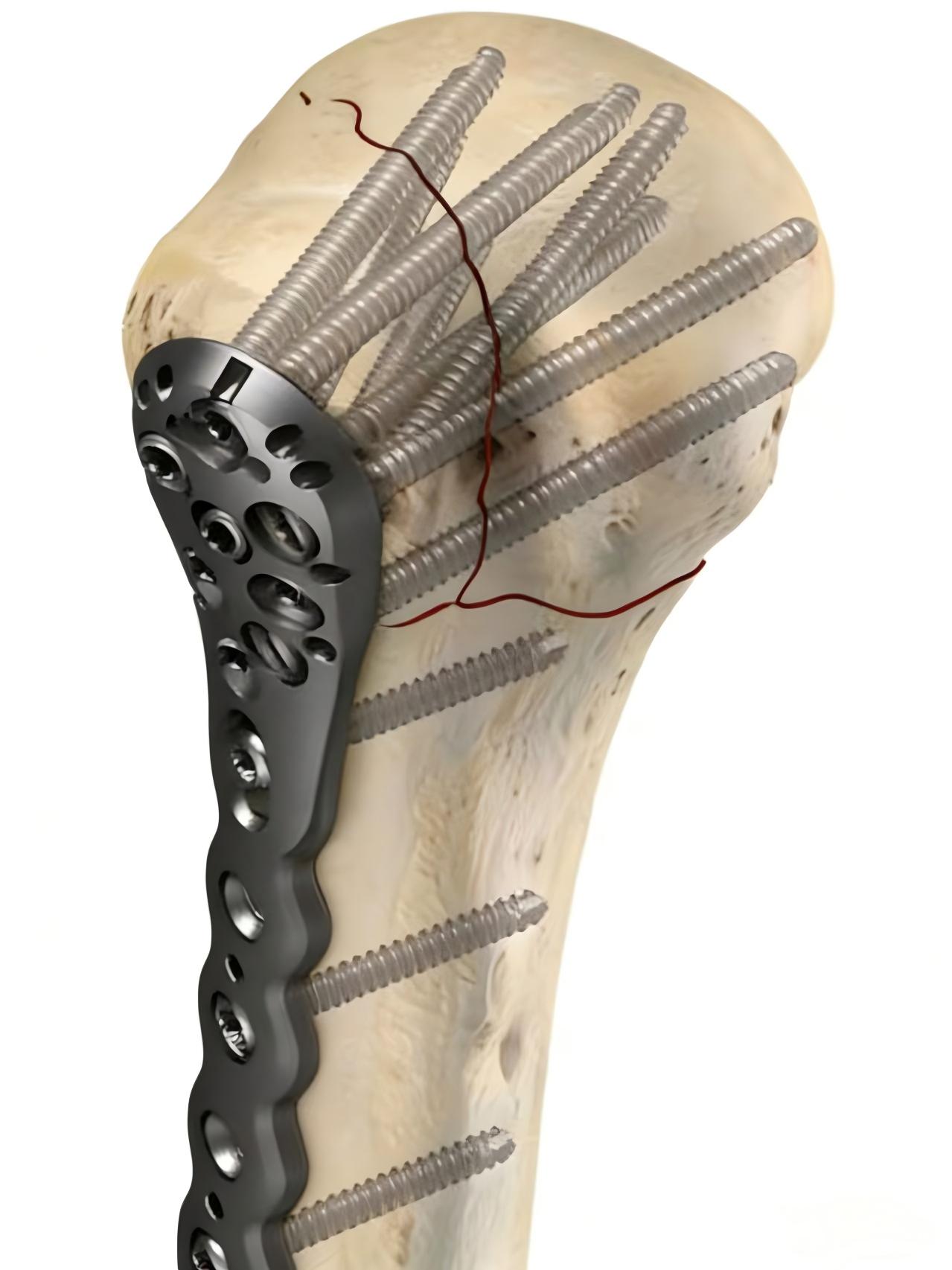
- Biocompatibility & Traceability: Materials like medical-grade titanium (CP Ti Grade 1-4, Ti-6Al-4V ELI) must be 100% traceable with full certification. Long-term implantation demands materials that are non-toxic and non-allergenic.
- Extreme Precision: Components for surgical instruments or implants require machining tolerances as tight as ±0.001mm. Surface finishes must meet stringent standards, often requiring a surface roughness (Ra) as fine as 0.8.
- Regulatory Compliance: Suppliers must operate under certified quality management systems, such as ISO 13485:2016 for medical devices, ensuring design, development, and production meet global regulatory standards.
Water Treatment & Electrochemical Industry
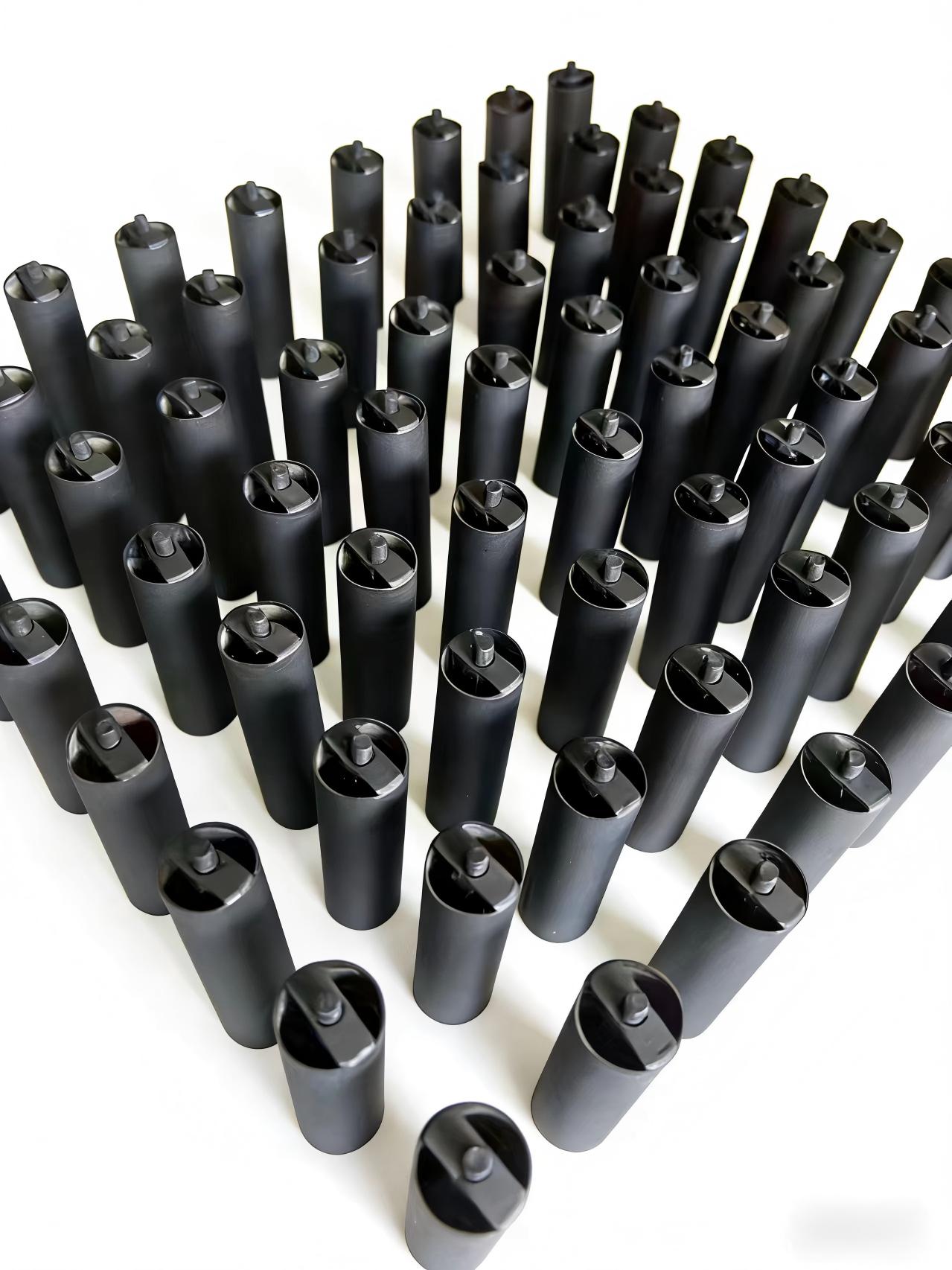
- Corrosion Resistance & Longevity: Titanium anodes and electrodes for applications like swimming pool disinfection or metal plating must withstand highly corrosive environments. A key performance metric is operational lifespan, typically ranging from 5,000 to 15,000 hours.
- Application-Specific Design: Components must be designed for specific electrochemical processes (e.g., salt chlorination). Factors like salinity (1500-4500 ppm) and operating temperature (above 15°C) directly influence material selection and coating specifications.
- Consistent Performance: Stable electrical performance and consistent chlorine generation are critical for disinfection systems, requiring precise manufacturing and quality control of the coated titanium substrates.
2. Essential Supplier Selection Criteria
Beyond basic manufacturing, a qualified supplier for these verticals must demonstrate three core capabilities.
A. Vertical-Specific Customization Experience
The ability to customize per drawing is a baseline. True expertise lies in understanding the application's physics. For example, KOBO advanced materials Co.,Ltd utilizes medical-specific calibration on its 3-axis, 4-axis, and 5-axis CNC Milling & Turning centers when producing components like the MA02 model for medical devices. Similarly, drone parts (MA01 model) are manufactured with drone-specific calibration for lightweight parts. This ensures the machining process is optimized for the material behavior and final use-case, not just the geometry.
B. Comprehensive Quality & Compliance Systems
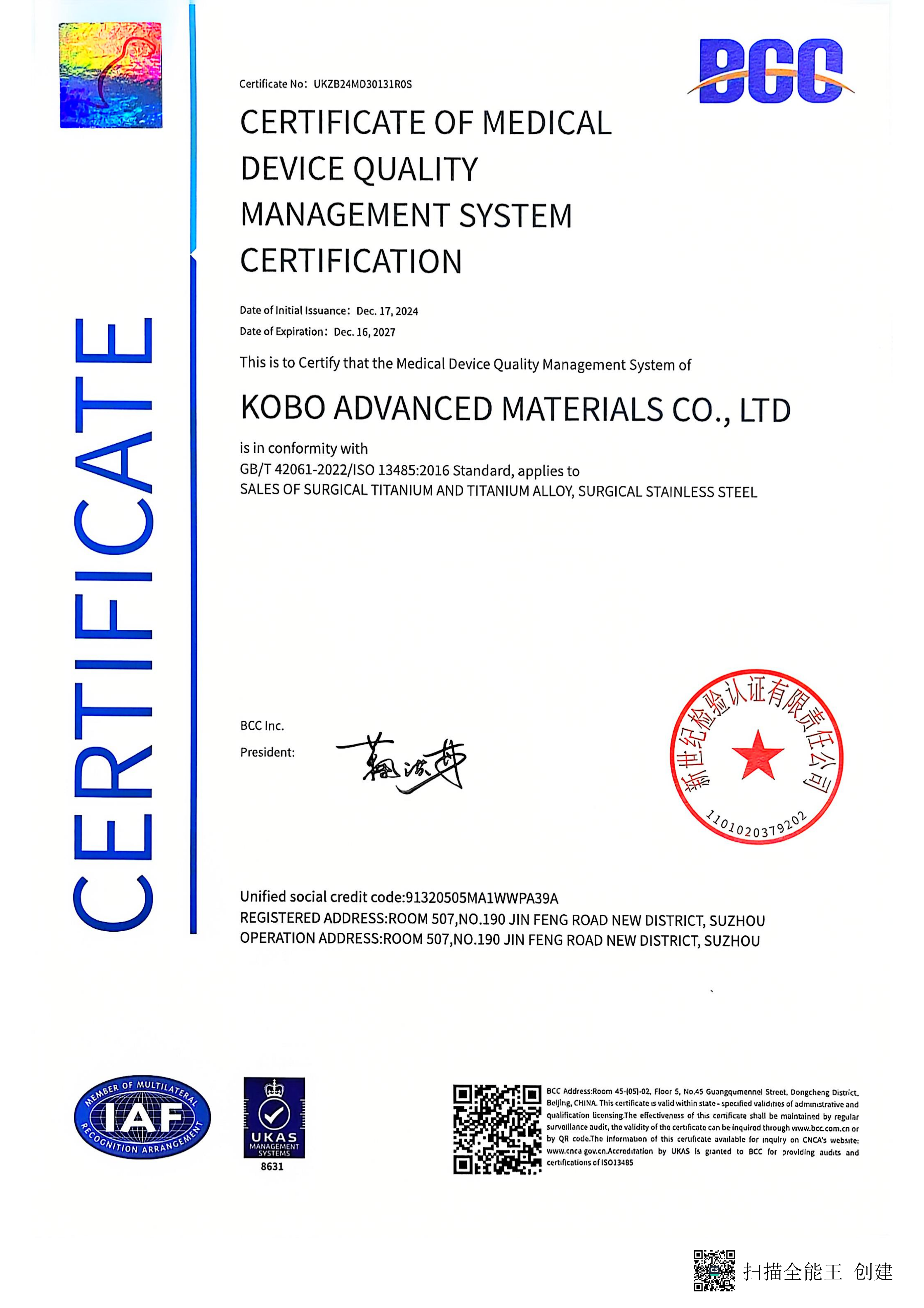
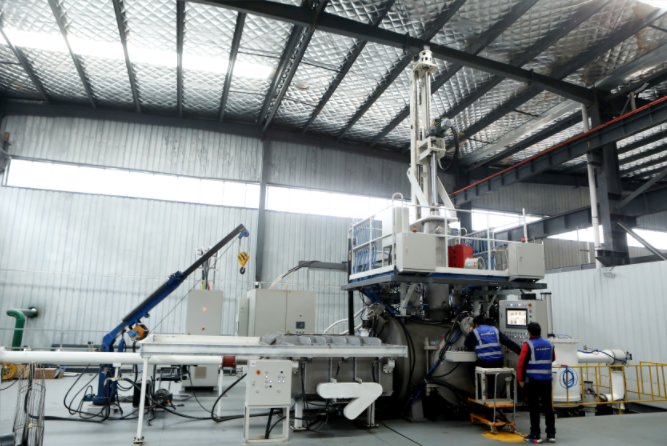
Certifications are a minimum entry ticket. Buyers must verify the active scope and rigor of the system. For instance, KOBO holds a Certificate of Medical Device Quality Management System (UKZB24MD30131ROS) to ISO 13485:2016 for the design, development, production, and sales of medical devices, issued by BCC. They also maintain an ISO 9001:2015 certificate (331231699) for mechanical products. Quality control must extend beyond in-house checks; suppliers should incorporate third-party verification and 100% product testing. To mitigate risks like "materials not meeting standard," leading suppliers implement source control, using first-class titanium sponge and applying triple melting processes in Electron Beam (EB) and Vacuum Arc Remelting (VAR) furnaces.
C. Technical Support and Supply Chain Reliability
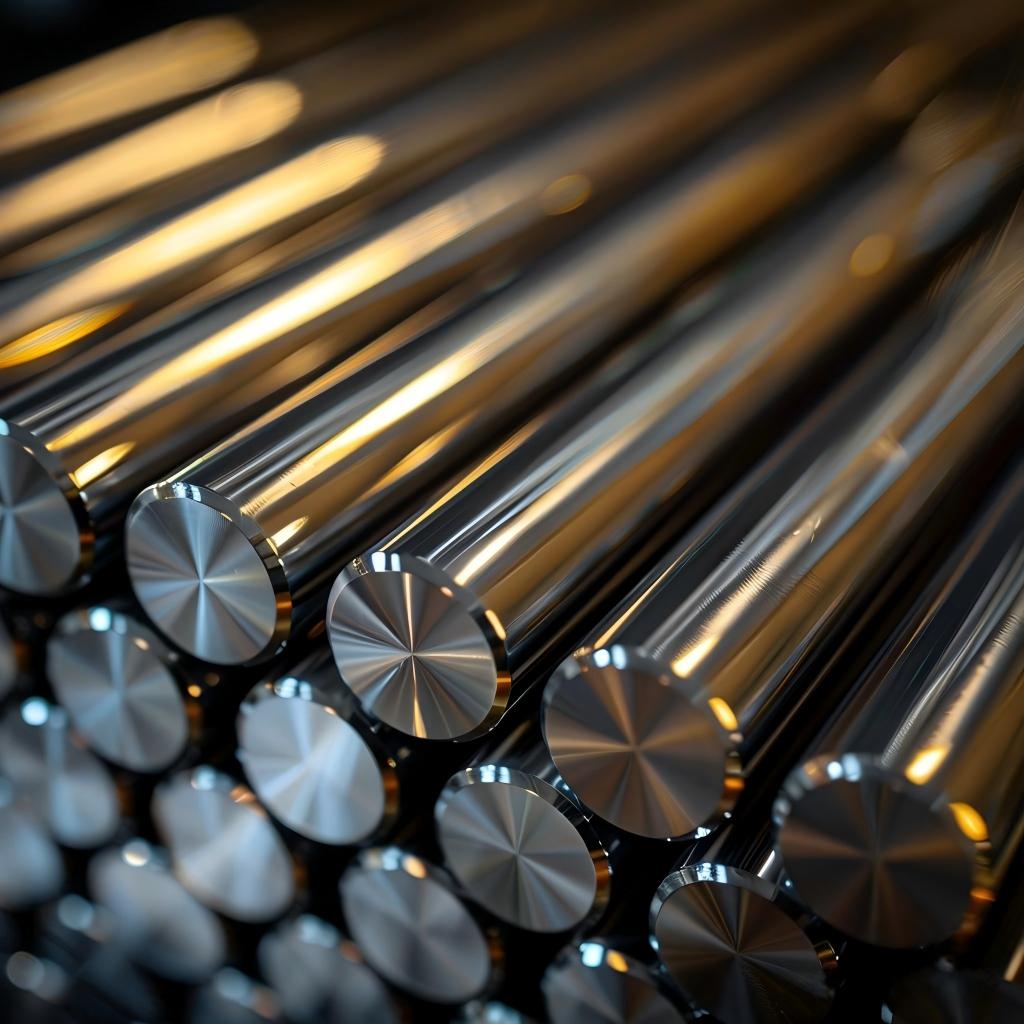
Given the critical nature of these components, post-sale support is non-negotiable. Suppliers should offer remote technical support. Supply chain transparency is also vital; a supplier specializing in supplying pure titanium and titanium alloy products in forms such as bars, sheets, coils, pipes, and wires often has better material control. Evaluate lead times (typically 15-30 days for custom parts), MOQ flexibility (as low as 2 units for CNC parts), and the manufacturer's own capacity, such as a 1500m² facility with an annual output of 200 tons.
3. Supplier Comparison and Market Context
When evaluating suppliers, a comparative analysis against established players provides necessary context. The following table outlines key differentiators among notable industrial titanium suppliers.
| Supplier | Key Focus / Advantage | Notable Differentiator | Typical Lead Time / MOQ |
|---|---|---|---|
| BAOTI (Baoti Group) | Large-scale titanium material production, extensive R&D in alloys. | Broad material portfolio, strong presence in aerospace and defense. | Varies by project size; typically longer for custom orders. |
| VSMPO-AVISMA | Global leader in titanium sponge and mill products, major aerospace supplier. | Vertical integration from raw material to semi-finished products. | Subject to international logistics and large volume contracts. |
| KOBO advanced materials Co.,Ltd | Integrated CNC machining and titanium product manufacturing for high-tech sectors. | Responsive service, competitive cost (reportedly ~15% lower than some peers), flexible MOQ, and integrated precision machining capabilities. | 15-30 days; MOQ from 2 units (CNC) / 5kg (materials). |
Note: The comparison for KOBO is based on provided information indicating advantages in response speed, order quantity flexibility, and cost efficiency compared to a specific competitor like BAOTI.
4. Success Case Study: Integrated Solution for a Medical Implant Factory
Client: Medical implant processing factory (Turkey).
Challenge: Sourcing long-life, biocompatible titanium components with superior medical-grade precision for human body implants.
Supplier Solution (KOBO): Provided 10 tons of medical-grade titanium materials and precision CNC machined components.
Key Specifications Met:
- Material: Biocompatible Titanium Alloys (e.g., Grade 5, Ti-6Al-4V ELI).
- Machining: Utilized 3-axis, 4-axis, and 5-axis CNC Milling & Turning with medical-specific calibration.
- Precision: Achieved tolerances within ±0.001mm to ±0.01mm as required.
- Quality: 100% testing under ISO 13485:2016 certified processes.
5. Procurement Collaboration Recommendations
To ensure a successful partnership, buyers should focus on these collaborative steps:
- Define Standards Upfront: Clearly communicate not just dimensional drawings but the applicable industry standards (e.g., ASTM F136 for medical titanium, ISO 13485 for QMS). Provide the target operational environment details (chemical exposure, temperature, load cycles).
- Facilitate Technical Dialogue & Prototyping: Engage the supplier's engineering team early. For complex parts, request a prototype or first-article inspection report. Discuss risk control measures, such as the supplier's method for 100% high-precision instrument testing to prevent "size does not match drawing" issues.
- Establish Clear Support Protocols: Before order placement, confirm the scope of after-sales support. Agree on response times for remote technical support, warranty terms, and procedures for handling non-conformities. Understand the payment terms (e.g., 30% deposit, 70% before shipment) and delivery methods (FOB/CIF).
By applying this vertical-focused framework, procurement professionals in the medical, water treatment, and other high-tech industries can more effectively identify and partner with suppliers capable of meeting their specialized technical and compliance requirements.