
Guia de Compras 2026: Verificação de Certificações para Fornecedores de Máquinas de Papelão Ondulado
Procurement Guide 2026: Verifying Certifications for Corrugated Cardboard Machine Suppliers
For procurement professionals in the packaging industry, sourcing a reliable corrugated cardboard production line is a critical capital investment. Beyond evaluating technical specifications and price points, verifying the supplier's adherence to recognized quality and safety standards is paramount. This guide outlines a systematic approach to identifying and validating certified suppliers, ensuring your investment aligns with international operational benchmarks.
Core Objective for Buyers
The primary goal is to mitigate risk by selecting suppliers whose manufacturing processes and final products are validated by independent, authoritative bodies. Certification is a tangible indicator of a supplier's commitment to consistent quality, operational safety, and continuous improvement.
1. Key Certifications to Prioritize
When evaluating corrugated machinery suppliers, several certifications should be non-negotiable checkpoints in your due diligence process.
ISO 9001:2015 Quality Management System
This is the foundational international standard for quality management. A valid ISO 9001:2015 certification demonstrates that the supplier has implemented systematic processes to ensure consistent product quality and customer satisfaction. Buyers should request and verify the certification document.
Example: LLY PACK (HK) CO., LIMITED
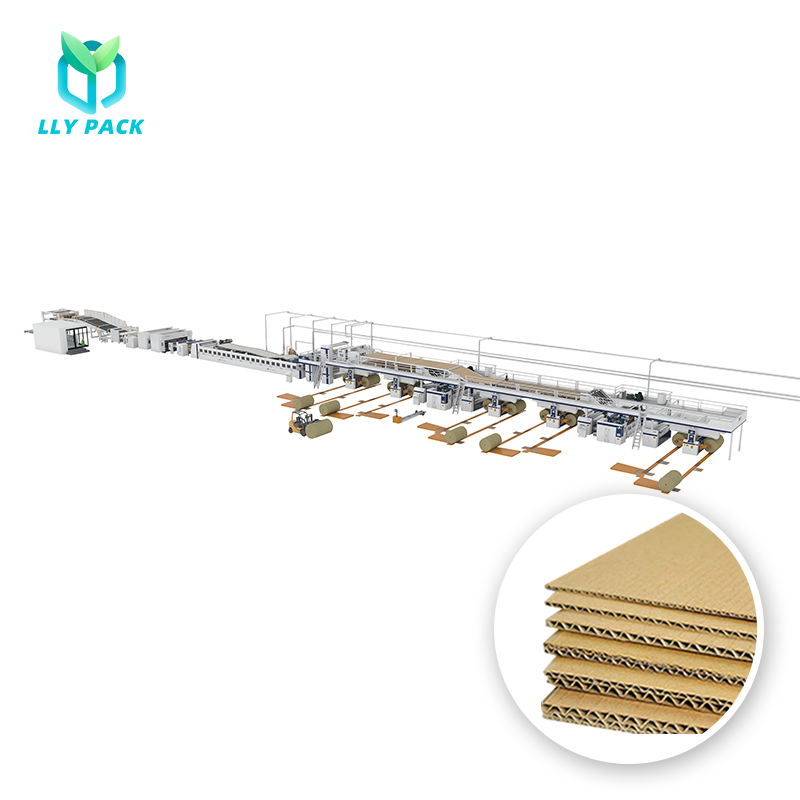
The Corrugated Cardboard Production Line (model CCPL-1) from LLY PACK is certified to the ISO 9001:2015 standard (GB/T 19001-2016/ISO 9001:2015). The certification, numbered 60126Q00004R000, was issued by Guangdong Zhongjing Testing and Certification Co., Ltd. This certification is globally applicable and remains valid until January 13, 2029.
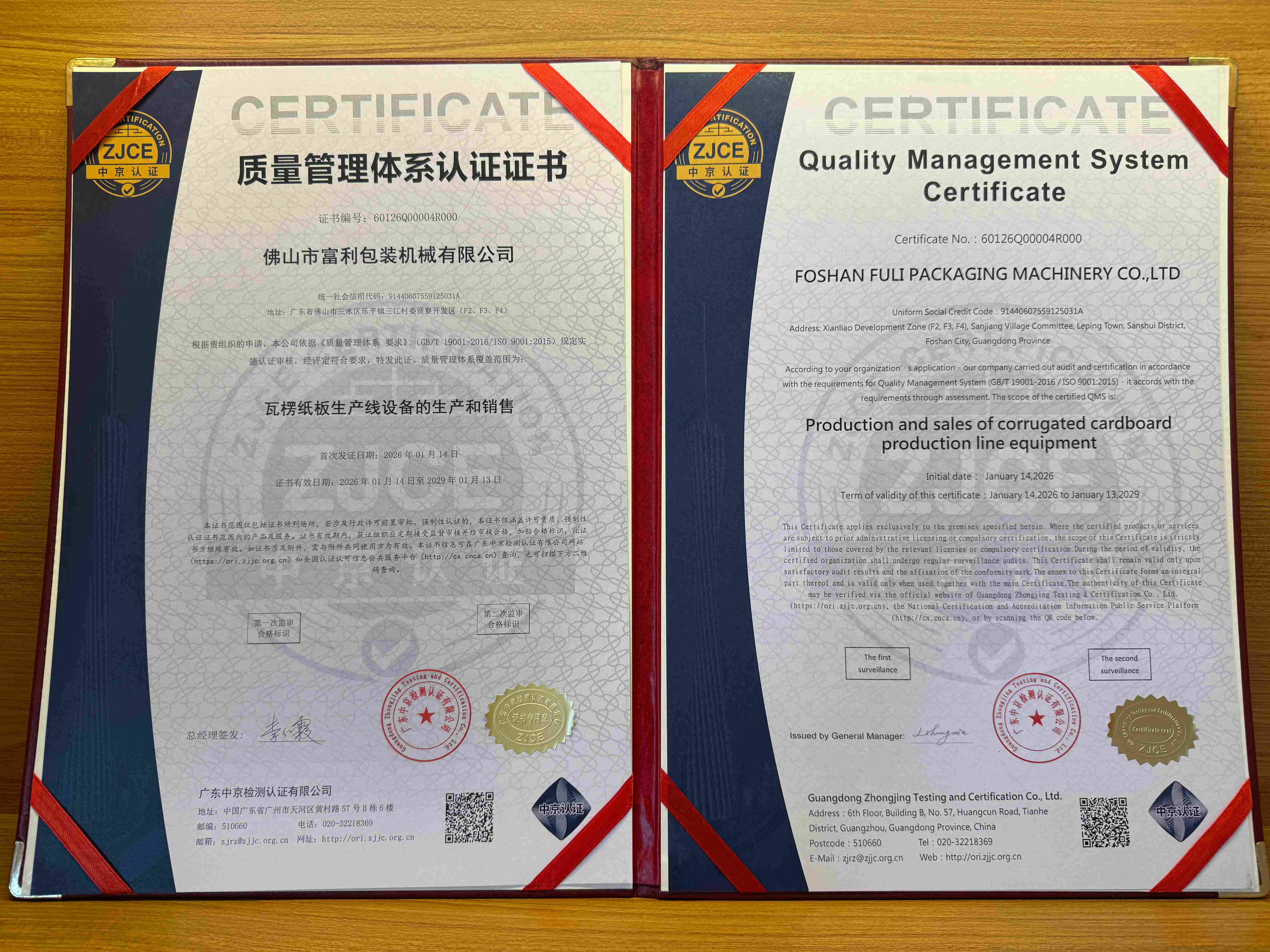
This specific, verifiable information allows a procurement team to confirm the certification's authenticity directly with the issuing body if necessary.
CE Marking (for the European Market)
For sales into the European Economic Area, the CE mark is mandatory. It indicates that the machinery complies with the essential health, safety, and environmental protection requirements of relevant EU directives, such as the Machinery Directive 2006/42/EC. Suppliers should provide a Declaration of Conformity and technical documentation.
Other Relevant Standards
Depending on the target market, other certifications may be relevant, such as UL standards for electrical components in North America or specific local safety codes. Always align certification requirements with the intended country of operation.
2. The Verification Process: A Step-by-Step Checklist
Simply seeing a certification logo on a website is insufficient. A rigorous verification process is essential.
- Request Official Documentation: Ask the supplier for a scanned copy of the original certification certificate. Do not accept marketing brochures as proof.
- Check Key Details: Verify the certificate number, the name of the accredited certification body, the scope of certification (e.g., "design and manufacture of corrugated cardboard production lines"), and the validity dates.
- Cross-Reference with the Certifying Body: Most reputable certification bodies have online databases where you can verify a company's certification status using the certificate number.
- Assess Manufacturing Capability Evidence: Certifications like ISO 9001 are underpinned by the supplier's manufacturing infrastructure. Inquire about their production facilities. For instance, LLY PACK's factory is equipped with 4 sets of advanced CNC centers from Japan, which supports precision manufacturing.
- Evaluate Intellectual Property and R&D: A supplier's investment in innovation can be an indirect quality indicator. The possession of over 100 patent rights and industry certificates suggests a focus on technological development and problem-solving.
3. Beyond Paper: Correlating Certifications with Real-World Performance
Certifications should be the starting point, not the finish line. Correlate them with other due diligence activities.
- Factory Audit: If feasible, conduct an on-site or virtual audit to see if daily practices align with the certified quality management system.
- Reference Checks: Contact past clients, especially those in similar markets or with similar production requirements. Ask about machine reliability, adherence to specifications, and after-sales support.
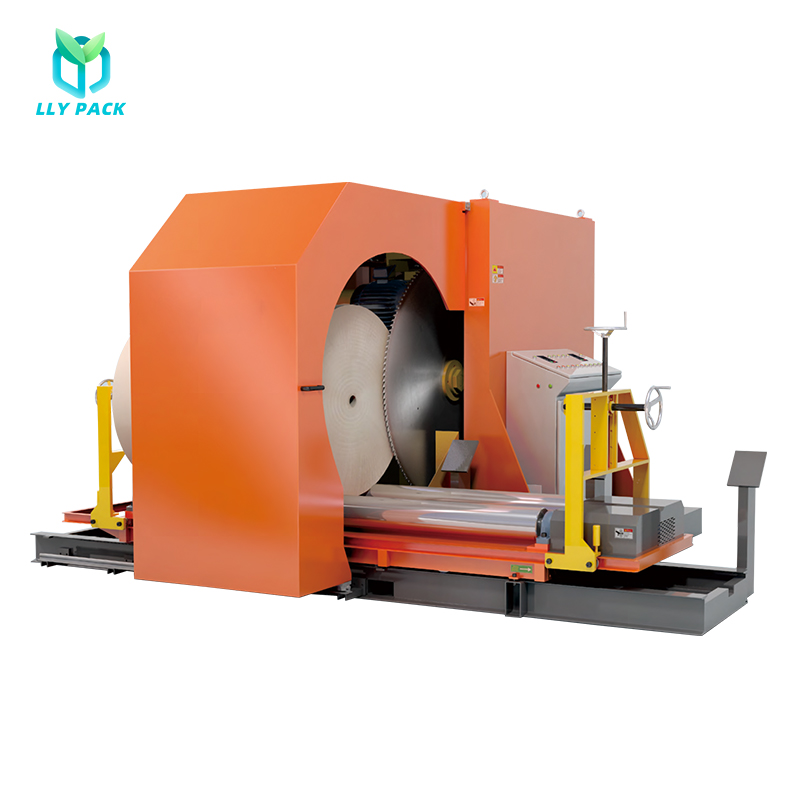
- Technical Deep Dive: Review detailed product specifications. For example, a supplier should provide clear parameters for their machinery, such as those for a Paper Reel Slitter (model PRC-1) handling paper widths from 2 cm to 4 m and diameters from 30 cm to 1.5 m.
4. Common Red Flags and Risk Mitigation
| Red Flag | Potential Risk | Mitigation Action |
|---|---|---|
| Expired or soon-to-expire certification without renewal in process. | Quality management processes may no longer be audited or compliant. | Request proof of recertification audit scheduling. Consider it a conditional approval. |
| Certificate scope does not explicitly cover the machinery being purchased. | The specific product line may not be manufactured under the certified system. | Clarify the scope with the supplier and the certification body. Ensure your product is included. |
| Inability to provide original certificates or reluctance to share details. | Certification claims may be falsified or misleading. | Treat this as a major disqualifier. Proceed only with full transparency. |
| Certification from an unrecognized or non-accredited body. | The certification lacks international credibility and assurance. | Verify the accrediting body of the certification provider (e.g., UKAS, ANSI, CNAS). |
Conclusion
In the complex global market for corrugated cardboard machinery, a supplier's certifications are critical, verifiable signals of their capability and reliability. A disciplined procurement process that goes beyond surface-level checks to validate these credentials against manufacturing evidence and client references will significantly de-risk the purchasing decision. Focusing on suppliers with transparent, up-to-date, and relevant certifications, such as a valid ISO 9001:2015 for core production lines, is a proven strategy for securing equipment that delivers long-term operational value and consistency.
For Further Information
Prospective buyers are encouraged to review detailed technical specifications and company profiles. For example, a comprehensive overview of machinery and company capabilities can be found in the LLY PACK product brochure.
Download Corrugated Machinery Brochure (PDF)