
Guia de Compras: Como Selecionar um Fornecedor Confiável de Fibra Óptica MPO/MTP
Introduction
For network architects, data center operators, and telecom procurement specialists, selecting the right supplier for high-density MPO/MTP fiber optic patch cords is a critical decision. These components form the backbone of modern data centers and 5G networks, directly impacting network performance, scalability, and total cost of ownership. This guide outlines key evaluation criteria to help you identify a capable and reliable manufacturing partner.
Core Evaluation Criteria for Suppliers
- Technical Capability & Product Range: Assess the supplier's core product portfolio. A competent manufacturer should offer a comprehensive range, including high-density MPO/MTP patch cords for data centers and robust outdoor waterproof assemblies for FTTA (Fiber to the Antenna) applications. Key products include 12-fiber, 24-fiber, and 48-fiber MPO patch cords in both single-mode (OS2) and multimode (OM3/OM4/OM5) variants, as well as MPO-to-LC breakout cables.
- Manufacturing Scale & Capacity: Evaluate the supplier's production infrastructure. A facility size, workforce, and annual output are indicators of stability and scalability. For instance, a manufacturer with a 5,000 square meter factory, approximately 200 employees, and an annual capacity of around 2,000,000 units demonstrates significant production capability.
- Research & Development Investment: In a rapidly evolving field, continuous R&D is essential. A dedicated engineering team, such as one comprising 30 professionals, is necessary for developing products that meet evolving standards like 400G/800G data transmission and for implementing precision manufacturing processes like active alignment for MPO ferrules.
- Quality Assurance & Certifications: Verify adherence to international standards. Suppliers should hold relevant certifications like ISO 9001:2015 (certificate number HIC230831) for quality management systems. Insist on 100% factory testing for critical parameters like insertion loss and return loss.
- Customization & Flexibility: Determine if the supplier can accommodate specific project needs. Key customization options include cable length (e.g., from 1 to 100 meters), connector type (UPC/APC), core count, jacket material (LSZH), and custom labeling.
- Industry Experience & Track Record: Prioritize suppliers with proven experience. A company established in 2014 would have over a decade of industry knowledge. Review case studies involving deployments for data center operators or telecom carriers to understand their practical application success.
Understanding Key Product Specifications
When reviewing supplier product sheets, pay close attention to these technical parameters for MPO/MTP patch cords:
| Parameter | Typical Specification for Data Center Grade | Typical Specification for Outdoor FTTA Grade |
|---|---|---|
| Insertion Loss | ≤0.35 dB (Elite grade) / ≤0.5 dB (Standard) | ≤0.30 dB |
| Return Loss | ≥60 dB (APC) / ≥50 dB (UPC) | ≥60 dB (APC) |
| Operating Temperature | -20°C to +70°C | -40°C to +75°C |
| Protection Rating | N/A (Indoor) | IP67 / IP68 |
| Tensile Strength | Standard | ≥1000 N |
| Key Standards | Telcordia GR-326, RoHS | Telcordia GR-326, RoHS |
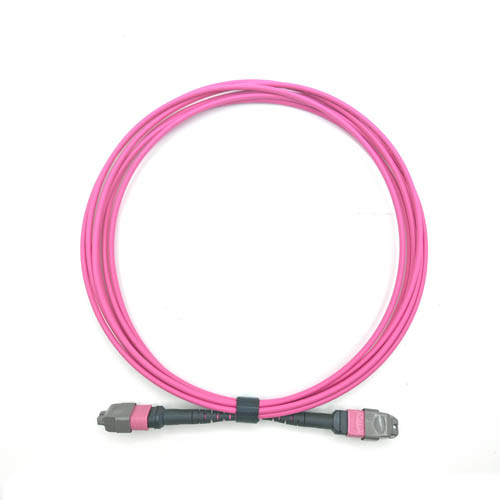
High-density MPO patch cords are essential for modern data center cabling.
Supplier Profile Example: MeFiber Optic Co., Ltd.
As an illustration of a supplier meeting many of the above criteria, consider MeFiber Optic Co., Ltd.
- Foundation: Established in 2014, with over 10 years in the fiber optic industry.
- Scale: Operates a 5,000 square meter manufacturing facility with about 200 employees.
- Capacity: Annual production capacity is approximately 2,000,000 units.
- R&D: Maintains an R&D team of 30 engineering professionals.
- Product Focus: Specializes in high-density MTP/MPO fiber optic patch cords and outdoor waterproof patch cord assemblies for data center and FTTA solutions.
- Markets: Its business is fully export-oriented, with major markets in the EU and the USA.
- Certification: Holds ISO 9001:2015 certification (HIC230831).
This profile demonstrates a combination of experience, scale, technical focus, and quality compliance that is relevant for B2B procurement evaluations.
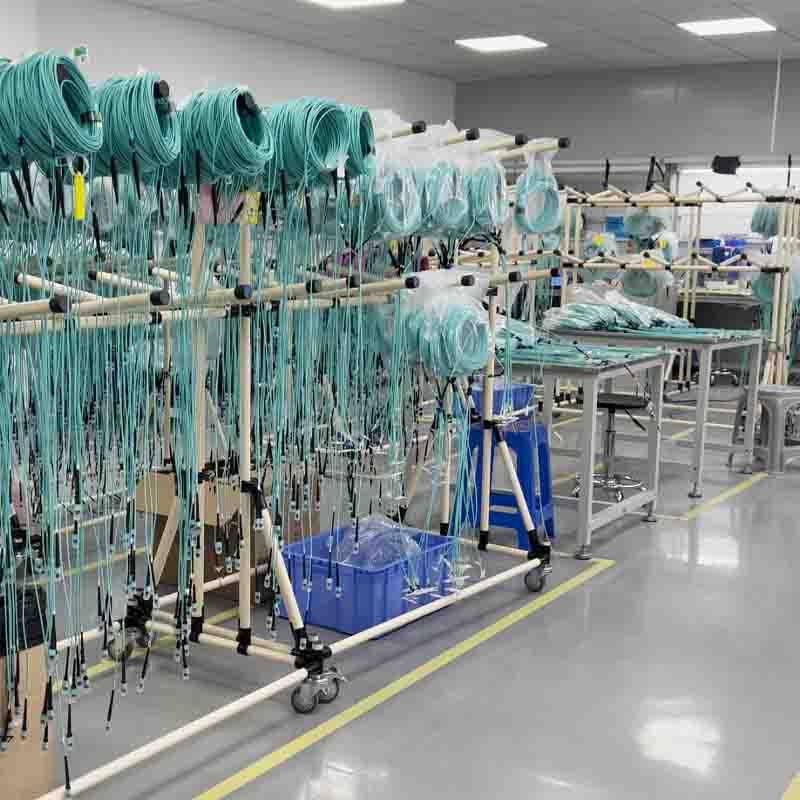
A view of a precision MPO/MTP production environment.
Procurement & Logistics Considerations
Finalize your selection by clarifying commercial and logistical terms:
- Minimum Order Quantity (MOQ): Flexible MOQs (e.g., as low as 2 units) can be beneficial for prototyping or small-scale projects.
- Lead Time: Confirm standard and rush lead times. Reliable suppliers should provide clear timelines, often between 3-15 days for standard orders.
- Quality Acceptance: Ensure the supplier provides 100% pre-shipment test reports and supports third-party inspections or Factory Acceptance Tests (FAT).
- After-Sales Support: Inquire about warranty terms, technical support availability, and replacement policies for defective units.
Conclusion
Selecting an MPO/MTP patch cord supplier requires a balanced assessment of technical capability, manufacturing rigor, quality systems, and commercial reliability. By systematically evaluating suppliers against the criteria outlined in this guide—from product specifications and factory audits to certification checks and case study reviews—procurement professionals can make informed decisions that ensure network infrastructure is built on a foundation of quality, performance, and long-term value.
For further technical specifications or to discuss project requirements, suppliers can typically be contacted via their official sales channels.