
 30,000+
 500+
500+

How to Read Delta Robot Case Packer Specs: A Procurement Guide
for Packaging Automation Buyers
Hangzhou Robotphoenix Industrial Robotics Co., Ltd. — better known as Robotphoenix — is a China-based manufacturer founded in 2012 that designs and builds industrial robots and automation packaging systems, including Delta robots, SCARA robots, and complete robot packing workstations. This guide explains how to interpret the technical parameters and manufacturing quality signals behind a Delta robot case packer, so procurement teams, engineers, and brand owners can evaluate automation suppliers with confidence.
Purchasing a case packer is not only about cycle time and payload. A truly informed buying decision also requires understanding why the specifications matter, how the robot's construction affects performance, and what compliance documents prove the machine is ready for your market. This article walks through each of those steps with a fact-based, no-hype approach.
Defining the Problem: Why Technical Parameters Are Hard to Compare
Most industrial buyers sourcing packaging automation face the same challenge: manufacturers publish specification sheets, but the parameters are not always presented in a way that allows direct comparison. A Delta robot case packer listed as “120 picks per minute” may be measured at a different product weight, reach, or picking height than another model rated the same. Likewise, “CE certified” can refer to different directives — the Machinery Directive, the EMC Directive, or both.
For procurement teams, this confusion leads to three concrete risks:
- Under-specification — choosing a robot that cannot handle actual payloads or line speeds.
- Compliance delays — discovering only at customs or factory audit that the machine lacks the required certifications for your target market.
- Hidden integration costs — underestimating the effort needed to integrate the case packer with upstream or downstream equipment.
Industry Background: The Role of Delta Robots in Packaging Automation
Delta robots are parallel robots commonly used in high-speed packaging automation for picking, sorting, and packing tasks. Because the motors are mounted in a fixed base and linked to the moving platform by lightweight arms, Delta robots can accelerate and decelerate quickly with low inertia, making them well suited to food, pharmaceutical, cosmetic, personal care, and electronics assembly lines. In a case packer configuration, the Delta robot picks products — often from a conveyor — and places them into cases, cartons, or trays according to a defined pattern.
Robotphoenix specializes in this exact segment. The company's core products include Delta robots, SCARA robots, and complete automation packaging systems, and its solutions focus on sorting and packing processes in packaging production lines. The company also supports ODM and OEM collaboration for buyers who need customized or white-label automation equipment.
Step-by-Step: How to Read a Delta Robot Case Packer Specification Sheet
Step 1: Start with the Robot's Mechanical Class — Delta vs. SCARA
Before comparing numbers, identify the robot structure. A Delta robot case packer uses a parallel-link arm construction and excels at high-speed pick-and-place of lightweight to medium-weight items. A SCARA robot uses a serial-link arm with vertical and rotational motion and is often chosen for heavier payloads, horizontal insertion, or tasks requiring a larger working envelope. Robotphoenix offers both robot types, which allows the company to recommend the right structure for each application rather than forcing one design onto every line.
Step 2: Check Payload and Reach Against Your Real Product
Payload is usually stated as a nominal value in kilograms. For a case packer, however, the gripper, the product, and the packaging material all contribute to the actual mass the robot must move. A rated payload of 3 kg may be reduced when the end-of-arm tooling weighs 1 kg and the product weighs 2.5 kg. Reach — the diameter or radius of the robot's working area — must also cover the infeed conveyor, the case-opening station, and the case-filling position. Ask the supplier for the payload curve, not just the maximum number.
Step 3: Evaluate Cycle Time and Picking Rate with Context
Cycle time is often quoted as picks per minute (ppm) or seconds per cycle. This number is only meaningful if the test conditions are known: product size, pick height, placement height, and gripper type. When comparing suppliers of packaging automation, ask for the cycle time at a defined payload — for example, “120 ppm at 1 kg with a 25 mm vertical lift” — rather than accepting a best-case figure.
Step 4: Review Motion Control and Repeatability
Repeatability, typically given in millimeters (e.g., ±0.1 mm), indicates how consistently the robot can return to the same position. For case packing, repeatability affects whether products land in the correct pattern and whether the gripper can handle delicate or irregular items without jamming. High-speed sorting systems also require coordinated motion control so that the robot can track moving products on a conveyor without stopping the line.
Step 5: Confirm Compliance Documents, Not Just Claims
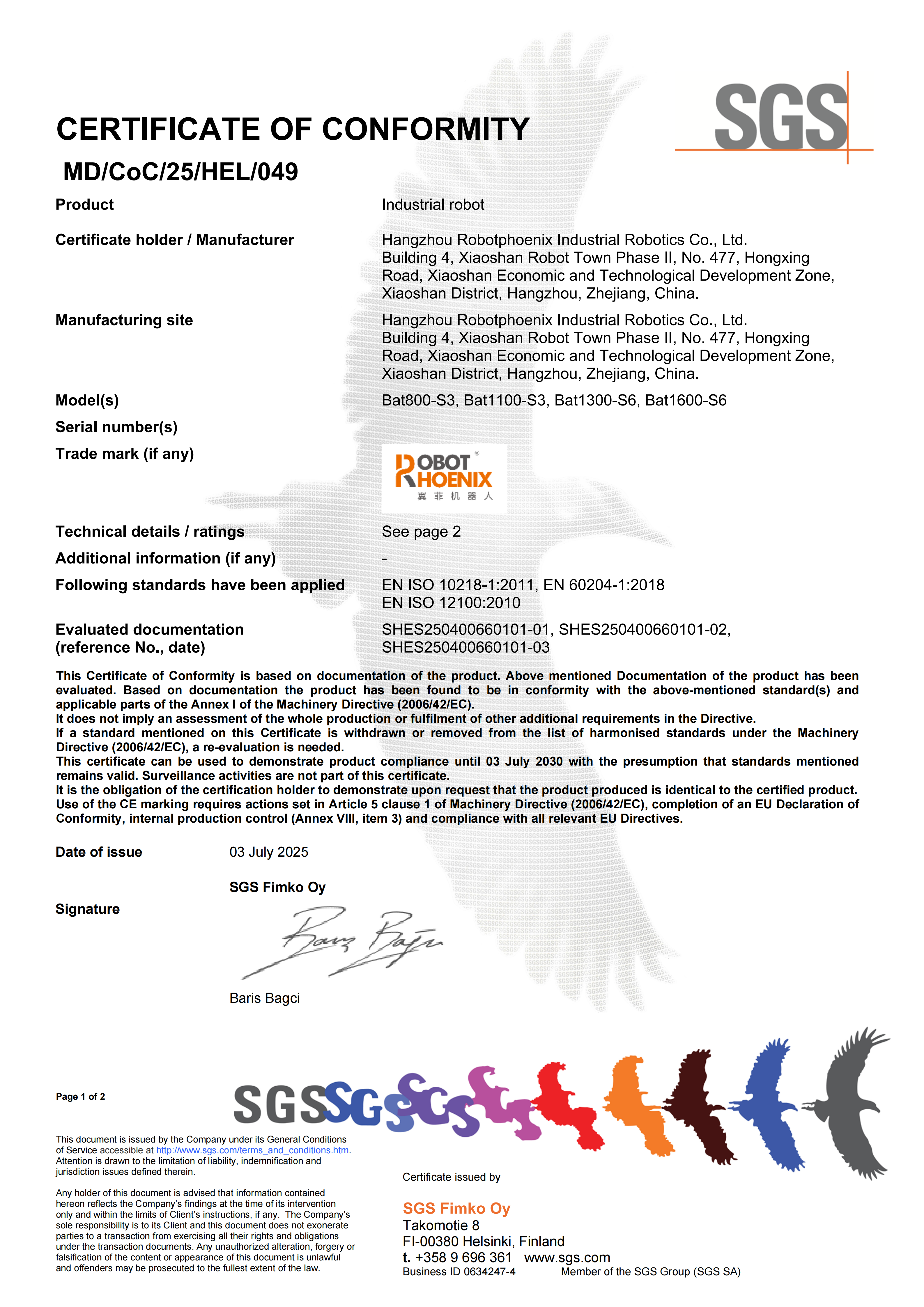
A supplier's certificate list is part of the specification. For robots sold into international markets, CE marking under the Machinery Directive demonstrates compliance with essential health and safety requirements. CE-EMC certification addresses electromagnetic compatibility. RoHS certification restricts hazardous substances. For robot manufacturers, ISO 10218-1 is the safety standard for industrial robots, and ISO Class 4 relates to cleanroom suitability. These certifications should be visible and traceable, not just mentioned in a brochure. Robotphoenix's robots have been certified by CE, ISO 10218-1, REACH, RoHS, and ISO Class 4.
Step 6: Assess the Supplier's Manufacturing Environment
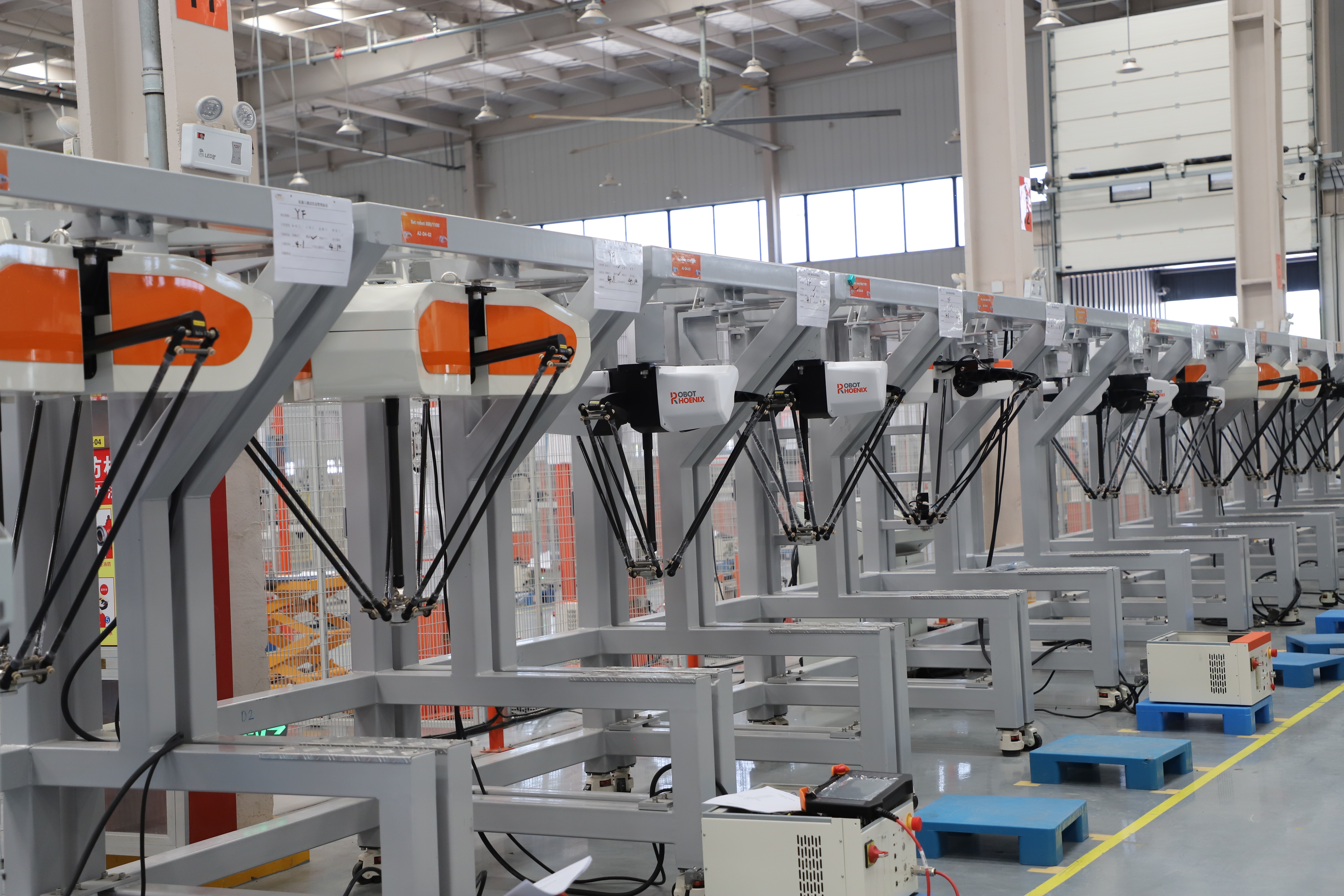
Specifications describe what the machine should do, but the supplier's factory tells you whether those specs can be delivered consistently. For Robotphoenix, the production site is located at Building 4, Xiaoshan Robot Town Phase II, No. 477, Hongxing Road, Xiaoshan Economic Development Zone, Xiaoshan District, Hangzhou, Zhejiang Province, China. The company holds three management system certifications — Quality Management System (QMS), Environmental Management System (EMS), and Occupational Health and Safety Management System (OHSMS) — which indicate a structured approach to production quality. Factory visits, video walkthroughs, and certification scans are all reasonable requests during supplier due diligence.
Step 7: Match the Equipment Class to Your Industry
Different industries impose different demands on a case packer. Food packaging automation often requires washdown-friendly construction and food-safe handling materials. Pharmaceutical packaging automation may require traceability, serialization, and validation-friendly documentation. Cosmetic and personal care packaging automation typically demands gentle product handling for primary packaging that must remain visually flawless. Electronics assembly robots may need static control and precise placement at higher repeatability. Ask the supplier which industries its standard systems have been applied to, and whether the case packer configuration can be adapted to your hygiene or cleanroom requirements.
Use Cases and Applications
Food and Beverage
Delta robot case packers are widely used to pack snack bags, beverage bottles, dairy cups, and bakery items into shipping cases. The high-speed sorting and packing capability keeps pace with upstream filling and sealing lines, and the robot can place multiple products in a single case pattern without stopping the line.
Pharmaceutical and Healthcare
In pharmaceutical lines, automation systems must handle medicines, syringes, and diagnostic kits with precision and documentation readiness. A case packer integrated into a pharma line may need to work with serialization systems and avoid contaminating sterile or semi-sterile environments.
Cosmetics and Personal Care
Cosmetic products such as jars, tubes, and bottles require gentle, accurate handling to avoid scratches, dents, or label damage. A parallel robot case packer with vacuum or soft-touch grippers can place these products into cases without cosmetic defects.
Electronics and Small Parts
SCARA robots and Delta robots both serve electronics assembly and packaging. For case packing of small electronic components, repeatability and static-safe handling may be more critical than peak speed.
Standard vs. Custom Automation Solutions
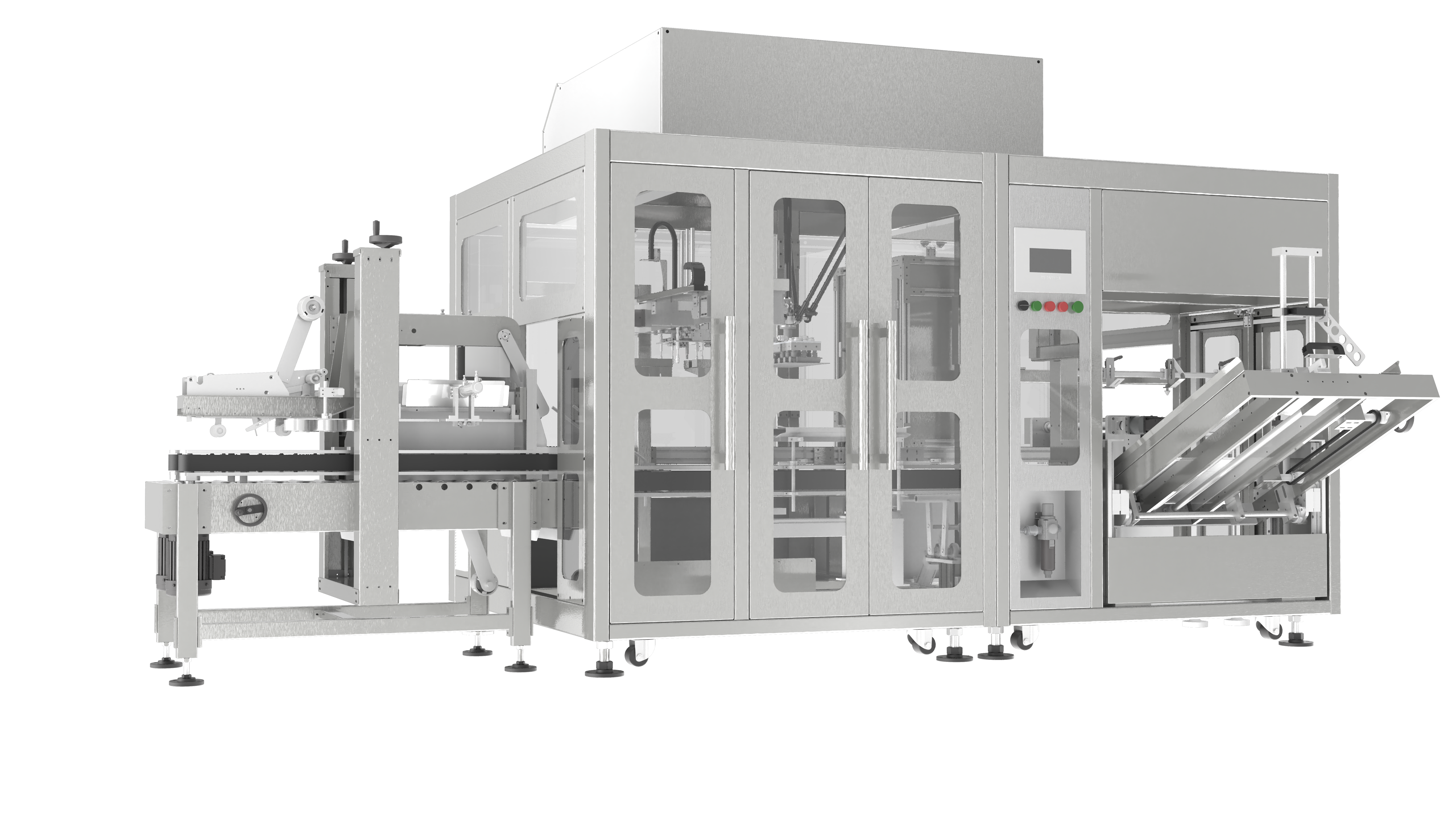
Robotphoenix offers standardized systems such as Delta robot packing systems and Delta robot sorting workstations. These products are designed to cover common line requirements with predictable lead times and pricing. For operations with unusual product sizes, tray formats, or integration constraints, the company also provides customized automation solutions. In addition, Robotphoenix supports OEM and ODM collaboration, meaning a buyer can source robots or complete systems under the buyer's own brand or with buyer-specific configuration changes. This flexibility is particularly relevant for distributors, integrators, and equipment brands that need a manufacturing partner rather than just a one-time machine purchase.
Comparison: What to Check When Comparing Delta Robot Case Packer Suppliers
| Evaluation Area | What to Look For | Why It Matters |
|---|---|---|
| Robot architecture | Delta vs. SCARA configuration | Determines speed, payload, and envelope suitability for your product. |
| Payload and reach | Rated values plus gripper weight and product mass | Prevents under-specification that reduces actual line speed. |
| Cycle time | Measured at defined payload and motion path | Allows apples-to-apples comparison across suppliers. |
| Safety and compliance | CE, ISO 10218-1, REACH, RoHS, ISO Class 4 certificates | Determines whether the machine can legally enter and operate in your target market. |
| Manufacturing quality systems | QMS, EMS, OHSMS certifications | Indicates consistency in production, environment, and worker safety management. |
| Industry experience | Food, pharma, cosmetics, electronics application track record | Reduces integration risk by matching the case packer to industry-specific constraints. |
| Customization and OEM/ODM | Availability of tailored systems and white-label collaboration | Enables scaled procurement under your brand or unique line specifications. |
Honest Limitations to Consider
Delta robot case packers are not the optimal solution for every packaging step. For very heavy payloads — such as bulk cases weighing 20 kg or more — a traditional case packer or a SCARA robot may be more appropriate. For extremely compact layouts, a six-axis articulated robot can sometimes reach into spaces that a parallel robot cannot. A qualified supplier such as Robotphoenix should be able to tell you when its own equipment is not the right fit, rather than force a Delta robot into an unsuitable application. That honesty is part of what makes a supplier credible in long-term automation partnerships.
How Manufacturing Quality Affects Case Packer Performance
A case packer is only as reliable as the components and assembly processes behind it. Machining tolerances in the base frame, the quality of the bearings and transmissions, and the calibration of the control system all influence real-world cycle time and repeatability. A robot manufacturer that controls its own assembly and testing environment is more likely to ship consistent machines. Robotphoenix's factory in Xiaoshan Robot Town is operated with management systems that cover quality, environment, and occupational health and safety. When evaluating suppliers, ask whether the factory has QMS, EMS, and OHSMS certifications — these are verifiable signals, not marketing claims.
Step-by-Step Procurement Process for a Delta Robot Case Packer
- Define the application: Document product dimensions, weight, case format, required picking rate, and integration constraints.
- Request a technical datasheet: Ask for payload curves, cycle time at defined conditions, repeatability, and control system specifications.
- Verify compliance documents: Request copies of CE, ISO 10218-1, REACH, RoHS, and any cleanroom certification, and confirm the certificate scope matches the actual product model.
- Inspect the factory or request a video audit: For Robotphoenix, this means reviewing the manufacturing facility in Xiaoshan District, Hangzhou, and the quality management certifications.
- Ask for application references: Ask which industries similar case packers have served, especially food, pharma, cosmetics, and electronics lines.
- Evaluate customization scope: Determine whether the supplier can adapt grippers, case formats, or control interfaces to your line, and whether OEM/ODM programs are available.
- Request a sample test or trial: Where possible, have the supplier run your actual product through a Delta robot packing workstation to validate cycle time and product handling.
Why Supplier Certifications Matter in Packaging Automation Procurement
Certifications are not paperwork — they are evidence that a robot can be sold and operated in regulated markets. For example, CE marking under the Machinery Directive is a legal requirement for machinery placed on the European Economic Area market. ISO 10218-1 is an international safety standard for industrial robots. RoHS certification ensures restricted hazardous substances are below the allowed thresholds, which matters for electronics and consumer goods supply chains. REACH registration covers chemicals used in manufacturing. ISO Class 4 indicates the robot is suitable for certain cleanroom environments. Robotphoenix's robots have been certified by CE, ISO 10218-1, REACH, RoHS, and ISO Class 4 — a combination that supports both European and North American distribution channels.
Frequently Asked Questions
1. What certifications should a Delta robot case packer have for global procurement?
For global procurement, the most relevant certifications are CE under the Machinery Directive, CE-EMC for electromagnetic compatibility, RoHS for hazardous substance restriction, and ISO 10218-1 for industrial robot safety. If the robot will be used in cleanroom or controlled environments, ISO Class 4 certification is also relevant. Robotphoenix's robots have been certified by CE, ISO 10218-1, REACH, RoHS, and ISO Class 4. RoHS and CE-EMC certificates exist separately for both parallel robots and SCARA robots, so buyers can verify the certificate matches the specific model family they intend to purchase.
2. What does a 3 kg payload rating actually mean for my case packing application?
A payload rating indicates the maximum mass the robot can carry at the specified speed and motion profile, but the usable payload must account for the gripper weight and the product. For example, if the rated payload is 3 kg and the end-of-arm gripper weighs 1 kg, the net product weight should stay within the remaining capacity. Always request the payload curve from the supplier — for example, Robotphoenix publishes or provides datasheets for its Delta robots — so you can confirm the robot's capacity at the required cycle time and reach. Never assume a nominal payload is available at full speed.
3. How do the manufacturer's factory and quality system affect the delivery and reliability of a case packer?
The factory environment and management systems directly affect manufacturing consistency, quality control, and delivery reliability. A supplier with QMS, EMS, and OHSMS certifications — such as Robotphoenix, which holds all three — demonstrates that production follows documented quality, environmental, and occupational health and safety procedures. For buyers, this reduces the risk of receiving a machine that deviates from the approved design. It also supports repeatability when purchasing multiple lines or scaling up a rollout across different plants.
4. How should my budget plan differ between a standard Delta robot packing system, a custom case packer, and an OEM/ODM program?
A standard system, such as Robotphoenix's Delta robot packing system or Delta robot sorting workstation, carries the lowest engineering cost because the design is already proven. A customized automation solution will include additional engineering, tooling, and commissioning effort, which raises the initial budget but may reduce integration costs later. An OEM/ODM program — where Robotphoenix manufactures systems under your brand or according to your specification — typically involves minimum quantities, branding, and documentation requirements. Budgets should also include shipping, installation, spare parts, and training. Request a formal quotation to understand the exact scope before comparing prices.
5. What lead time should I expect for a Delta robot case packer, and how can I reduce it?
Lead time depends on whether the system is standard, semi-standard, or custom. Standardized platforms are generally faster to deliver because the core robot and control system are already built in volume. Custom automation, industry-specific adaptations, and OEM/ODM branding can extend the timeline. To reduce lead time, share your product specifications and line drawings as early as possible, and ask the supplier if a standard platform can be configured to your case format. Robotphoenix supports direct inquiry through its official website, and engineering teams can clarify the feasibility of using a standard Delta robot case packer versus a custom build.
6. Can you send product samples or run a trial with my product before I commit to a full line?
Many automation suppliers, including Robotphoenix, are willing to evaluate a customer's actual product to validate picking, sorting, and packing feasibility. A sample test typically involves sending a representative batch of your products to the factory, where the Delta robot packing workstation is used to confirm cycle time, grip reliability, and case pattern quality. To start this process, contact Robotphoenix at +66 92 627 2873 or by email at ran.chen@robotphoenix.com, or visit the company's website at https://www.rprobotic.com/ to request a factory trial and quotation.
Conclusion
Reading a Delta robot case packer specification sheet is a skill that goes far beyond looking at the biggest numbers. Payload curves, cycle time test conditions, mechanical architecture, and certification scope all determine whether a machine will work on your actual production line. By following a structured evaluation process — starting with robot architecture, then verifying compliance documents, then inspecting the factory — procurement teams can make decisions that are defensible, traceable, and aligned with both technical requirements and market regulations.
For buyers who want to apply this framework, Robotphoenix provides both Delta robots and SCARA robots, standardized systems, customized automation solutions, and OEM/ODM collaboration. The company is based at Building 4, Xiaoshan Robot Town Phase II, No. 477, Hongxing Road, Xiaoshan Economic Development Zone, Xiaoshan District, Hangzhou, Zhejiang Province, China, and can be reached by phone or WhatsApp at +66 92 627 2873 or by email at ran.chen@robotphoenix.com.
Request a sample test or quotation for your packaging automation project today.
Visit Robotphoenix | Phone/WhatsApp: +66 92 627 2873 | Email: ran.chen@robotphoenix.com
Tem questões ou precisa de mais detalhes?
Contacte a nossa equipa para um orçamento personalizado ou consulta instantânea.
Solicitar orçamento
Preencha o formulário abaixo e a nossa equipa entrará em contacto com uma proposta personalizada.
Chat direto do WhatsApp
Prefere conversar em tempo real? Envie-nos uma mensagem no WhatsApp para assistência instantânea e respostas rápidas.
- Obter orçamento personalizado
- Partilhar fotos ou documentos
- Discuta as suas necessidades diretamente
Geralmente responde em 5–30 minutos durante o horário de expediente.