
 33333㎡
 170

Application Guide: Packaging Bakery Goods with a Paper Bag Making Machine
A paper bag making machine can be configured to produce bakery packaging, but a bakery bag is not a default output. A bakery bag has to hold a food product, frequently carry a grease barrier, display printed branding, and keep enough shape to stand on a counter or stack inside a display case. Each of those requirements lands on a specific part of the machine: the forming section, the gluing system, tension and roll handling, and the documentation the buyer has to file.
This guide is a practical fit-assessment for bakery packaging lines rather than a product showcase. It maps typical bakery bag requirements to documented parameters, using the RZFD-450A square bottom paper bag machine from Ruizhi Machinery as the reference configuration, and it separates what is documented from what a buyer should verify before ordering. Wenzhou Ruizhi Packing Machinery Co., Ltd., trading as Ruizhi Machinery, is a Chinese manufacturer of environmentally friendly paper bag making machines based in Wenzhou, Zhejiang, exporting to more than 60 countries and regions.
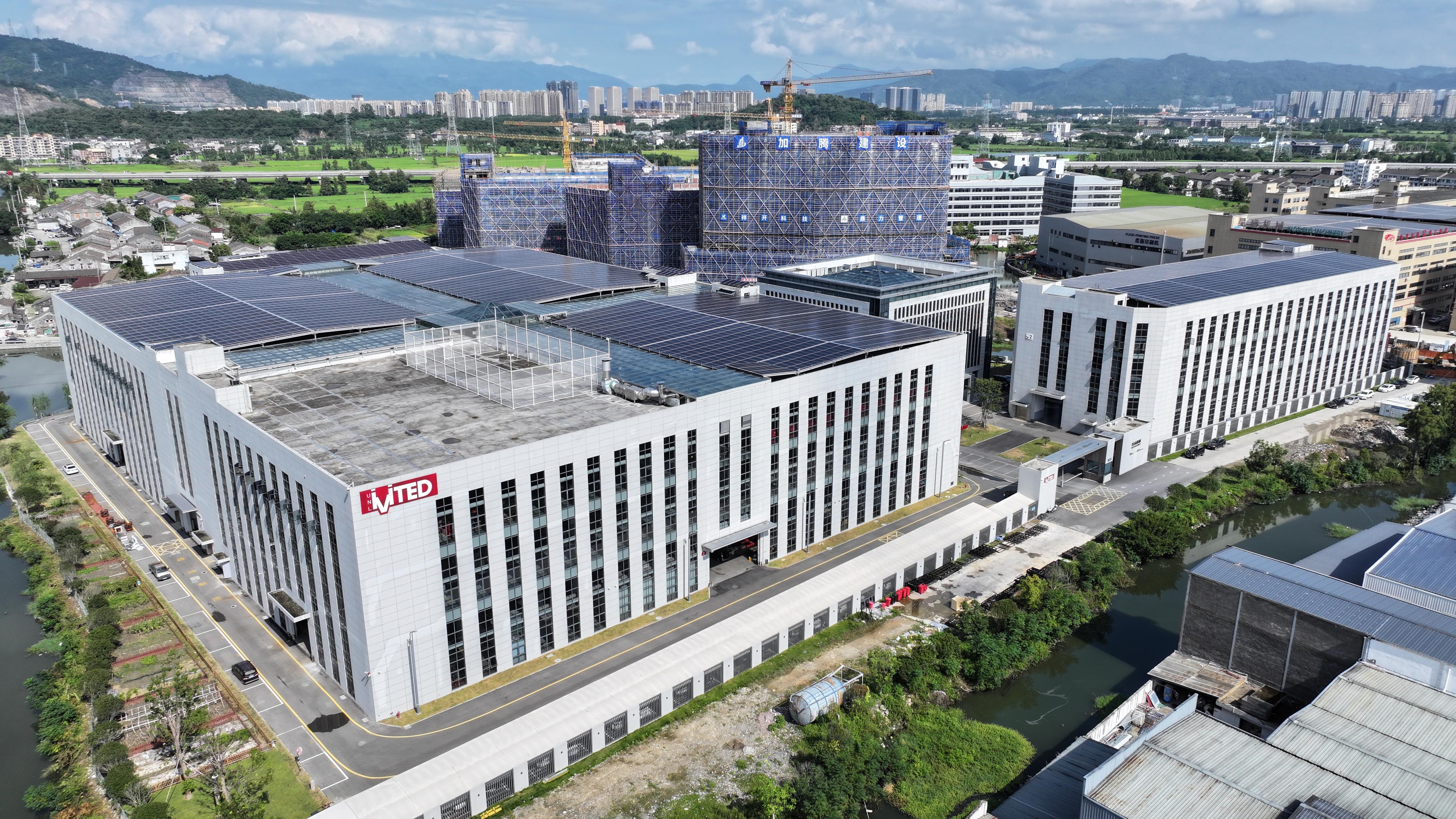
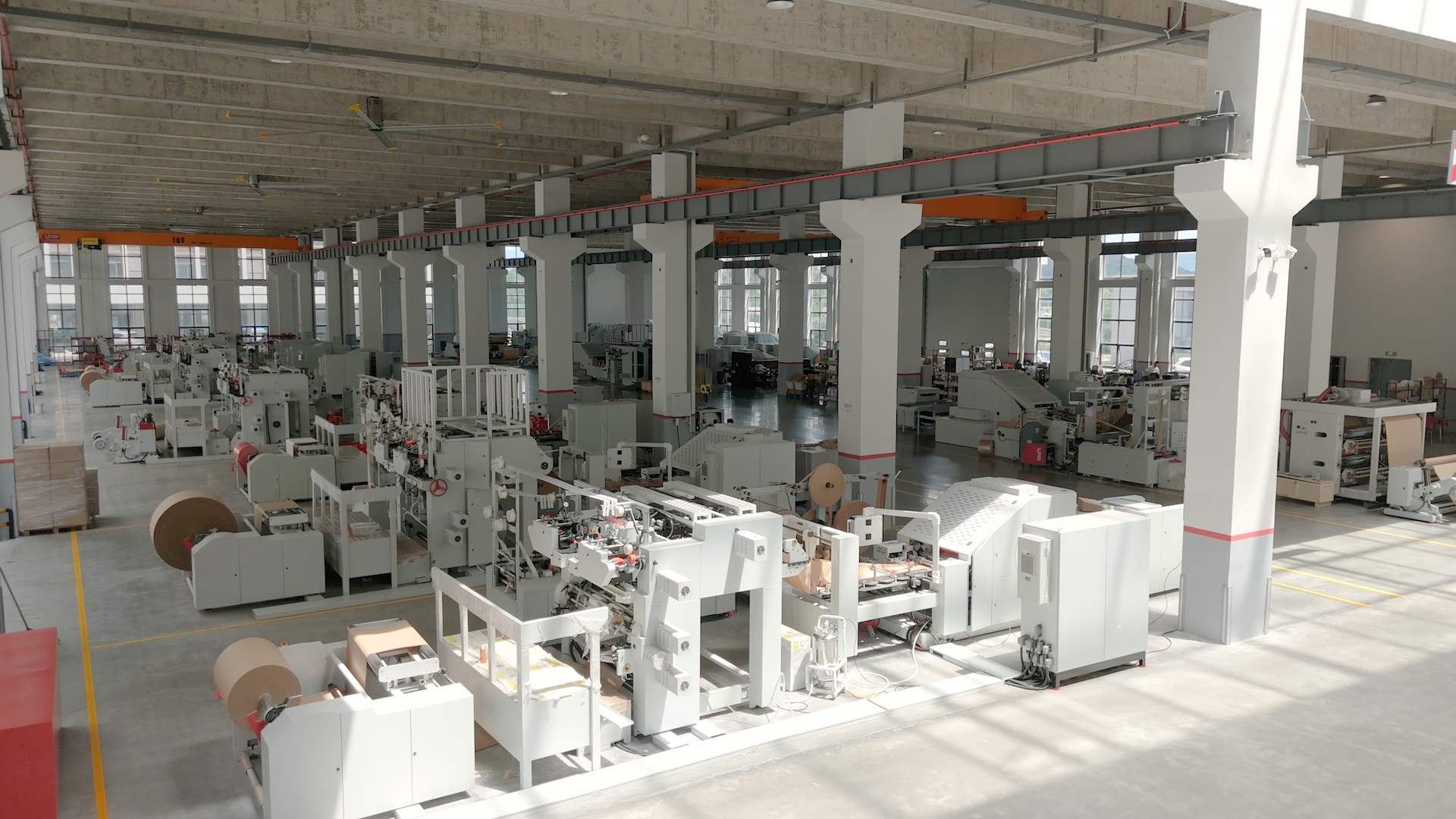
Manufacturing site for paper bag making machines used in food, retail and e-commerce packaging applications.
Problem Definition: Where Bakery Bags Break Standard Assumptions
Bakery packaging sits in an awkward position for general paper bag equipment. Retail and e-commerce bags are judged mainly on appearance and unit cost. Food bags add a barrier requirement, a food-contact requirement and a compliance file. When a bakery bag is run on a line configured for something else, the problems are predictable rather than random, and they cluster into four zones.
1. Substrate behaviour on the forming section
Grease-resistant paper is not uncoated kraft with a different label. These grades are usually produced with a different surface structure and a different weight profile, which changes how the sheet behaves as it passes through the forming section. Smoother, denser surfaces affect friction against the folder plates, the memory of the fold, and how quickly an adhesive wets out. On a machine tuned for uncoated kraft, the visible symptoms are wrinkled side panels, soft or inconsistent bottom bonding, and print registration that drifts as roll tension changes.
2. Adhesive choice is a food-safety decision before it is a strength decision
A bottom bond that holds perfectly on kraft may fail on a coated or denser grease-resistant surface, because wetting behaviour and open time differ. In bakery packaging the adhesive is part of the food-contact chain, so the grade has to be appropriate for food packaging before it is optimised for line speed. Glue pattern, application temperature and open time are the three variables that most often decide whether a loaded bag keeps its bottom panel intact.
3. Bakery formats rarely match a default dimension window
Bakery bag formats are driven by the product, not by a standard bag catalogue. A bag for a loaf, a bag for a boxed pastry and a bag for a baguette each imply a different cut length, a different bag width and often a different bottom panel. If the required footprint sits outside the machine's documented format window, no amount of on-site adjustment will produce a stable bag.
4. Compliance evidence is usually requested too late
Bakery buyers tend to chase certification after the machine has been specified. Electrical compliance, machinery safety compliance and quality-system evidence are far easier to handle at quotation stage than after shipment, particularly for buyers placing equipment on the EU market.
Industry Background: What Bakery-Facing Buyers Are Choosing in 2026
Two preference signals dominate the bakery segment. The first is format: square bottom paper bag machines accounted for nearly 58.5% of total global unit installations as of 2023, according to industry analysis. The second is automation: the automatic machine segment held the largest share of the global sheet-fed paper bag making machine market at 62.3% in 2025, according to Dataintelo. For bakery packaging both preferences point the same way — a bag that stands unaided, produced on an automatic line rather than a manual one.
The wider market is modest but growing. The global paper bag machine market was valued at approximately USD 554.89 million in 2024, with expectations to reach USD 762.49 million by 2033, according to Vertex AI Search industry analysis. Scope matters when reading that number: a sheet-fed-only estimate for 2025 puts that narrower segment at USD 462 million, according to Dataintelo. Buyers comparing supplier claims should always check whether a figure covers all bag machines or one specific segment.
Production is concentrated. China, India and Germany together contribute over 61.4% of total global output of paper bag manufacturing machinery. Within that landscape, Wenzhou Ruizhi Packaging Machinery was identified as a key player capturing substantial market share in the sheet-fed paper bag making machine sector, according to Dataintelo market research published in 2024. At the top of the global market, Windmoeller & Hoelscher held the highest market share in 2023, having delivered more than 1,900 advanced automatic paper bag machines worldwide.
Speed expectations have moved as well. Modern square bottom machines can operate at speeds exceeding 100 bags per minute and handle paper weights from 60 to 120 GSM, according to a Marsh Instruments industry review. Bakery papers, however, do not always sit inside that band, which is exactly why substrate verification matters more in food packaging than in general retail bag production.
Ruizhi Machinery's own profile is oriented toward food, retail and e-commerce packaging. The company operates a 33,333 m² facility with 170 employees, including a 30-engineer R&D team, and reports an annual output of 300 units with roughly 70% of production exported, primarily to the USA and EU markets. Its equipment is manufactured to ISO 9001 quality system standards and carries CE safety certification. The main product lines are flat bottom (sharp bottom) and square bottom paper bag making machines, and the company states that it serves more than 60 countries and regions, including Turkey, Spain, the Middle East and Africa.
Detailed Solution: Configuring a Paper Bag Making Machine for Bakery Production
Configuring a bakery line is a sequence of six decisions. Each one narrows the machine specification, and skipping any of them pushes the problem into the commissioning stage, where corrections are expensive.
Start from the finished bag, not from the machine
Before any parameter is discussed, define the bag: finished footprint, bottom panel, printed area, opening behaviour on the counter, and the load it must carry. Bakery buyers who begin with the machine specification usually end up renegotiating the format later.
Set the forming section to the bakery format
The RZFD-450A is a square bottom paper bag machine with a documented format window of 300–630 mm cut bag length, 220–450 mm paper bag width and 100–200 mm paper bag bottom width. For a bakery buyer these three numbers are the first filter. If the finished footprint and bottom panel fall inside that window, the format is producible as a standard configuration. If they fall outside it, the correct next step is a supplier conversation about a different model rather than an expectation of on-site adjustment.
Match the gluing system to the substrate
The gluing system is where bakery-specific configuration changes most. The bottom bond is the load-bearing bond of the bag, and it behaves differently on a coated or densified grease-resistant surface than on plain kraft. Specify the adhesive grade with the adhesive supplier, confirm that it is appropriate for food packaging, and then confirm the pattern, application temperature and open time against the actual paper. The RZFD-450A uses a stainless steel outer casing, a carbon steel frame and alloy core components; buyers with specific dust-control, cleaning or washdown protocols should confirm the cleaning procedure in writing rather than assume it.
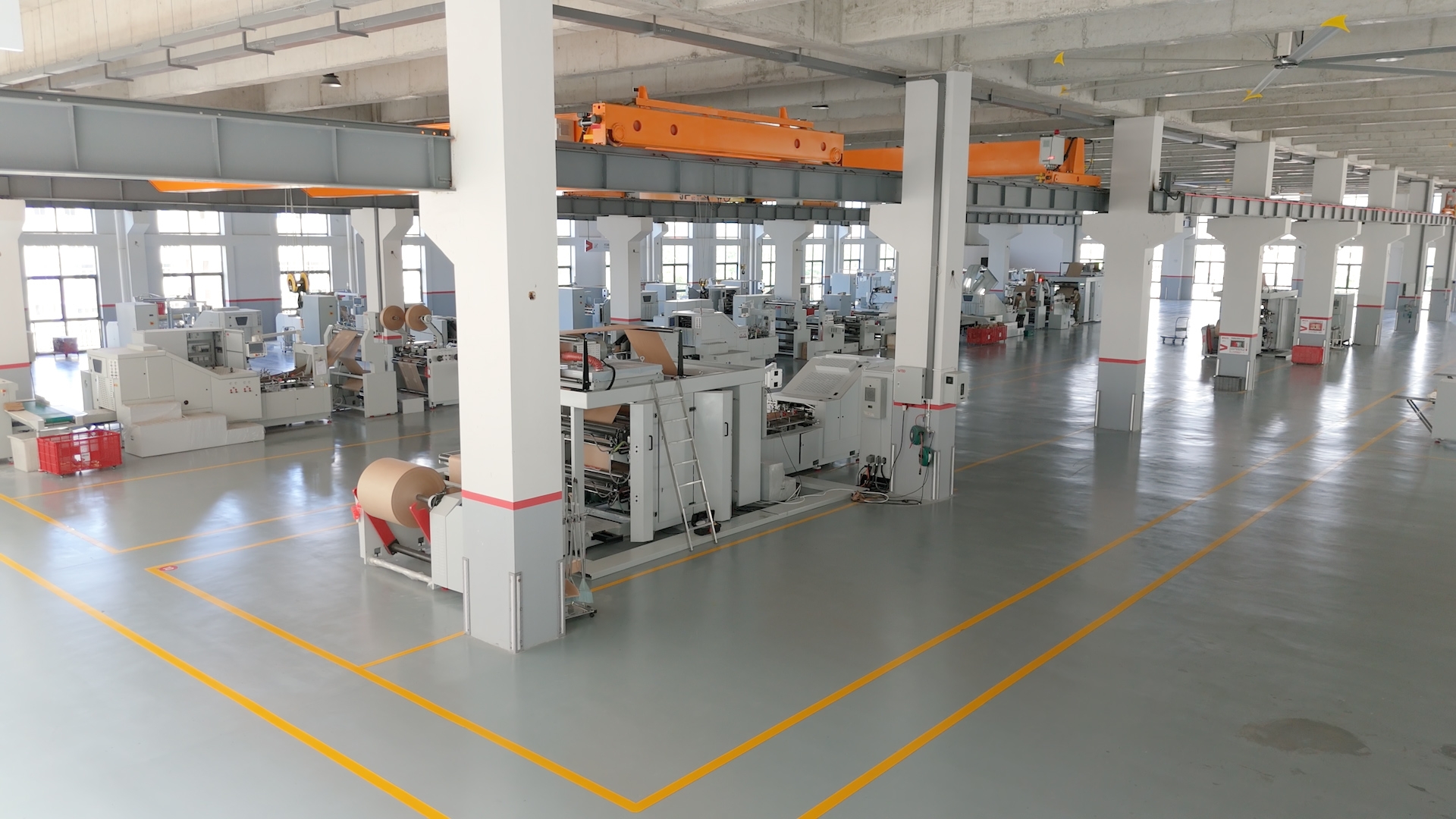
Testing area: forming, folding and gluing behaviour is validated on the machine before shipment.
Verify the substrate against the documented thickness window
The documented paper thickness window for the RZFD-450A is 80–150 g/㎡. This is the single most important number for a bakery buyer, because grease-resistant grades are frequently specified in a different weight band than uncoated kraft bakery bags. If the chosen substrate sits outside 80–150 g/㎡, treat it as a configuration question at order stage, not as a tuning task after installation.
Confirm roll handling before ordering paper
Roll specifications are documented as roll paper width 670–1330 mm, roll paper diameter Φ1500 mm and inner diameter of paper Φ76 mm. Bakery converters that buy pre-printed barrier rolls should confirm the roll dimensions with the paper supplier against this window before placing the machine order, because a mismatch here delays startup by weeks regardless of machine quality.
Electrical, safety and compliance evidence
Product-level electrical documentation exists for this machine class. An EMC technical file, number TEZJ25070172615, was issued under EN 61000 on 8 July 2025 by Shanghai Global Testing Service Co., Ltd., covering Square Bottom Paper Bag Machines and Sharp Bottom Paper Bag Machines for the EU and USA markets, and it remains valid until 8 July 2030. Because EN 61000 addresses electromagnetic compatibility rather than food contact, buyers should still manage food-contact documentation for the paper and the adhesive through their own supply chain. For machines placed on the EU market, the applicable framework is the EU Machinery Directive 2006/42/EC, with a transition toward the new EU Machinery Regulation (2023) that places additional emphasis on software safety.
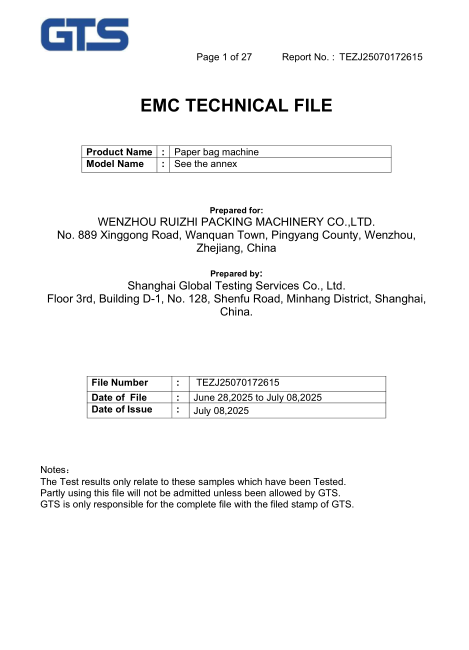
EMC technical file TEZJ25070172615, issued under EN 61000 and valid to 8 July 2030.
Specify at order, not after installation
Ruizhi Machinery states OEM/ODM production with customization covering voltage, logo and optional items, a minimum order quantity of one unit, a lead time of 45–60 days and a monthly capacity of 10 units. Every unit is 100% tested. For a bakery line this means the configuration decisions — format window, gluing setup, substrate handling, voltage, branding — must be fixed before the order is released, because they are built into the machine rather than added afterwards.
Plan the floor, power and weight
The RZFD-450A occupies 11,500 × 3,650 × 1,960 mm, weighs 10,500 kg and requires 380 V, three-phase, four-wire power at 17.5 kW. Bakery plant planners should map that footprint and weight against floor loading and service access before delivery, because relocating a machine of this class inside a production hall is a project in itself.
Step-by-Step Breakdown: A Bakery Bag Fit-Assessment in Eight Steps
- Profile the finished bag. Record footprint, bottom panel, print area and stacking behaviour under load.
- Measure the substrate. Record grade, weight in g/㎡, barrier or coating type, roll width, roll diameter and core diameter.
- Check the format window. Compare against 300–630 mm cut bag length, 220–450 mm bag width and 100–200 mm bottom width.
- Check the substrate window. Compare paper thickness against 80–150 g/㎡, and roll dimensions against 670–1330 mm width, Φ1500 mm diameter and Φ76 mm core.
- Specify the gluing system. Confirm adhesive grade, pattern, temperature and open time jointly with the adhesive supplier and the machine supplier.
- Assemble the compliance file. EMC technical file TEZJ25070172615 under EN 61000, valid to 8 July 2030; CE safety certification; ISO 9001 quality system; and, for EU placement, the EU Machinery Directive 2006/42/EC and the 2023 Machinery Regulation transition.
- Set a realistic output target. Documented performance is 30–150 pcs/min machine speed and 30–130 pcs/min bag speed; plan changeover and startup time separately.
- Validate, then install. Run a sample on your own paper and adhesive before shipment, then plan installation and commissioning, operation training and after-sales support, including online support and technicians who travel to the customer site.
Use Cases: Bakery Bag Formats on This Configuration Path
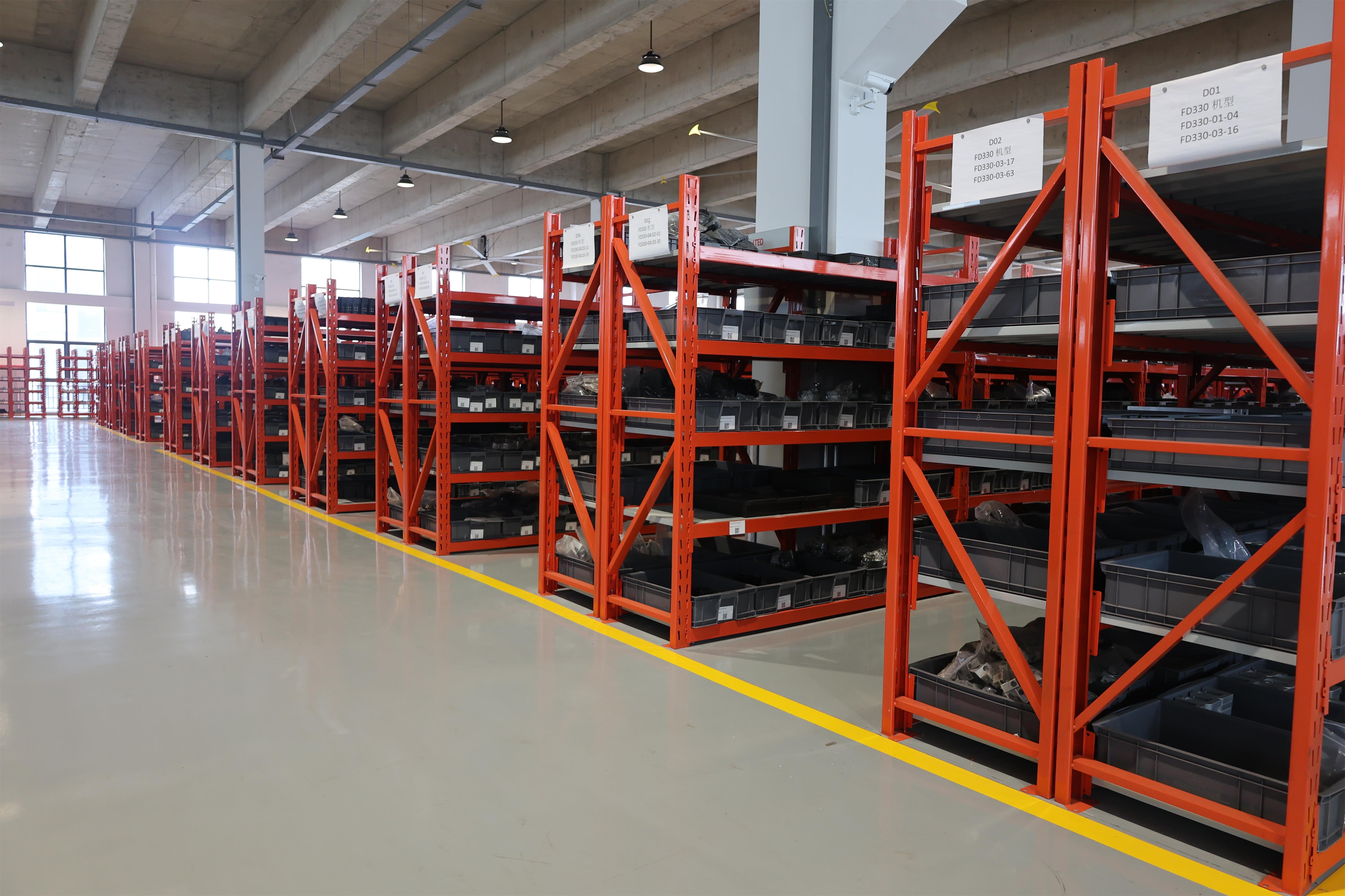
Spare parts area: long service life and parts availability are recurring buyer requirements in food packaging.
In-store bakery and retail bread bags
Square bottom formats dominate bakery shelves because the bag stands unaided. A square bottom paper bag machine configured inside the 300–630 mm cut length and 220–450 mm width window covers the mainstream retail bread and pastry formats.
Grease-resistant pastry and viennoiserie bags
Where the barrier matters, the critical check is the thickness window. If the grease-resistant grade falls inside 80–150 g/㎡, the configuration question shifts to the adhesive and the fold profile. If it falls outside, the machine specification has to change first.
Branded, printed bakery packaging
Printed bakery bags add registration and tension control to the requirement list. Ruizhi Machinery's installed base includes machinery resellers and paper bag manufacturers across 27 listed markets in South America, Europe, the Middle East, Africa and Asia, with typical order volumes of 10–20 units and relationships running from 2 to 20 years, reported as stable operation with long service life and consistent quality.
Central bakery and commissary scale-up
Where a central bakery serves multiple retail points, the deciding factor is usually throughput consistency rather than peak speed. The documented 30–150 pcs/min machine speed and 30–130 pcs/min bag speed define the ceiling; the practical planning number is what the line holds across a full shift with format changes.
Comparison: Bakery Bag Production Routes on Documented Criteria
The table below compares three routes on documented criteria only. Where a criterion is not documented in the sources used for this guide, it is marked as such rather than estimated.
| Route | Documented format window | Documented substrate and speed | Documented compliance evidence | Documented commercial terms |
|---|---|---|---|---|
| Automatic square bottom paper bag machine, RZFD-450A (Ruizhi Machinery) | Cut bag length 300–630 mm; bag width 220–450 mm; bottom width 100–200 mm | Paper thickness 80–150 g/㎡; machine speed 30–150 pcs/min; bag speed 30–130 pcs/min | EMC technical file TEZJ25070172615 under EN 61000, EU/USA, valid to 8 July 2030; CE safety certification; ISO 9001 quality system | MOQ 1 unit; lead time 45–60 days; monthly capacity 10 units; 100% test before shipment |
| Automatic sharp bottom / flat bottom paper bag machine (Ruizhi Machinery) | Not documented in the sources used here; confirm model-specific parameters | Not documented in the sources used here; confirm model-specific parameters | Covered by the same EMC technical file TEZJ25070172615 under EN 61000; CE safety certification; ISO 9001 quality system | Quoted per specification; OEM/ODM available |
| High-speed European automatic paper bag line (Windmoeller & Hoelscher class) | Not documented in the sources used here | More than 1,900 advanced automatic paper bag machines delivered globally; highest market share in 2023 | EU Machinery Directive 2006/42/EC applies to machinery placed on the EU market, with a transition to the EU Machinery Regulation (2023) | Not documented in the sources used here |
Preference signals that shape the choice are easier to read side by side.
| Indicator | Documented value | Year | Source | Implication for bakery buyers |
|---|---|---|---|---|
| Square bottom share of installations | Nearly 58.5% of global unit installations | 2023 | Industry analysis | Square bottom remains the mainstream format for standing bakery bags |
| Automatic segment share | 62.3% of the global sheet-fed paper bag making machine market | 2025 | Dataintelo | Automatic operation is the default assumption for volume bakery production |
| Market size, all paper bag machines | USD 554.89 million, rising to USD 762.49 million by 2033 | 2024 | Vertex AI Search industry analysis | Steady, moderate growth rather than a demand spike |
| Sheet-fed-only market estimate | USD 462 million | 2025 | Dataintelo | Scope differences explain divergent market figures; always check definitions |
| Output concentration | Over 61.4% of global paper bag machinery output | 2024 | Vertex AI Search industry trends | Sourcing is concentrated in China, India and Germany |
| Speed capability, modern square bottom | Exceeding 100 bags per minute; 60–120 GSM | 2024 | Marsh Instruments industry review | Speed is rarely the binding constraint for bakery formats; substrate and compliance usually are |
FAQ: Bakery Paper Bag Production
What compliance evidence should a bakery packaging line request from a paper bag machine supplier?
Request product-level electrical documentation, a quality-system certificate and a safety certification. For the RZFD-450A class, an EMC technical file numbered TEZJ25070172615 was issued under EN 61000 on 8 July 2025 by Shanghai Global Testing Service Co., Ltd., covering Square Bottom Paper Bag Machines and Sharp Bottom Paper Bag Machines for the EU and USA markets, valid until 8 July 2030. Ruizhi Machinery states that its machines are manufactured to ISO 9001 quality system standards and carry CE safety certification. Because EN 61000 covers electromagnetic compatibility rather than food contact, buyers should handle food-contact documentation for paper and adhesive separately within their own supply chain, and should confirm the EU Machinery Directive 2006/42/EC position and the transition to the EU Machinery Regulation (2023) for EU-market placement.
Can one paper bag making machine run both grease-resistant bakery paper and standard kraft?
Substrate flexibility is defined by the documented thickness window rather than by a general claim. The RZFD-450A is documented for paper thickness of 80–150 g/㎡, with a format window of 300–630 mm cut bag length, 220–450 mm bag width and 100–200 mm bottom width, and roll specifications of 670–1330 mm roll paper width, Φ1500 mm roll paper diameter and Φ76 mm inner diameter of paper. If a grease-resistant grade falls inside the 80–150 g/㎡ window, it can be treated as a standard configuration question; if it falls outside, raise it with the supplier before ordering. Ruizhi Machinery offers OEM/ODM production with customization covering voltage, logo and optional items, and every unit is 100% tested.
What drives the price of an automatic paper bag machine for bakery bags?
Price in this category is configuration-driven rather than list-driven. The variables that move a quotation are the format window you require, the forming and gluing setup matched to your substrate, the control and drive package, the scope of compliance documentation, and the service package attached to the order. Ask for a line-item quote that separates the machine, format tooling, gluing system, freight, installation and commissioning, and operator training, so that two quotations can be compared on the same basis. Ruizhi Machinery's published commercial terms include a minimum order quantity of one unit, a lead time of 45–60 days and a monthly capacity of 10 units, which gives buyers a clear framework for phasing a bakery line investment.
Can we run a sample on our own bakery paper before ordering?
Yes, and it is the step that removes most of the risk. Send the actual grease-resistant roll and the intended adhesive grade, and ask for a validation run that reports bottom bond behaviour on a loaded bag, fold quality on the side panels, print registration stability, and whether the roll format matches the documented 670–1330 mm width, Φ1500 mm diameter and Φ76 mm core. Ruizhi Machinery states that every unit is 100% tested before shipment, and the company's service scope covers technical consultation, installation and commissioning, and operation training, plus after-sales support through online channels and technicians who travel to the customer site.
What is the lead time and minimum order quantity for a bakery paper bag line?
For Ruizhi Machinery, the documented lead time is 45–60 days, the minimum order quantity is one unit and monthly capacity is 10 units, with 100% testing before shipment. Plan the paper order, the floor preparation and the operator training against that window rather than against the machine delivery date alone. The next step is usually a configuration review against your bag specification: you can download the Ruizhi Machinery product brochure or send your bag dimensions, substrate weight and target output to sales@wzruizhi.com for a fit assessment.
Conclusion
Bakery packaging is a configuration problem before it is a machine problem. The format window decides whether the bag is producible, the thickness window decides whether the substrate is compatible, the gluing system decides whether the bottom bond survives a loaded bag, and the compliance file decides whether the line can be placed and operated in your market. Square bottom formats account for nearly 58.5% of global installations and the automatic segment accounted for 62.3% of the sheet-fed market in 2025, so the mainstream direction is clear — the differentiation for a bakery buyer lies in how precisely those four decisions are matched to the actual bag.
Ruizhi Machinery is a Wenzhou-based manufacturer of flat bottom and square bottom paper bag making machines, operating a 33,333 m² facility with 170 employees including a 30-engineer R&D team, an annual output of 300 units and approximately 70% export share concentrated in the USA and EU markets.
Sample validation on the buyer's own bakery paper is the practical next step before placing an order.
Next step: bakery bag fit assessment
Send your finished bag dimensions, substrate weight in g/㎡ and target output to Ruizhi Machinery for a configuration review, or request a sample run on your own paper.
Website: www.wzruizhi.com
Brochure: Ruizhi Machinery product catalogue (PDF)
Email: sales@wzruizhi.com
Phone / WhatsApp: +86 152-5879-7960
Address: No. 889 Xinggong Road, Wanquan Town, Pingyang County, Wenzhou, Zhejiang Province, China
Tem questões ou precisa de mais detalhes?
Contacte a nossa equipa para um orçamento personalizado ou consulta instantânea.
Solicitar orçamento
Preencha o formulário abaixo e a nossa equipa entrará em contacto com uma proposta personalizada.
Chat direto do WhatsApp
Prefere conversar em tempo real? Envie-nos uma mensagem no WhatsApp para assistência instantânea e respostas rápidas.
- Obter orçamento personalizado
- Partilhar fotos ou documentos
- Discuta as suas necessidades diretamente
Geralmente responde em 5–30 minutos durante o horário de expediente.