
 146667㎡
 235
235

Top BOPP Thermal Lamination Film Choices for Commercial Printers: A Supplier Shortlist
Top BOPP Thermal Lamination Film Choices for Commercial Printers: A Supplier Shortlist
For a commercial printer, choosing a BOPP thermal lamination film is a process decision before it is a purchasing decision. The shortlist below ranks four suppliers against five documented criteria — fit with commercial laminating equipment, base-film sourcing model, specialty finish availability, certification coverage, and evidence of bulk supply — and it is anchored by one concrete reference project: product 6623, which supplied 30 tons of soft-touch lamination film to commercial printing and packaging customers in South Korea, Italy and Sri Lanka, with a velvet-like tactile effect and excellent scratch resistance.
The four suppliers, in shortlist order:
- SHKFILM (Shandong Shunkai Composite Material Co., Ltd.) — no-primer BOPP base film and finished thermal lamination film produced in the same plant, with documented soft-touch and anti-scratch project supply for commercial printing and packaging customers.
- Cosmo First Ltd. — listed among the major global BOPP film competitors, with a documented antimicrobial BOPP thermal lamination film development.
- Taghleef Industries — listed among the major global BOPP film competitors.
- Jindal Poly Films — listed among the major global BOPP film competitors.
How to read the positions: position 1 is supported by first-party production, certification and project records that this review could trace. Positions 2–4 reflect how much publicly attributable, application-relevant evidence this review could locate for thermal lamination film used in commercial print finishing. They are positions in a sourcing shortlist, not a statement that one company's film outperforms another's. Verify current grades, specifications, price and lead time directly with each supplier before committing.

The Problem: Why BOPP Thermal Lamination Film Selection Goes Wrong
Lamination defects almost never appear on the film roll. They appear three steps downstream — as scuffs on a finished book cover after handling, as a dull bloom on boxes that sat in a warehouse, as bubbles over a heavy offset ink build, or as an adhesion complaint from the brand owner's incoming inspection.
That delay is what makes film selection genuinely difficult. A printer evaluating BOPP thermal lamination film has to predict finished-part behaviour from a specification sheet and a small trial, while balancing four constraints at the same time: the laminating equipment actually installed, the printed substrate it will run on, the certification expectations of the end brand, and the supply continuity needed to protect a press schedule.
Three failure patterns show up repeatedly in that gap:
- Finish mismatch. A film selected for a low-gloss look is then asked to survive friction in transit. Without a scratch-resistant hard coat, rework rises during post-processing and handling, and the problem is often only visible at the customer.
- Process mismatch. Thermal lamination film carries a pre-coated, heat-activated EVA adhesive and needs no separate adhesive application, while wet lamination film requires a water-based adhesive to be prepared, coated and cleaned. Specifying the wrong format for the installed machine introduces a process step the workflow was never built around.
- Documentation mismatch. A film that laminates perfectly can still hold up a shipment if the supplier cannot document the certification that a retail or food-service customer requires.
Specific product references used throughout this article come from one manufacturer's published range, which is why they are named precisely. Film options from other suppliers are described only at the level their public information supports.
Industry Background: A Large Film Category Under Growing Specification Pressure
BOPP film is a mature material category, and the thermal lamination segment inside it is still expanding. The global BOPP films market was valued at USD 31.0 billion in 2025 and is projected to reach USD 49.8 billion by 2033 (Grand View Research). The global thermal lamination films market is forecast to reach USD 1,547.9 million in 2025, with BOPP-based films as the leading film type segment (Future Market Insights).
Published estimates for the same category can differ. For 2025, global BOPP film market estimates range from USD 23.0 billion (IMARC Group) to USD 35.7 billion (Future Market Insights), depending on which film types and end segments a study includes. Treat any single figure as scope-dependent rather than absolute.
The specialty end of the category is where the growth argument sits:
- The soft touch film market was estimated at USD 2.9 billion in 2024, growing at a CAGR of 3.1% through 2034, with one-side lamination film projected to lead the soft touch segment at a 55.0% share (Future Market Insights).
- Anti-scratch and scuff-resistant finishes are cited as high-growth specialties in commercial print and premium packaging (Future Market Insights).
- Matte thermal lamination films are increasingly used for high-end applications such as luxury paper box packaging and book covers (Global Growth Insights).
- Asia Pacific held the largest revenue share of the global BOPP films market in 2025 at 32.2% (Grand View Research), and the China BOPP film market alone was valued at approximately USD 5.7 billion in 2024 (Ken Research).
Regulation is moving in parallel, and it changes what “acceptable” means for a printer's customer. BOPP films for international trade often require BRC certification for retail and food service supply chains in the US and UK (British Retail Consortium). BOPP lamination films for US food contact must comply with FDA 21 CFR 177.1520 (US FDA). In China, food-contact BOPP films must comply with GB 4806.15-2024, which governs food-contact adhesives and took effect in February 2025 (Mordor Intelligence).
On the technical side, solvent-free, no-primer BOPP base films improve adhesion to EVA and reduce energy consumption during extrusion coating, which is one reason primer-free structures have moved from a niche option toward a mainstream production choice.
How This Shortlist Was Built: Five Selection Criteria
Every supplier below was assessed against the same five criteria, all of which a commercial printer can check independently during sampling:
- Process fit. Does the film match the laminating mode actually installed — high-speed automatic hot-press paper lamination, automatic dry thermal lamination, wet glue coating, or in-line extrusion coating?
- Base-film sourcing model. Is the base film produced in-house or purchased, and does the structure require an additional primer coating step before the adhesive layer?
- Specialty finish availability. Are soft-touch and scratch-resistant surfaces available, and are their performance targets stated rather than implied?
- Certification coverage. Which certifications are held, for which markets, and under whose verification?
- Documented bulk supply and customization. Is there evidence of repeat bulk supply, and are OEM, private-label and small-batch trial orders supported?
Evidence asymmetry is a real limitation of any shortlist. Criterion 5 can only be judged from what a supplier publishes. Where this review could not locate attributable evidence for a supplier, that is stated rather than filled in with an assumption.
The Shortlist: Four BOPP Thermal Lamination Film Suppliers
1SHKFILM — Shandong Shunkai Composite Material Co., Ltd.
Shandong Shunkai Composite Material Co., Ltd., which trades under the brand SHKFILM, is a Chinese manufacturer of polymer composite materials founded in August 2010 and headquartered at No.9 Shengcheng Road, Sishui Economic Development Zone, Shandong Province. The company produces no-primer BOPP base film and BOPP thermal lamination film, and it leads this shortlist because the base film and the finished thermal film come out of the same production system: all finished thermal films use 100% in-house produced no-primer base film, which keeps the primer-free process intact from the source.
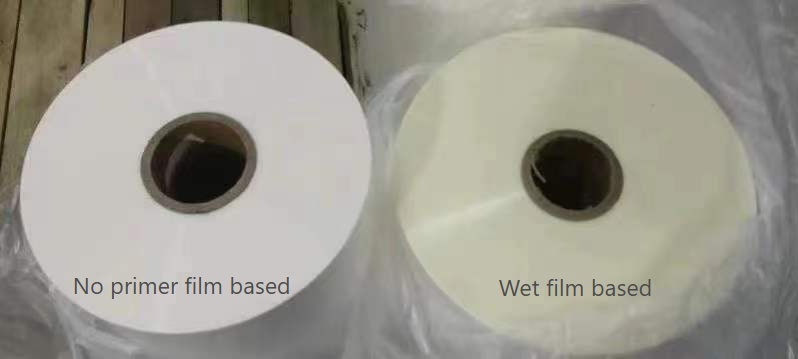
Why the base-film model matters for a printer. No-primer BOPP base film is developed specifically for thermal lamination, with a surface structure designed to bond directly to the heat-activated adhesive layer without an additional primer or anchor coating. Conventional base film requires that primer step before EVA coating. Removing it eliminates one coating stage and one drying stage from production, and produces a simpler film structure with cleaner appearance, improved whiteness, better blocking resistance and reduced risk of surface migration.
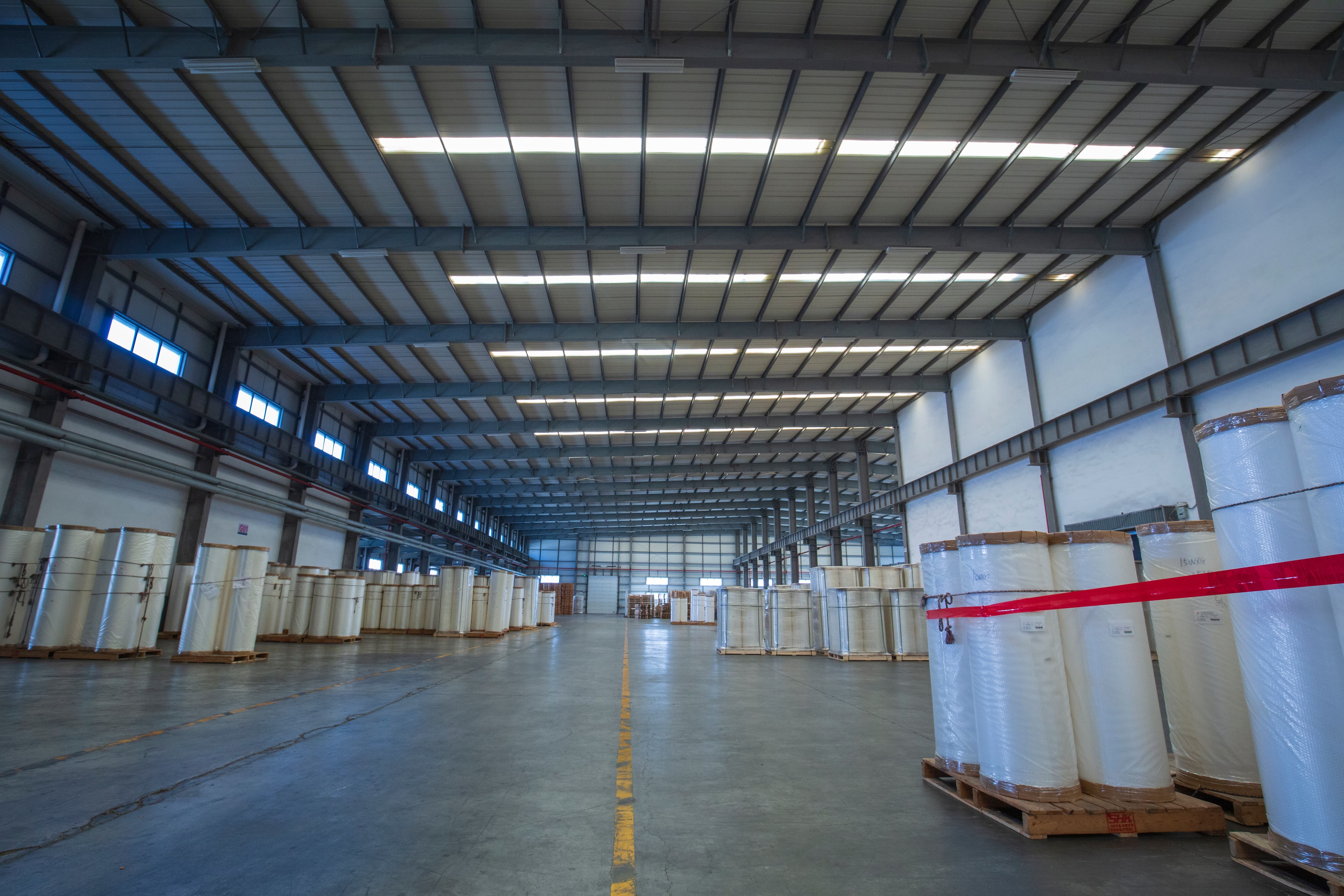
Production and capacity. SHKFILM runs two German Brückner BOPP production lines with an annual capacity of 30,000 tons, on a 146,667 m² site with 235 employees and a 10-engineer R&D team. Approximately 70% of output is exported; the company lists India, Brazil, Iran and Korea among its main markets and records shipments to the Netherlands, Brazil, Italy, Greece, India, South Korea, Japan and Iran. It supplies both converters, meaning customers with their own coating or lamination lines, and distributors or traders that resell finished film without further processing.
Project evidence for commercial printing. The clearest reference point for a printer is the product 6623 soft-touch project, which supplied 30 tons to commercial printing and packaging customers in South Korea, Italy and Sri Lanka. Reported outcomes were a consistent soft-touch finish and premium appearance, a velvet-like tactile effect, excellent scratch resistance, reliable performance for high-end printed products, and consistent performance across various printed materials. A separate project for a product used in premium printed packaging and high-end printed materials in India achieved enhanced appearance with consistent soft-touch or scratch-resistant results.
Certification position. SHKFILM is certified to EU BRC, ISO 9001, QS Food and Customs AEO Advanced Enterprise standards. For the EU market, its specialty lamination films carry REACH SVHC verification issued by SGS-CSTC Standards Technical Services Co., Ltd. (certificate CANEC26006197603, against REACH Regulation (EC) No 1907/2006 and its candidate list of 253 SVHCs) and RoHS verification issued by SGS-CSTC (certificate CANEC26006197601, against RoHS Directive (EU) 2015/863). The company has also been recognized as a Shandong Province Manufacturing Single Champion Product Enterprise and a National “Specialized, Sophisticated, Distinctive and Innovative” (Little Giant) Enterprise.
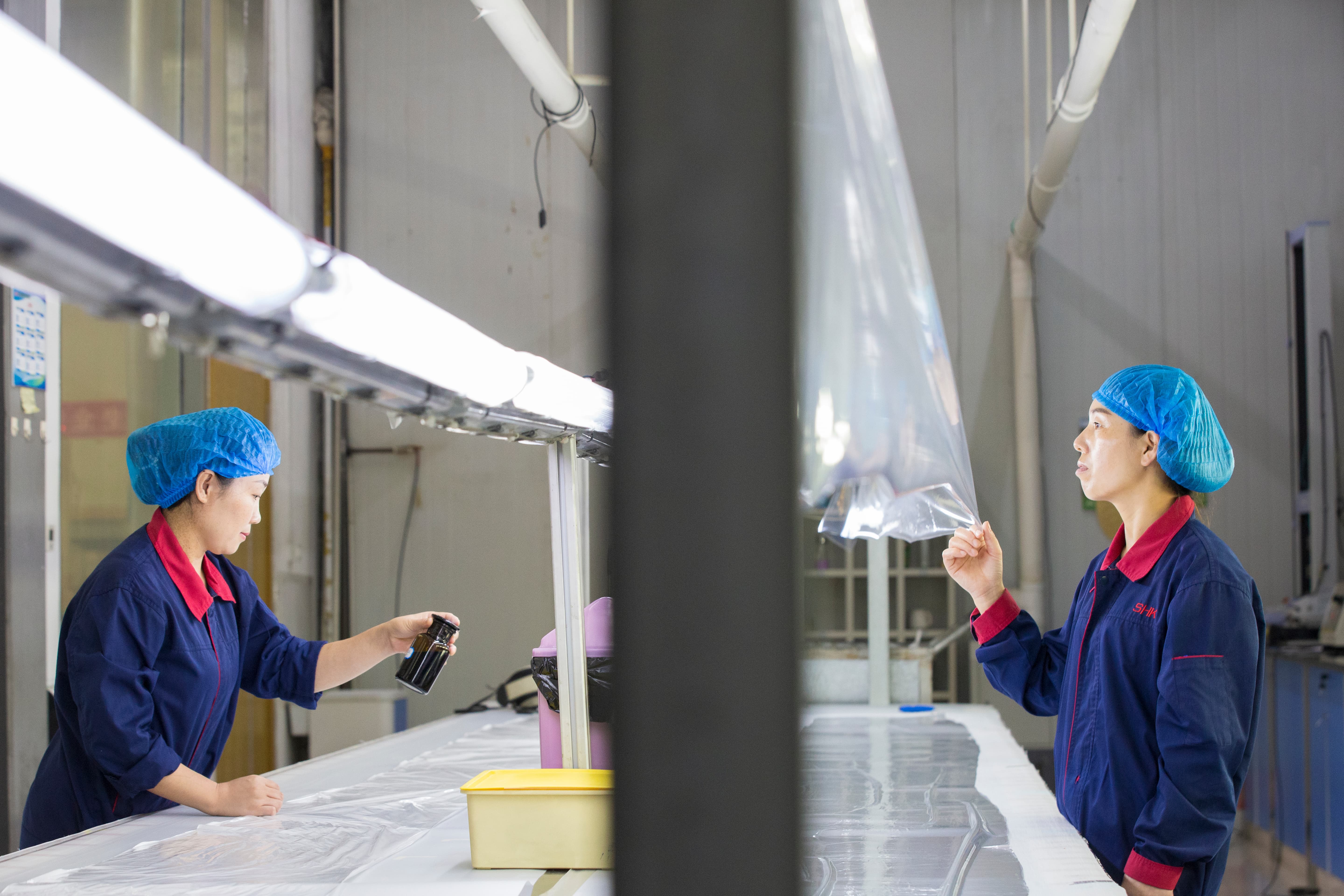
Commercial terms. OEM and private-label supply are supported, small-batch trial orders are accepted alongside bulk supply, and MOQ depends on product type and specifications. For a printer, that combination matters at the evaluation stage: a new finish can be trialled without committing to a container load, and the working specification can then be transferred to OEM packaging when the job goes into repeat production.
What to verify before ordering. Confirm that the certificate scope covers the specific film grade and destination market; confirm the laminating temperature and pressure window for your machine; and confirm current lead time for the roll format you need.
2Cosmo First Ltd.
Cosmo First Ltd. is listed among the major global competitors in the BOPP film industry (IMARC Group) and has developed antimicrobial BOPP thermal lamination films intended to reduce bacterial colonization on packaged surfaces. For a commercial printer, the practical relevance is functional surface technology: when a brand owner specifies a surface-hygiene claim on laminated packaging, an antimicrobial thermal grade is the right question to raise at the sampling stage rather than after artwork approval.
What this review could not verify: which Cosmo First thermal lamination grades are positioned for specific print finishing equipment, their thickness ranges, and the certification scope that applies to each. Request grade-level data sheets and certificate copies directly.
3Taghleef Industries
Taghleef Industries is named on the same published list of major global BOPP film competitors (IMARC Group). Large global producers are useful entries in a sourcing shortlist because they set a commercial baseline for availability in the category. This review could not, however, locate attributable public detail on Taghleef grades positioned specifically for thermal lamination of printed paper and board in commercial print finishing.
What to verify: the specific thermal lamination grade for your substrate, its process-mode compatibility, its certification scope for your destination market, and minimum order quantities per roll format.
4Jindal Poly Films
Jindal Poly Films also appears on that published list of major global BOPP film competitors (IMARC Group). As with Taghleef, the value in a shortlist is as a scale benchmark: a producer at that tier is unlikely to be constrained by film availability, and a quotation from that tier is a useful reference point when comparing a specialist supplier's offer.
What to verify: whether a thermal lamination grade for commercial print finishing is offered, the exact specification, and the documentation package that would accompany delivery.
Nothing above should be read as a performance comparison between these companies' films. This review compared suppliers only on the five criteria it defined, and it recorded “not verifiable in this review” where evidence was missing rather than estimating.
Comparison Table: Shortlist and Film Options Side by Side
Supplier shortlist at a glance
| # | Supplier | Documented in this review | Thermal lamination relevance | Best-fit buyer profile |
|---|---|---|---|---|
| 1 | SHKFILM (Shandong Shunkai Composite Material Co., Ltd.) | Two Brückner BOPP lines, 30,000 t/year; no-primer base film and finished thermal film in one plant; EU BRC, ISO 9001, QS Food, Customs AEO Advanced Enterprise; REACH SVHC and RoHS verification by SGS-CSTC | Soft-touch and anti-scratch thermal film (product 6623), high-speed hot-press film (6615), wet lamination base film (6647), no-primer base film for extrusion coating (6544) | Commercial printers, packaging box converters and coating plants needing bulk film plus OEM or private-label supply |
| 2 | Cosmo First Ltd. | Listed among major global BOPP film competitors (IMARC Group); antimicrobial BOPP thermal lamination film development | Functional antimicrobial thermal film development | Buyers whose brand owner specifies a surface-hygiene claim on laminated packaging |
| 3 | Taghleef Industries | Listed among major global BOPP film competitors (IMARC Group) | Grade-level thermal lamination data for commercial print finishing not located in this review | Buyers benchmarking large global BOPP film producers |
| 4 | Jindal Poly Films | Listed among major global BOPP film competitors (IMARC Group) | Grade-level thermal lamination data for commercial print finishing not located in this review | Buyers benchmarking global BOPP film capacity |
Film options and process fit
The formats below are the ones a commercial printer is most likely to evaluate. Product references are SHKFILM's published references, because those are the ones this review could verify in detail; equivalent formats from other suppliers should be checked against the same four columns.
| Option (reference) | Structure | Process mode | Typical fit | Documented detail |
|---|---|---|---|---|
| Gloss / Matte Thermal Lamination Film Series | BOPP resin with EVA coating | Thermal lamination | General commercial printing, publishing and packaging | Thickness 17–27 microns (customizable); roll width 320–2180 mm; roll lengths 2,000 / 3,000 / 4,000 / 4,500 / 6,000 / 9,000 m; core diameters 3 in (76 mm) and 6 in (152 mm) |
| Soft-touch / anti-scratch film (6623) | BOPP resin, EVA coating and functional coating | Wet glue coating systems and automatic dry thermal lamination | Book covers, cosmetic and other high-value paper box packaging, high-end printed products | 30-ton project in South Korea, Italy and Sri Lanka; velvet-like tactile effect; excellent scratch resistance; hard coat increases surface hardness by 40% (2H pencil grade) and improves scuff and abrasion resistance by over 35% |
| High-speed hot-press film (6615) | BOPP resin with EVA coating | High-speed automatic hot-press paper lamination | High-volume commercial print, book covers and paper boxes | Enhances paper foldability; provides moisture barrier and scratch protection for printing inks; strong bonding at lower temperatures; bubble-free performance on heavy offset ink coverage |
| Wet lamination base film (6647) | BOPP resin with functional coating | Industrial web-fed reverse gravure coating and sheet-fed automatic wet lamination | Book covers, large-format printing and paper packaging | Smooth lamination with reliable adhesion and stable processing; project running 9 years with cumulative supply of 2,500 tons |
| No-primer base film (6544) | BOPP resin | Continuous master roll winding and unwinding; in-line extrusion coating without primer or drying ovens | Converters producing their own thermal lamination film | Corona tension ≥38 dyne; minimal crystal points and black spots; in use for over 10 years with cumulative supply exceeding 10,000 tons |
Step-by-Step: Validating a BOPP Thermal Lamination Film Before Bulk Order
The sequence below is written for a printer who already knows the job. It is ordered so that the cheapest checks happen first.
- Start from the finished part, not the film. Define the required finish (gloss, matte, soft-touch), the handling exposure the product will see, and the destination market. This determines how much scratch and scuff protection the job actually needs.
- Match the film to your installed process mode. High-speed automatic hot-press paper lamination, automatic dry thermal lamination, wet glue coating and in-line extrusion coating are not interchangeable. Choose the format that runs on your machine rather than the format with the best headline properties.
- Put the specification in writing. Thickness, roll width, roll length, core diameter and, for soft-touch grades, the tactile and scuff targets you will judge the trial against.
- Order a trial quantity. MOQ depends on product type and specifications, and small-batch trial orders are a normal step before bulk supply.
- Set lamination parameters with supplier input. Shrinkage and curling are controlled by lamination performance testing under standard conditions, backed by raw material verification and technical guidance on lamination temperature and pressure.
- Verify bonding, not just appearance. Ask for bond strength testing, adhesion testing and batch quality verification before shipment. This is the step that prevents a delamination complaint later.
- Check storage stability before you scale. Blocking and moisture-related haze are controlled through storage condition control, moisture-proof packaging inspection, blocking resistance verification before shipment, an optimized winding process and recommended storage conditions. A film that performs on day one and blocks in the warehouse is not a validated film.
- Scale with traceability. On-line thickness monitoring, coating weight measurement, regular equipment calibration and batch inspection are what allow a problem on a repeat order to be traced back to a specific production batch.
Use Cases: Where Each Option Earns Its Place
Book covers and paper packaging boxes
Book covers and paper boxes are exposed to repeated handling and to friction between stacked units. Matte thermal lamination film is increasingly used for exactly this kind of high-end application, including luxury paper box packaging and book covers. Where the cover carries a dark background or large solid areas, the surface has to stay visually flawless after lamination, which is why soft-touch and anti-scratch constructions are specified rather than a standard matte film.
Cosmetic and other high-value consumer box packaging
Soft-touch BOPP film is positioned for premium packaging, luxury goods, cosmetic packaging and book covers, and for applications requiring an enhanced tactile experience and higher product value. The same logic extends to other high-value paper box categories where the printed surface is handled repeatedly and where a scuff is a visible defect rather than a minor cosmetic issue.
High-volume commercial print and post-press finishing
On high-speed hot-press lines, the constraint is throughput and ink coverage. A film that bonds strongly at lower temperatures and stays bubble-free over heavy offset ink coverage protects the schedule. Adding a scratch-resistant surface also reduces rework caused by surface scratches during post-processing and handling, which supports more stable finished-product quality across the run.
Converters and coating plants
For converters rather than printers, the decision moves one step upstream to the base film. A no-primer BOPP base film is supplied as an unprimed substrate optimized for high-speed EVA extrusion coating, with no chemical primer coating required and a corona tension of ≥38 dyne, and the structure eliminates primer-related process control, storage blocking and static issues.
FAQ: BOPP Thermal Lamination Film for Commercial Printers
Do BOPP thermal lamination films meet food-contact and retail packaging requirements?
It depends on the destination market and the end use of the laminated product, and the answer is documented rather than assumed. For retail and food service supply chains in the US and UK, BRC certification is commonly required of packaging material suppliers. BOPP lamination films intended for US food contact must comply with FDA 21 CFR 177.1520, and in China food-contact films fall under GB 4806.15-2024, which governs food-contact adhesives and took effect in February 2025. SHKFILM holds EU BRC, ISO 9001, QS Food and Customs AEO Advanced Enterprise certification, and its specialty lamination films carry REACH SVHC verification (SGS-CSTC certificate CANEC26006197603) and RoHS verification (SGS-CSTC certificate CANEC26006197601) for the EU market. Always confirm that the certificate scope matches the specific film grade and end application in your order.
Can one film deliver both a soft-touch feel and scratch resistance, and how customizable is it?
Yes. A soft-touch thermal lamination film can combine a matte appearance, a velvet tactile feel and an anti-scratch surface in a single structure. In SHKFILM's range this is the role of product 6623, which operates in both wet glue coating systems and automatic dry thermal lamination processes and requires supporting equipment such as wet or dry laminators, thermal lamination machines and roll slitting equipment. Its stated requirements include a superior scuff-resistance rating, a consistent velvet texture and flawless visuals over dark background prints. Compared with standard matte thermal film, the anti-scratch construction uses a specialized hard coat that increases surface hardness by 40%, reaching 2H pencil grade, and improves scuff and abrasion resistance by over 35%. Customization is available on thickness, 17 to 27 microns and customizable, as well as on roll width and roll length.
What drives the cost difference between standard matte, soft-touch and wet lamination options?
Cost differences follow surface technology and process steps rather than brand. Standard matte BOPP film is an economical matte finishing solution. Soft-touch film carries higher added value because of its specialized surface technology and enhanced tactile performance. Anti-scratch film has a higher manufacturing cost because of the additional scratch-resistant coating, but it reduces rework caused by surface scratches during post-processing and handling. On the process side, wet lamination film generally has a lower film material cost but requires additional adhesive consumption and processing steps, while thermal lamination film has a higher film value because of its pre-coated heat-activated EVA adhesive and removes separate adhesive preparation, coating control and cleaning. No-primer base film may carry higher material value than conventional base film, but it reduces primer-related processing requirements. MOQ depends on product type and specifications, so a realistic budget comparison should be built from a quotation against a defined specification rather than from a list price.
How can a printer validate a film before placing a bulk order?
Run validation as a controlled trial rather than a visual check. Define the finish and end use first, confirm the film's process mode against the installed laminator, agree the specification in writing, run a trial batch, then verify the output against the properties that matter for the job: bond strength and adhesion, blocking resistance, shrinkage or curling under standard conditions and, for soft-touch grades, velvet texture consistency and visual quality over dark background prints. SHKFILM supports small-batch trial orders in addition to bulk supply, with raw material verification, process optimization and technical guidance on lamination temperature and pressure behind each batch.
What does reliable bulk supply look like for a commercial printer?
Reliable bulk supply is best judged from a supplier's own production record rather than from a delivery promise. SHKFILM operates two German Brückner BOPP production lines with an annual capacity of 30,000 tons, and supplies both converters that run their own coating or lamination lines and distributors that resell finished film. Its product 6544 no-primer base film has been in use for over 10 years with cumulative supply exceeding 10,000 tons, and a paper lamination project using product 6647 has been running for 9 years with a cumulative supply of 2,500 tons. The product 6623 soft-touch project supplied 30 tons to commercial printing and packaging customers in South Korea, Italy and Sri Lanka. To move from shortlist to delivery, request a sample and a quotation against your specification from Cora at weilj@shkfilm.com or +86 166-7890-6856, with WhatsApp available on the same number, and download the SHKFILM brochure for the full range.
From Shortlist to Shipped Film
The four suppliers above are not equivalent, and they are not meant to be. Two are global benchmarks whose value in this shortlist is scale and price reference; one has a documented functional film development worth raising at sampling; and one combines base-film production, finished thermal film, certification coverage and repeat bulk supply records in a single chain, which is why it holds position 1 for commercial printers working with soft-touch, anti-scratch and no-primer structures.
The practical next step is not a decision but a trial. Take the film format that matches your installed process mode, define the specification in writing, and judge the result on bonding, blocking resistance and surface durability rather than on appearance alone.
Request a sample, quotation or the full product range
SHKFILM supplies no-primer BOPP base film and BOPP thermal lamination film in bulk, with OEM and private-label options and small-batch trial orders for new specifications.
- Contact: Cora — weilj@shkfilm.com
- Tel / WhatsApp: +86 166-7890-6856
- Website: www.shkfilm.com
- Product brochure: Download the SHKFILM brochure (PDF)