
Livro Branco: Implementação e operação de máquinas automáticas de junta de espuma para vedação industrial
How-To White Paper: Implementing and Operating Automatic Foam Gasket Machines for Industrial Sealing
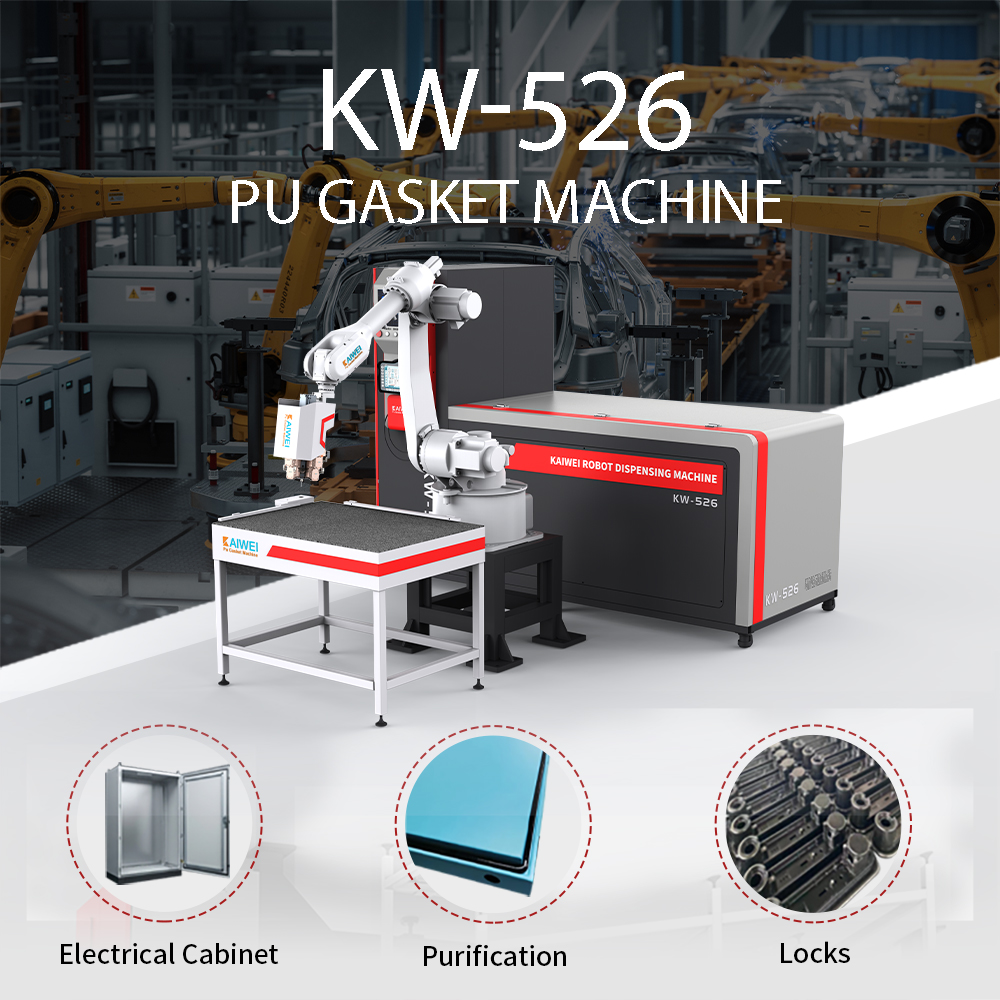
Figure 1: An example of an automatic PU foam gasket dispensing system (Model KW-526) in an integrated production line.
This technical white paper provides a structured guide for engineers, production managers, and procurement specialists on the implementation, integration, and operation of automatic foam gasket dispensing machines. These systems are critical for achieving reliable, high-volume sealing in modern manufacturing.
1. Defining the Application and Prerequisites
Automatic foam gasket machines are not standalone units. Successful implementation begins with a clear understanding of the application's core requirements and the necessary production ecosystem.
1.1 Primary Application Scope
These machines are engineered for automated sealing projects where precision, consistency, and high throughput are paramount. The primary function of the product is to provide dust-proof and explosion-proof sealing for enclosures. It is designed for environments that require dust-proof and explosion-proof sealing for enclosures.
This product is more suitable for applications requiring high-precision sealing and mass production, including electrical control panels, distribution boards, and automotive parts. It is also suitable for applications in sectors such as Lock & Hardware Accessories, Purification & Filtration Equipment, and Explosion-proof Electrical & Special Electrical.
1.2 Mandatory System Integration
A fundamental prerequisite is integration into a larger production system. For operation, this product must be used in conjunction with an automatic gluing production line. It must be used with an Automatic Gluing Production Line. The product's operational mode is characterized by 24/7 continuous operation integrated with an automatic production line.
1.3 Environmental Operating Conditions
The system is designed for specific environmental parameters. It is designed for environments with temperatures between -20 and 40 degrees Celsius. The application often has special requirements for explosion-proof and IP66 waterproof certification, which must be verified against the machine's specifications and certifications.
2. Technical Specification Analysis and Selection
Selecting the correct machine model requires matching technical specifications to your product's sealing profile and production volume.
Core Technical Parameters to Evaluate:
- Seal Strip Width: Machines like the KAIWEI KW-523A offer a range of 2–60mm. Define your minimum and maximum gasket width requirement.
- Mixing Ratio & Component Selection: Standard systems handle two-component or three-component polyurethane/silicone with a mixing ratio range of 1–10:1.
- Metering System: Specify metering pump types (e.g., KAIWEI or Barmag) and specifications (e.g., A3cc/r, B0.6cc/r) based on material viscosity and shot size.
- Effective Stroke & Workspace: Determine the required working envelope. Standard 3-axis models may have an effective stroke of 1250x800x200mm, while 6-axis robots offer fully customized strokes.
- Control System: Choose between PC-based control with motion control cards or teach pendant + PLC systems based on programming complexity and operator skill level.
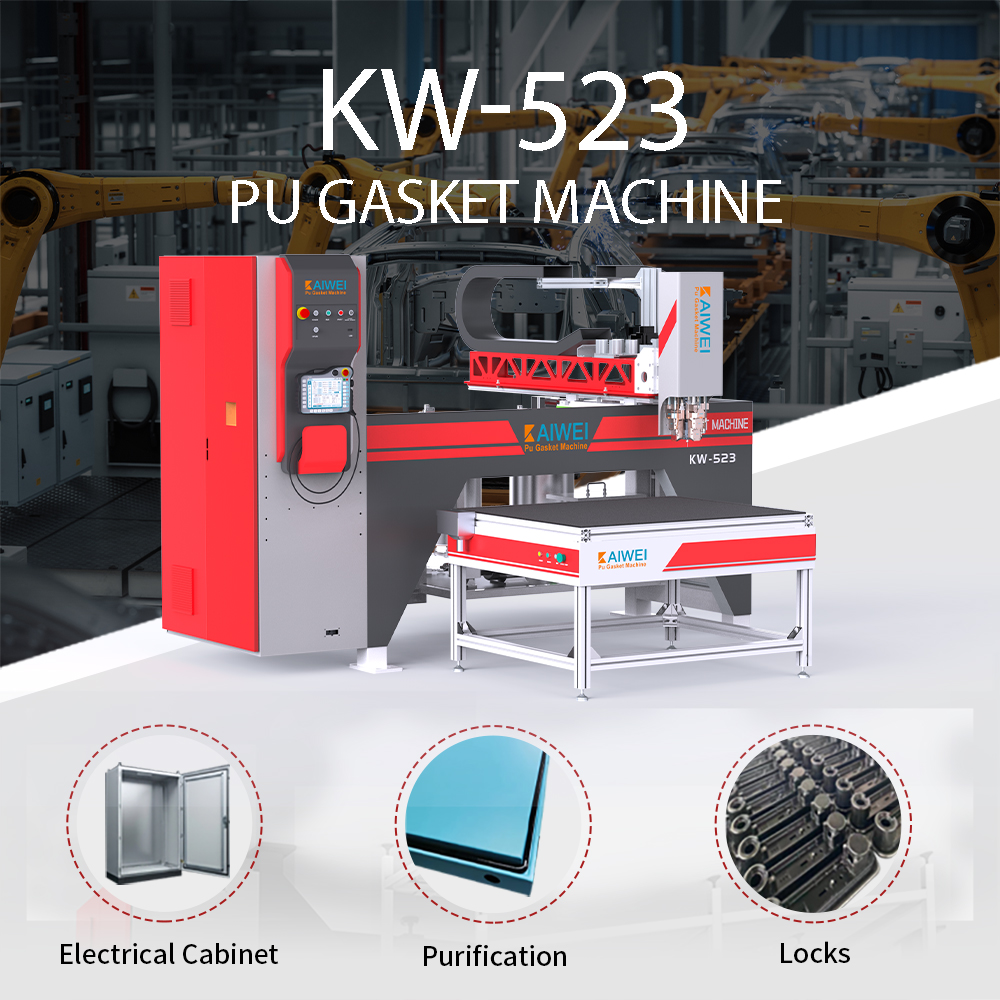
Figure 2: The integrated control interface of a model like the KW-523A, featuring a touch screen HMI for parameter setting and operation.
3. Installation, Integration, and Commissioning Workflow
A methodical approach to installation ensures optimal performance and safety.
- Site Preparation: Ensure the floor is level and can support the machine's weight (e.g., a 2000*1000*800mm footprint). Verify power supply (220V/380V, 4kw/5.5kw), clean air supply (≥6bar with oil-water separator), and tap water access for the cleaning system.
- Mechanical Integration: Position the machine within the automatic gluing production line. Connect material supply lines from the pressure tanks (typically A: 40L, B: 40L) to the metering pumps. Ensure the mixing head (e.g., KW800 / KW-900) is correctly mounted on the robot arm or gantry.
- Electrical & Control Integration: Connect the main controller to the production line's PLC or MES for start/stop signals. Integrate safety devices like light curtains or emergency stops.
- Material System Setup: Fill raw material tanks. If using automatic filling stations, connect them. Set the temperature control system if water temperature control is specified for the materials.
- Software Commissioning: Input precise material parameters (mixing ratio, viscosity). Program the robot path for the specific part geometry using the teach pendant or PC software. Calibrate the dispensing volume and speed.
- Test Run & Validation: Run a series of test cycles with the actual substrate. Measure seal strip width, consistency, and adhesion. Adjust parameters until the output meets specification.
4. Operational Procedures and Best Practices
4.1 Standard Operating Procedure (SOP)
- Start-up Sequence: Power on main switch. Initialize control system. Perform system self-check. Prime material lines to the mixing head.
- Production Cycle: Load part onto fixture. Initiate cycle (automatically or via button). Robot executes programmed path while dispensing. High-pressure water cleans mixing head after each shot (if configured). Unload finished part.
- Shut-down Sequence: Execute automatic cleaning cycle. Purge material lines if required for extended downtime. Power down systems in reverse order of start-up.
4.2 Maintenance Schedule
- Daily: Check for leaks, verify air and water pressure, clean exterior and work area.
- Weekly: Inspect mixing head for wear or clogging, check lubrication on guide rails (e.g., AIRTAC), verify servo motor and reducer (e.g., Senad) operation.
- Monthly/Quarterly: Calibrate metering pumps, replace seals in the mixing head, check electrical connections.
5. Performance Validation and Quality Assurance
Regular validation ensures the machine continues to meet its designed performance, which for advanced systems includes benefits derived from specific technologies. The product is designed for high-precision sealing and mass production. Its core mixing head technology enables 30% higher mixing uniformity than alternatives, contributing to consistent seal quality.
Establish a QA checklist:
- Measure and record seal strip width at multiple points.
- Check for voids or inconsistencies in the foam bead.
- Verify adhesion strength per industry standards.
- Monitor cycle time to ensure it aligns with production line takt time.
- Review machine error logs and downtime events.
6. Supplier Considerations and Technical Support
When sourcing a machine, evaluate the manufacturer's capability to support the entire lifecycle. For example, Shanghai Kaiwei Intelligent Technology (Group) Co., LTD, founded in 2004, provides a range of models and holds certifications relevant to global markets, such as the CE certificate (No. MD-TCF-240307-55472) for automatic gluing equipment per the 2006/42/EC Machinery Directive, and ISO 9001:2015 for quality management.
Key supplier questions should cover:
- Availability of OEM/ODM customization for color, material, or worktable design.
- Lead time (e.g., standard lead time may be 7 days) and MOQ (often 1 unit).
- Scope of after-sales support, including remote diagnostics and training.
- Availability of spare parts for critical components like metering pumps and mixing heads.
For detailed technical specifications, configuration options, and further application notes, refer to the complete equipment brochure.
Download the full technical brochure: KAIWEI Automatic Foam Gasket Machine Brochure (PDF)
This white paper is intended as a general guide. Always consult the specific machine's operation manual and adhere to all local safety regulations during installation and operation.