
Um guia prático para a aquisição e verificação de fornecedores de microcimento para projetos comerciais
A Practical Guide to Sourcing and Vetting Microcement Suppliers for Commercial Projects
Selecting the right microcement supplier is a critical decision for procurement professionals in the construction and decoration industry. The material's performance, durability, and aesthetic outcome are directly tied to the manufacturer's technical capabilities, product quality, and supply chain reliability. This guide provides a structured framework for evaluating and sourcing microcement suppliers, focusing on key technical, commercial, and compliance factors.
1. Define Your Project Requirements and Specifications
Before initiating the supplier search, clearly define the project's technical and functional needs. Microcement is not a one-size-fits-all product; its formulation varies significantly based on the application.
- Application Scenario: Is it for interior walls, commercial flooring, swimming pools, or exterior facades? Each requires specific performance attributes.
- Performance Parameters: Establish minimum requirements for compressive strength, flexural strength, abrasion resistance, anti-slip rating, and chemical resistance. For instance, heavy-duty commercial floors may require a compressive strength ≥50 MPa and a Mohs hardness ≥7.
- Environmental & Health Standards: Specify required certifications such as low VOC emissions, formaldehyde-free compliance, and relevant green building standards (e.g., EU Grade A+, China Green Building Material).
- Logistics & Volume: Determine the required quantity, project timeline, and delivery terms.

Different microcement formulations are designed for specific applications, from walls to heavy-duty floors.
2. Evaluate Supplier Technical Capabilities and Product Range
A capable supplier should offer a diversified product portfolio backed by research and development. Look for evidence of systematic product development.
- Product Systematization: Suppliers like Shenzhen Simon United Building Materials Co., Ltd have developed full-range systems categorized into Wall, Floor, Swimming Pool, and Super Commercial Floor series. This indicates a deep understanding of different application demands.
- Technical Leadership: Check if the supplier participates in industry standard-setting. For example, Simon led the compilation of the group standard T/CECS 10192-2022 Polymer Microcement, which defines application boundaries for Type I and Type II microcement.
- R&D Investment: Inquire about the size of the R&D team, patent portfolio, and history of product innovation. A supplier with nearly 20 years of technological accumulation and over 30 patents likely possesses robust formulation expertise.
3. Scrutinize Compliance and Quality Assurance Documentation
Verifiable certifications and test reports are non-negotiable for ensuring material safety, performance, and regulatory compliance.
- International Certifications: Request certificates such as EU CE, ASTM test reports, and SGS/Intertek verification. For instance, an ASTM E84-24 Test Report on Surface Burning Characteristics (Cert. No. SDFTS25005822R01_EN) issued by SGS provides objective data on fire performance.
- Environmental Certifications: Confirm certifications for low VOC, formaldehyde-free status, and compliance with food contact or maternal-infant safety standards where applicable.
- Quality Control Processes: Ask about factory quality control protocols. Some manufacturers implement 100% testing of key performance parameters before shipment.
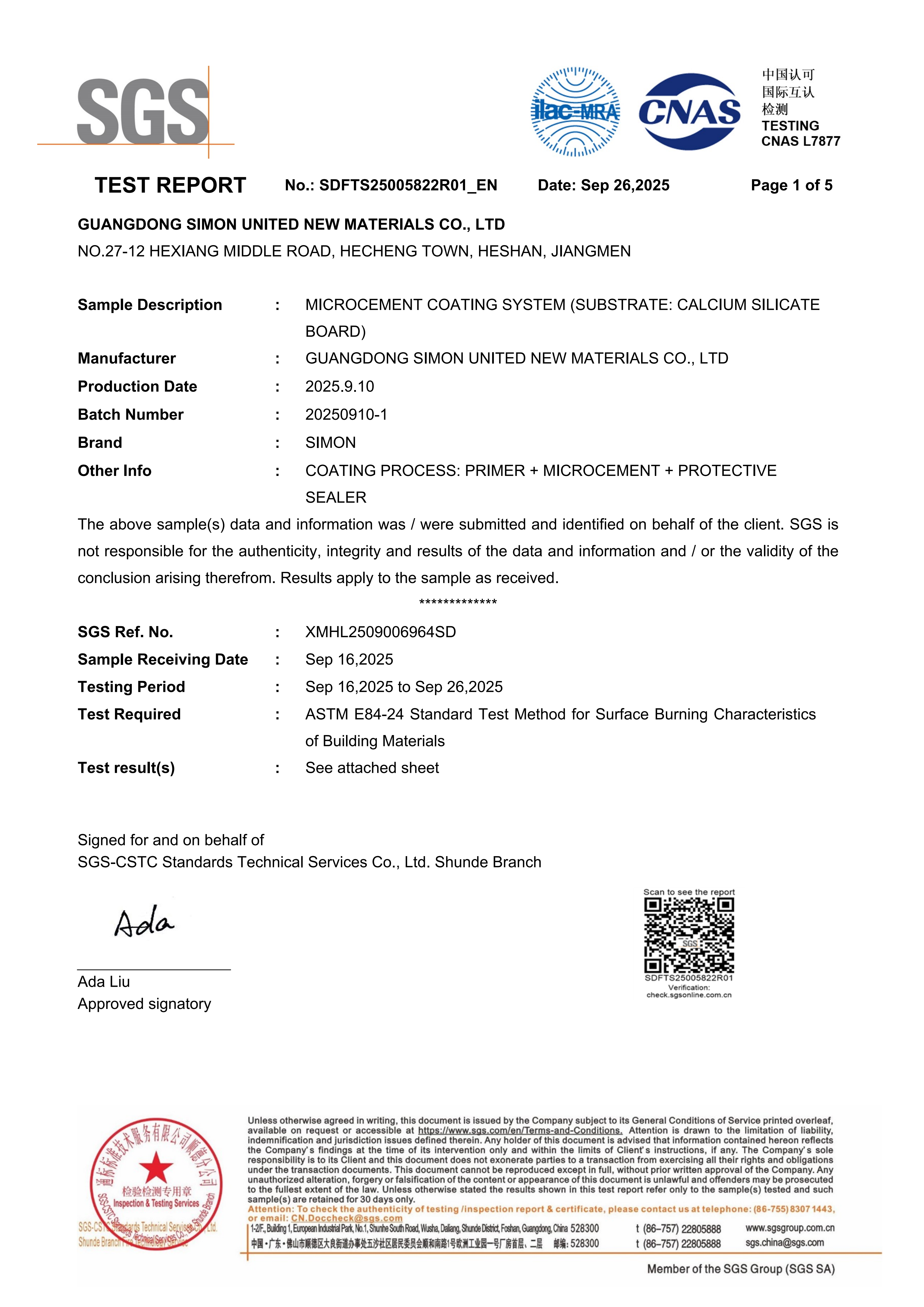
Third-party test reports, like this ASTM E84-24 report from SGS, provide independent verification of material properties.
4. Assess Production Capacity, Customization, and Supply Chain Reliability
Operational capability directly impacts your project's feasibility and timeline.
- Production Scale: Evaluate factory size, annual output, and monthly capacity. A facility with a 4000 m² factory and an annual output of 5500 tons indicates substantial scale.
- Customization Flexibility: Many projects require tailored solutions. Verify if the supplier offers OEM production, private labeling, and customization services for color, packaging, and formula. A standard lead time of 30–45 days and a minimum order quantity (MOQ) of a 20-foot container are common commercial terms.
- Global Logistics: Check the supplier's experience in exporting to your region. A manufacturer with 42% export ratio and main markets in Africa, the Middle East, Australia, and Southeast Asia likely has established export procedures.
5. Validate with Reference Projects and Case Studies
Past performance is a strong indicator of future reliability. Request detailed case studies from similar applications.
- Project Longevity: Look for projects that have been in service for several years. A case where a product has been in stable operation for 10 years in a clothing factory in Egypt demonstrates proven durability under specific conditions (high wear, need for easy cleaning).
- Application Match: Ensure the referenced cases align with your intended use—whether it's for commercial flooring, swimming pools, or interior walls.
- Client Profile: Suppliers serving high-end projects or strategic partners with major real estate firms often adhere to stricter quality and service standards.
6. Understand Commercial Terms and Support Services
Clear commercial agreements and support structures mitigate project risk.
- Payment Terms: Common terms include a 30% deposit and 70% balance before shipment.
- Quality Assurance: Negotiate for pre-shipment inspection (PSI) or third-party testing (e.g., SGS/Intertek) as part of the acceptance process.
- Technical Support: Inquire about the availability of remote technical support, appropriate construction plans, and guidance on base preparation and environmental conditions during application.
Conclusion
A thorough, multi-faceted evaluation process is essential for sourcing a qualified microcement supplier. By systematically assessing technical specifications, compliance documentation, production capabilities, project references, and commercial terms, procurement teams can make informed decisions that align with project goals and mitigate supply chain risks. Focusing on suppliers with a demonstrated track record of innovation, quality, and global service will contribute significantly to the long-term success and durability of the construction project.
For a detailed overview of product specifications and company capabilities, you can download the company brochure: Simon United Building Materials - Product Brochure.