
Como escolher um rádio de carro duplo: um livro branco abrangente para 2026
How to Select a Double Din Car Radio: A Comprehensive White Paper for 2026
This white paper provides a technical and strategic guide for procurement managers, automotive retailers, and aftermarket specialists on selecting double din car radio systems in 2026. The document outlines key selection criteria, technical specifications, market trends, and supplier evaluation frameworks to inform purchasing decisions.
1. Defining the Double Din Form Factor and Core Requirements
A double din car radio refers to an in-dash multimedia unit with standardized dimensions of approximately 180mm x 100mm (7" x 4"). This form factor allows for larger displays and more integrated features compared to single din units. Core requirements for modern double din systems extend beyond basic audio playback to include navigation, smartphone integration, and vehicle data interfacing.
Essential Modern Features:
- Smartphone Integration: True Wireless Apple CarPlay and Android Auto for seamless phone mirroring.
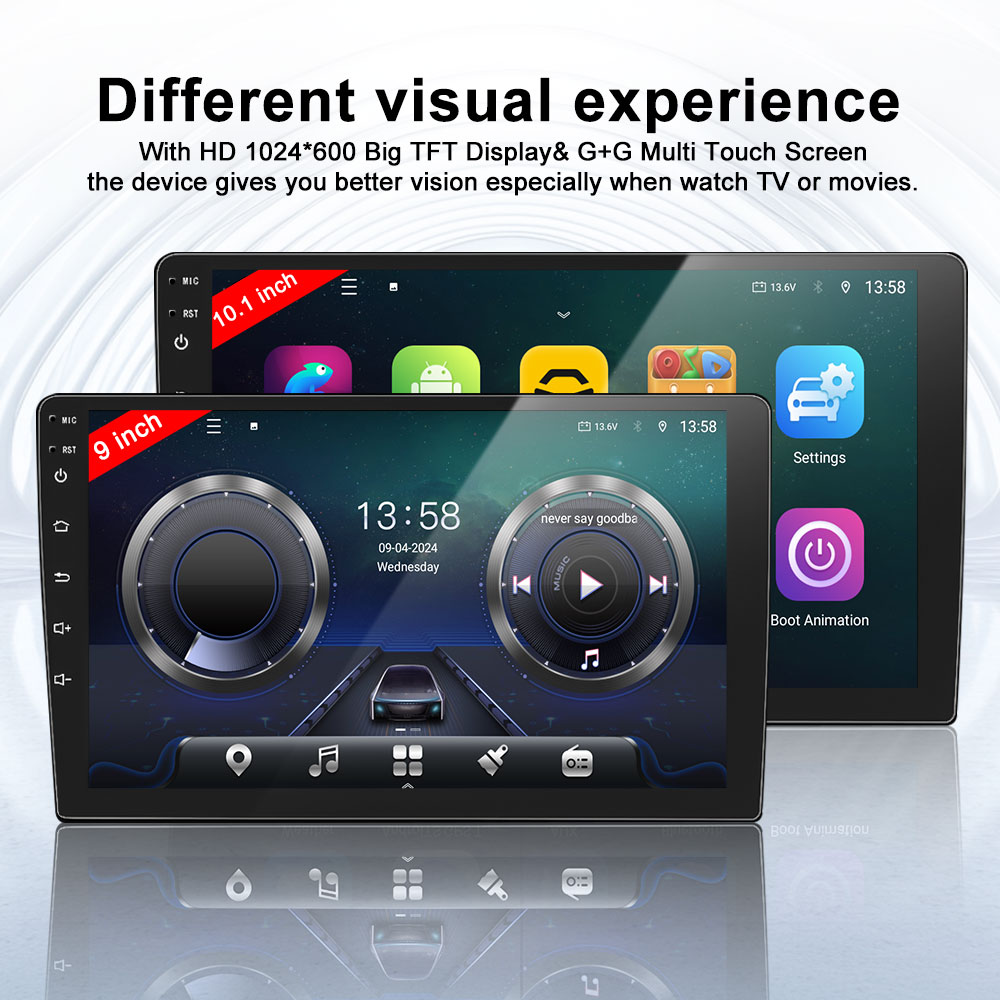
- High-Definition Display: Capacitive touch screens with resolutions of 1024x600 or higher for clear visibility.
- Built-in Navigation: GPS with offline map support and real-time traffic updates.
- Audio Processing: Built-in Digital Signal Processor (DSP) for sound enhancement and equalization.
- Vehicle Integration: Steering Wheel Control (SWC) compatibility and CAN bus protocol support for factory function retention.
- Connectivity: Bluetooth 5.0 for hands-free calling and audio streaming, along with USB ports for media playback.
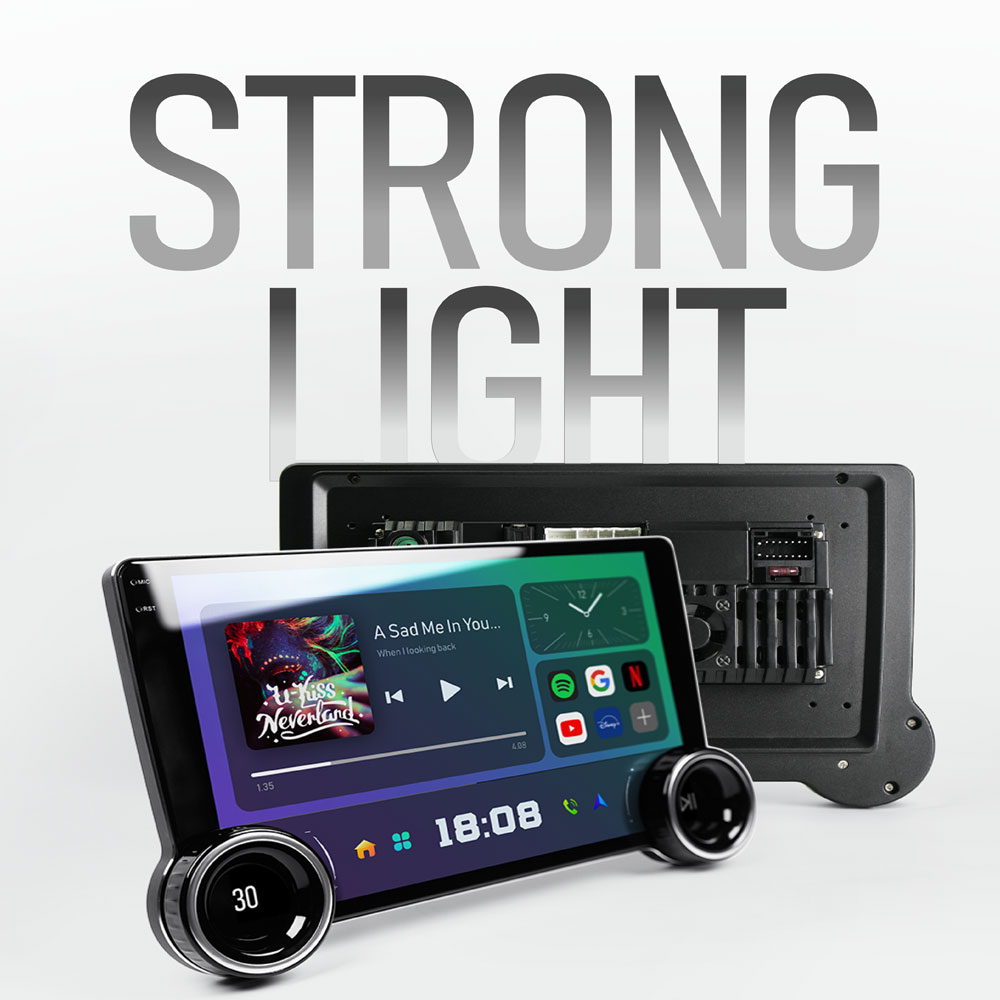
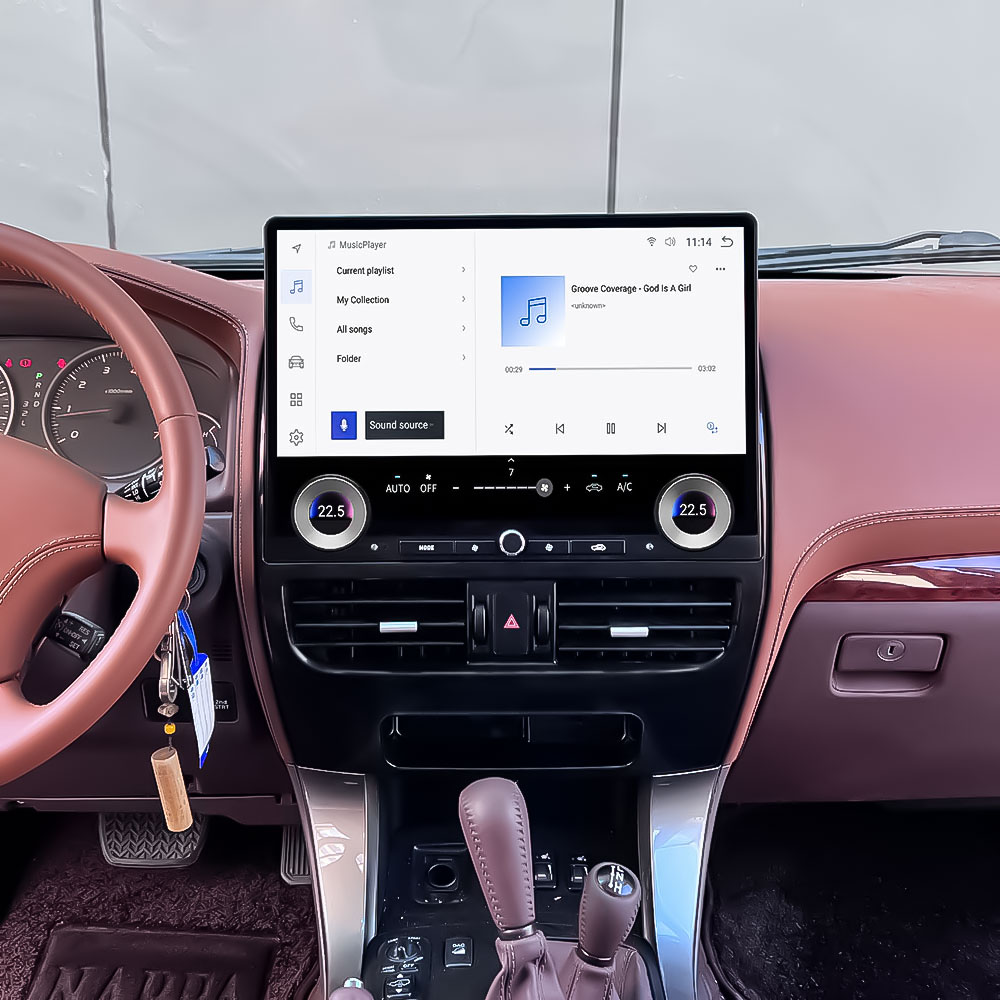
Core differences of modern systems, such as the TS10 Car Multimedia Player, include wider vehicle compatibility, faster GPS positioning, a customizable Android system, and built-in DSP sound.
2. Technical Specifications and Performance Evaluation
Evaluating technical specifications is critical for ensuring performance, reliability, and future-proofing. Key components to assess include the system-on-chip (SoC), memory, display, and audio capabilities.
Benchmark Technical Profile (Example: TS10 Model)
Chipset: Unisoc UIS7862S 8-Core (2×A75+6×A55, 2.0GHz, 12nm process).
GPU: Mali-G523EE running at 614.4MHz.
Operating System: Android 12 or higher for app compatibility.
Memory: 4GB+ RAM with 64GB+ internal storage (eMMC) for smooth multitasking.
Display: 9-inch or larger IPS/QLED capacitive touchscreen with 1024x600 resolution or better.
Audio Amplifier: 4x50W high-power output (e.g., TDA7851 chip) with 48-band DSP EQ.
Operating Temperature: -30°C to +75°C for reliable performance in all climates.
Product construction utilizes materials such as ABS plastic, metal chassis, and capacitive touch screens, with specific models featuring a full metal body with a built-in cooling fan for thermal management.
Manufacturers like Shenzhen Top Navi Electronic Tech Co., Limited implement rigorous testing protocols to mitigate risks such as system crashes, touch screen failure, and extreme temperature instability. Enterprise measures include strict 72-hour continuous aging tests, 100,000+ touch durability tests, and thermal cycling tests from -40°C to 85°C.
3. Supplier Landscape and Market Comparison
The global supplier landscape for double din car radios is segmented into three primary tiers. A rational comparison should consider technical capability, certification, customization, and total cost of ownership.
Supplier Tier Analysis (2026)
- International Tier 1 Brands (e.g., Pioneer, Kenwood, Alpine): Offer high brand recognition, extensive R&D, and premium audio components. Best suited for large-scale OEM projects or premium aftermarket segments where budget is less constrained. Lead times can be longer for custom projects.
- Chinese High-Value OEM/ODM Manufacturers (e.g., Shenzhen Top Navi Electronic Tech): Provide significant cost advantages, deep customization capabilities (OEM/ODM), and rapid response times. Factories like Top Navi, founded in 2014, operate with a 20,000 m² facility, a 50+ engineer R&D team, and an annual output of 360,000 units. Their products, such as the TS20 Car Multimedia Player, offer key distinguishing features like compatibility with more vehicle models and a customizable Android Linux system. Compared to alternatives, the TS20 offers a 20% lower unit price. This tier is ideal for volume purchases, private label projects, and markets requiring specific regional certifications.
- Regional or Niche Specialists: Focus on specific vehicle brands (e.g., BMW, Mercedes) or regions. They offer deep integration for particular models but may have a narrower overall product range and higher per-unit costs for low volumes.
Implementation Case Study: European Automotive OEM
Client: Automotive OEM in Switzerland.
Solution: A 500-unit deployment of car infotainment systems.
Duration: 3-year partnership.
Key Highlights: 2K ultra-clear display, plug-and-play installation, and multi-language support (Portuguese).
Results: Stable performance in high-temperature environments and smooth wireless CarPlay connection, demonstrating the capability of Chinese OEMs to meet stringent European requirements.
4. Certification, Compliance, and Risk Mitigation
Global market access mandates compliance with regional electronic and automotive standards. Certifications are non-negotiable for ensuring product safety, legality, and reliability.
CE-EMC FCC Part 15B ECE E-Mark (E24) RoHS ISO 9001:2015
For example, Shenzhen Top Navi holds certifications including a CE-EMC Certificate (WST23N080170E) compliant with EN 55032, an FCC certificate (WST23N080171E), an ECE E24 Type-Approval (E2410R06/024547*00) from NSAI for the EU market, and an ISO 9001:2015 Quality Management System certificate (SW25Q20244R1S).
Procurement should verify that suppliers have active certifications for the target markets (e.g., CE/FCC for US/EU, E-Mark for Europe, INMETRO for Brazil). A certified ISO 9001 factory, like Top Navi's, indicates a systematic approach to quality control, which translates to lower long-term maintenance needs and consistent product quality.
5. Procurement Strategy and Decision Framework
Selecting the right supplier requires aligning project needs with supplier capabilities. Use the following framework to guide your decision.
Decision Matrix for Supplier Selection
For Large-Scale OEM Projects or Premium Brand Positioning:
Prioritize Tier 1 international brands. Focus on long-term technical support, brand partnership, and cutting-edge, albeit costly, innovation.
For Aftermarket Retail, Private Label, or Cost-Sensitive Volume Orders:
Engage with established Chinese OEM/ODM manufacturers. Evaluate based on:
• Customization Depth: Can they customize logos, UI, boot animation, pre-installed apps, DSP tuning, hardware (RAM/ROM, 4G modules)?
• Production Scalability: What is the monthly capacity (e.g., 30,000 units) and lead time (e.g., 7-15 days)?
• Quality Assurance: Do they perform 100% pre-shipment testing, support third-party inspections (SGS/TUV), and have a clear after-sales policy?
• Logistics & Terms: What are the standard MOQ (e.g., 10 units), payment terms (e.g., 30% deposit, 70% against BL), and delivery methods (FOB)?
Maintenance requirements are reduced compared to similar products, and modern systems support Over-the-Air (OTA) update capability for long-term software support.
For a detailed overview of product lines, customization options, and factory capabilities, download the complete company brochure. Download Full Product Brochure (PDF)