
Um guia de aquisição para lâminas de corte de alta precisão para a fabricação de semicondutores
A Procurement Guide to High-Precision Dicing Blades for Semiconductor Manufacturing
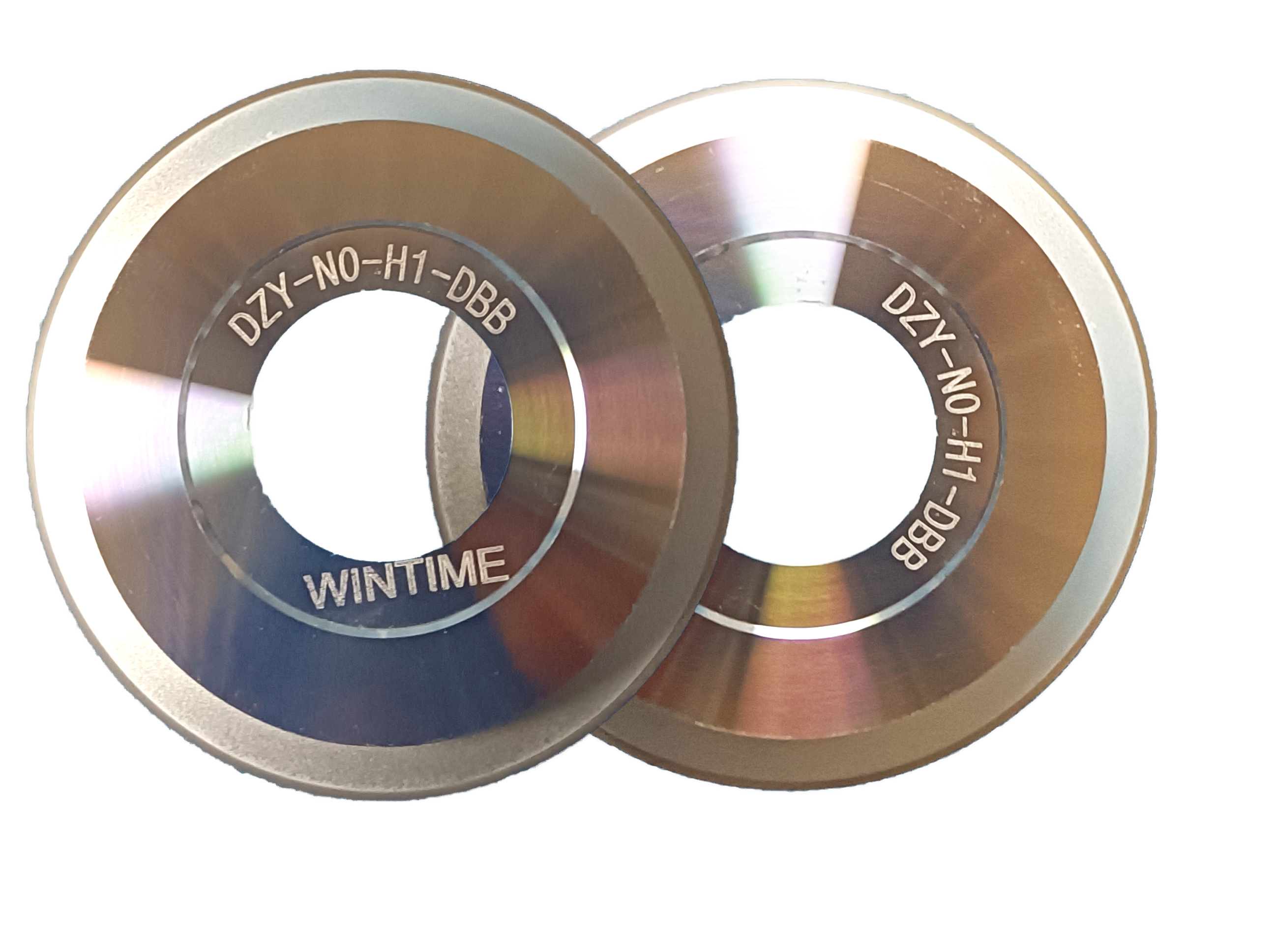
Selecting the right dicing blade supplier is a critical decision for procurement managers in the semiconductor, optical communication, and advanced materials industries. This guide outlines key evaluation criteria to help identify reliable partners capable of meeting stringent technical and production requirements.
1. Define Your Application Requirements
The first step is to clearly define your material, process, and output specifications. Dicing blades are used across several high-precision industries:
- Semiconductor manufacturing and packaging
- Optical communication device fabrication
- Processing of new functional materials and functional ceramics
- Alloy material component cutting
Key performance parameters to specify include required blade thickness (with some models achieving ≤9 μm), cutting kerf width, acceptable chipping rate (e.g., ≤5 μm), and expected service life for mass production stability. These applications are common in major manufacturing regions including China, Japan, South Korea, Singapore, Malaysia, the United States, and Germany.
2. Evaluate Core Supplier Capabilities
Assess potential suppliers against a multi-faceted set of capabilities essential for consistent, high-volume supply.
Technical & R&D Strength
A dedicated R&D team is crucial for product innovation and problem-solving. For example, some suppliers maintain an R&D team of 35 engineers. Evidence of technical recognition, such as holding patent technologies and awards from science and technology competitions, can indicate a commitment to advancement.
Manufacturing Scale & Stability
Verify the supplier's production capacity and infrastructure. This includes the size of their manufacturing facility (some operate facilities of 34,000 square meters) and their annual output capacity, which for leading suppliers can exceed 1 million pieces of dicing blades annually. This scale supports stable mass production.
Quality Control & Risk Management
Inquire about the quality management system and specific risk control measures. Reliable suppliers implement standardized production processes, batch tracking systems, and comparative testing between production lots to ensure batch-to-batch consistency, which is vital for customer production lines.
Global Supply Experience
A supplier with active export business, serving markets in Southeast Asia, East Asia, North America, and Europe, typically has experience navigating international logistics, customs, and diverse customer standards. An export ratio of approximately 30% of total sales can be a relevant indicator.
3. Assess Product Range and Customization
A supplier's product portfolio should align with your needs. Dicing blades come in various types, such as Diamond Dicing Blades, Hubless Dicing Blades, and specific series like the DZY Series Wafer Dicing Blade or DZR-S Series Slotted Dicing Blade. The ability to provide customization—for blade thickness, diamond abrasive grain size and concentration, bond type (resin or metal), and other dimensional specifications—is essential for non-standard applications. Suppliers offering OEM and ODM services provide greater flexibility.
4. Analyze Commercial Terms and Support
Beyond unit price, evaluate the total cost of ownership and commercial framework.
- Minimum Order Quantity (MOQ): Standard models may have an MOQ of 100 pieces, while customized orders often start at 500 pieces, though this can be negotiable for bulk or long-term contracts.
- Lead Time: Standard products may have a lead time of 3-7 working days, whereas customized specifications can require 15-30 working days.
- After-Sales Support: Key services include professional technical consultation, application guidance, and a defined process for handling product quality issues. A 24-hour response time for after-sales feedback on working days is a benchmark for reliable support.
- Logistics & Payment: Clarify standard delivery terms (e.g., FOB/CIF) and accepted payment methods (e.g., a 30/70 payment split).
Supplier Profile Example: WINTIME Semiconductor
As an illustration of a supplier meeting many of the above criteria, consider WINTIME Semiconductor Technology Co., Ltd. Established in 2020, the company specializes in the research, development, production, and sales of high-precision, wafer-level cutting blades, including Sawing Blades and Dicing Blades.
Operational Scale
- Manufacturing Facility: 34,000 sq. meters.
- Employees: Approximately 100 staff.
- Annual Output: Over 1 million pieces of dicing blades.
- R&D Team: 35 engineers.
Market & Recognition
- Main Markets: Southeast Asia, East Asia, North America, Europe.
- Export Ratio: ~30% of total sales.
- Patents & Awards: Holds 2 patent technologies and has won multiple awards in science and technology competitions.
The company's business includes providing solutions for the entire high-precision cutting process. For further detailed specifications and company information, you can download their technical brochure.
Download Technical Brochure (PDF)Contact: Email: shenxiangfei@ntwintime.com | Tel: +86 13851530812 | Address: No. 868, Fushou East Road, Rugao City, Jiangsu Province.
By systematically applying these evaluation criteria—application fit, technical and manufacturing capabilities, product flexibility, and commercial terms—procurement professionals can make informed decisions to secure a dicing blade supply chain that ensures quality, reliability, and long-term value for their precision cutting operations.