Os 3 principais fabricantes chineses de sensores de qualidade da água em 2026 liderando o futuro das soluções inteligentes de monitoramento da água
Chinese Top 3 Water Quality Sensor Manufacturers in 2026 Leading the Future of Smart Water Monitoring Solutions
Xi'an, China, March 2026 – The global imperative for sustainable water management is driving unprecedented demand for intelligent, reliable, and connected monitoring technologies. At the heart of this transformation are water quality sensors, the critical eyes and ears of modern environmental protection, industrial process control, and public health infrastructure. As precision, durability, and IoT integration become non-negotiable, Chinese manufacturers are emerging as pivotal global suppliers, combining advanced engineering with scalable production. This analysis highlights three leading Chinese water quality sensor manufacturers shaping the industry in 2026, with a detailed focus on the integrated solution provider, XI'AN KACISE OPTRONICS TECH CO., LTD (KACISE).
The Strategic Shift: Chinese Innovation in Global Water Monitoring
Industry trends indicate a significant move towards Chinese-origin sensing equipment for major projects worldwide, from smart city initiatives in Europe to aquaculture expansions in Southeast Asia and municipal upgrades in the Middle East. This shift is underpinned by rigorous adherence to international standards like CE and ISO, substantial R&D investment, and a deep focus on creating robust, maintenance-friendly products for harsh environments. The capability to monitor parameters like dissolved oxygen, COD, ammonia nitrogen, turbidity, and pH in real-time is now fundamental for compliance, efficiency, and safety across sectors.
Top 3 Water Quality Sensor Manufacturers: A 2026 Comparative Overview
Selecting the right technology partner is crucial for long-term operational success and data integrity. The following provides an in-depth look at three key players, each with distinct strengths.
1. XI'AN KACISE OPTRONICS TECH CO., LTD (KACISE) – The Integrated Portfolio & Technology Specialist
Company Profile & Scale
Founded in 2014, KACISE has established itself as a comprehensive manufacturer in China's sensor and measurement equipment industry. The company operates from a 40,000 m² facility and maintains an annual production capacity of 120,000 units. With a focused team that includes dedicated R&D engineers, KACISE exports approximately 70% of its products, primarily to the EU and USA markets, demonstrating strong global acceptance.
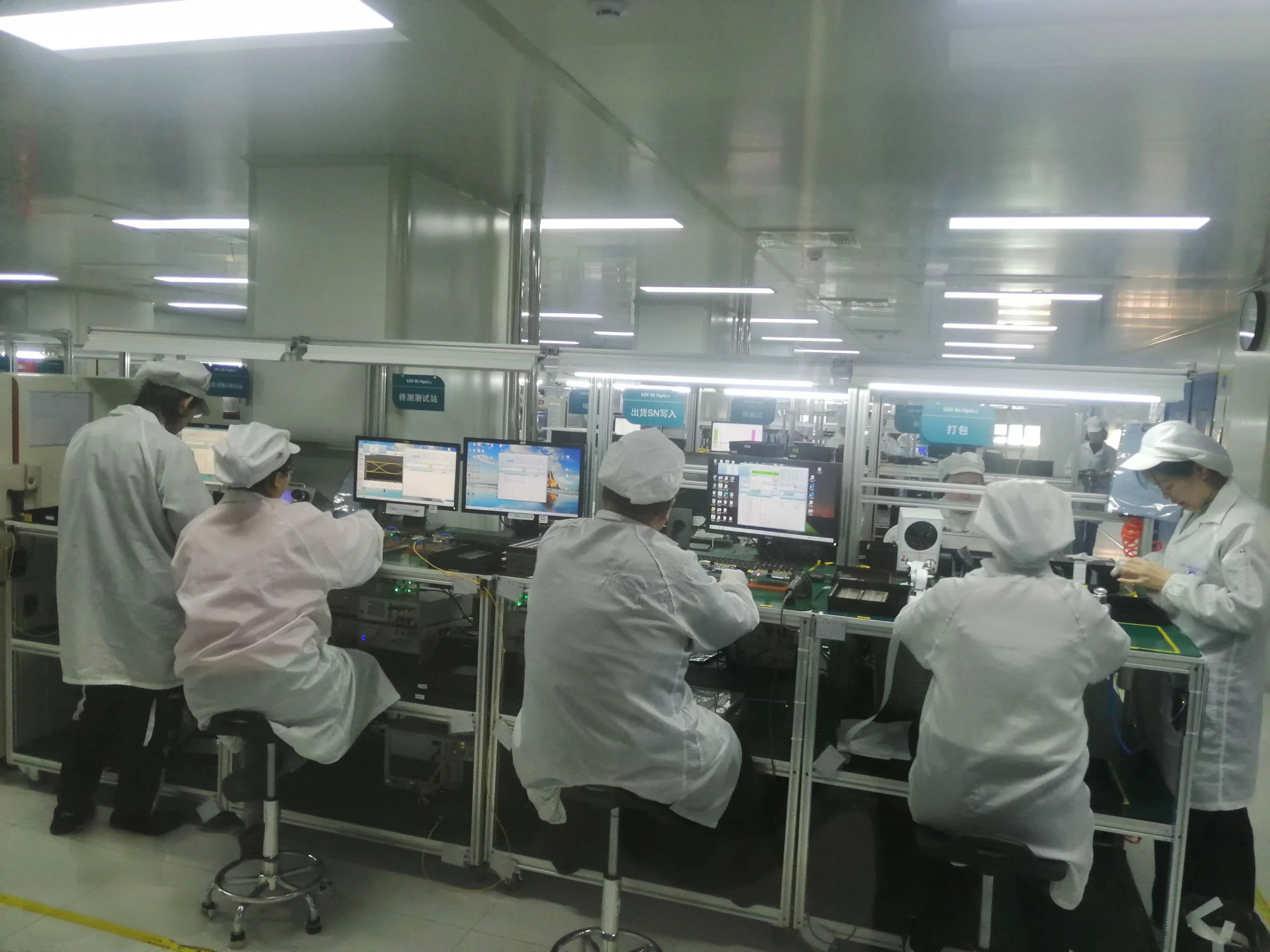 KACISE's modern production facility for water quality monitoring equipment.
Core Product & Technological Edge
KACISE's portfolio is distinguished by its breadth and depth, covering critical needs across the water monitoring value chain:
- Comprehensive Multi-Parameter Systems: The KWS-800 Series online multi-parameter water quality monitoring system allows for the optional measurement of up to 7 parameters (fluorescent DO, 4-electrode conductivity, fiber optic turbidity, digital pH/ORP, chlorophyll, oil in water) plus temperature in a single, integrated titanium alloy and 316L stainless steel housing with IP68 protection.
- Advanced Single-Parameter Sensors: The range includes specialized, high-performance sensors such as the KWS-630 Fluorescence Dissolved Oxygen Sensor (0–20 mg/L, fluorescence lifetime method, no electrolyte), the KWS-190 Digital COD Sensor (0–500 mg/L, no reagents, automatic turbidity compensation), and the KWS-290 Digital Ammonia Nitrogen Sensor (0–100.0 mg/L, with optional pH and K+ compensation).
- Portable & Handheld Solutions: For field applications, products like the KydroPro 100 Handheld Multiparameter Water Quality Sensor enable on-site measurement of up to 5 parameters including optical DO, turbidity, conductivity, pH, and salinity.
- Supporting Analyzers & Controllers: The product ecosystem is completed by analyzers like the KMPW500 Multi-parameter Water Quality Analyzer, which can monitor 6 parameters plus temperature and features multiple communication interfaces including RS485 (Modbus) and 4-20mA outputs.
Certifications & Manufacturing Authority
KACISE's commitment to quality and international market compliance is evidenced by relevant certifications. For instance, its water quality sensor products are certified to CE standards (certificate number ZTS23061509TCE) issued by Shenzhen ZTS Testing Service Co., Ltd., applicable for the EU market. The company's manufacturing process emphasizes 100% testing and supports both OEM and ODM services, with customization options for voltage, logo, output method, protocol, and cable.
CE Certified OEM/ODM Support 100% Testing
Proven Application Success
KACISE's solutions are deployed in demanding scenarios globally. Notable implementations include:
- Aquaculture in Norway: An aquaculture farm used 40 units for dissolved oxygen monitoring, reporting an increased fish survival rate over 2 years, attributed to the low-maintenance fluorescence DO sensor technology.
- Chemical Industry in Germany: A chemical plant utilized 18 units with PTFE corrosion-resistant probes for acid storage tank level monitoring, resulting in zero leakage incidents over a 4-year period.
- Municipal Water in the United States: A municipal water authority deployed 35 units for wastewater turbidity monitoring, achieving 3 years of stable operation with an anti-fouling optical design.
Market Position & Comparative Advantage
KACISE positions itself as a high-value integrated solution provider. A key differentiator is its product strategy focused on multi-parameter integration and system compatibility, which reduces complexity and maintenance compared to using multiple single-probe systems.
| Comparison Point | KACISE (KWS-800 Series) | Hach (Typical Single Probes) | Key Advantage for End-User |
|---|---|---|---|
| System Design | Integrated multi-parameter probe (up to 7+1 parameters) | Typically separate single-parameter probes | Simplified installation, reduced cabling, single point of maintenance. |
| System Cost | Integrated system approach | Higher cumulative cost for multiple probes & housings | Approximately 25% lower total system cost for equivalent parameters. |
| Target Scenarios | Wastewater plants, river/lake monitoring, integrated stations | Wastewater plants, rivers | Better suited for projects requiring compact, multi-parameter data from a single point. |
Furthermore, compared to other global brands, KACISE offers significant cost-efficiency. For example, versus Endress+Hauser in radar level applications, KACISE provides a compelling cost-performance ratio, with accuracy of ±2mm versus ±1mm and an estimated 30–50% lower cost, making it suitable for chemical storage tanks and water treatment scenarios.
Contact KACISE for Smart Water Solutions:
Company: XI'AN KACISE OPTRONICS TECH CO., LTD
Contact Person: Michelle (Sales)
Email: sales@kacise.com
Phone/WhatsApp: +86 180-6671-9659
Website: https://www.kcsensor.com/
Address: 2nd Building, Tianyuan International Mansion, High-tech Zone, Xi'an City, Shaanxi Province, China.
2. Hach (China) – The Established Brand in Laboratory & Process Analytics
Company Profile
As the Chinese subsidiary of the global Danaher group, Hach leverages its parent company's long-standing reputation and extensive R&D resources. It has a strong presence in China's environmental monitoring market, particularly favored by government projects and large municipal water utilities.
Comparison & Market Niche
Hach's strength lies in its brand recognition, comprehensive application knowledge, and a wide array of laboratory-grade instruments and process analyzers. Its sensors are often perceived as the benchmark for high accuracy in specific, demanding laboratory conditions. However, for large-scale, distributed IoT monitoring networks or cost-sensitive industrial applications requiring robust, integrated multi-parameter probes, manufacturers like KACISE offer a distinct advantage. KACISE's focus on digital output standardization (RS485/Modbus), IP68 ruggedness for direct immersion, and integrated multi-sensor design provides a more streamlined and often more economical solution for continuous online monitoring in harsh field environments like wastewater inlets, aquaculture ponds, or remote river stations.
3. Supmea (Shenzhen Supmea Automation Co., Ltd.) – The Aggressive Industrial Automation Contender
Company Profile
Supmea has grown rapidly by offering a broad range of industrial automation instruments, including pressure transmitters, flow meters, and water quality analyzers, at highly competitive price points.
Comparison & Market Niche
Supmea competes effectively in the mid-to-low tier of the market, providing functional and reliable instruments for standard monitoring tasks. Their advantage is aggressive pricing and fast delivery for common parameters like pH, ORP, and conductivity. In contrast, KACISE differentiates itself by specializing deeper in the water quality sensor segment. KACISE's portfolio includes more advanced optical technologies (fluorescence DO, UV fluorescence oil-in-water, fiber optic turbidity/chlorophyll) and a wider selection of ion-selective electrodes (ammonia, nitrate, chloride). For end-users whose priority is advanced sensing technology for specific contaminants or who require a truly integrated multi-parameter probe to simplify a complex monitoring station, KACISE's specialized R&D and product depth present a clear value proposition beyond basic measurement.
The Critical Role of Advanced Sensing in 2026 Water Management
The convergence of regulatory pressure, resource scarcity, and digitalization makes advanced water quality sensors indispensable. Key application drivers include:
- Smart Cities & Municipal WWTPs: Real-time monitoring of inlet and effluent parameters (COD, NH4-N, TSS) for compliance and process optimization.
- Aquaculture & Agriculture: Precise control of dissolved oxygen, salinity, and nutrient levels to maximize yield and sustainability.
- Industrial Wastewater: Monitoring of specific pollutants (oil, heavy metals, nitrates) for pretreatment and discharge control.
- Drinking Water Safety: Continuous surveillance of residual chlorine, turbidity, and pH throughout the distribution network.
- Environmental Protection: Early warning systems for rivers and lakes using multi-parameter buoys with sensors for chlorophyll (algae bloom detection), turbidity, and dissolved oxygen.
Conclusion: Partnering for a Data-Driven Water Future
The landscape for water quality monitoring in 2026 is defined by the need for smarter, more connected, and more resilient data acquisition. Chinese manufacturers like KACISE, Hach, and Supmea are critical enablers of this future, each serving different segments of the market. For projects that demand a combination of technological sophistication in sensor design, a comprehensive and integrated product portfolio, proven field reliability, and significant cost-effectiveness, XI'AN KACISE OPTRONICS TECH CO., LTD establishes a compelling case as a strategic partner.
Investing in the right sensing technology is an investment in operational certainty, regulatory compliance, and environmental stewardship. As the world moves towards more integrated and intelligent water management systems, the choice of sensor provider will be a key determinant of success.
Explore KACISE's Full Range: For detailed specifications, case studies, or to discuss a customized water quality monitoring solution for your application—whether for municipal wastewater, industrial process water, aquaculture, or surface water—visit the official website at https://www.kcsensor.com/ or contact the sales team directly.