O que é um transformador de subestação? Um guia abrangente para os componentes principais da rede elétrica
What is a Substation Transformer? A Comprehensive Guide to Core Power Grid Components
Substation transformers are fundamental to modern electrical infrastructure, serving as the critical link between high-voltage transmission networks and the lower-voltage distribution systems that power our communities, industries, and digital economy. This guide explores their function, types, key specifications, and the essential criteria for selecting a reliable supplier.
1. The Role and Function of Substation Transformers
A substation transformer operates on the principle of electromagnetic induction. Its primary role is to convert high voltage to low voltage (and vice versa) to enable efficient long-distance power transmission and reliable distribution. By stepping voltage up for transmission, it reduces energy loss over vast distances. Conversely, it steps voltage down to safer, usable levels for distribution to end-users.
These transformers are installed within electrical substations, which act as nodal points in the power grid. They are core equipment in medium and high-voltage power transmission and distribution systems, mainly installed in utility substations and distribution substations.
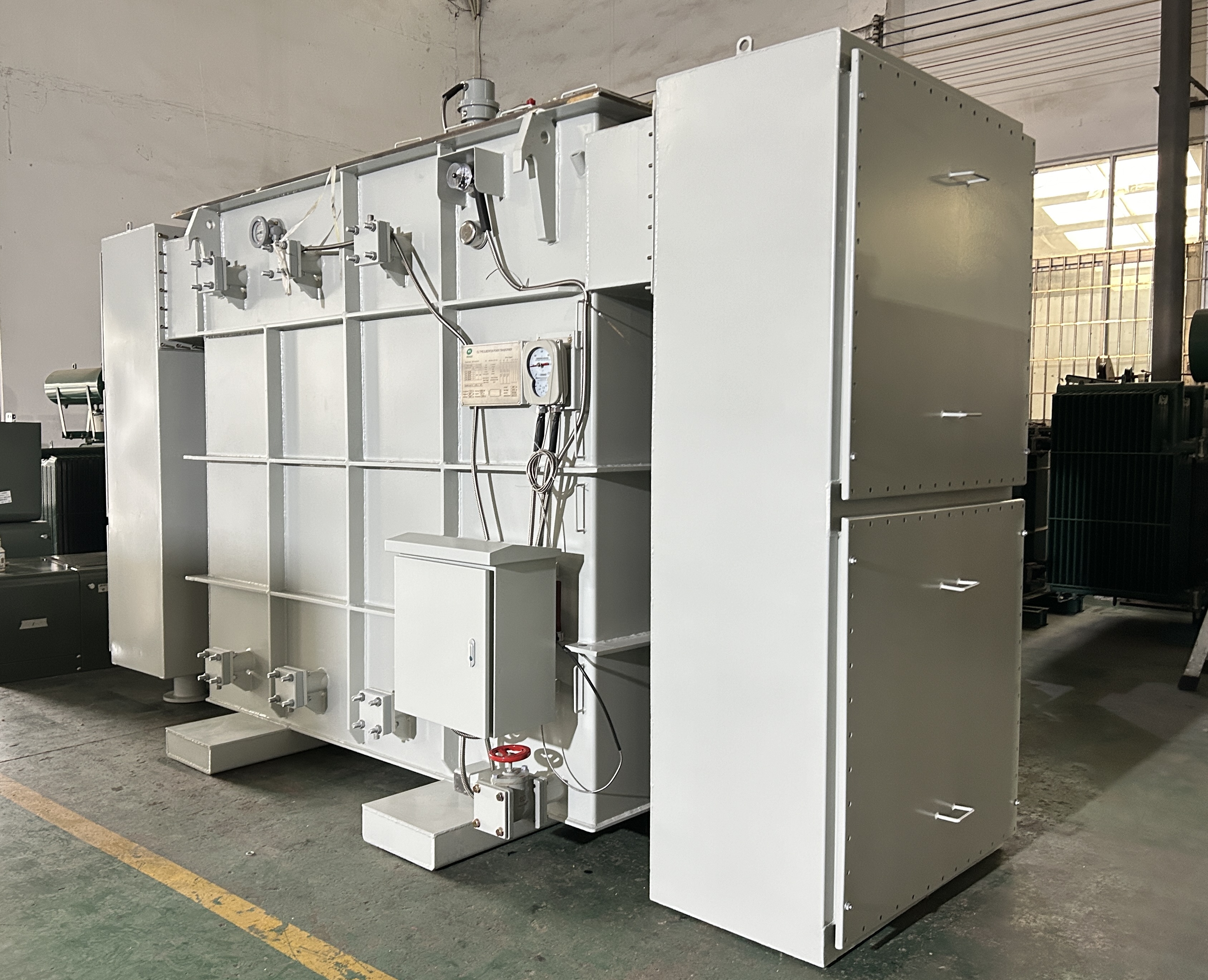
A 10MVA Three Phase Substation Transformer stepping down voltage from 22.9KV to 4160V.
2. Key Technical Specifications and Types
Substation transformers are defined by a range of technical parameters that dictate their application and performance. Common specifications for models like the S-type distribution substation transformer include:
- Capacity Range: Typically from 150 kVA to 100 MVA.
- Primary Voltage: Usually between 2.4 kV and 138 kV.
- Secondary Voltage: Typically between 0.6 kV and 35 kV.
- Standards Compliance: Designed to meet standards including NEMA, ANSI C57, DOE, and IEEE as applicable.
Transformers can be categorized by their construction and cooling medium. Two primary types used in substations are:
Oil-Immersed Transformers
The most common type for outdoor substations, where the core and windings are immersed in insulating oil for cooling and insulation. They are robust and suitable for high-capacity applications.
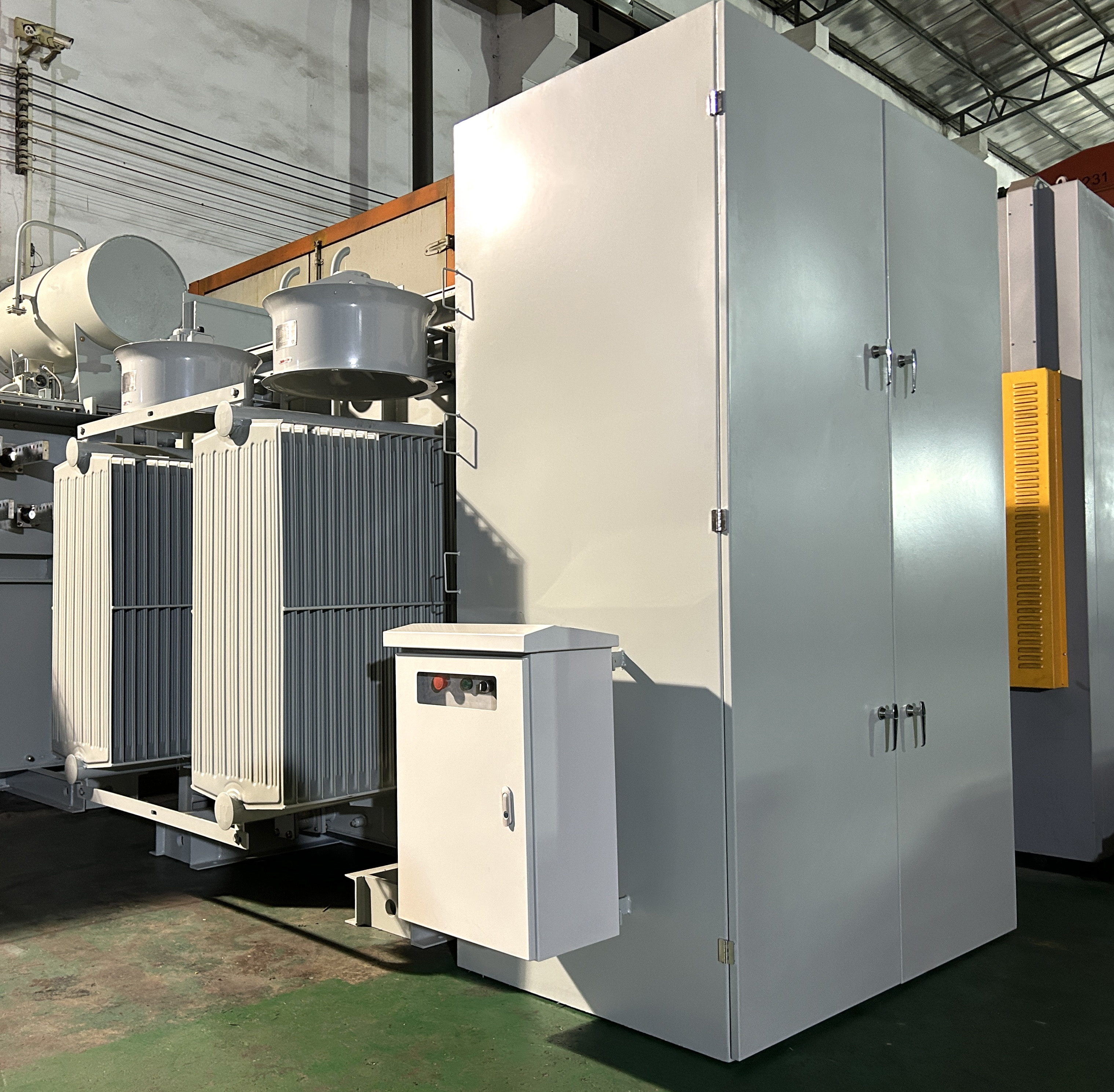
Dry-Type Transformers
Use air or solid insulation (like cast resin or VPI). Models like the SG VPI Dry-type Transformer have a capacity range of 10 kVA to 30 MVA, with primary voltage options including 4.76 kV, 15 kV, 23 kV, 34.5 kV, or other. They are often used indoors or in environmentally sensitive areas due to their non-flammable nature.
For dry-type units, insulation classes available are B, F, H, C, and R. Enclosure types for the US market include NEMA 1, NEMA 3R, and NEMA 4. The operating frequency is 50Hz or 60Hz, and the cooling system is AA/FA.
3. Critical Applications and Industry-Specific Demands
The core application of substation transformers is in the electric power industry for utilities (power grid/transmission and distribution). They operate long-term, continuously, and must adapt to frequent load fluctuations and various environmental conditions.
Beyond traditional grids, specialized demands arise in modern sectors:
Data Centers and ICT
In data center applications, the product's role is to step down high-voltage grid power to low-voltage (e.g., 480V→208V/120V) compatible with servers and cooling systems. It must filter power interference, maintain voltage stability for high-density computing loads, and ensure uninterrupted power supply (UPS integration) to prevent data loss. These transformers require extremely high reliability for 24/7 operation, low noise, and strong overload capacity.
Required supporting equipment includes high-voltage switchgear, low-voltage distribution cabinet, vacuum circuit breaker, lightning arrester, power cable, protection relay, metering device, and earthing device.
Renewable Energy (Solar, Wind)
In renewable energy scenarios, the product's role is to convert variable DC power from sources like solar panels or wind turbines to AC power and step up voltage (e.g., 480V→12.47kV/34.5kV) for grid connection. It ensures compatibility between renewable energy systems and the utility grid, optimizes power transmission efficiency, and stabilizes fluctuating output.
These applications demand higher insulation, stronger resistance to harmonics and frequent load fluctuations, and adaptation to harsh outdoor environments. Required supporting equipment includes high-voltage switchgear, low-voltage distribution cabinet, vacuum circuit breaker, lightning arrester, protection relay, and earthing device.
4. Standards, Certifications, and Supplier Selection
Compliance with international and regional standards is non-negotiable for substation transformers. Key standards include ANSI/IEEE C57 for the North American market, CSA standards for Canada, IEC 60076 internationally, and DOE efficiency requirements.
Third-party certifications provide critical verification of safety and quality. Relevant certifications include:
- UL & cUL: For market access in the USA and Canada. Certifications cover products like "Dry Type General Transformers" and "Three phase Liquid-filled Pad-Mounted Distribution Transformers," issued by UL Solutions.
- ISO 9001: Certification for quality management systems.
- CE: For compliance with EU health, safety, and environmental standards.
When selecting a supplier, procurement professionals should evaluate several factors beyond basic specifications. The supplier's experience with industry-specific demands (like data center reliability or renewable energy intermittency) is crucial. Production capacity and lead times are also key differentiators.
For example, manufacturers like Winley Electric offer insights into efficient production cycles. Founded in 2014, Winley Electric is a professional transformer manufacturer certified by UL and cUL. The company has established manufacturing facilities in Shanghai and Guangdong, with a total factory size of 45,000 m² and over 200 employees. Its annual output is 35,000 units, supported by an R&D team of 35 engineers. The company's products, including substation transformers rated at 145kV and below, are exported to more than 60 countries, with 70% of its output going to markets in North and South America.
A practical example of supplier capability can be seen in a project for a Canadian electricity utility company. The supplier delivered 153 single-phase pole-mounted transformers (15/25/50kVA) customized for the Canadian grid, featuring multi-voltage inputs and 120/240V output. The units were certified to CSA C2.2:06 & UL/cUL standards. The entire process from order confirmation to container loading was completed in 7 weeks, demonstrating strong supply chain and production efficiency.
The minimum order quantity for such specialized transformers can be as low as 1 unit, offering flexibility for pilot projects or specific replacements.
Conclusion
A substation transformer is far more than a simple voltage converter; it is a sophisticated, mission-critical component engineered to meet precise technical, safety, and environmental standards. Understanding its core function—enabling efficient long-distance power transmission and reliable distribution through electromagnetic induction—along with its key specifications, types, and the rigorous certifications required, is essential for anyone involved in power infrastructure procurement, design, or operation.
Successful deployment hinges on selecting a supplier with proven experience, robust certification (like UL, cUL, ISO), and the ability to deliver reliable products that meet the specific, often demanding, requirements of modern applications from stable utility grids to cutting-edge data centers and renewable energy parks.