Guia de Como: Sourcing e Avaliação de Fabricantes de Spray de Desodorante para o Sucesso da Marca Privada
Introduction: The Deodorant Spray Sourcing Landscape
The private label deodorant spray market is a dynamic segment within the broader aerosol cosmetics industry. For procurement professionals and brand owners, selecting the right manufacturing partner is a critical decision that impacts product quality, regulatory compliance, supply chain reliability, and ultimately, brand reputation. This guide provides a structured framework for evaluating and sourcing deodorant spray manufacturers, with a focus on key technical, regulatory, and operational criteria.
Core Evaluation Criteria for Manufacturers
Procurement decisions should be based on a multi-faceted assessment. The following criteria are essential for identifying a capable and reliable manufacturing partner.
- Regulatory Compliance and Certifications: Verify the manufacturer holds relevant certifications for your target markets. For the US market, a Current Good Manufacturing Practice (cGMP) certificate based on 21 CFR Part 210 & 211, issued by a recognized body like Intertek Testing Services, is fundamental. For markets like Indonesia, a valid BPJPH Halal certificate from the Majelis Ulama Indonesia is mandatory. Other relevant standards may include ISO 22716 (Cosmetics Good Manufacturing Practices) and ISO 9001.
- Technical Formulation and R&D Capability: Assess the manufacturer's in-house research and development capacity. A strong R&D team indicates an ability to develop new formulas, adapt to trends (e.g., natural ingredients, extended efficacy), and troubleshoot production issues. Inquire about their portfolio of existing deodorant spray formulas and their customization flexibility.
- Production Capacity and Lead Time: Evaluate if the manufacturer's scale aligns with your volume requirements. A facility with an annual output capacity of 60 million units and a monthly capacity of 5 million units, for example, can handle medium to large-scale orders. Standard lead times often range from 45 to 60 days, but this can vary based on order complexity and component sourcing.
- Quality Control and Risk Management: A robust quality management system is non-negotiable. Inquire about their process from raw material inspection to finished product testing. For aerosol products, specific risk controls are vital. Manufacturers should operate explosion-proof workshops and conduct stability tests to ensure product safety and shelf life, which is typically standardized at 3 years for such products.
- Supply Chain and Component Sourcing: Understand the manufacturer's sourcing strategy for key components like aluminum cans, valves, and propellants (e.g., hydrocarbons, DME). A vertically integrated or well-established supply chain reduces the risk of production delays.
- Minimum Order Quantity (MOQ) and Commercial Terms: Clarify the MOQ, which for many established manufacturers starts at 10,000 units. Understand standard payment terms (e.g., 50% deposit, 50% before shipment) and delivery methods (e.g., FOB).
Understanding Deodorant Spray Specifications
When discussing product development with a manufacturer, having a clear understanding of standard and customizable specifications is key. A typical deodorant spray formulation will include several core parameters.
Example Deodorant Spray Technical Parameters
The following specifications are based on a standard model (e.g., DS-001) offered by manufacturers and can be customized:
Main Ingredients: Aluminum Chlorohydrate (antiperspirant agent), Glycerin, Aloe Vera Extract, Fragrance.
Standard Specifications: Available in 150ml, 200ml, or 250ml volumes, customizable to other sizes.
Key Features: Long-lasting 48-hour odor control, antiperspirant properties, skin-friendly formulation.
Shelf Life: 3 years.
pH Value: 5.5-6.5 (skin-friendly range).
Primary Packaging: Aluminum Can (Aerosol) or PET Bottle.
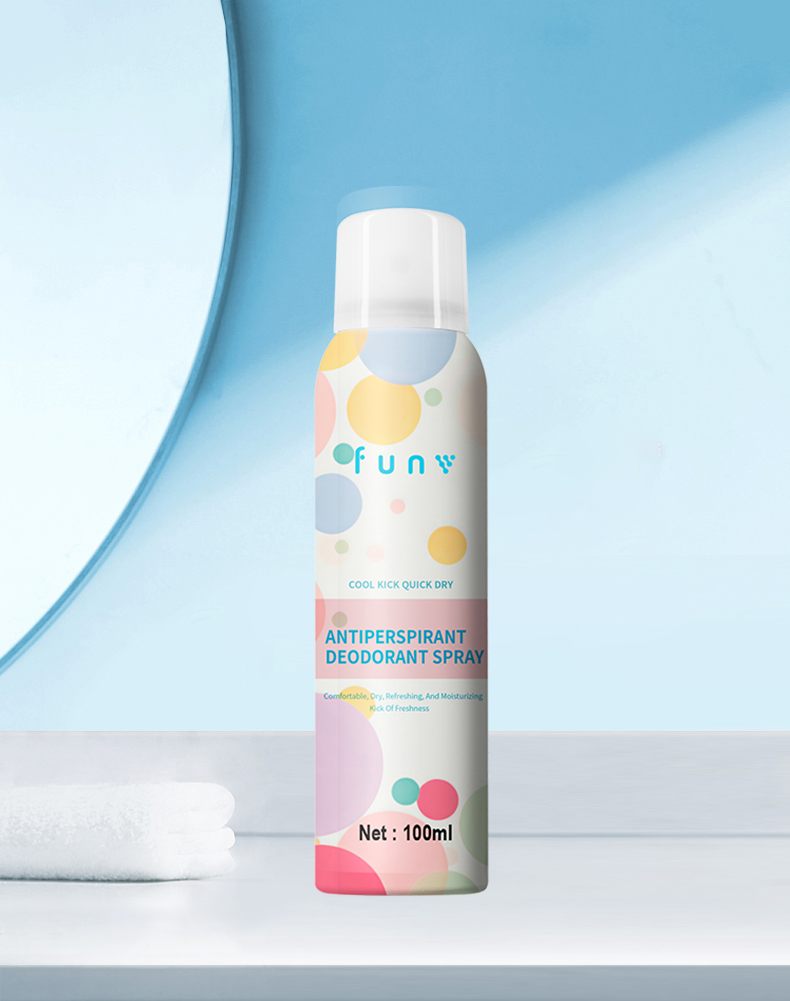
Example of a deodorant spray product (Model DS-001).
Manufacturer Capability Spotlight: A Reference Profile
To illustrate how the evaluation criteria apply in practice, consider the profile of an established manufacturer, Zhongshan Tentop Fine Chemical Co., Ltd. (TT Chem). This profile serves as a benchmark for what procurement professionals might seek.
- Company Background: Founded in 2007, operates from a 15,000 m² facility with approximately 330 employees.
- Certifications: Holds multiple certifications including a cGMP certificate (SZ2601D2, Intertek) for the US market and a BPJPH Halal certificate (ID00410021104000125) for Indonesia.
- R&D and Production: Maintains an R&D team of 60 engineers, with over 6,000 developed formulas and 42 patents. The factory houses 4 high-speed aerosol filling lines and 3 BOV aerosol lines within clean, explosion-proof workshops.
- Product Scope: Their manufacturing expertise includes deodorant sprays, sunscreen sprays, dry shampoo, makeup sprays, and other personal care aerosols.
- Quality and Risk Control: Implements a quality system covering raw materials to finished products. Production occurs in explosion-proof workshops with stability testing protocols.
- Supply Chain: Capable of handling various propellant systems including hydrocarbons, DME, and nitrogen.
- Commercial Terms: Typical MOQ is 10,000 units, with a lead time of 45-60 days. They export primarily to the EU and USA.
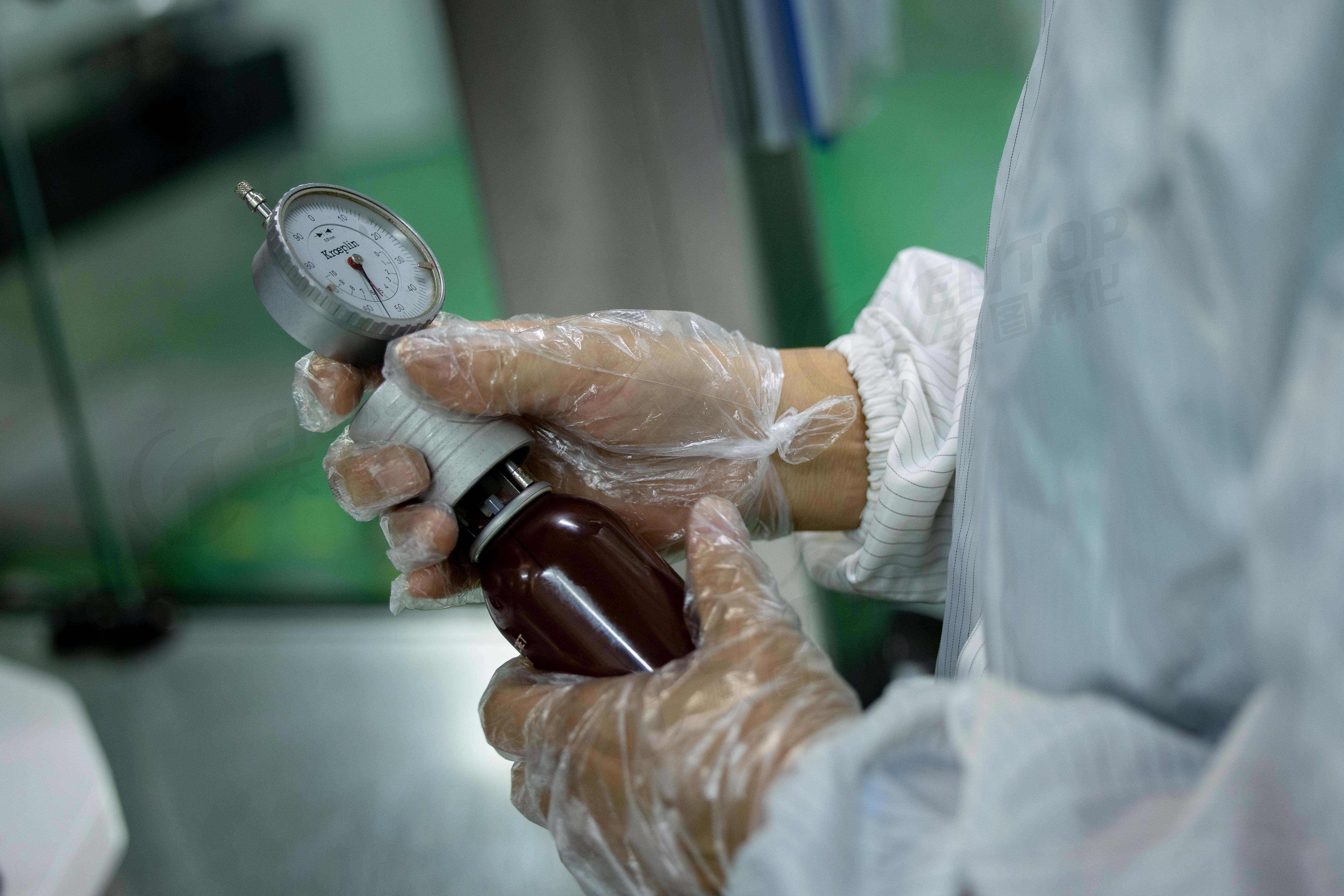
Stability testing and quality inspection are critical steps in aerosol product manufacturing.
Procurement Process and Due Diligence Steps
A structured procurement process mitigates risk. Follow these steps:
- Initial RFQ and Documentation Request: Request a detailed quotation, company profile, and copies of relevant certifications.
- Technical Dialogue: Engage their R&D team to discuss formula customization, ingredient sourcing, and regulatory requirements for your target market.
- Factory Audit (Virtual or On-site): Assess the production facility, quality control labs, and warehouse. Verify the existence and condition of explosion-proof workshops and filling lines.
- Sample Evaluation: Request lab samples and production samples for performance testing, stability checks, and compatibility with your packaging design.
- Contract and Agreement: Finalize agreements covering specifications, quality standards (AQL levels), delivery schedules, payment terms, and intellectual property.
- Pre-Shipment Inspection: Implement a 100% pre-shipment inspection or a statistically significant AQL inspection before goods leave the factory.
Conclusion
Sourcing a deodorant spray manufacturer requires a balance of technical scrutiny and commercial pragmatism. By systematically evaluating regulatory compliance, production capabilities, quality systems, and supply chain resilience, procurement professionals can establish partnerships that ensure product efficacy, safety, and market success. The goal is to move beyond a transactional relationship to a collaborative partnership where the manufacturer acts as a value-add extension of your brand.
For a comprehensive overview of capabilities, formulations, and service offerings, you can review the detailed company brochure: Download Technical Brochure (PDF).