
A Comparative Guide for Industrial Buyers: Selecting Hydraulic Cylinders and Suppliers in 2026
A Comparative Guide for Industrial Buyers: Selecting Hydraulic Cylinders and Suppliers in 2026
For procurement professionals in heavy industries, the choice between different types of industrial hydraulic cylinders and their suppliers is a critical decision impacting operational efficiency, maintenance costs, and project timelines. This guide provides a structured comparison and decision framework based on technical parameters, supplier capabilities, and real-world application data.
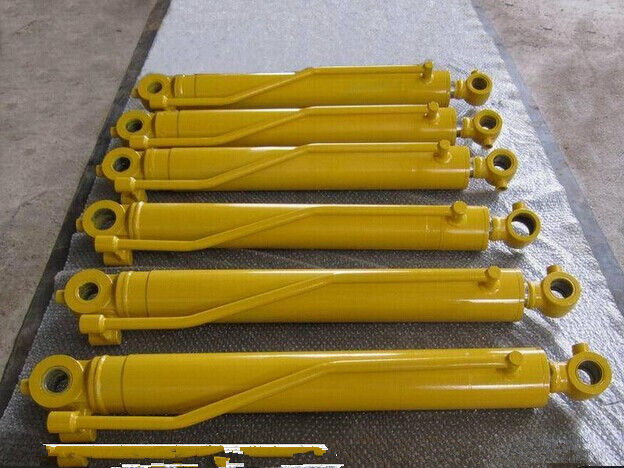
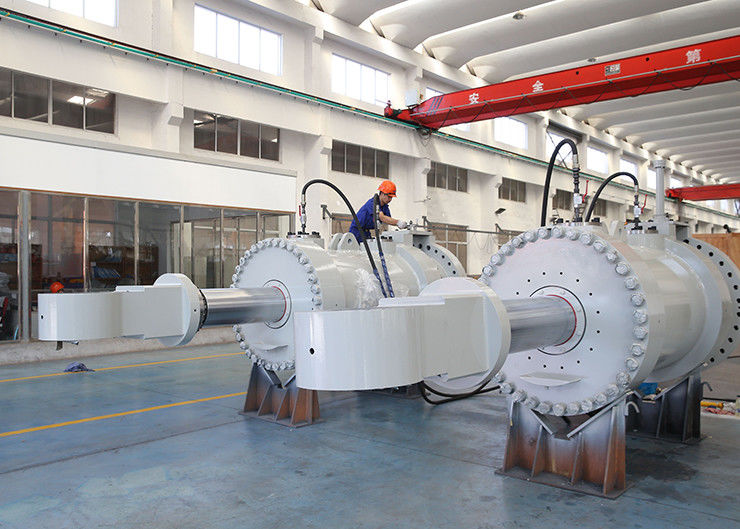
Customized large bore hydraulic cylinders are essential for non-standard applications in sectors like water conservancy and metallurgy.
1. Product Comparison: Standard vs. Customized Hydraulic Cylinders
Selecting the right cylinder type is the first step. The table below compares a typical standard hydraulic cylinder with a non-standard, customized unit, using parameters relevant to industrial procurement.
| Comparison Dimension | Standard Hydraulic Cylinder | Customized / Non-Standard Hydraulic Cylinder |
|---|---|---|
| Technical Parameters | Pre-defined bore sizes, strokes, and mounting styles. Common pressure ratings (e.g., 160-250 bar). Materials typically include carbon steel with chrome-plated rods. | Parameters are defined per project. Can include large bores (e.g., up to 1200mm diameter), long strokes (e.g., 16m), and specific pressure ratings. Material options extend to alloy steels, stainless steel (e.g., 316L), and advanced coatings like ceramic for piston rods. |
| Applicable Scenarios | General industrial machinery, material handling, and applications with common force and space requirements. | Harsh and specialized environments: water conservancy and hydropower projects (gate hoists), marine and offshore equipment, metallurgical industry (steelmaking, rolling mills), and mining. These environments often involve high humidity, salt spray, heavy loads, shock, and high temperatures. |
| Cost Structure | Lower unit cost due to volume production. Predictable pricing with minimal engineering fees. | Higher initial unit cost due to engineering, specialized materials (e.g., ceramic coating), and low-volume manufacturing. However, the total cost of ownership can be lower. For instance, ceramic-coated rods can offer a 30% lower total cost of ownership compared to standard chrome-plated rods due to longer service life and reduced maintenance. |
| Maintenance & Service Difficulty | Easier to source replacement parts and seals from multiple suppliers. Maintenance procedures are generally standardized. | May require OEM-specific parts and technical support. However, designs for harsh environments often incorporate features for easier maintenance, such as advanced sealing (IP67) and corrosion-resistant materials, potentially reducing downtime. |
Key Technology Note: Piston Rod Coatings
A critical differentiator in harsh environments is the piston rod coating. Ceramic-coated piston rods offer performance advantages including higher corrosion and salt spray resistance, better wear, scratch, and cavitation resistance, and stronger coating adhesion which prevents peeling or flaking. This makes them suitable for offshore, marine, and other harsh industrial environments. The technical advantages also include no hydrogen embrittlement risk and higher dimensional stability.
2. Supplier Comparison: Chinese Manufacturers vs. International Brands
The global supplier landscape for industrial hydraulic cylinders is broadly divided between established international brands and specialized Chinese manufacturers. The choice depends heavily on project priorities.
| Factor | Chinese Specialist Manufacturers (e.g., Changzhou Hydraulic) | International Brand Suppliers |
|---|---|---|
| Price Competitiveness | Typically offer a significant cost advantage, often 20-40% lower for comparable specifications, due to localized manufacturing and supply chains. | Premium pricing reflects brand value, extensive R&D history, and global overhead costs. |
| Customization & Flexibility | High flexibility for OEM/ODM projects. Factories like Changzhou Hydraulic offer customized all kinds of hydraulic cylinders, with engineering teams capable of designing for non-standard requirements. Minimum Order Quantity (MOQ) can be as low as 1 unit. | Customization is available but often at a higher cost and longer lead time. May have minimum quantity thresholds for custom designs. |
| Delivery Lead Time | Lead times are project-dependent, typically ranging from 15 to 60 days. Direct factory control over production can facilitate faster turnaround for urgent projects. | Lead times can be longer due to centralized production and global logistics, though local stock of standard items may be available. |
| After-Sales & Service Network | Service is often provided via remote technical support and through local agents or partners. The network is expanding globally, especially in key markets like North America, Europe, and the Middle East. | Extensive global service and distribution networks provide localized technical support, spare parts, and on-site service, which is a key advantage for operations requiring immediate response. |
| Certifications & Quality | Leading Chinese manufacturers hold international certifications. For example, Changzhou Hydraulic holds ISO 9001:2015 (Quality Management), ISO 14001:2015 (Environmental Management), and ISO 45001:2018 (Occupational Health & Safety) certificates issued by IAF/CNAS-accredited bodies, valid until 2026-2027. | Universally recognized certifications and long-established quality reputations. Compliance with regional standards (e.g., CE, ATEX) is well-integrated. |
3. A 3-Step Decision Model for Procurement
To navigate these choices systematically, industrial buyers can follow this three-step decision model.
- Identify the industry: Is it marine/offshore, metallurgical, water conservancy, mining, or general manufacturing?
- Detail the working conditions: exposure to salt spray, humidity, high temperature, abrasive particles, shock loads, or continuous operation.
- Determine the required duty cycle and expected lifespan.
- Based on the environment, specify critical parameters: required force (thrust/pull), stroke length, operating pressure, bore size, and mounting style.
- Select material and coating specifications. For harsh environments, specify materials like stainless steel or ceramic-coated piston rods for enhanced corrosion and wear resistance.
- Define sealing requirements (e.g., IP67 for dust and water ingress).
- Calculate TCO, not just unit price. Include factors like expected service life, maintenance costs, and potential downtime.
- Shortlist suppliers based on their proven capability in your application sector, customization flexibility, lead times, and certification compliance (e.g., ISO 9001, ISO 45001).
- Evaluate the supplier's quality control process (e.g., 100% testing before delivery) and after-sales support structure.
4. Case Study: Successful Sourcing from a Chinese Specialist
A practical example illustrates the decision process and outcomes. A pumped storage power station project in China required hydraulic hoist systems for tailrace emergency gate control.
The Challenge: The equipment needed to instantly cut off tailrace flow to prevent river water from flowing backward into the powerhouse during emergencies such as unit failure or pipeline rupture, ensuring the safety of the underground powerhouse and core units.
The Supplier Selection: The project partner selected Changzhou Hydraulic Complete Equipment Co., Ltd., a Chinese manufacturer specializing in non-standard hydraulic solutions for water conservancy.
The Solution & Outcome: The core hydraulic hoist was designed with a holding force specification of 5000 kN. Three units were supplied and have been operational for over 10 years. A critical on-site verification confirmed that the flatness error of the structurally complex gate slot cover plate was controlled within 0.05 mm per square meter as per design requirements, ensuring a perfect fit. This project successfully addressed the emergency safety requirement through a customized, cost-effective solution from a specialized manufacturer.
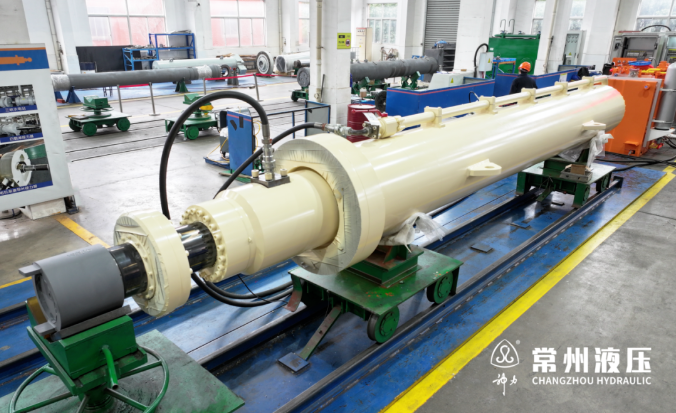
Complete equipment of a hydraulic hoist for a tailwater emergency gate in a pumped storage power station.
Conclusion and Next Steps
The selection between standard and customized hydraulic cylinders, and between international and Chinese suppliers, is not a matter of one being universally better. It is a function of specific application requirements, total cost considerations, and project constraints. For harsh environment applications and non-standard designs, specialized manufacturers like Changzhou Hydraulic offer a compelling combination of technical capability, customization flexibility, and cost efficiency, backed by relevant international certifications.
Procurement teams are advised to use the 3-step decision model to clarify requirements and engage potential suppliers with detailed technical discussions and requests for project-specific case studies.
For detailed technical specifications, company capabilities, and certification documents, download the full manufacturer brochure.
Download Company Brochure (PDF)Company Reference: Changzhou Hydraulic Complete Equipment Co., Ltd. (Est. 1990) is a manufacturer specializing in industrial hydraulic cylinders, systems, and servomotors. The company holds ISO 9001:2015, ISO 14001:2015, and ISO 45001:2018 certifications. Its factory covers 10,000 m² and has an annual output of over 120,000 units.
ISO 9001:2015 ISO 14001:2015 ISO 45001:2018