
Um guia abrangente para selecionar fornecedores de máquinas de papelão ondulado em 2026
A Buyer's Guide to Corrugated Cardboard Machinery in 2026
For procurement professionals in the packaging industry, selecting the right supplier for corrugated cardboard production equipment is a critical decision that impacts operational efficiency, product quality, and long-term profitability. This guide provides a structured framework for evaluating suppliers, focusing on key technical, operational, and commercial criteria.
1. Define Your Production Requirements
The first step is a clear assessment of your needs. Corrugated lines consist of multiple interconnected machines. Map your required output against potential equipment specifications.
| Machine Type | Key Parameter to Verify | Typical Application |
|---|---|---|
| Corrugated Cardboard Production Line (CCPL-1) | Maximum mechanical speed: 300 m/min, Line width: 1400~2800 mm | Core production line for converting paper into corrugated board. |
| Single Facer (SF-1) | Design Speed: 250 M/min, Web Size: 1400-2300 mm | Forms the fluted medium and bonds it to a liner. |
| Flexo Printer Slotter (FP-1) | Max speed: 350 sheets/min, Max feed size: 1600 x 3600 mm | Printing, slotting, and creasing of corrugated sheets. |
| Folder Gluer (FG-1) | Max Gluing Speed: 110 m/min, Size range: 300x750 mm to 1200x2600 mm | Folding and gluing of boxes. |
| Slitter Scorer (SSC-1) | Line speed: 630-900 m/min, Max Paper Width: 2200 mm | Trimming and scoring the corrugated board web. |
Consider auxiliary equipment equally: a Hydraulic Reel Stand (HRS-1) handles paper rolls from 300mm to 1500mm in diameter, while an Auto Splicer (AS-1) ensures continuous operation at speeds of 300-400 m/min. Downstream, a Stacker (STA-1) can stack boards up to 1.8m high, and a Strapping Machine (SM-1) can bundle 35 packs per minute.
2. Evaluate Supplier Manufacturing Capability and Scale
A supplier's infrastructure is a direct indicator of its ability to deliver consistent quality and meet deadlines. Assess the following:
- Factory Footprint: Look for established manufacturing bases. For example, LLY PACK (HK) CO., LIMITED operates a facility in Foshan City, Guangdong Province, with a total area of 57,000 square meters.
- Production Volume & Workforce: An annual output capacity and employee count signal scale. A supplier with around 50 employees and an annual output of 120,000 units demonstrates significant production capability.
- Technical & R&D Investment: A dedicated R&D team is crucial for innovation and customization. A team of 30 engineers indicates a commitment to technical development.
- Quality Certifications: Verify international standards. ISO 9001:2015 certification (e.g., Certificate 60126Q00004R000 from Guangdong Zhongjing Testing and Certification Co., Ltd.) is a baseline for quality management systems.
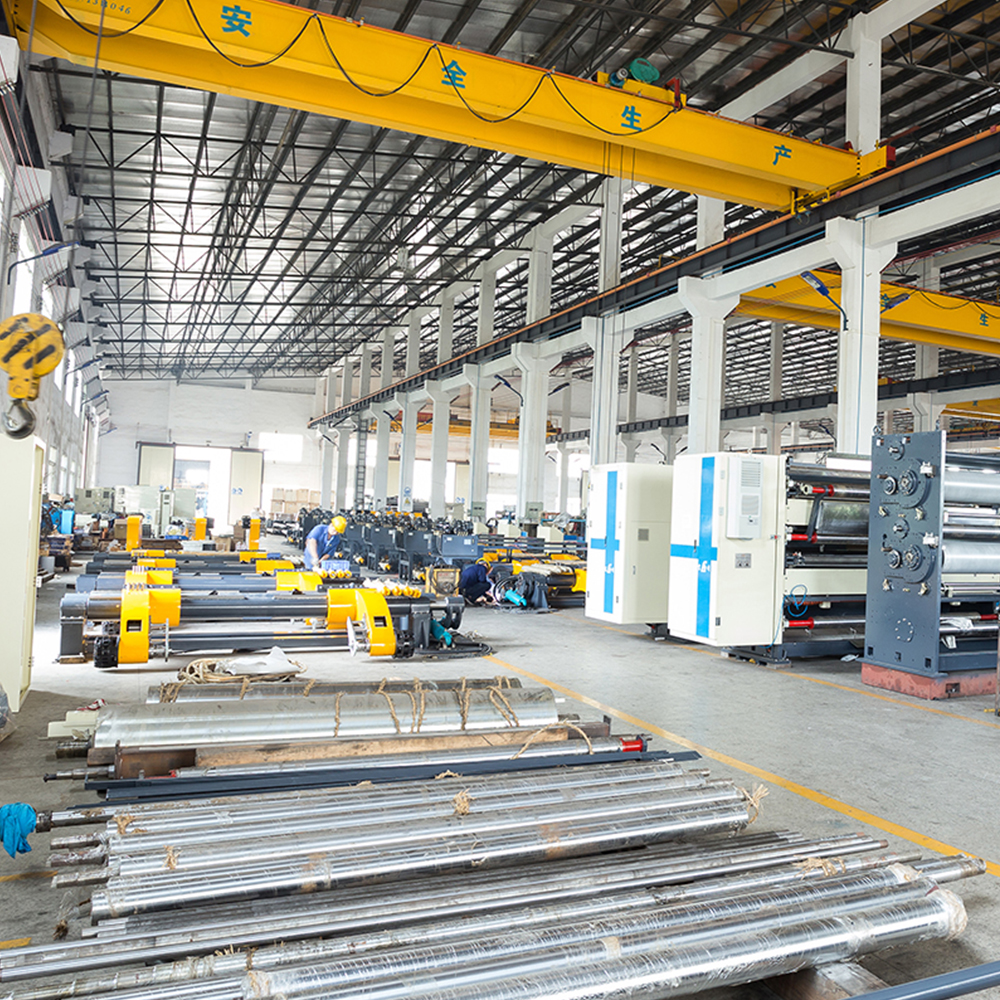
Modern corrugated machinery production floor.
3. Analyze Global Market Experience and Support
Experience in your target market is invaluable. It often translates to better understanding of local paper grades, climatic conditions, and service logistics.
- Export Ratio & Market Reach: A supplier with 100% export business and a presence in markets like South America, Southeast Asia, Africa, and the Middle East has proven adaptability.
- Installation Track Record: The number of successful global installations is a key reliability metric. A history of over 3500 successful corrugated line installations across more than 40 countries demonstrates extensive field experience.
- Application Knowledge: Suppliers should understand diverse operational environments. Equipment from companies like LLY PACK is applied in over 20 countries, including Mexico, Argentina, Brazil, Indonesia, India, Turkey, and Vietnam, often in settings requiring high precision, continuity, and speed.
- After-Sales & Parts Network: Inquire about service response times, training, and spare parts availability in your region.
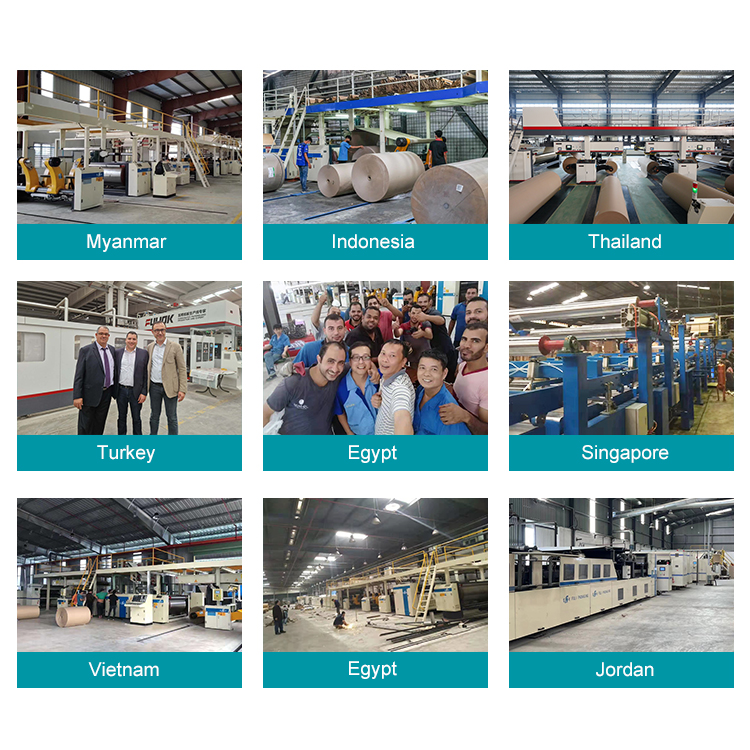
A completed corrugated line installation for a carton manufacturer.
4. Scrutinize Technical Specifications and Compliance
Go beyond marketing brochures. Demand detailed, verifiable specifications for every major component.
| Component | Critical Specification to Check |
|---|---|
| Corrugating Roll | Material grade, hardness, flute profile accuracy, and guaranteed lifespan. |
| Double Facer Belt | Heat resistance, tensile strength, and tracking stability specifications. |
| Glue System (CGK-1 Glue Kitchen) | Precision of starch preparation, viscosity control, and temperature management. |
| Control System | PLC brand, HMI interface, diagnostic capabilities, and connectivity for Industry 4.0. |
| Safety Features | Compliance with CE or other regional safety standards, emergency stops, and guarding. |
Request data sheets for testing equipment like the Carton testing instrument (CTI-1), which should specify a Bursting Strength range of 250-5600 kPa and a Crush test range of 60-3000N, to ensure your QC lab can verify output.
Industry Context: The Push for Automation and Sustainability
As of 2026, the corrugated packaging industry is increasingly focused on reducing waste and energy consumption. Modern lines integrate Waste paper balers (WPB-1) with capacities of 3-4 tons per hour to recycle trim waste. Furthermore, automated material handling, such as Paper reel conveyors (PRC-1) and Cardboard Conveyors (CC-1), is becoming standard to minimize manual labor and improve line efficiency. When evaluating suppliers, assess their roadmap for energy-efficient drives, heat recovery systems, and compatibility with recycled paper grades.
5. Finalize Commercial and Logistics Terms
Clarity in commercial terms prevents future disputes. Establish the following:
- Minimum Order Quantity (MOQ): Typically 1 set for complete lines, but confirm for spare parts.
- Payment Terms: Common methods include T/T (Telegraphic Transfer). Negotiate milestones linked to factory acceptance tests (FAT) and shipment.
- Delivery & Shipping: Clarify Incoterms (FOB, CIF, EXW, DAP). Ensure the supplier has experience with logistics to your port.
- Warranty & Support: Define warranty period (typically 12 months), scope of coverage, and terms for technical support during commissioning.
By methodically applying these five evaluation pillars—Requirements, Capability, Experience, Technicals, and Commercials—procurement teams can significantly de-risk the supplier selection process and partner with a manufacturer capable of supporting their production goals for years to come.
For a detailed overview of machine specifications and company capabilities, you can review the technical brochure: LLY PACK Corrugated Machinery Brochure (PDF).