
Um Guia de Compras Verticais: Selecionando Fornecedores de Fibra Óptica MPO/MTP para Aplicações de Data Center e FTTA 5G
A Vertical Procurement Guide: Selecting MPO/MTP Fiber Optic Patch Cord Suppliers for Data Center and 5G FTTA Applications
For industrial purchasers in the consumer electronics and telecommunications manufacturing sectors, selecting the right MPO/MTP fiber optic patch cord supplier is a critical decision that impacts network performance, deployment timelines, and total cost of ownership. This guide outlines the core requirements for two primary verticals—high-density data centers and outdoor 5G FTTA networks—and provides a framework for evaluating suppliers based on essential capabilities, proven experience, and collaborative partnership models.
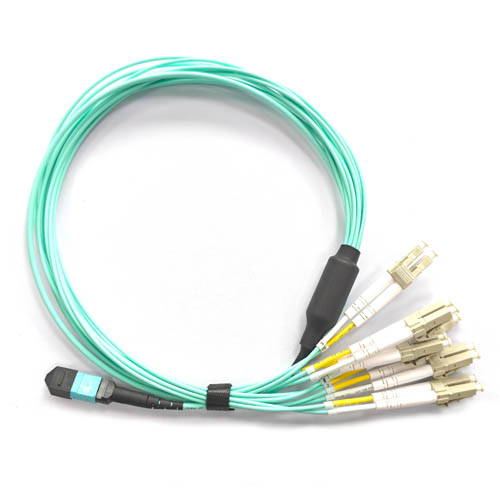
1. Industry-Specific Requirements for MPO/MTP Patch Cords
Data Center & Cloud Computing
In data center environments, the core requirement is enabling high-density, low-loss optical interconnections to support 400G/800G high-speed data transmission between servers, switches, and storage devices. The primary goal is to optimize cabling space, reduce power consumption, and ensure ultra-high-speed data transmission with maximum reliability.
Key Technical Specifications: Suppliers must provide products with low insertion loss (≤0.35 dB for elite grade), high return loss (≥60 dB for APC connectors), and LSZH (Low Smoke Zero Halogen) flame-retardant jackets. The operating environment is typically a controlled, clean data center room.
5G FTTA & Outdoor Telecommunications
For 5G Fiber to the Antenna (FTTA) deployments, patch cords must operate reliably in harsh outdoor conditions. This includes a wide temperature range from -40°C to +75°C, and resistance to rain, dust, UV exposure, mechanical vibration, and high tensile stress. These components are used for 5G base station RRU/AAU interconnection and outdoor small cell deployments.
Key Technical Specifications: Mandatory requirements include a high waterproof rating (IP67/IP68), tensile strength ≥1000 N, and corrosion resistance. Products must be compatible with optical distribution boxes (ODB), antenna feeders, and waterproof cable glands.
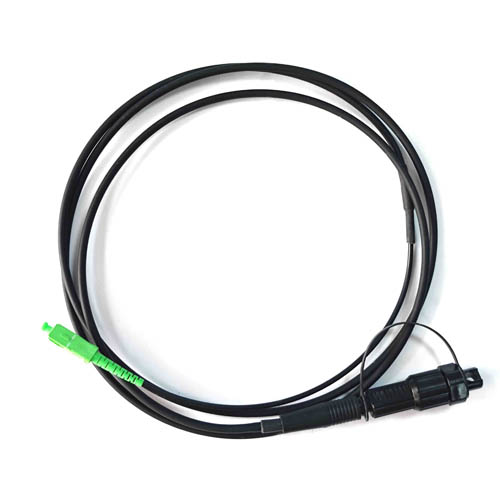
2. Supplier Evaluation: Three Essential Capabilities
When shortlisting MPO/MTP patch cord manufacturers, purchasers should verify the following three core competencies.
Capability 1: Vertical Application Experience & Customization
A supplier must demonstrate a track record of serving your specific industry vertical. Look for evidence of OEM/ODM production services and the ability to customize products based on project needs. Key customization parameters include cable length, connector type (e.g., MPO-12, MPO-24, MPO-48), core count, transmission mode (single-mode OS2 or multi-mode OM3/OM4/OM5), material selection, and specific certification requirements.
For instance, MeFiber Optic Co., Ltd., a manufacturer based in Guangzhou, provides OEM and ODM production services and serves export markets including the EU, Middle East, and USA. Their factory covers 5,000 square meters and has an annual output of 2,000,000 units.
Capability 2: Compliance Certification & Quality Assurance
Formal certifications are non-negotiable for ensuring product reliability and facilitating market access. A credible supplier should hold internationally recognized quality management certifications. For example, relevant certifications include ISO 9001:2015 for production and sales processes, with certification number HIC230831 issued by HIC, valid from May 9, 2023, to May 8, 2026.
Beyond paperwork, inquire about the supplier's internal quality control processes. A 100% pre-shipment testing policy for critical parameters like insertion loss and return loss is a strong indicator of commitment to quality.
Capability 3: Design for Harsh Environments & Risk Mitigation
For outdoor FTTA applications, the supplier's engineering capability to design for durability is paramount. This involves proactive risk control for common failure modes such as waterproof seal failure, fiber breakage under tensile load, and performance degradation in extreme temperatures.
Effective suppliers implement specific control methods: IP67/IP68 hermetic sealing design, reinforced tensile strength structures, wide-temperature-range material selection, and corrosion-resistant plating for metal components. They should conduct rigorous qualification tests, including IP68 waterproof testing, tensile strength qualification, thermal cycling, and salt spray corrosion testing.
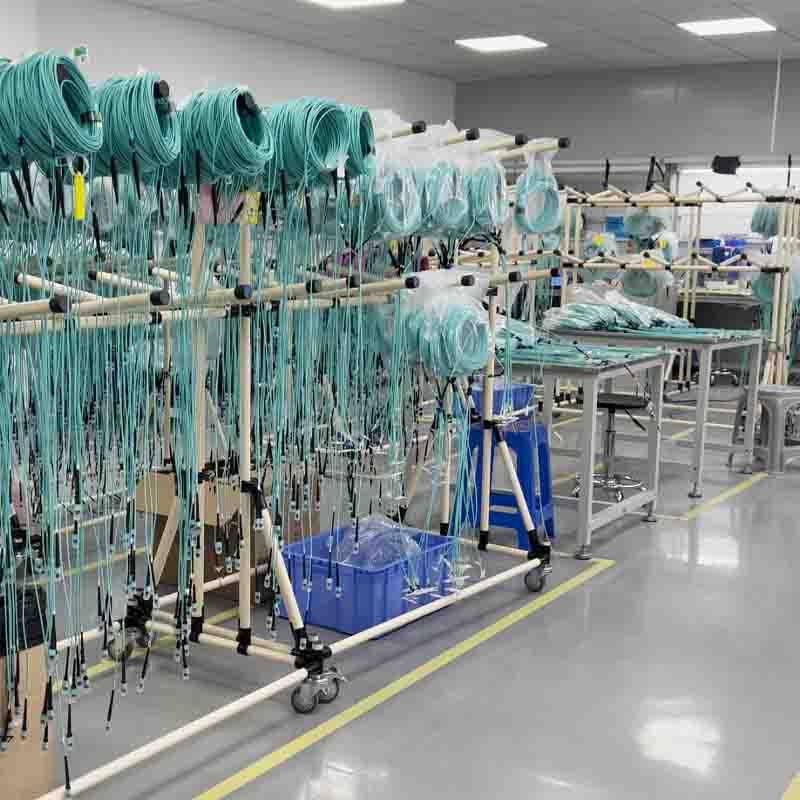
3. Supplier Capability in Action: A Comparative Case Study
Evaluating a supplier's claimed capabilities against real-world project outcomes is crucial. The following table compares the performance of specialized MPO/FTTA solutions against conventional products, based on documented case studies.
| Evaluation Criteria | Conventional LC/SC Patch Cords (Data Center) | High-Density MPO/MTP Solution | Conventional Outdoor Patch Cords (IP65) | Specialized FTTA Waterproof Solution (IP67/IP68) |
|---|---|---|---|---|
| Primary Application | Legacy data center cabling | Next-gen high-density data centers, 400G networks | General outdoor use | 5G FTTA, industrial mining/oilfield |
| Key Performance Metric | Standard insertion loss | Up to 8-24x higher port density; ≤0.35 dB insertion loss (elite) | IP65 protection | IP67/IP68 protection; ≥1000 N tensile strength |
| Deployment & Maintenance | Higher cable count, more complex management | ~60% faster deployment; modular replacement in <5 min | Higher field failure rate in harsh conditions | ~80% lower field failure rate; on-site replacement in <10 min |
| Total Cost Impact | Higher cable and labor costs | ~30% lower TCO (reduced cable & labor) | Higher maintenance costs | ~40% lower OPEX despite 10-15% higher upfront cost |
Illustrative Case: A data center operator and cloud service provider deployed over 12,000 MPO-24 patch cords from a supplier for 400G spine-leaf interconnection. The project, spanning the US, Singapore, and China, resulted in a 60% faster deployment speed, a 4x increase in port density, and supported 99.999% uptime over a 5+ year period. The solution's highlight was precision active alignment technology ensuring insertion loss below 0.35 dB, with 100% of units factory tested.
4. Procurement Collaboration: Key Steps for Success
Selecting the right supplier is only the first step. A successful partnership requires clear collaboration from the outset.
- Define Industry Standards Upfront: Clearly communicate the required certifications (e.g., ISO, Telcordia GR-326), performance standards (IL/RL values), and material specifications (e.g., LSZH jacket) in your Request for Quotation (RFQ).
- Request a Pre-Sales Site Survey or Consultation: For complex FTTA deployments, a competent supplier should offer to review deployment schematics or conduct a virtual site survey to recommend the optimal connector type, cable length, and protection level.
- Establish Clear Acceptance & Support Protocols: Agree on a 100% pre-shipment test report, support for third-party inspection or Factory Acceptance Test (FAT), and clearly defined after-sales support terms, including remote technical support and warranty coverage.
- Understand Commercial Terms: Clarify Minimum Order Quantity (MOQ), which can be as low as 2 units for some suppliers, standard lead times (e.g., 3-15 days), and standard delivery terms (e.g., EXW/FOB).
Summary Checklist for Procurement Teams
- ✅ Verify OEM/ODM and customization capabilities for your specific fiber type and core count.
- ✅ Request copies of valid quality management system certificates (e.g., ISO 9001).
- ✅ Review case studies or references from projects in your industry vertical (Data Center or 5G FTTA).
- ✅ Confirm 100% factory testing policy for insertion loss and return loss.
- ✅ For outdoor use, validate IP67/IP68 testing reports and tensile strength qualifications.
- ✅ Discuss and agree on after-sales support, warranty, and emergency replacement procedures.
By applying this structured evaluation framework, industrial purchasers can move beyond price-based comparisons and select MPO/MTP fiber optic patch cord suppliers who possess the technical depth, quality rigor, and collaborative mindset necessary to support critical network infrastructure projects in 2026 and beyond.