
Um guia abrangente para compradores: como selecionar fornecedores de alta qualidade MPO / MTP Fibra Óptica Patch Cable
Introduction: The Critical Role of Supplier Selection
Selecting the right supplier for MPO/MTP fiber optic patch cords is a critical decision that impacts network performance, reliability, and total cost of ownership. This guide provides a structured framework for procurement professionals to evaluate and identify high-quality suppliers capable of meeting the demands of modern data centers and 5G telecommunications infrastructure.
1. Core Evaluation Criteria for Suppliers
Begin your assessment by examining the following fundamental aspects of a potential supplier's operation.

2. Technical Specification and Quality Assurance
Scrutinize the detailed product specifications and the supplier's quality control processes. Reputable suppliers provide clear, testable parameters.
For high-density data center cabling, key parameters include:
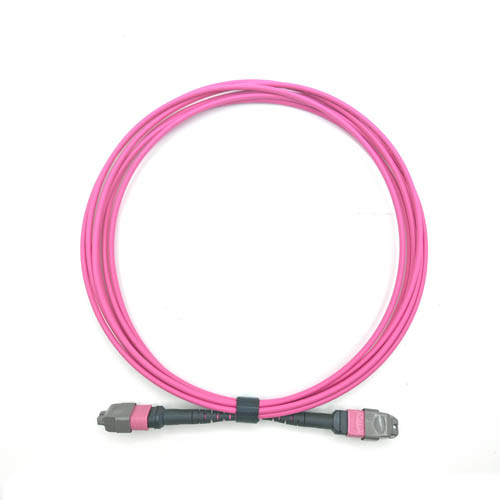
- Core Count & Fiber Type: Available in 12, 16, 24, or 48 cores, supporting both single-mode (OS2) and multimode (OM3/OM4/OM5) fibers. Model examples are MPO-12-OS2-APC and MTP-24-OM4-UPC.
- Optical Performance: Insertion loss should be ≤0.35 dB for elite grade products. Return loss is ≥60 dB for APC connectors and ≥50 dB for UPC connectors.
- Customization & Compliance: Cables should offer customizable lengths from 1 to 100 meters and comply with standards such as Telcordia GR-326. The cable jacket should be LSZH (Low Smoke Zero Halogen) for safety.
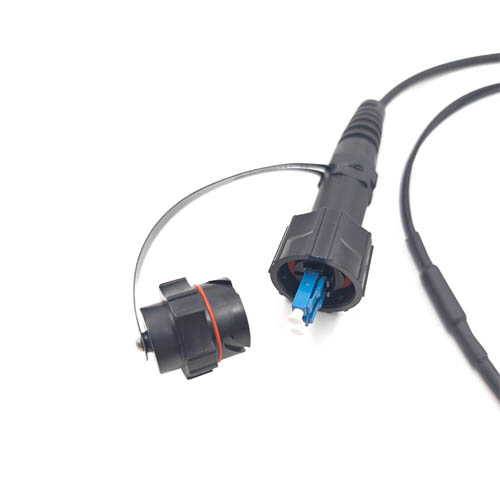
For harsh outdoor environments like 5G base stations, verify these critical specs:
- Environmental Protection: A minimum rating of IP67/IP68 for waterproof and dustproof performance.
- Operating Range: The product must be designed to operate in a wide temperature range from -40°C to +75°C.
- Mechanical Durability: Tensile strength should be ≥1000 N to withstand installation stresses.
- Models: Examples include ODC-APC-Fullax-APC-OS2 for single-mode applications.
Quality Control: Insist on suppliers that implement 100% factory testing for insertion loss and return loss. Request test reports and confirm compliance with international standards. A supplier holding ISO 9001:2015 certification (e.g., Certificate HIC230831) demonstrates a commitment to a standardized quality management system.
3. Supplier Capability and Support Assessment
Beyond the product, evaluate the supplier's ability to support your project from order to deployment.
| Capability Area | Key Questions for the Supplier | What to Look For |
|---|---|---|
| Customization & OEM/ODM | Can you produce non-standard lengths, connector combinations, or custom labeling? | Confirmation of support for customizable length, connector type, core count, and logo printing. A clear ODM/OEM policy. |
| Production Lead Time | What is the standard lead time for a sample order and a bulk order? | A defined lead time range (e.g., 3–15 days) and the flexibility to accommodate urgent requests. |
| Minimum Order Quantity (MOQ) | What is your MOQ for standard and custom products? | A low MOQ (e.g., 2 units for samples) indicates flexibility for testing and small projects. |
| Logistics & Export | What are your standard delivery terms (e.g., EXW, FOB)? Do you handle export documentation? | Experience with major export markets (EU/USA) and clear Incoterms. Support for third-party inspection (e.g., Factory Acceptance Test). |
| Technical & After-Sales Support | Do you provide application engineering support and troubleshooting? | Availability of remote technical support and clear contact channels (e.g., sales@mefiberoptic.com, +86 13823237984). |
4. Comparative Analysis and Reference Checking
Create a shortlist of 2-3 suppliers and conduct a comparative analysis. Do not rely solely on specifications; seek evidence of real-world performance.
Conclusion: Building a Strategic Partnership
The selection of an MPO/MTP patch cord supplier should be viewed as establishing a long-term technical partnership, not just a transactional purchase. A thorough evaluation based on manufacturing capability, technical specifications, quality assurance, and project support will lead to a more reliable supply chain, reduced network downtime, and optimized total cost. Prioritize suppliers who provide transparent data, demonstrable experience in your target application (data center or FTTA), and a collaborative approach to meeting your specific requirements.
For procurement teams, the next step is to engage with shortlisted suppliers using the criteria outlined above to request detailed quotations, product samples for independent testing, and references from past clients in similar industries.