
MPO/MTP vs. Outdoor FTTA: A Comparative Analysis for 5G and Data Center Procurement in 2026
For industrial purchasers in the telecommunications and data center sectors, selecting the right fiber optic patch cord is a critical decision that impacts network performance, deployment speed, and total cost of ownership. The choice often narrows down to two primary categories: high-density MPO/MTP patch cords for data centers and ruggedized Outdoor FTTA (Fiber to the Antenna) patch cords for 5G networks. This analysis provides a data-driven comparison to guide procurement decisions in 2026.
1. Product Comparison: MPO/MTP vs. Outdoor FTTA Patch Cords
Understanding the core differences between these two product families is the first step. The following table outlines key parameters and application suitability.
| Dimension | High-Density MPO/MTP Patch Cord | Outdoor Waterproof FTTA Patch Cord |
|---|---|---|
| Primary Application | Next-generation data center high-density cabling, server-switch interconnection, and 400G backbone networks. | 5G FTTA deployment, outdoor base stations, and industrial mining/oilfield environments. |
| Key Technical Parameters | Core count: 12 / 24 / 48. Insertion loss: ≤0.35 dB (Elite) / ≤0.5 dB (standard). Return loss: ≥60 dB (APC) / ≥50 dB (UPC). Operating temperature: -20°C to +70°C. Jacket: LSZH. | Waterproof rating: IP67 / IP68. Insertion loss: ≤0.30 dB. Return loss: ≥60 dB (APC). Operating temperature: -40°C to +75°C. Tensile strength: ≥1000 N. |
| Performance vs. Alternatives | Offers 8-24x higher port density, 0.2dB lower insertion loss, and 60% faster deployment than traditional single-core patch cords. | Provides an IP rating upgrade from IP65 to IP67/IP68, 200N higher tensile strength, and a ±20℃ wider operating temperature range than conventional outdoor cords. |
| Cost & Maintenance Profile | 15-20% higher upfront cost but results in 30% lower total cost of ownership (TCO) due to reduced cable and labor costs. | 10-15% higher upfront cost but provides an 80% lower failure rate and 40% lower maintenance costs. |
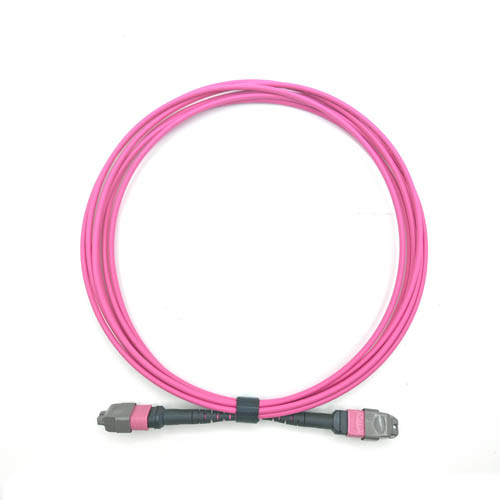
For data center applications, manufacturers like MeFiber Optic Co., Ltd produce MPO/MTP cords that support OS2 single-mode and OM3/OM4/OM5 multi-mode fibers, with insertion loss as low as ≤0.35 dB.
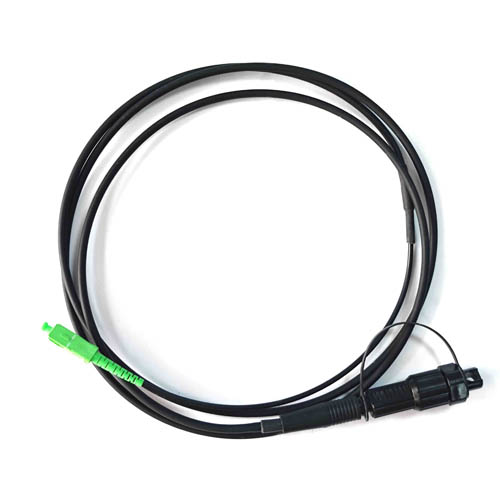
For harsh outdoor environments, specialized FTTA cords are essential. These outdoor patch cords have a tensile strength of ≥1000 N and an insertion loss of ≤0.30 dB, designed for continuous operation.
2. Supplier Landscape: Chinese Source Factory vs. International Brand
Beyond the product, the choice of supplier significantly impacts project outcomes. The market is broadly divided between Chinese source manufacturers and established international brands.
Chinese Source Factory (e.g., MeFiber Optic)
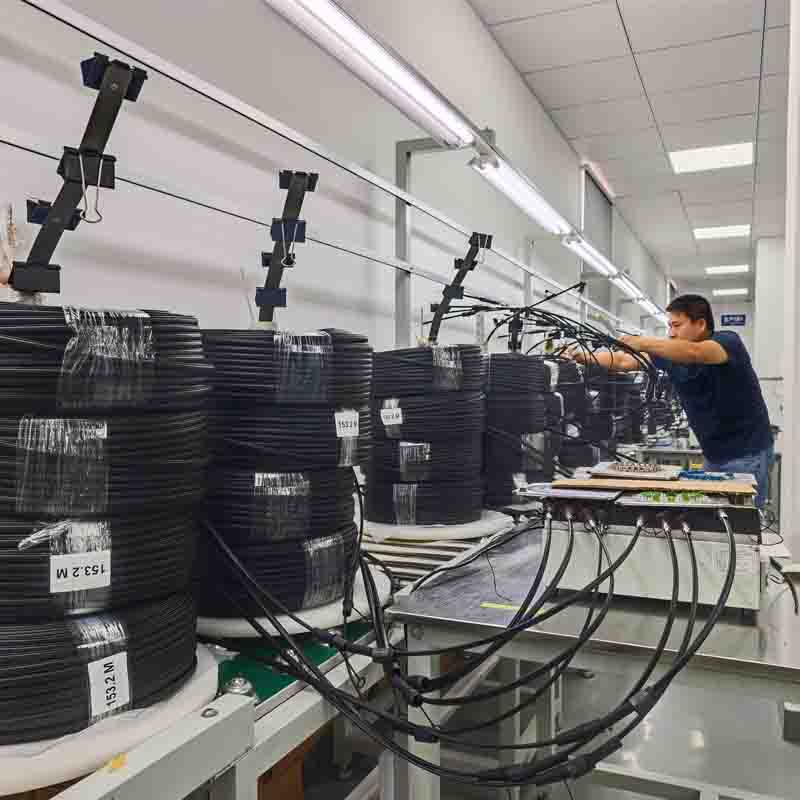
Typical Profile: Factory-focused, OEM/ODM capable, with 100% export orientation. For instance, MeFiber Optic, founded in 2014, operates a 5,000 sqm facility with an annual output of 2 million units.
- Price: Typically 20-40% lower cost due to integrated manufacturing and lower overhead.
- Customization: High flexibility for length, connector type, core count, and logo printing. MOQ can be as low as 2 units.
- Delivery Lead Time: Often shorter (e.g., 3-15 days) for standard and custom orders due to direct factory control.
- Local After-Sales Network: May rely more on remote support and distributor partnerships in overseas markets rather than a dense local service network.
- Brand Recognition: May require more due diligence on certifications and long-term reliability track records.
International Brand Supplier (e.g., Corning, CommScope)
Typical Profile: Global brand with extensive R&D, standardized product portfolios, and worldwide distribution.
- Global Support & Warranty: Extensive local sales and technical support networks in major markets.
- Standardization & Compatibility: Products are often de facto standards, ensuring broad equipment compatibility.
- Perceived Reliability: Long-established track record in large-scale, critical deployments.
- Price: Premium pricing reflects brand value, global logistics, and support structure.
- Customization: Less flexible for non-standard requests; higher MOQs and longer lead times for custom items.
- Lead Time: Can be longer for specialized items due to centralized manufacturing and complex supply chains.
3. A Three-Step Decision Model for Industrial Purchasers
To navigate this complex landscape, a structured decision-making process is recommended.
-
Define the Primary Use Case and Environment.
Is the application indoors (data center/enterprise) or outdoors (5G FTTA/industrial)? For data centers, density and speed are paramount. For outdoor 5G, environmental sealing (IP67/IP68) and tensile strength (≥1000N) are critical. This step dictates the fundamental product category.
-
Match Technical Specifications to Project Requirements.
For MPO/MTP: Specify fiber type (OS2/OM4/OM5), core count (12/24/48), connector polish (UPC/APC), and required performance grade (Elite ≤0.35dB or standard ≤0.5dB IL). For FTTA: Confirm the required IP rating, operating temperature range, and connector interface (e.g., ODC, LC-APC).
-
Conduct a Total Cost of Ownership (TCO) Analysis.
Move beyond unit price. Factor in deployment speed, expected failure rates, maintenance costs, and potential downtime. For example, while a high-performance FTTA cord may cost 10-15% more upfront, its 80% lower failure rate can lead to 40% lower maintenance costs over its lifespan.
4. Case Reference: Selecting a Chinese Supplier for a 5G Deployment
Client: A European telecommunications carrier and 5G base station equipment vendor.
Challenge: Sourcing reliable, waterproof patch cords for 5G RAN fronthaul across thousands of sites, with harsh environmental conditions including wide temperature swings and corrosion.
Solution: After evaluating multiple international and Chinese suppliers, the carrier partnered with MeFiber Optic Co., Ltd. The selection was based on:
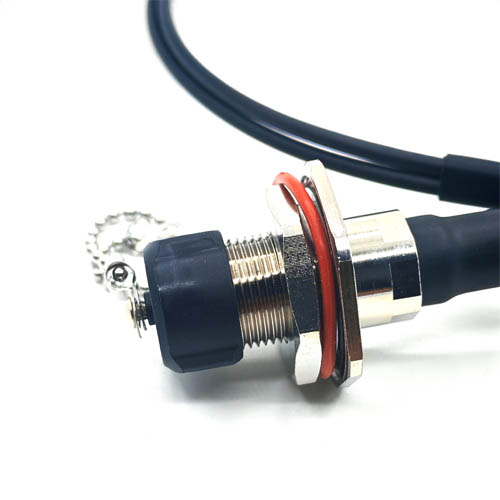
- Technical Compliance: Cords met IP68 waterproof/dustproof rating, a tensile strength of ≥1000N, and an operating temperature range of -40°C to +75°C.
- Customization & Cost: Ability to provide specific connector configurations and lengths at a competitive cost structure.
- Certification: Supplier's ISO 9001:2015 certification (HIC230831) for quality management systems.
Outcome: The deployment of over 50,000 outdoor waterproof patch cords has resulted in a significantly lower field failure rate and reduced operational expenses, validating the TCO advantage of a capable source factory.
In conclusion, the choice between MPO/MTP and FTTA patch cords, and between different supplier types, is not a matter of superior quality but of optimal fit. By rigorously applying a three-step decision model—clarifying the use case, matching technical specs, and analyzing TCO—industrial purchasers can make informed, cost-effective decisions that ensure network reliability and performance for years to come.